Why you should visit the Orangerie Museum.
The Orangerie Museum is where Impressionism exhales, where light, water, and silence fuse into a sensory experience so profound it almost defies description.
Tucked discreetly at the edge of the Tuileries Garden, the building’s modest exterior conceals one of the most transcendent encounters in all of Paris: Claude Monet’s monumental Water Lilies. Step inside and the world dissolves. The two oval rooms designed to Monet’s exact specifications envelop you in color, reflection, and stillness. The effect is hypnotic, brushstrokes seem to ripple as your eyes adjust, revealing not merely a landscape, but the passage of time itself. Beyond Monet’s legacy, the museum curates a remarkable collection of works from the likes of Cézanne, Renoir, Picasso, and Modigliani, bridging the romanticism of Impressionism with the rebellion of modern art. The intimacy of the galleries invites unhurried exploration, no grand staircases, no overwhelming crowds, only the hum of artistic revelation whispered across eras. Here, you don’t look at art; you are momentarily absorbed into it.
What you didn’t know about the Orangerie Museum.
What few realize is how the Orangerie itself became an instrument of artistic intent, an architectural sonnet sculpted around Monet’s vision.
Originally built in 1852 to house the orange trees of the Tuileries, the space was never meant for art. Its transformation into a temple of light was the result of a deeply personal dialogue between Monet and architect Camille Lefèvre in the 1920s. The placement of skylights, the curve of the walls, and even the diffused northern illumination were all meticulously designed to echo the rhythm of nature in Giverny. The Water Lilies cycle was conceived as a gift of peace to France after the devastation of World War I, a meditative refuge in a city learning to heal. The lower-level galleries, added later, introduced the Jean Walter and Paul Guillaume Collection, connecting Monet’s infinite horizons with the grounded, human intimacy of early 20th-century masters. It’s a conversation, between eras, aesthetics, and philosophies, contained within a single, quietly breathing building.
How to fold the Orangerie Museum into your trip.
To fold the Orangerie Museum into your Paris experience, resist the impulse to rush.
Start your morning here before the crowds, when the light streaming through the skylights is at its most tender. Let yourself linger in Monet’s world, sit on one of the curved benches and watch as the colors deepen and blur with each passing minute. Then descend into the lower galleries to trace the evolution from Impressionist lyricism to Cubist dissection, noticing how the themes of emotion and perception remain constant even as form fractures. When you leave, step directly into the Tuileries, and the paintings come alive, the rippling ponds, the muted greens, the endless reflections of the sky. Pair your visit with lunch at Café de Flore or Les Deux Magots in nearby Saint-Germain, echoing the haunts of the painters whose spirits still reside here. By the end, you’ll feel as if you’ve moved through both time and tone, from serenity to revelation, from canvas to air.
Hear it from the Foresyte community.
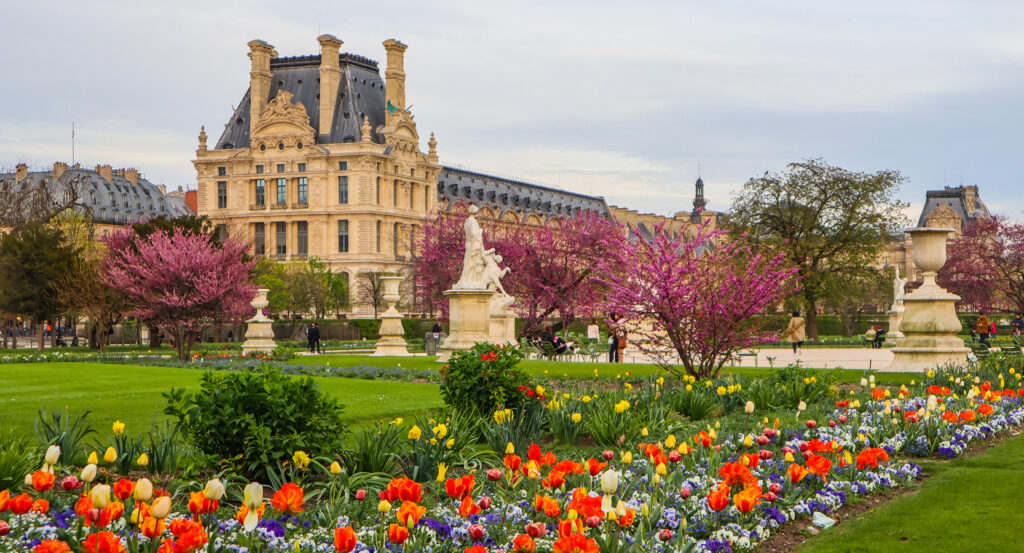
You stumble out of the Louvre with museum brain and suddenly it’s flowers everywhere around you. Feels like Paris built this just for lazy afternoons. Snacks in hand, sun out, you kinda never wanna leave.
Where meaningful travel begins.
Start your journey with Foresyte, where the planning is part of the magic.
Discover the experiences that matter most.