Why you should visit Rosetta Stone British Museum.
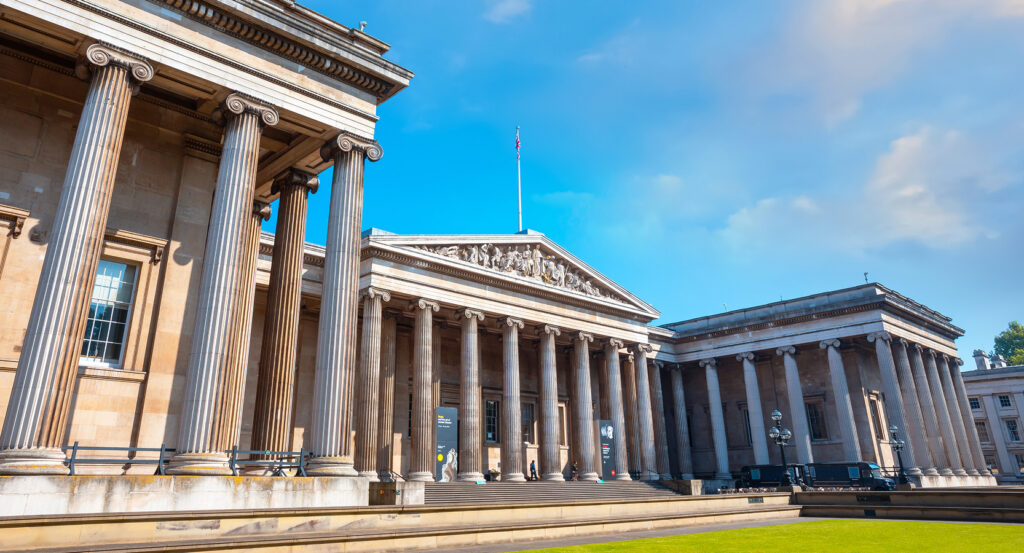
Few objects in the world possess the magnetic power of the Rosetta Stone, a slab of dark granodiorite that quietly unlocked the language of an entire civilization. Inside the British Museum’s softly lit Egyptian Gallery, it stands at human height yet commands a gravity that transcends its size. To see it in person is to stand before the key that bridged millennia, its inscriptions etched in three scripts, hieroglyphic, Demotic, and Ancient Greek, a linguistic trinity that cracked open the mysteries of ancient Egypt.
The stone radiates intellectual seduction: a testament to humanity’s obsession with understanding the past, decoding its symbols, and asserting meaning where time sought to erase it. Visitors gather in reverent hush, some drawn by its beauty, others by its revelation, that even the most impenetrable mysteries can yield to persistence and intellect. Beneath its glass case, the centuries dissolve; you can almost feel the feverish awe that gripped 19th-century scholars as they deciphered the code that would rewrite history.
What you didn’t know about Rosetta Stone British Museum.
What most visitors don’t realize is that the Rosetta Stone’s journey to the British Museum was as tumultuous as the history it helped illuminate.
Discovered by French soldiers near the Nile Delta in 1799, it became a spoil of empire, claimed by the British after Napoleon’s defeat under the terms of the Treaty of Alexandria. The stone’s physical story mirrors the shifting tides of global power: a relic of Egypt’s sacred past, passed between empires that sought to possess its secrets. Even the name “Rosetta” is a European echo of Rashid, the Egyptian town where it was found, a subtle reminder of how history’s retellings often carry traces of conquest. In a sense, the artifact is more than a linguistic key; it’s a mirror reflecting how civilizations interpret, and sometimes appropriate, the legacies of others.
How to fold Rosetta Stone British Museum into your trip.
To fold the Rosetta Stone into your visit, approach it early, before the crowds thicken and the air hums with the restless energy of smartphones and chatter.
Stand close enough to trace, with your eyes, the ancient scripts carved more than two millennia ago, and imagine the hands that chiseled each line with divine precision. Then step back to take in the gallery’s wider collection of Egyptian relics, sarcophagi, temple reliefs, and the monumental sculptures that once guarded tombs and gods. Let the Rosetta Stone anchor your exploration: it’s the intellectual heartbeat of the museum, the piece that transforms the collection from a display of antiquity into a living conversation between languages, empires, and eras.
Hear it from the Foresyte community.
Place feels like humanity’s attic, but instead of old lamps and creepy dolls it’s pyramids, marbles and other casual things that rewrote history.
Where meaningful travel begins.
Start your journey with Foresyte, where the planning is part of the magic.
Discover the experiences that matter most.