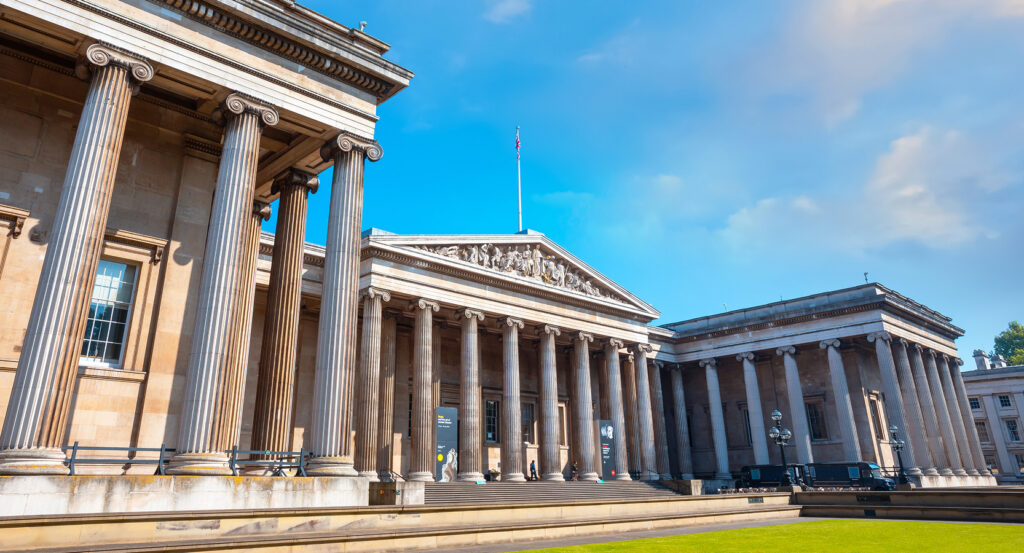
Why you should visit Parthenon Sculptures British Museum.
To stand before the Parthenon Sculptures is to encounter both beauty and controversy embodied in marble. These breathtaking works, once adorning the crown of Athens’ Acropolis, radiate the elegance and precision that defined classical Greek art. Within the British Museum’s Duveen Gallery, their alabaster glow seems to pulse with life, the folds of drapery and tension of muscle capturing motion frozen in eternity.
Visiting them isn’t just about appreciating ancient craftsmanship; it’s about witnessing the ideals of balance, harmony, and human perfection that shaped Western art and architecture. Each figure, from the serene gods reclining in celestial ease to the powerful horses galloping across the frieze, speaks of a civilization obsessed with form, proportion, and the pursuit of beauty as a divine language. The air in the gallery hums with that reverence, as though every curve of stone still whispers of Athena’s temple high above the Athenian skyline.
What you didn’t know about Parthenon Sculptures British Museum.
What many don’t realize is that these masterpieces have traveled through time under turbulent and contested circumstances.
Originally carved in the 5th century BCE under the direction of the sculptor Phidias, they adorned the Parthenon until the early 19th century, when Lord Elgin, then British ambassador to the Ottoman Empire, removed about half of them and transported them to London. Their presence in the British Museum has since stirred fierce debate over cultural ownership and the ethics of preservation. Supporters argue that Elgin saved them from destruction during Ottoman neglect and later wars; critics call for their repatriation to Greece, where replicas stand in anticipation within the Acropolis Museum. This ongoing tension imbues the sculptures with a charged duality, they are at once art and evidence, relics and reminders, subjects of awe and instruments of diplomacy.
How to fold Parthenon Sculptures British Museum into your trip.
To fold the Parthenon Sculptures into your visit, allow them to be your compass for the museum’s vast classical collections.
Begin at the Duveen Gallery, where the natural light complements the marble’s subtle texture, and move slowly through the panels, tracing the evolution of storytelling through relief and form. Let your imagination lift you to the Acropolis, envisioning how these scenes once glowed under the Attic sun, colored with pigments now long faded. Then, continue onward to the galleries of Greek pottery and sculpture, works that echo the same pursuit of aesthetic truth. In doing so, you’ll experience what the Parthenon Sculptures truly represent: not just fragments of stone, but fragments of human aspiration, reminders that art, like history itself, is never static, always shifting between reverence and reclamation.
Hear it from the Foresyte community.
Place feels like humanity’s attic, but instead of old lamps and creepy dolls it’s pyramids, marbles and other casual things that rewrote history.
Where meaningful travel begins.
Start your journey with Foresyte, where the planning is part of the magic.
Discover the experiences that matter most.