Why you should experience the Lincoln Memorial in Washington, D.C.
The Lincoln Memorial isn’t just a monument, it’s a national altar, a space where stone and silence converge to remind America of its conscience.
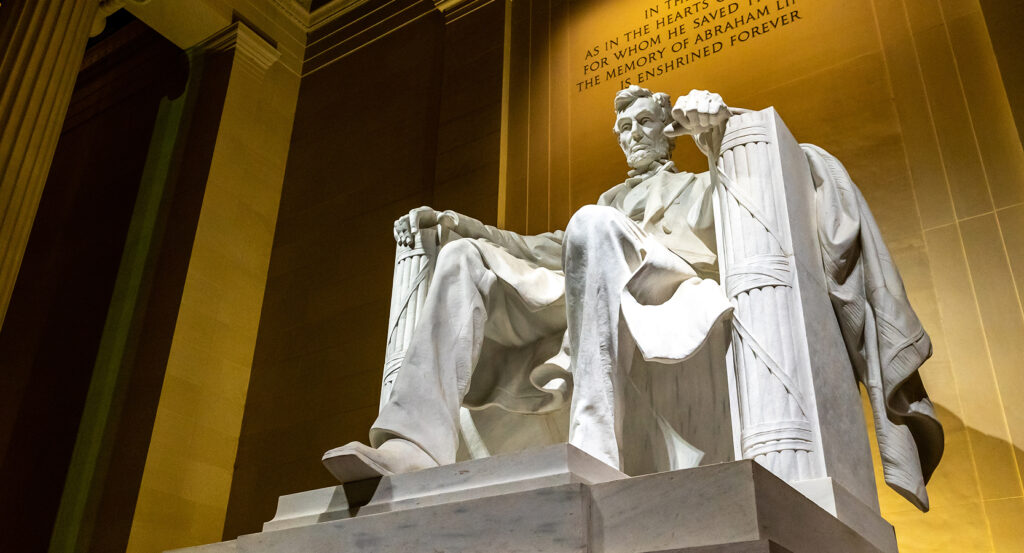
Standing at the west end of the National Mall, this neoclassical masterpiece feels less like architecture and more like revelation. Inside its marble columns sits Abraham Lincoln, larger than life yet profoundly human, carved in contemplation, his gaze steady over the Reflecting Pool toward the Capitol. The setting is cinematic but spiritual, a stage for both memory and movement. The faint echo of footsteps on marble, the soft shuffle of tourists turned pilgrims, all blend into a collective reverence that transcends time. At dawn, golden light spills through the columns, washing Lincoln’s face in warmth; at night, floodlights reveal every fold in his coat, every line of weariness and resolve. Around him, the words of the Gettysburg Address and his Second Inaugural are etched in stone, not as relics of history, but as living scripture. The Lincoln Memorial doesn’t just honor a man; it asks a nation to keep listening to its better angels.
What you didn’t know about the Lincoln Memorial.
Completed in 1922, the Lincoln Memorial was designed by Henry Bacon, who envisioned it as a neoclassical temple symbolizing eternal democracy.
French’s sculpture of Lincoln rises 19 feet tall, seated in quiet authority, with hands resting in a gesture that subtly balances strength and compassion. The building’s 36 columns represent the states in the Union at the time of Lincoln’s death, while additional inscriptions along the walls honor the progress of the nation since his presidency. The memorial’s interior design carries hidden symbolism, the asymmetry in Lincoln’s hands (one clenched, one relaxed) mirrors the tension between war and peace. Over the years, it has become more than an architectural triumph; it’s a living stage of history. This is where Dr. Martin Luther King Jr. delivered his immortal “I Have a Dream” speech in 1963, transforming the memorial into a beacon of civil rights and equality. The acoustics, intentionally tuned to amplify oratory, make standing on those steps feel like stepping into the flow of history itself.
How to fold the Lincoln Memorial into your trip.
A visit to Washington, D.C. is incomplete without standing before the Lincoln Memorial, and it’s best experienced both by day and night.
Begin your approach from the Reflecting Pool, allowing the monument’s reflection to emerge with cinematic grandeur. Once inside, spend time reading the carved speeches; their words resonate differently when absorbed within the monument’s solemn silence. Afterward, step out onto the memorial’s steps and turn east, the panoramic view of the Washington Monument and the U.S. Capitol is one of the most stirring perspectives in the city. For a deeper experience, join a National Park Service ranger talk, often held in the evenings, to learn about the memorial’s historical moments and design symbolism. Combine your visit with nearby landmarks like the Vietnam Veterans Memorial and Korean War Veterans Memorial for a powerful walk through America’s story of struggle and redemption. Whether you come to reflect, remember, or simply stand in awe, the Lincoln Memorial remains a timeless sanctuary, a place where the ideals of liberty and equality still feel within reach.
Hear it from the Foresyte community.
Come at night. No crowds, just you and this giant marble Lincoln staring you down. Kinda spooky, kinda inspiring… like he’s still judging us.
Where meaningful travel begins.
Start your journey with Foresyte, where the planning is part of the magic.
Discover the experiences that matter most.