Why you should visit Oculus Interior.
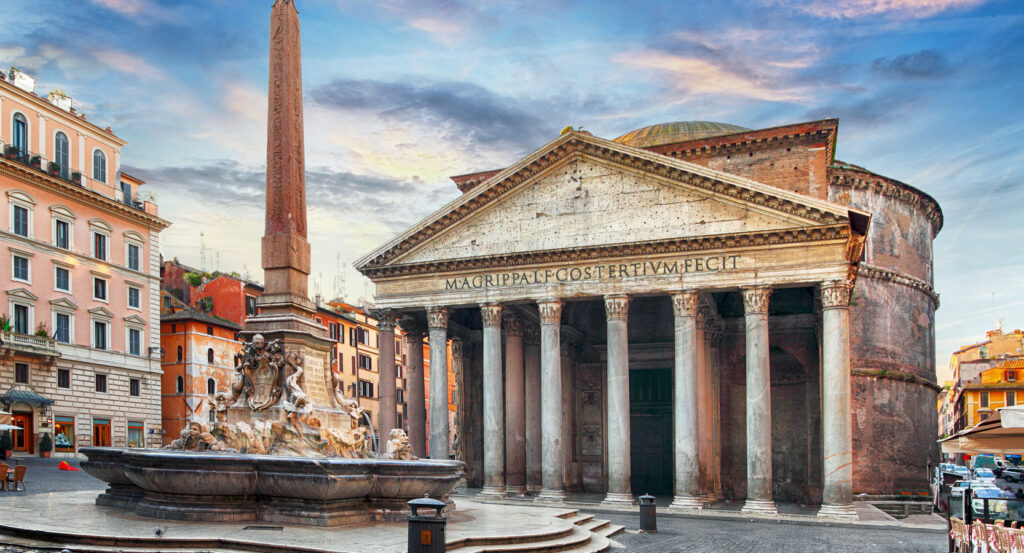
The Pantheon’s oculus is the eye of eternity, a perfect circle cut into the dome, unblinking and alive.
From the moment you step beneath it, your senses recalibrate. The air feels different here, charged, as though time itself circulates through that open wound in the sky. Measuring 27 feet across, the oculus is the building’s only source of natural light, transforming the vast rotunda into a living sundial. As the sun moves, its beam drifts slowly along the curved walls, caressing marble, bronze, and shadow in a silent choreography. The light is never the same twice; at noon, it floods the interior like revelation, while at dusk it thins to a golden whisper. Rain falls through it freely, spattering onto the ancient floor’s invisible drains, nature invited, never resisted. The effect is elemental: you are indoors yet exposed to the cosmos, embraced by architecture yet reminded of your smallness. The oculus is not a window, it’s a pulse, the Pantheon’s way of breathing the heavens in.
What you didn’t know about Oculus Interior.
What most travelers never grasp is that the oculus was not merely decorative, it was metaphysical, mathematical, and spiritual all at once.
Hadrian’s architects conceived it as the dome’s keystone in reverse, not a stone that holds weight, but an absence that holds meaning. Its perfect proportion maintains structural balance, relieving stress at the dome’s apex while symbolically joining the earthly and the divine. In pagan Rome, the opening served as a conduit for the gods, a literal channel between man’s world and theirs. Later, in Christian centuries, it became a metaphor for the eye of God, omnipresent, inescapable, infinite. The oculus also marked time: during the equinox, its light falls precisely on the entrance, illuminating the emperor’s path as he entered, an act of divine theater. That alignment was no accident, it was prophecy in geometry. Every ray that passes through it carries a message: that perfection is not a wall but an opening, not enclosure but release.
How to fold Oculus Interior into your trip.
To fold the Pantheon’s oculus into your Roman experience, surrender your gaze upward and let it change your perception of space itself.
Stand directly beneath the beam of light if you can, it warms your skin like a benediction, connecting you to every soul who has stood there for two thousand years. Visit in late morning, when the sunlight spills diagonally across the dome’s coffers, emphasizing their gradation from weight to grace. Watch how the light slides, minute by minute, revealing invisible architecture, the dome’s mathematics expressed in illumination. On rainy days, come anyway; the spectacle of raindrops falling through the open sky onto ancient stone is one of Rome’s quiet miracles. Stay long enough for silence to settle, and you’ll hear it: the whisper of water, the echo of time, the faint hum of air moving between heaven and earth. When you finally step outside, you’ll carry the oculus with you, that circle of light, that invitation to see the world not as enclosure, but as endless expanse.
Hear it from the Foresyte community.
The dome feels unreal like you’re standing inside geometry itself. Sunbeam hits the floor and suddenly you’re just small in the best way.
Where meaningful travel begins.
Start your journey with Foresyte, where the planning is part of the magic.
Discover the experiences that matter most.