Why Restaurant 20 Victoria matters.
Restaurant 20 Victoria is a MICHELIN-starred contemporary fine-dining restaurant where the Financial District's nineteenth-century commercial heritage meets Chris White's independent hospitality enterprise, Rafael Covarrubias's modern Mexican cooking and an influential chapter in Toronto's evolution as an international dining destination.
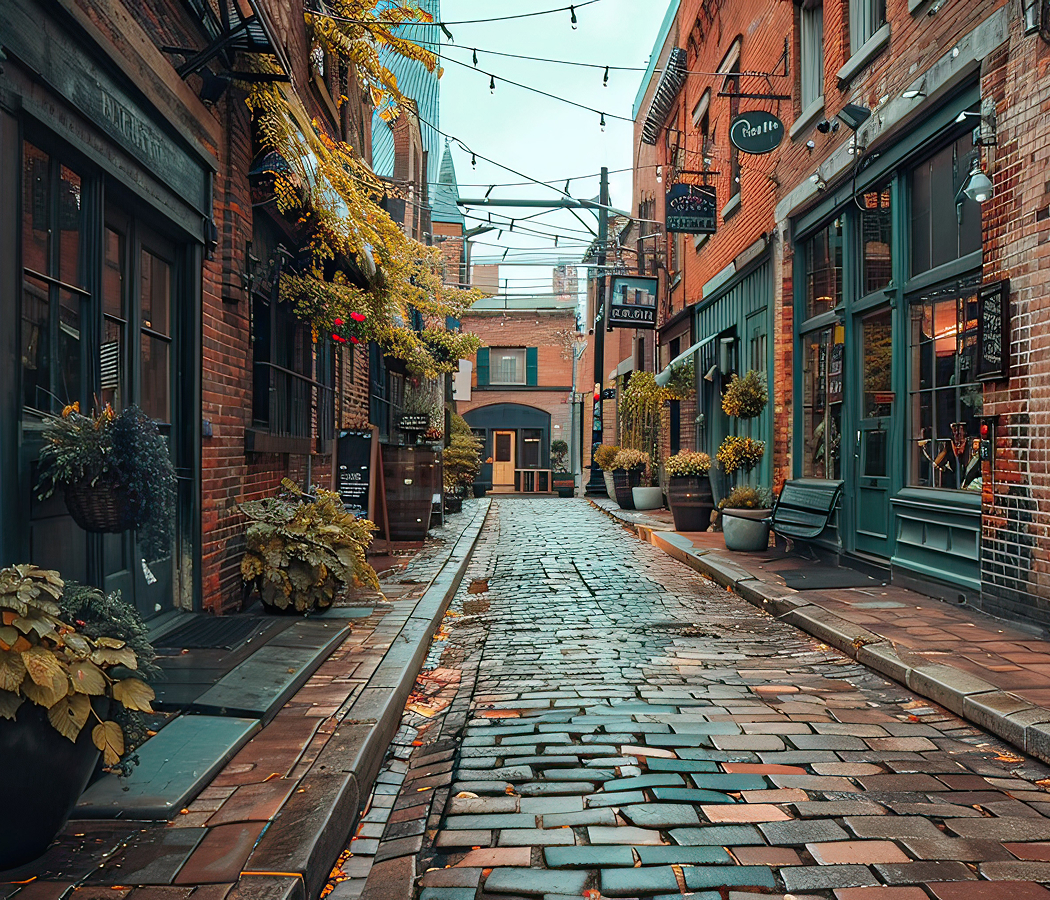
Positioned along Victoria Street between King Street East and Adelaide Street East, the restaurant occupies a discreet downtown storefront surrounded by historic commercial buildings, established financial institutions and the pedestrian corridors connecting the St. Lawrence neighborhood with Toronto's central business district. Its understated exterior introduces an intimate dining room organized around a prominent open kitchen, establishing a direct relationship between the chefs and their guests. Dark finishes, subdued lighting and closely arranged tables create a sophisticated atmosphere within the compact interior. Counter seating provides a particularly immediate view of the kitchen's preparation and service, with the culinary team frequently presenting individual courses directly to diners. The restrained design places particular emphasis on the movement of the kitchen and the carefully coordinated sequence of the meal. The result is an intimate restaurant whose architectural simplicity and attentive hospitality establish a distinctive fine-dining setting within Toronto's historic commercial center.
What defines Restaurant 20 Victoria.
Restaurant 20 Victoria is best known for the partnership between restaurateur Chris White and the chefs who transformed his independent dining enterprise into one of Toronto's most celebrated contemporary restaurants. White previously operated Brothers Food & Wine in Yorkville, developing a reputation for ambitious cooking, carefully selected wines and informal hospitality. The expiration of the restaurant's lease prompted the development of a new establishment in Toronto's Financial District. White brought chef Julie Hyde from Brothers Food & Wine into the project, preserving a professional collaboration established through their earlier restaurant. Restaurant 20 Victoria opened in June 2021, confronting the restrictions and uncertainty of the COVID-19 pandemic during its earliest operations. Ontario's indoor dining restrictions initially confined service to the sidewalk, creating an unusually challenging beginning for a restaurant conceived around an intimate dining room. The establishment subsequently developed a distinctive tasting-menu program under Hyde, whose cooking emphasized seasonal Canadian ingredients, exceptional seafood and precise European techniques. Its reputation grew rapidly through the quality of its culinary execution and the personal attention of a small professional team. Air Canada's enRoute magazine named Restaurant 20 Victoria Canada's Best New Restaurant in 2022, establishing its national significance shortly after opening. The restaurant subsequently earned one MICHELIN star in the 2023 Toronto selection, becoming one of the city's recognized destinations for contemporary fine dining. MICHELIN also presented its Toronto Service Award to the restaurant's hospitality team, acknowledging the exceptional attention and coordination that distinguished its dining program. Hyde's leadership established an important example of female culinary achievement within Toronto's MICHELIN-starred restaurant community. The restaurant's national standing continued developing through Canada's 100 Best Restaurants, reaching fourth place in the 2024 rankings. Its sustained recognition demonstrated the effectiveness of a compact operation organized around close collaboration between the kitchen, service team and ownership. A decisive leadership transition began in 2025 when White approached Rafael Covarrubias, the executive chef of Hexagon in Oakville, about assuming responsibility for the kitchen. Covarrubias had established his reputation through technically accomplished contemporary cooking informed by his Mexican heritage. His professional achievements included winning the North American regional final of the S.Pellegrino Young Chef competition in 2019. At Hexagon, he contributed to the restaurant's MICHELIN-starred reputation and received MICHELIN's Young Chef Award in 2024. Hyde concluded her tenure at Restaurant 20 Victoria at the end of 2025, allowing Covarrubias to introduce a new culinary direction in January 2026. He brought chef de cuisine Jordan Wilkinson and sous-chef Victoria Rinsma from Hexagon, establishing an experienced team familiar with his approach to contemporary Mexican gastronomy. The transition substantially expanded the restaurant's culinary repertoire, introducing complex regional sauces, traditional Mexican preparations and ingredients interpreted through refined tasting-menu techniques. Canada's 100 Best Restaurants ranked Restaurant 20 Victoria tenth nationally in 2026, recognizing the strength of the new kitchen and the continued importance of its intimate hospitality program. The restaurant's significance rests on this progression from a pandemic-era independent opening into a nationally recognized fine-dining institution, preserving White's original commitment to exceptional hospitality through two distinct and influential culinary chapters.
Rafael Covarrubias's cooking develops through the regional traditions of Mexico, combining intricate sauces, carefully controlled cooking and contemporary presentations that preserve the character of familiar ingredients. His approach emphasizes the relationship between aromatic complexity and technical precision, introducing preparations whose flavors emerge through carefully developed combinations of chiles, herbs, seeds and traditional seasonings. A custardy tamale with salsa roja and snow crab provides a representative expression of this direction, combining the delicate texture of steamed masa with the sweetness of Canadian seafood. The salsa introduces concentrated acidity and aromatic warmth, establishing a carefully balanced relationship between the principal ingredients. Scallop with mole verde develops another expression of the kitchen's cooking, pairing the natural sweetness of shellfish with a green mole distinguished by herbs, seeds and layered savory flavors. The preparation reflects the versatility of traditional Mexican sauces within a contemporary fine-dining format. Dry-aged roasted duck provides the centerpiece of the tasting menu, drawing upon the concentrated richness developed through controlled aging and precise roasting. The bird is presented to diners before being served with a glossy jus and chimole negro, introducing a dark, complex sauce associated with the cooking traditions of the Yucatán Peninsula. Its composition demonstrates the kitchen's ability to connect European meat preparation with the depth and aromatic complexity of regional Mexican cooking. The tasting menu develops these preparations through a carefully coordinated sequence, allowing individual courses to establish contrasting textures, temperatures and intensities of flavor. Seafood contributes an important recurring element, with the kitchen selecting ingredients whose delicacy complements the assertive character of traditional sauces. The intimate open-kitchen arrangement allows the chefs to participate directly in service, reinforcing the relationship between preparation, presentation and the guest. The wine program emphasizes distinctive international producers, including carefully selected bottles whose acidity, texture and aromatic character complement the restaurant's complex seasonings. Service is incorporated into the restaurant's pricing structure, preserving the establishment's commitment to a coordinated hospitality program. Restaurant 20 Victoria's culinary distinction emerges from this integration of contemporary Mexican technique, exceptional Canadian ingredients and carefully structured tasting-menu service, establishing a compelling new direction under Covarrubias's leadership.
How Restaurant 20 Victoria fits.
Restaurant 20 Victoria works as the dining culmination of an exploration connecting Toronto's nineteenth-century financial institutions, the architectural development of its historic commercial district and the city's role in the international movement to abolish slavery, placing the restaurant within the civic and cultural heritage of Downtown.
Begin at Hockey Hall of Fame, the international institution devoted to preserving and interpreting the history of ice hockey. Its principal exhibition spaces occupy the former Bank of Montreal building at Yonge and Front Streets, constructed in 1885 to designs by the Toronto architectural partnership Darling and Curry. The expansive building served as the bank's Toronto headquarters until 1949 and continued operating as a branch until 1982. Its restoration formed part of the Brookfield Place redevelopment, allowing the Hockey Hall of Fame to establish its permanent downtown location in 1993. The institution's collections include historic equipment, photographs, championship memorabilia and the Stanley Cup, connecting the preserved financial architecture with the development of Canada's national winter sport. Continue to St. Lawrence Market, the historic public market whose origins are associated with the establishment of Toronto's original market reserve in 1803. The present South Market building originated as Toronto's second city hall, completed in 1845 under architect Henry Bowyer Lane. Following the relocation of municipal government in 1899, the structure underwent substantial alterations to accommodate the expanding market, preserving elements of its original civic architecture within a commercial institution. Its contemporary vendors maintain the district's longstanding relationship with regional agriculture, specialty food production and independent trade. The building's historic fabric and continuing commercial activity establish a direct connection between Toronto's early municipal development and the everyday traditions of its central market district. Conclude at St. Lawrence Hall, the Renaissance Revival public building designed by architect William Thomas and constructed in 1850 following the devastating Great Fire of Toronto in 1849. The hall opened in April 1851 and quickly became an important venue for concerts, public lectures, political meetings and civic celebrations. Its early history included gatherings associated with the abolitionist movement, notably appearances by Frederick Douglass and the North American Convention of Colored Freemen in 1851. Organized by Henry and Mary Bibb, the convention brought together delegates concerned with the rights and protection of Black communities during a period of growing migration to Canada from the United States. The building underwent substantial restoration in 1967 and received designation as a National Historic Site of Canada, preserving its significance within Toronto's architectural and political history. The progression connects a landmark of nineteenth-century banking with the city's historic commercial marketplace and concludes at an important center of abolitionist organizing, establishing the broader historical setting surrounding Restaurant 20 Victoria.
Where your story begins.
Foresyte Travel reveals places that feel extraordinary long before you arrive.
Enjoy editorial crafted for luxury travelers.
Foresyte may earn a commission when you book.