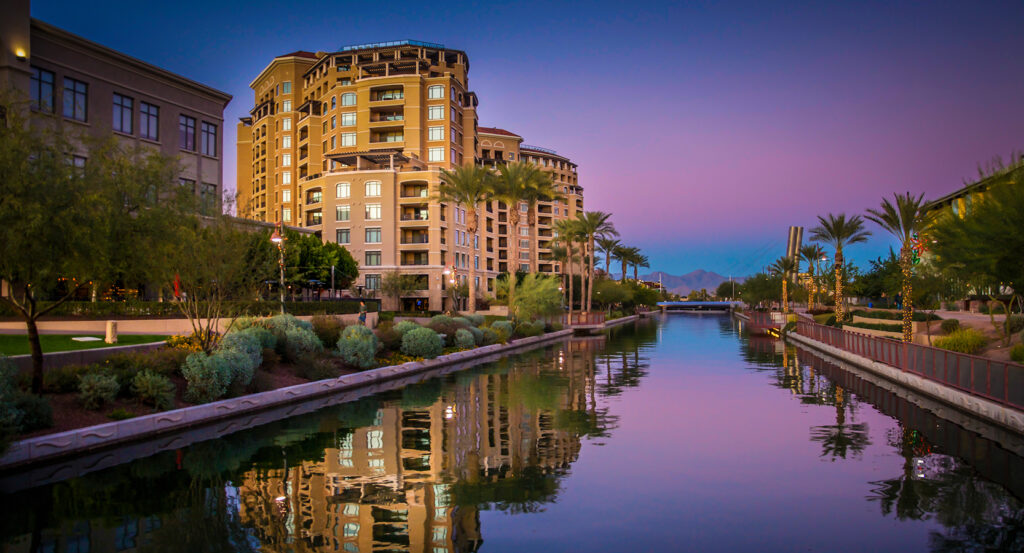
Top places to stay in Phoenix, Arizona.
Phoenix's transformation into a major American hotel destination began with the irrigation of the Salt River Valley, where an agricultural settlement eventually became a winter refuge for wealthy travelers and a center of Southwestern resort hospitality. The ancestral Sonoran Desert was home to the Hohokam, whose extensive canal systems supported agriculture across the valley for centuries. Jack Swilling established an irrigation enterprise in 1867, encouraging the settlement that became Phoenix. Incorporated in 1881, the town developed around farming, commerce, and transportation. The arrival of the railroad in 1887 strengthened regional connections, supporting boardinghouses and hotels serving merchants, agricultural investors, and visitors traveling through Arizona Territory. Phoenix became Arizona's territorial capital in 1889, expanding demand for accommodation near government offices and commercial streets. The Adams Hotel opened in 1896, establishing a prominent downtown institution associated with the city's growing political and business community. Arizona achieved statehood in 1912, and Phoenix's reputation for dry winter weather increasingly attracted travelers seeking sunshine and relief from colder climates. The opening of the Arizona Biltmore in 1929 introduced a defining chapter in luxury hospitality. Designed by Albert Chase McArthur with architectural consultation from Frank Lloyd Wright, the resort combined geometric concrete-block construction with landscaped grounds beneath the Phoenix Mountains. Its association with prominent political figures and entertainers strengthened the city's national reputation as a prestigious winter destination. The opening of the Royal Palms Inn that same year introduced another intimate resort environment amid citrus groves near Camelback Mountain. Following the Second World War, widespread air conditioning, expanding aviation, and suburban development accelerated metropolitan growth. The establishment of major resorts in neighboring Scottsdale extended the region's hospitality economy into the surrounding desert. The opening of the Phoenician in 1988 reinforced the metropolitan area's standing in international luxury travel through an ambitious resort developed against the southern slopes of Camelback Mountain. Professional sports, conventions, and corporate expansion subsequently broadened the visitor economy beyond seasonal leisure. The development of the Phoenix Convention Center and surrounding downtown hotels strengthened the city's capacity to host major events. Contemporary investment has introduced sophisticated urban properties, restored historic buildings, and secluded desert retreats throughout the valley. Phoenix's hospitality history reflects the reinvention of an agricultural capital into a metropolitan resort destination whose character rests upon desert architecture, winter sunshine, and the dramatic mountains of Central Arizona.
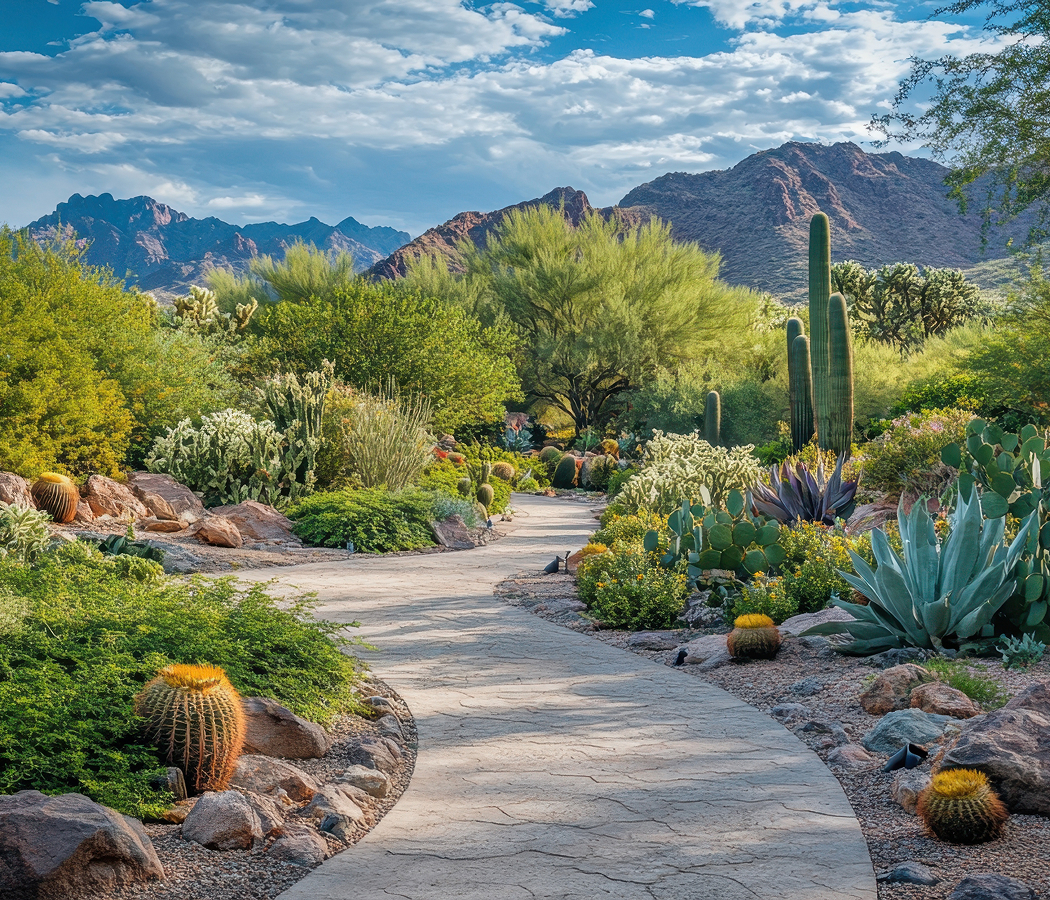
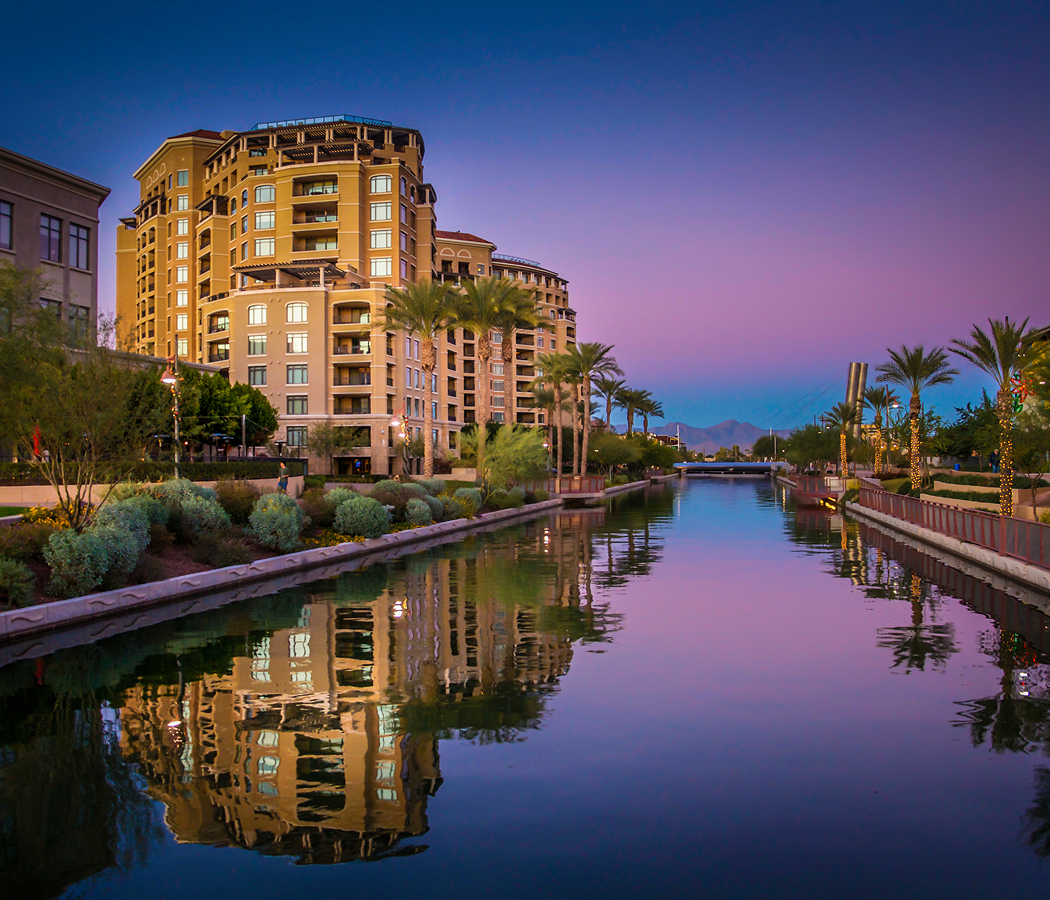
Phoenix's accommodation landscape extends across the broad Salt River Valley, where mountain preserves interrupt an expansive urban grid and resort properties occupy carefully landscaped settings beneath the Sonoran Desert's rugged peaks. Downtown forms the metropolitan center, with contemporary hotels concentrated near the convention district, major sporting venues, and cultural institutions. Its architecture combines historic commercial buildings, substantial midcentury structures, and modern glass towers, creating an increasingly walkable environment along Washington Street and Central Avenue. The neighboring Roosevelt Row district introduces a more intimate urban atmosphere through restored commercial properties, contemporary galleries, and streets animated by public art. Boutique accommodation provides access to independent restaurants and the surrounding creative community. Northward, Midtown follows the Central Avenue corridor through established office towers, residential neighborhoods, and substantial hotels connected by the Valley Metro Rail system. The district's broad avenues and mature landscaping reflect Phoenix's twentieth-century metropolitan expansion. Farther northeast, the Biltmore area occupies one of the city's most prestigious resort environments, with luxury hotels and residential enclaves arranged around golf courses, landscaped grounds, and views toward Piestewa Peak. The surrounding architecture incorporates desert-inspired materials, low horizontal profiles, and expansive outdoor terraces designed for the region's warm climate. Eastward, the Arcadia neighborhood extends beneath Camelback Mountain through established residential streets, mature citrus trees, and substantial private properties. Intimate luxury accommodation and secluded retreats benefit from proximity to mountain trails and refined neighborhood dining. The adjoining Camelback East district contains contemporary hotels and commercial developments near major shopping and business destinations. North of the central city, the North Mountain area introduces a more rugged setting through substantial desert preserves, residential communities, and hotels positioned near recreational trails. The surrounding slopes provide dramatic perspectives across the metropolitan basin, particularly during the clear winter months. Farther northeast, the Desert Ridge district presents a contemporary resort landscape through substantial hotels, golf facilities, and planned residential developments. Its broad streets and landscaped commercial centers provide access to northern Phoenix's expanding recreational amenities. Across the eastern valley, Paradise Valley occupies an exceptionally prestigious residential landscape between Camelback Mountain and the Phoenix Mountains Preserve. Luxury resorts stand amid extensive private grounds, with low-rise architecture, secluded pools, and carefully framed mountain views creating an atmosphere of privacy. The neighboring Scottsdale resort districts extend this environment through golf communities, contemporary wellness retreats, and properties integrated into the surrounding desert terrain. Old Town Scottsdale offers a contrasting setting through pedestrian shopping streets, galleries, restaurants, and boutique hotels associated with the region's Southwestern artistic heritage. Farther north, the Pinnacle Peak area introduces a more remote landscape of granite formations, saguaro-covered slopes, and secluded luxury properties. These settings provide accommodation ranging from contemporary downtown hotels and intimate urban retreats to expansive desert resorts whose architecture and outdoor spaces respond directly to the Sonoran landscape. Foresyte may earn a commission when you book.
Foresyte Travel's top five choices.
5. Sanctuary Camelback Mountain Resort & Spa
Sanctuary Camelback Mountain Resort & Spa occupies the northern slope of Camelback Mountain in Paradise Valley, where steep desert terrain shaped a low-rise complex embedded into the hillside. The property originated in the 1950s as a private retreat associated with the Wrigley family and later became a tennis resort before developers transformed it into Sanctuary in 2001. Architect and designer elements across the property use stone, stucco, glass, and horizontal forms to maintain a close physical relationship with the mountain. Gurney's Resorts acquired Sanctuary in 2021, bringing the Arizona property into a hospitality portfolio that began on the eastern end of Long Island. Sanctuary's evolution traces Paradise Valley's progression from secluded desert estates and recreational clubs into one of Arizona's principal luxury resort enclaves.
4. Arizona Biltmore, LXR Hotels & Resorts
Arizona Biltmore is best known for the architectural collaboration between Albert Chase McArthur and Frank Lloyd Wright that produced one of Phoenix's defining resort complexes in 1929. McArthur, a former Wright draftsman, designed the hotel around geometric concrete textile blocks manufactured on site, with Wright serving as a consulting architect during the project's development. Brothers Warren and Charles McArthur financed the resort before chewing-gum magnate William Wrigley Jr. became its sole owner following the financial pressures of the Great Depression. Successive additions expanded the original composition across the desert site as Phoenix developed into a major metropolitan and resort destination. A large-scale restoration completed in 2021 preceded the property's incorporation into Hilton's LXR Hotels & Resorts portfolio, carrying McArthur's distinctive architecture into a new chapter of its hospitality history.
3. JW Marriott Phoenix Desert Ridge Resort & Spa
JW Marriott Phoenix Desert Ridge Resort & Spa opened in 2002 as a major component of Desert Ridge, the master-planned community developed across thousands of acres in North Phoenix. The resort emerged as metropolitan Phoenix expanded toward the northern desert and large residential, retail, recreational, and hospitality projects followed the Loop 101 corridor. Hill Glazier Architects designed a sprawling complex of stone, stucco, courtyards, water, and landscaped outdoor spaces that translated Southwestern architectural references into the scale of a major convention resort. Its development helped establish the northern edge of Phoenix as a resort destination beyond the older hospitality concentrations around Scottsdale, Paradise Valley, and Camelback Mountain. Desert Ridge represents the geographic expansion of the Valley's resort economy alongside one of the region's largest late twentieth-century master-planned communities.
2. Royal Palms Resort and Spa, The Unbound Collection
Royal Palms Resort and Spa, The Unbound Collection began as the private winter residence of Delos Willard Cooke, a New York financier who built the estate near Camelback Mountain in 1929 for his wife, Florence. Cooke drew upon Spanish Colonial and Mediterranean precedents, creating a secluded composition of stucco walls, tiled roofs, courtyards, fountains, and gardens around the central residence. The estate later became a hotel, preserving its domestic scale as the surrounding citrus groves and desert acreage evolved into the residential districts of Phoenix and Paradise Valley. Subsequent expansions maintained the original architectural style through low-rise buildings arranged around intimate landscaped spaces. Royal Palms joined Hyatt's Unbound Collection in 2016, extending the life of a private interwar desert estate as one of the Valley's enduring historic resorts.
1. The Phoenician, a Luxury Collection Resort, Scottsdale
The Phoenician, a Luxury Collection Resort, Scottsdale occupies a 250-acre estate at the southeastern base of Camelback Mountain, where the Sonoran Desert meets the luxury residential communities of Scottsdale and Paradise Valley. Developed by financier Charles Keating and designed by Killingsworth, Stricker, Lindgren, Wilson & Associates, the resort incorporates Italian Carrara marble, gilded architectural detailing, and extensive landscaped gardens within an ambitious desert hospitality complex. The property opened in 1988 on land associated with the historic Jokake Inn, establishing one of Arizona's most substantial luxury resort developments during the expansion of metropolitan Phoenix. Following its acquisition by Host Hotels & Resorts in 2015, a comprehensive renovation introduced interiors by Parker-Torres Design, a redesigned golf course by Phil Smith, and a three-story spa, connecting the property's original grandeur with contemporary hospitality architecture. The Phoenician's development helped establish Scottsdale as an internationally recognized luxury resort destination, reinforcing Camelback Mountain's significance as a defining geographic setting for the region's hospitality industry.
Where your story begins.
Foresyte Travel reveals places that feel extraordinary long before you arrive.
Enjoy editorial crafted for luxury travelers.
Foresyte may earn a commission when you book.