Top places to stay in Dublin, Ireland.
Dublin's rise from a Viking trading settlement to the capital of an independent republic created a hospitality tradition shaped by maritime commerce, Georgian society, political upheaval, and literary fame. Norse settlers established a fortified trading center beside the River Liffey during the ninth century, connecting Ireland with commercial networks across the Irish Sea and northern Europe. Following the Anglo-Norman conquest in the twelfth century, Dublin became the administrative center of English authority in Ireland. Merchants, judges, clergy, and visiting landowners supported inns and coaching establishments around the castle and principal market streets. The eighteenth century transformed the city's appearance as the Irish Parliament, aristocratic households, and prosperous merchants financed elegant squares and fashionable assembly rooms. The Shelbourne opened in 1824 under Martin Burke, occupying an address overlooking St. Stephen's Green that became synonymous with Dublin society. Railway expansion during the nineteenth century increased commercial travel, and steamship connections with Britain brought a growing international clientele. The Gresham Hotel opened on Sackville Street in 1817 under Thomas Gresham, establishing another enduring landmark of the capital's social life. The Easter Rising of 1916 devastated substantial portions of the central commercial district, including the original Gresham building. Its reconstruction reflected the city's recovery during the transition to Irish independence. In 1922, the committee drafting the Constitution of the Irish Free State met at the Shelbourne, linking its drawing rooms directly to the establishment of the new state. The twentieth century brought changing travel patterns as transatlantic aviation, expanding diplomatic representation, and international business gradually diversified demand. The opening of the Burlington Hotel in 1972 introduced substantial conference facilities to the southern city, reflecting the growing importance of corporate gatherings. Ireland's economic expansion during the 1990s accelerated investment in contemporary accommodation, particularly around emerging financial and commercial districts. The Morrison Hotel opened in 1999, bringing a design-conscious approach to the north bank of the Liffey. The subsequent redevelopment of former industrial sites encouraged further hotel construction and the conversion of historic commercial buildings. Dublin's contemporary hospitality industry carries the imprint of its Georgian prosperity, revolutionary history, and transformation into a European center for technology, finance, and international culture.
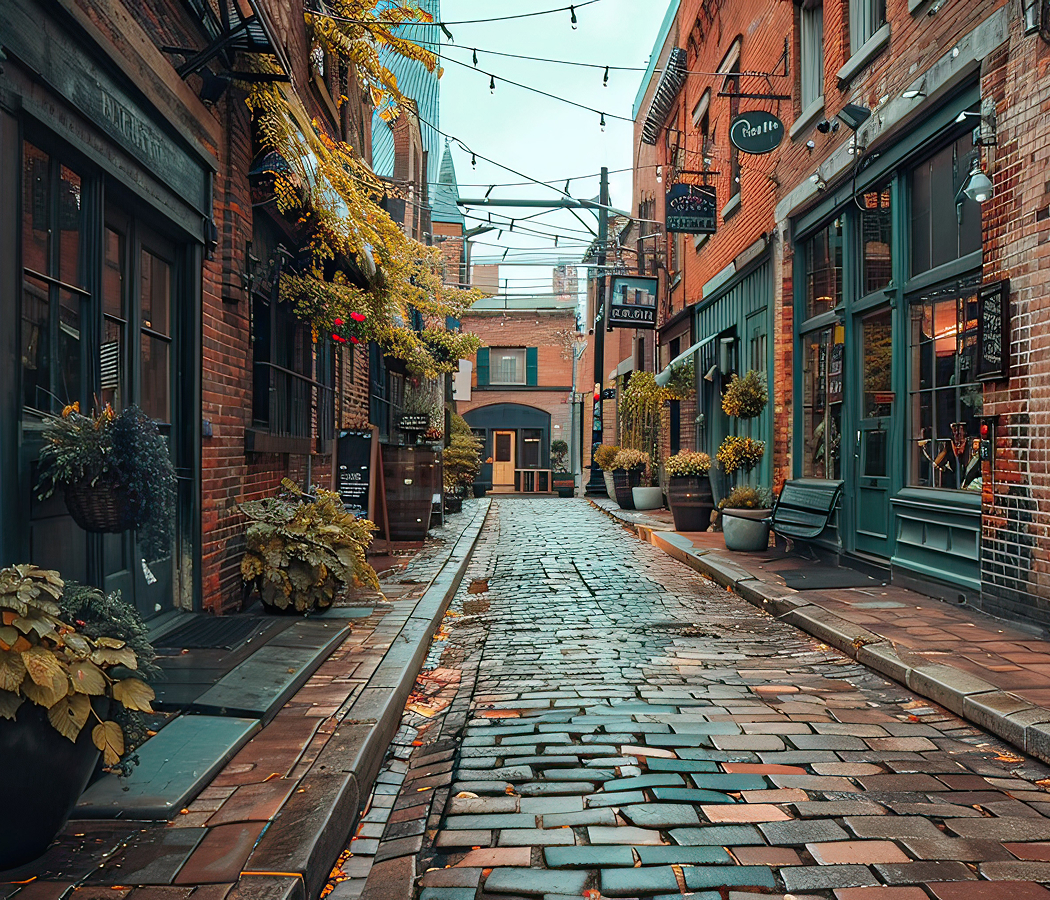
Dublin occupies a coastal plain where the River Liffey divides the central city before entering Dublin Bay, and its most compelling places to stay follow a sequence of historic squares, commercial streets, and regenerated waterfront districts. South of the river, the Georgian quarter surrounding St. Stephen's Green presents the capital's most distinguished architectural setting. Terraced brick townhouses, elaborate fanlights, wrought-iron railings, and carefully proportioned doorways frame landscaped squares and broad residential streets. Luxury properties occupy prominent corners overlooking the park, and intimate boutique establishments inhabit restored Georgian residences nearby. Eastward, Merrion Square offers a quieter environment of formal gardens and distinguished eighteenth-century façades, placing visitors close to major museums and government institutions. The surrounding streets preserve an exceptional concentration of historic domestic architecture, with smaller properties providing a residential atmosphere near established restaurants. Westward, the area around Grafton Street combines pedestrian shopping, lively cafés, and substantial commercial buildings. Hotels here provide convenient access to cultural venues and the adjoining historic center. Temple Bar occupies the narrow streets between Dame Street and the Liffey, where cobbled lanes, traditional brick buildings, and intimate courtyards create a densely textured entertainment district. Smaller hotels place guests among pubs, galleries, and music venues, with an energetic evening atmosphere. Across the river, the O'Connell Street corridor presents a grander commercial landscape through broad avenues, expansive civic buildings, and substantial urban hotels. The surrounding streets provide convenient connections to railway stations and the capital's principal shopping districts. Eastward, the Docklands have developed into a striking contemporary quarter where former port facilities and industrial sites accommodate glass-fronted offices, residential towers, and modern hospitality properties. Hotels around Grand Canal Dock overlook sheltered water basins, pedestrian bridges, and public plazas, creating a setting closely associated with Dublin's international business community. South of the center, Ballsbridge offers an established residential environment through substantial Victorian houses, leafy avenues, and landscaped embassy grounds. Its larger hotels provide generous public spaces and convenient access to conference facilities. Nearby Donnybrook extends this quieter character through traditional village streets and distinguished residential properties. Farther south, Ranelagh offers intimate neighborhood accommodation among redbrick terraces, independent restaurants, and established local shops. Along the coast, Sandymount presents a different perspective on the capital through low-rise residential streets, seaside promenades, and expansive views across Dublin Bay. North of the city, Clontarf combines waterfront hotels with mature residential neighborhoods and access to the broad recreational landscape of St. Anne's Park. Dublin's varied settings bring together Georgian townhouses, lively central streets, contemporary waterfront architecture, and coastal retreats within a compact metropolitan landscape. Foresyte may earn a commission when you book.
Foresyte Travel's top five choices.
5. The Fitzwilliam Hotel Dublin
The Fitzwilliam Hotel Dublin occupies the northern edge of St. Stephen's Green, placing the property at the junction between the historic park, Grafton Street, and Dublin's principal southside commercial district. The hotel opened in 1998 as part of a late twentieth-century redevelopment that inserted contemporary hospitality architecture into a streetscape dominated by Georgian and Victorian fabric. Sir Terence Conran's design practice shaped the original interiors, bringing the influential British designer's modernist approach to a prominent Dublin address. Subsequent redesigns preserved the property's design-led character while strengthening its relationship with the park immediately outside. The Fitzwilliam represents a modern architectural layer within the centuries-long evolution of St. Stephen's Green from private Georgian square to the civic center of Dublin's southside.
4. Anantara The Marker Dublin
Anantara The Marker Dublin occupies Grand Canal Square within the Docklands, an area transformed from working port infrastructure into one of the capital's principal districts of contemporary architecture and technology companies. Manuel Aires Mateus designed the building with a geometric facade inspired by the limestone formations of the Burren, translating an Irish geological reference into the architecture of the regenerated waterfront. The hotel opened as The Marker in 2013 beside Daniel Libeskind's Bord Gáis Energy Theatre, becoming part of the architectural concentration surrounding the square. Minor Hotels introduced the Anantara brand to Ireland at the property in 2023 following a substantial transformation. The Marker captures Dublin's reinvention of former dockland territory through ambitious architecture, cultural development, and twenty-first-century international investment.
3. The Westbury
The Westbury opened in 1984 immediately off Grafton Street, embedding the hotel within Dublin's most important pedestrian shopping district between Trinity College and St. Stephen's Green. The Doyle family developed the property as part of the Irish hospitality company founded by PV Doyle, whose business grew from a Dublin hotel acquired in the 1960s into an international collection. Its location beside the narrow streets of the Creative Quarter connects the property with an area long shaped by retail, theaters, restaurants, and Dublin's literary culture. The Doyle Collection subsequently emerged under the leadership of Bernie Gallagher, carrying the family enterprise into another generation of ownership. The Westbury represents the rise of a Dublin-founded hotel company through a property positioned at the commercial and cultural center of the city.
2. The Shelbourne, Autograph Collection
The Shelbourne, Autograph Collection opened in 1824 after Tipperary-born entrepreneur Martin Burke acquired adjoining houses overlooking St. Stephen's Green and created a hotel named for William Petty, Earl of Shelburne. Its rooms entered Irish political history in 1922 when members of the committee drafting the Constitution of the Irish Free State worked inside the hotel during the formation of the new state. The property had already become deeply embedded in Dublin social and political life through the nineteenth century as St. Stephen's Green evolved into one of the capital's most prestigious addresses. Successive expansions gave The Shelbourne its commanding red-brick presence along the northern side of the square. The Shelbourne connects two centuries of Dublin hospitality with the political events that accompanied the creation of modern Ireland.
1. The Merrion Hotel Dublin
The Merrion Hotel Dublin occupies four adjoining Georgian townhouses on Upper Merrion Street opposite Government Buildings, placing the hotel within the eighteenth-century district built around Dublin's expanding political and aristocratic center. The houses date from the 1760s, and one was the birthplace of Arthur Wellesley, the future Duke of Wellington, whose military and political career culminated in victory at Waterloo and two terms as British prime minister. The buildings were restored and combined with a purpose-built garden wing before The Merrion opened in 1997. Its collection of nineteenth- and twentieth-century Irish art includes works by figures central to the country's artistic development, integrating the collection throughout the restored domestic interiors. The Merrion unites Georgian Dublin, Irish art, and the governmental geography of the modern capital within one historically layered property.
Where your story begins.
Foresyte Travel reveals places that feel extraordinary long before you arrive.
Enjoy editorial crafted for luxury travelers.
Foresyte may earn a commission when you book.