Top places to stay in Los Angeles, California.
Los Angeles forged its distinctive hospitality character through the expansion of Southern California commerce, the rise of Hollywood, and the growing appeal of Pacific Coast leisure, establishing an international reputation for cinematic glamour, architectural innovation, and luxurious outdoor living. During the Spanish colonial period, the settlement founded in 1781 developed around an agricultural economy supported by ranching, regional trade, and the mission system. Travelers depended upon private households, ranchos, and modest commercial lodging as the pueblo expanded into a regional trading center. American annexation following the Mexican-American War and the subsequent California Gold Rush strengthened commercial connections between Los Angeles and the expanding economy of the American West. The arrival of the Southern Pacific Railroad in 1876 established a direct connection with the national rail network, encouraging population growth and investment in urban accommodation. The completion of the Santa Fe Railway connection in 1885 intensified competition between railroad companies, producing substantial reductions in passenger fares and accelerating the Southern California land boom of the 1880s. Los Angeles became an increasingly important destination for health seekers, winter visitors, and affluent travelers attracted by the region's mild climate and promotional campaigns emphasizing outdoor recreation. The establishment of the Los Angeles Chamber of Commerce in 1888 contributed to the organized promotion of Southern California as a destination for tourism, settlement, and investment. Resort development expanded across the surrounding coastal communities, with Santa Monica, Venice, and other beach settlements acquiring hotels, bathhouses, amusement facilities, and recreational infrastructure. The arrival of the motion-picture industry during the early twentieth century fundamentally transformed the city's international reputation. Film companies established production facilities in Hollywood and neighboring communities, attracted by reliable sunlight, varied landscapes, and access to substantial urban labor markets. The emergence of the studio system created demand for accommodation serving actors, directors, producers, financiers, and visiting industry executives. The Hollywood Roosevelt opened in 1927 along Hollywood Boulevard, becoming closely associated with the entertainment industry's expanding social and professional institutions. Beverly Hills developed into another important center of hospitality as film personalities and wealthy residents established substantial estates west of Hollywood. The Beverly Hills Hotel, opened in 1912 before the city's incorporation, became a prominent gathering place for the entertainment industry and contributed to the area's international reputation for luxury. The expansion of automobile ownership encouraged the development of motor courts, roadside inns, and accommodation along the city's growing network of commercial boulevards. The opening of Union Station in 1939 strengthened Downtown's position as a major transportation gateway, connecting regional and transcontinental rail services within a grand architectural complex. During the Second World War, the growth of aerospace manufacturing, military installations, and industrial production brought substantial population increases and new demand for temporary accommodation. Postwar suburban expansion and the construction of extensive freeway infrastructure transformed the geographic organization of tourism, encouraging hospitality development beyond the historic downtown core. The opening of Disneyland in Anaheim in 1955 established a major new center of family tourism within the broader Southern California region, contributing to the expansion of regional accommodation markets. Los Angeles International Airport developed into one of the principal aviation gateways of the Pacific Rim, supporting international business travel, entertainment tourism, and large-scale convention activity. The city's hospitality economy expanded further through the growth of television production, international trade, professional sports, and the development of cultural institutions attracting visitors from across the world. Preparations for the 1984 Summer Olympics encouraged investment in transportation, visitor services, and accommodation infrastructure, strengthening Los Angeles's international profile. The subsequent expansion of luxury hospitality in Beverly Hills, West Hollywood, Santa Monica, and downtown reflected the city's increasingly diverse commercial geography. Los Angeles developed an accommodation industry shaped by the intersection of entertainment, coastal leisure, international commerce, and the sprawling metropolitan landscape of Southern California.
Los Angeles's accommodation geography reflects the city's extraordinary territorial expansion, decentralized urban structure, varied topography, and architectural traditions ranging from Spanish Colonial Revival to midcentury modernism and contemporary high-rise construction. Downtown preserves the historic commercial center, where the Financial District, Historic Core, and surrounding neighborhoods contain substantial early twentieth-century buildings associated with the city's emergence as a major American metropolis. Broadway retains an exceptional concentration of historic theaters and commercial architecture, including elaborate façades influenced by Beaux-Arts, Spanish Baroque, and Art Deco design. The surrounding streets contain former department stores, office buildings, and commercial properties adapted to contemporary accommodation and entertainment uses. The Biltmore Hotel, completed in 1923 and designed by Schultze & Weaver, established an influential example of grand metropolitan hospitality through its grand Renaissance Revival architecture and richly decorated public interiors. The neighboring Financial District developed through successive generations of commercial construction, incorporating substantial office towers, modernist buildings, and contemporary residential developments. Bunker Hill underwent extensive redevelopment during the second half of the twentieth century, replacing much of its earlier Victorian residential landscape with corporate towers, cultural institutions, and large-scale urban infrastructure. The district's elevated terrain and grand architecture establish a distinct accommodation environment overlooking the historic downtown street grid. The Arts District occupies former industrial territory east of downtown, where brick warehouses, manufacturing buildings, and converted commercial properties create a contrasting architectural setting. Hollywood developed around the entertainment industry's early production centers, with Hollywood Boulevard and Sunset Boulevard establishing important commercial corridors associated with theaters, restaurants, nightlife, and accommodation. The district retains architectural examples from the 1920s and 1930s, including Art Deco buildings, Spanish Colonial Revival structures, and substantial commercial properties reflecting the prosperity of the studio era. West Hollywood occupies a separate municipality between Hollywood and Beverly Hills, with Sunset Boulevard's elevated western section becoming internationally associated with entertainment venues, recording studios, restaurants, and luxury hospitality. The Sunset Strip's position along the southern foothills of the Hollywood Hills creates distinctive relationships between accommodation, hillside residential neighborhoods, and expansive views across the Los Angeles Basin. Beverly Hills developed through carefully planned residential streets, landscaped commercial districts, and substantial private estates, acquiring an architectural character associated with Mediterranean Revival residences, elegant shopping streets, and low-rise luxury development. Rodeo Drive and the surrounding Golden Triangle form a concentrated commercial environment distinguished by carefully maintained streetscapes, specialist retailers, and architecture associated with international fashion. Century City occupies former land belonging to the 20th Century Fox studio, transformed during the 1960s into a modern commercial district incorporating office towers, landscaped plazas, and large-scale mixed-use development. Its high-rise architecture and proximity to Beverly Hills establish an accommodation environment closely associated with corporate travel and the entertainment industry. Westwood developed around the University of California, Los Angeles, combining institutional architecture, residential neighborhoods, and commercial streets serving the surrounding academic community. Farther west, Brentwood and Bel Air occupy affluent residential terrain approaching the Santa Monica Mountains, where landscaped properties, winding roads, and substantial private estates create a quieter architectural setting. Santa Monica presents a fundamentally different accommodation geography through its relationship with the Pacific Ocean, coastal bluffs, and established beachfront recreation. Ocean Avenue follows the elevated coastline above the beach, with substantial hotels and residential buildings positioned to overlook Santa Monica Bay. The city's downtown streets combine historic commercial buildings, contemporary retail development, and pedestrian-oriented public spaces extending toward the Santa Monica Pier. Venice developed through the ambitions of developer Abbot Kinney, whose early twentieth-century resort community incorporated artificial canals, amusement facilities, and architectural references to the Italian city. The surviving canals, beachside commercial streets, and eclectic residential architecture distinguish Venice from the more formal coastal planning of Santa Monica. Marina Del Rey occupies an extensive recreational harbor constructed during the twentieth century, supporting waterfront accommodation, boating facilities, and contemporary residential development. South of the airport, Manhattan Beach and Hermosa Beach developed as coastal communities characterized by pedestrian piers, compact commercial centers, and residential streets descending toward the Pacific. Pasadena, northeast of Central Los Angeles, preserves a distinctive architectural heritage associated with the Arts and Crafts movement, including substantial residences, historic commercial districts, and buildings influenced by California's early twentieth-century architectural reformers. The city's accommodation geography extends across grand downtown architecture, Hollywood's entertainment corridors, Beverly Hills's landscaped luxury districts, modern commercial centers, and coastal communities whose buildings respond directly to the geography of the Pacific shoreline. Foresyte may earn a commission when you book.
Foresyte Travel's top five choices.
5. The Maybourne Beverly Hills
The Maybourne Beverly Hills brought one of London's most established hotel groups to the United States when Maybourne Hotel Group assumed the former Montage Beverly Hills and reopened it under the Maybourne name in 2020. The acquisition placed the Beverly Hills property within the same hotel lineage as Claridge's, The Connaught and The Berkeley, making the Golden Triangle address Maybourne's first North American property. André Fu subsequently reshaped major interiors through commissions including The Maybourne Bar, extending the group's design-led approach into a distinctly Californian setting overlooking Beverly Cañon Gardens. The property represents a consequential transatlantic expansion for a company whose institutional history had previously been concentrated around three defining London hotels.
4. Waldorf Astoria Beverly Hills
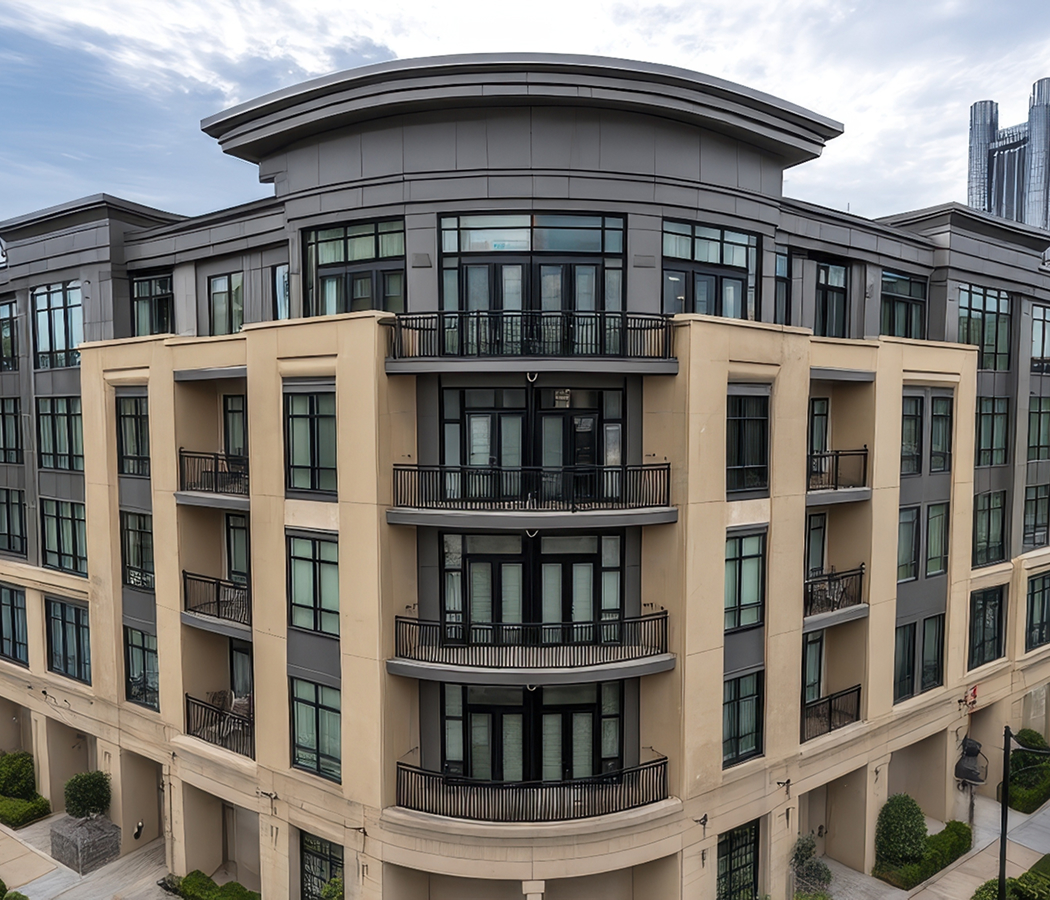
Waldorf Astoria Beverly Hills emerged from the redevelopment of the western gateway to Beverly Hills as a purpose-built twelve-story hotel adjoining the historic Beverly Hilton. Gensler and Pierre-Yves Rochon shaped a building defined by a curving white-stone façade, expansive glazing and projecting terraces that break the mass into a sequence of horizontal layers above Wilshire and Santa Monica boulevards. The 2017 debut brought Hilton's Waldorf Astoria flag to the West Coast for the first time, extending the New York-born hotel lineage into one of Southern California's most valuable hospitality districts. The building joined a midcentury hotel site established by Conrad Hilton with a twenty-first-century property carrying the name of the hotel he famously described as “The Greatest of Them All.”
3. The Peninsula Beverly Hills
The Peninsula Beverly Hills marked a major American expansion for Hongkong and Shanghai Hotels when it opened in 1991 as the Peninsula group's second United States property after New York. The hotel deliberately began operations at 8:08 a.m. on August 8, selecting the sequence of eights for the number's association with prosperity in Chinese culture and tying the Beverly Hills debut directly to the heritage of its Hong Kong parent company. Forbes Five-Star and AAA Five Diamond recognition followed from the hotel's first year, beginning an uninterrupted sequence of both distinctions that has extended across more than three decades. That longevity places The Peninsula Beverly Hills among the rare American hotels whose institutional reputation has persisted continuously from its opening generation into the present century.
2. The Beverly Hills Hotel
The Beverly Hills Hotel predates Beverly Hills itself, opening in 1912 after Margaret and Stanley Anderson developed Elmer Grey's Mediterranean Revival building to attract prospective residents to the emerging community created by the Rodeo Land and Water Company. The property became an early center of civic life before Beverly Hills incorporated in 1914, functioning as a gathering place, theater and church as surrounding residential development accelerated. Hernando Courtright's 1941 acquisition initiated another defining period, with architect Paul R. Williams reshaping major portions of the property and later creating the Crescent Wing, grand entrance and other elements that helped establish its pink-and-green architectural character. The city designated the property Beverly Hills Historic Landmark Number 1 in 2012, formally recognizing a hotel whose physical and social history reaches to the creation of Beverly Hills itself.
1. Hotel Bel-Air
Hotel Bel-Air occupies land integral to the creation of Bel-Air itself, beginning with oil entrepreneur Alphonzo Bell's acquisition of hundreds of acres in West Los Angeles and the estate-planning headquarters he constructed to direct development of the new community. Texas hotelier Joseph Drown acquired the property in 1946 and commissioned architect Burton Schutt to transform Bell's buildings and surrounding canyon landscape into Hotel Bel-Air, preserving the mission-style structure within an estate organized around gardens and the property's lake. Grace Kelly, Judy Garland, Audrey Hepburn, Elizabeth Taylor and Marilyn Monroe became part of its Hollywood history, with Monroe completing her final Vogue photographic session at the hotel weeks before her death in 1962. Dorchester Collection added Hotel Bel-Air to its portfolio in 2008, followed by a two-year architectural and interior transformation involving Alexandra Champalimaud and Rockwell Group that carried Bell and Drown's secluded canyon property into its next major chapter.
Where your story begins.
Foresyte Travel reveals places that feel extraordinary long before you arrive.
Enjoy editorial crafted for luxury travelers.
Foresyte may earn a commission when you book.