Fun facts about Los Angeles, California.
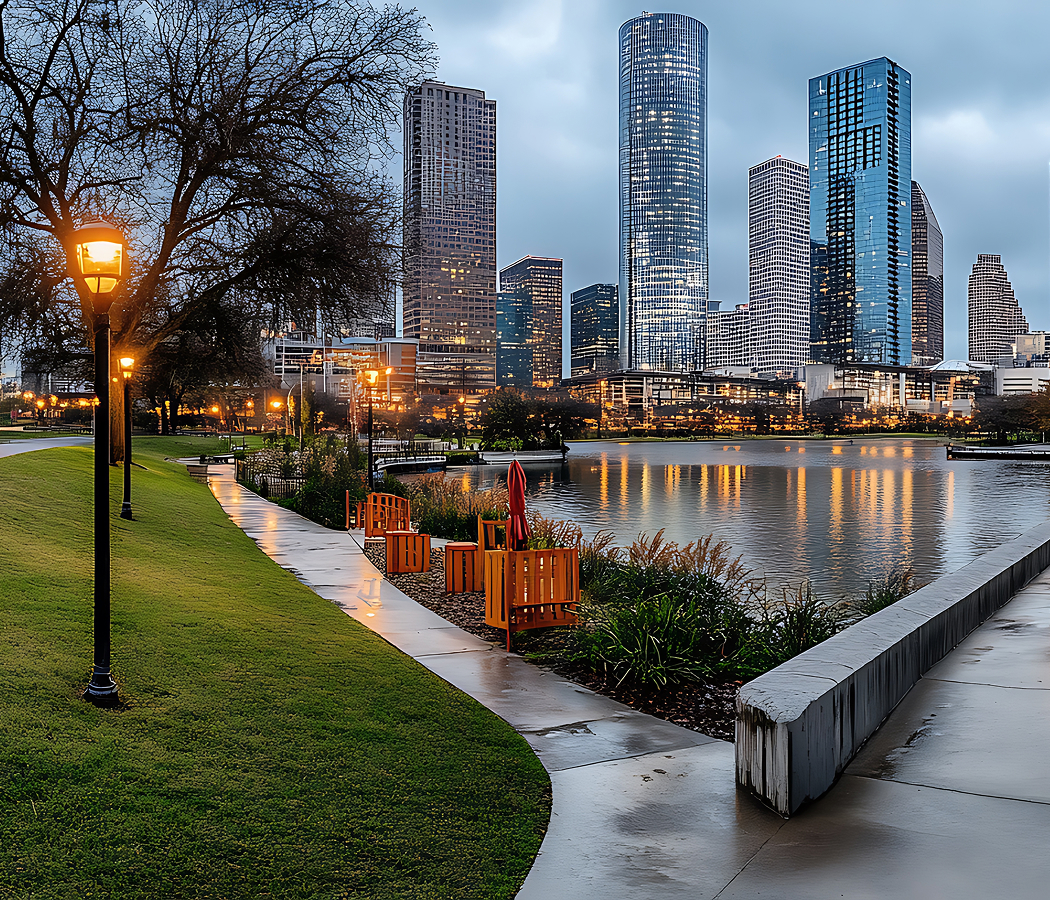
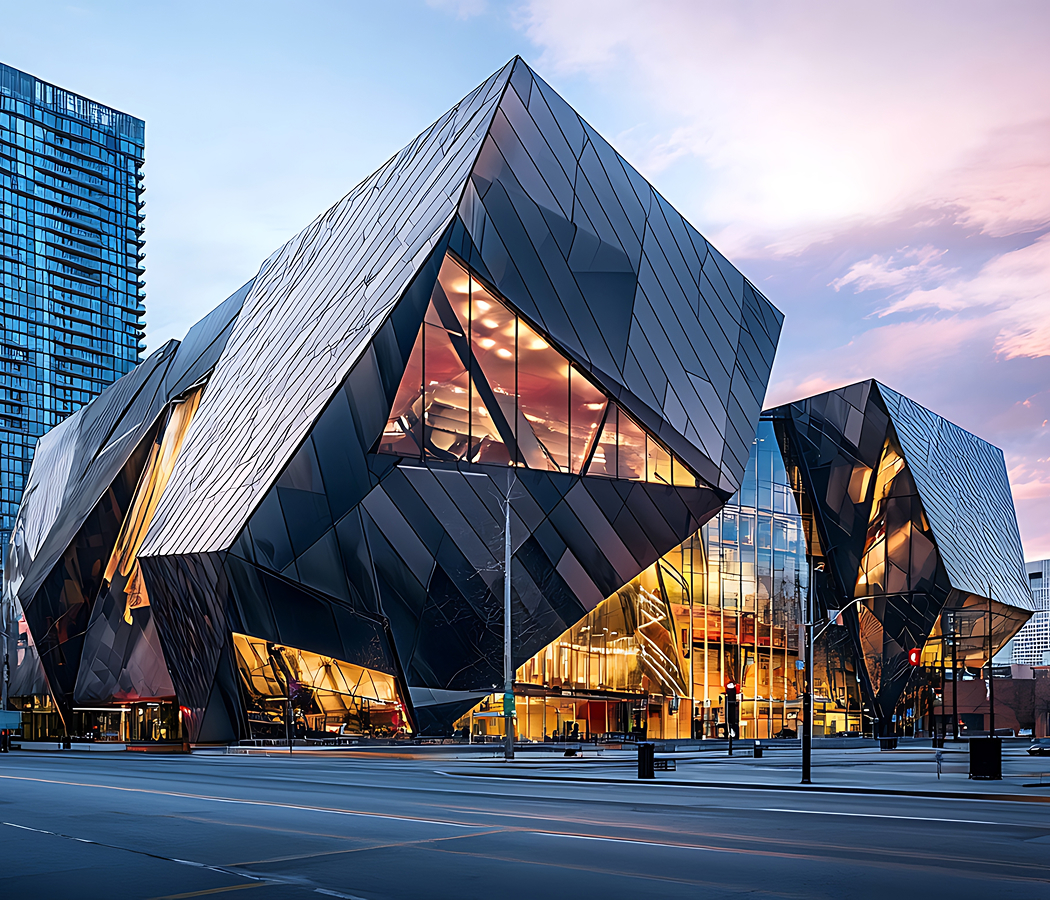
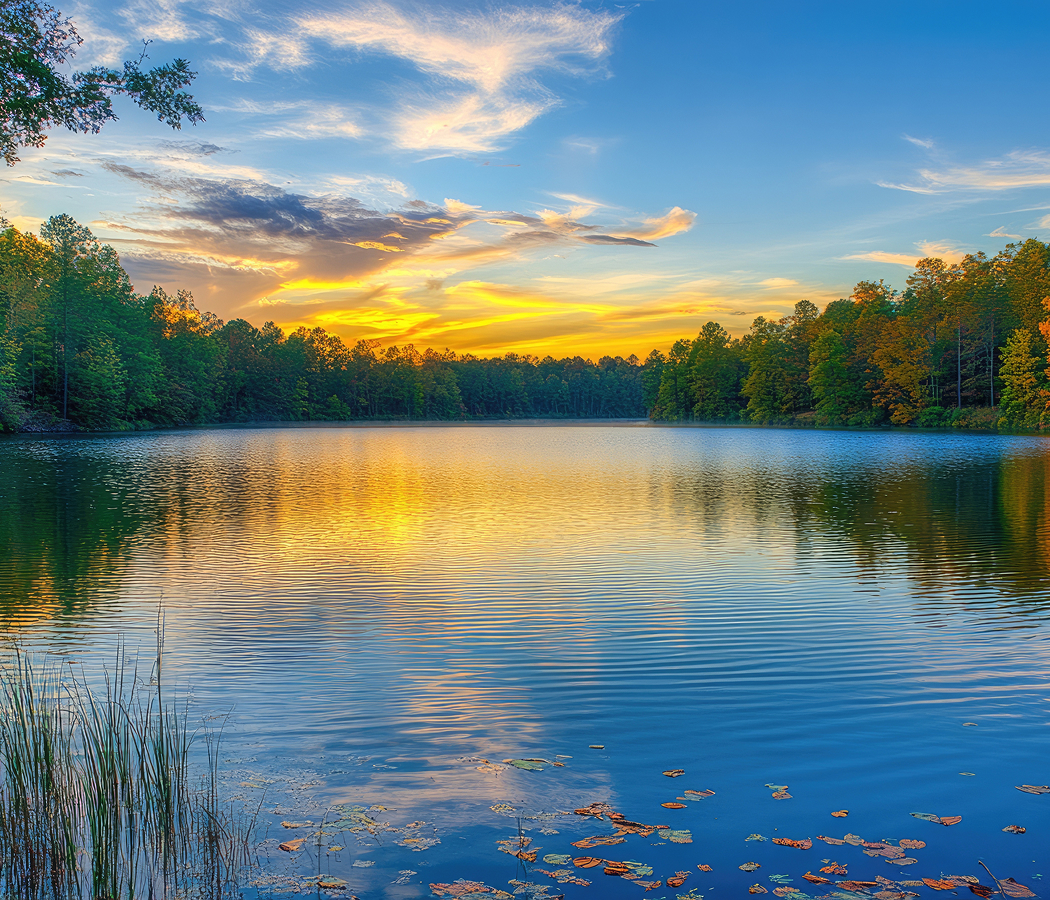
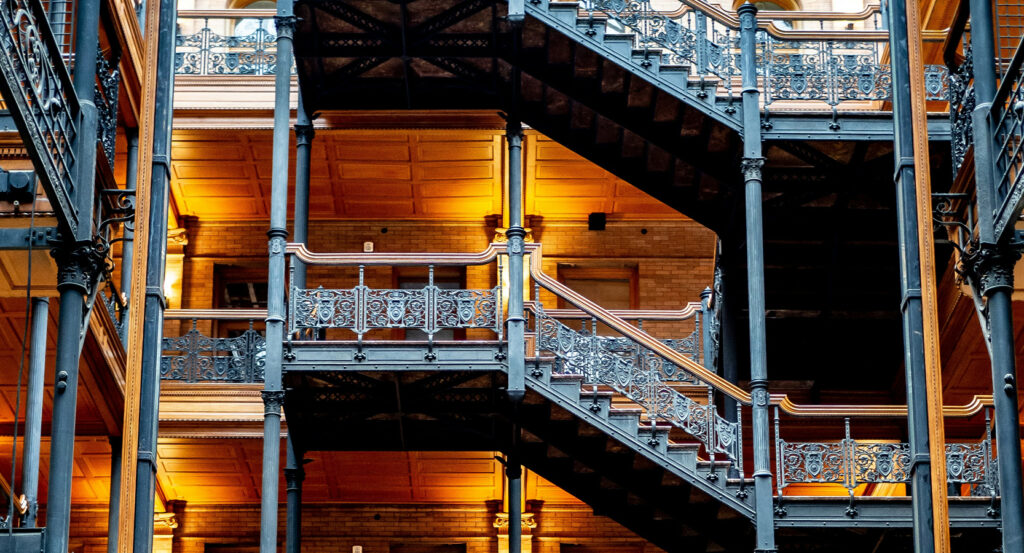
Los Angeles unfolds across a vast coastal basin framed by the Pacific Ocean, the Santa Monica Mountains, and the San Gabriel Mountains, producing an urban landscape where grand civic buildings, experimental residential architecture, historic neighborhoods, and protected natural environments reflect distinct periods of metropolitan development. Downtown preserves the city's early commercial geography around El Pueblo de Los Ángeles, where the historic Plaza, surviving adobe structures, and surrounding streets connect contemporary civic life with the original settlement. The Bradbury Building, completed in 1893, contains a celebrated five-story interior court distinguished by ornamental ironwork, open-cage elevators, marble staircases, and an immense glazed skylight. Nearby, the Eastern Columbia Building introduced a striking expression of Art Deco design in 1930 through its turquoise terra-cotta exterior, geometric ornamentation, and grand clock tower. Los Angeles City Hall, completed in 1928, established another architectural landmark through its distinctive tower and synthesis of classical and modern design influences. Farther northwest, the Hollywood Hills preserve the relationship between residential development and the entertainment industry, with the Hollywood Sign standing above the city since its original installation as a real estate advertisement in 1923. Griffith Observatory, completed in 1935, combines Art Deco architecture with public astronomy, its terraces overlooking the dense metropolitan basin and the surrounding mountain ranges. The residential landscapes of Beverly Hills developed through the prosperity of Southern California's entertainment economy, incorporating Mediterranean Revival estates, landscaped avenues, and influential examples of twentieth-century domestic design. Along the coast, Santa Monica preserves a historic tradition of beachfront recreation through its pier, public promenades, and oceanfront neighborhoods. Venice introduces a different architectural inheritance through the surviving canals of Abbot Kinney's 1905 resort development, whose waterways reflected an ambitious interpretation of Italian urbanism along the California shoreline. The Getty Center, designed by Richard Meier and opened in 1997, crowns a hilltop in the Santa Monica Mountains through a composition of travertine buildings, landscaped gardens, and expansive metropolitan views. Downtown's Walt Disney Concert Hall, designed by Frank Gehry and completed in 2003, established an influential landmark through its sculptural stainless-steel exterior and sophisticated concert-hall acoustics. The city's architectural experimentation also extends into its residential neighborhoods through the Case Study House program, launched in 1945, which encouraged innovative approaches to postwar domestic design through architects including Pierre Koenig, Richard Neutra, and Charles and Ray Eames. Beyond the developed districts, the Santa Monica Mountains preserve coastal sage scrub, chaparral ecosystems, and extensive canyon landscapes within the metropolitan region. These contrasting settings reveal the geographic foundations of a city whose architectural character developed through the interaction of Pacific coastal settlement, industrial prosperity, cinematic imagination, and the environmental conditions of Southern California.
Californian cultural innovation found one of its most influential centers in Los Angeles, where immigrant communities, independent artists, recording studios, and entertainment entrepreneurs reshaped the international languages of film, music, cuisine, and contemporary design. The motion picture industry transformed popular storytelling through the development of feature-length filmmaking, synchronized sound, advanced cinematography, and sophisticated visual effects, establishing production techniques that influenced cinema throughout the world. Walt Disney founded his first Hollywood animation studio with his brother Roy in 1923, contributing to the emergence of an entertainment enterprise that profoundly altered American animation and family entertainment. The Academy Awards, first presented at the Hollywood Roosevelt Hotel in 1929, subsequently became an internationally recognized institution celebrating cinematic achievement. Los Angeles also developed a remarkable musical inheritance through the emergence of West Coast jazz, surf rock, psychedelic rock, and influential recording traditions associated with the city's studios and performance venues. The development of the Laurel Canyon music community during the 1960s and 1970s brought together artists including Joni Mitchell, Carole King, and members of Crosby, Stills & Nash, contributing to a distinctive period of American songwriting and popular music. The emergence of N.W.A in Compton during the 1980s helped establish West Coast hip-hop as a major force in international music, bringing the experiences of South Los Angeles into global cultural consciousness. The city's visual arts communities acquired comparable influence through the Light and Space movement, whose artists explored perception, illumination, and the physical experience of architectural environments. Figures including James Turrell, Robert Irwin, and Doug Wheeler developed approaches that connected Southern California's distinctive light conditions with experimental sculpture and installation art. The Los Angeles County Museum of Art became an independent institution in 1961, strengthening the city's position within international artistic scholarship and exhibition. The Broad subsequently expanded Downtown's cultural landscape through its collection of contemporary art and distinctive architectural design. Los Angeles's culinary character developed through the contributions of Mexican, Chinese, Japanese, Korean, Armenian, Thai, and numerous other immigrant communities, whose restaurants and food businesses established one of America's most diverse metropolitan dining cultures. The emergence of California cuisine during the 1970s and 1980s encouraged influential approaches emphasizing seasonal produce, regional agriculture, and inventive combinations of international culinary techniques. Southern California's streetwear and skateboarding communities introduced another influential creative movement, connecting independent apparel design, youth culture, music, and the international popularity of skate fashion. Los Angeles ultimately brings cinematic storytelling, musical experimentation, artistic innovation, and the cultural achievements of successive immigrant generations into a metropolita character whose influence extends across the creative industries of the modern world.
Five fascinations.
5. Los Angeles once had one of the world's largest electric railway systems.
Long before freeways became inseparable from Los Angeles, electric trains connected communities across the region. Henry E. Huntington's Pacific Electric Railway developed an enormous network of distinctive Red Cars that linked Downtown with destinations stretching from the San Fernando Valley to San Bernardino and the Pacific coast. At its peak, the system operated across more than 1,000 miles of track. Its eventual disappearance helped produce one of Los Angeles' great historical paradoxes: a metropolis now synonymous with automobile culture once possessed an extraordinarily extensive electric interurban railway.
4. The Hollywood Sign originally advertised a real-estate development.
The letters overlooking Los Angeles were never conceived as a permanent monument to the film industry. Erected in 1923, the original sign read HOLLYWOODLAND and promoted a residential development in the hills below. Thousands of electric bulbs illuminated the enormous advertisement at night, turning a temporary marketing device into an increasingly recognizable landmark. The final four letters disappeared during a 1949 rehabilitation, leaving HOLLYWOOD behind. A commercial billboard had evolved into the defining visual symbol of an industry, a neighborhood, and eventually Los Angeles itself.
3. Los Angeles moved an entire generation of Victorian houses to save them.
During the redevelopment of Bunker Hill, historic buildings faced demolition as the formerly residential district was transformed. Preservationist Kenneth Ross founded the Cultural Heritage Foundation and helped relocate threatened structures to what became Heritage Square Museum in Montecito Heights. Beginning in the late 1960s, Victorian-era houses and other historic buildings were physically transported from locations around Los Angeles and assembled into a preservation complex. The collection captures an unusual chapter in the city's relationship with its past: architecture survived not because the surrounding neighborhood remained intact, but because Los Angeles literally moved buildings out of the path of redevelopment.
2. Los Angeles built an aqueduct more than 200 miles long to transform its future.
The Los Angeles Aqueduct began carrying water from the Owens Valley to Los Angeles in 1913 after one of the most ambitious municipal engineering projects of its era. Engineer William Mulholland directed a gravity-fed system extending more than 200 miles across mountains and desert, dramatically expanding the water supply available to the growing city. The project helped enable Los Angeles' twentieth-century expansion, yet its diversion of Owens Valley water produced profound environmental and political consequences that endured for generations. Few pieces of infrastructure have shaped both the physical growth and historical controversies of Los Angeles so profoundly.
1. The Getty Center rides on hundreds of seismic isolators.
Richard Meier's Getty Center occupies a dramatic hilltop above the Sepulveda Pass in one of America's most seismically active metropolitan regions. Beneath the complex, an extensive base-isolation system separates portions of the architecture from destructive ground motion during earthquakes. Hundreds of isolators allow controlled movement between the structures and their foundations, protecting buildings that contain artworks spanning centuries of human history. The engineering is largely invisible to visitors walking through the travertine plazas and galleries, making one of Los Angeles' great cultural landmarks simultaneously an enormous exercise in earthquake-resistant design.
Where your story begins.
Foresyte Travel reveals places that feel extraordinary long before you arrive.
Enjoy editorial crafted for luxury travelers.
Foresyte may earn a commission when you book.