Fun facts about Berlin, Germany.
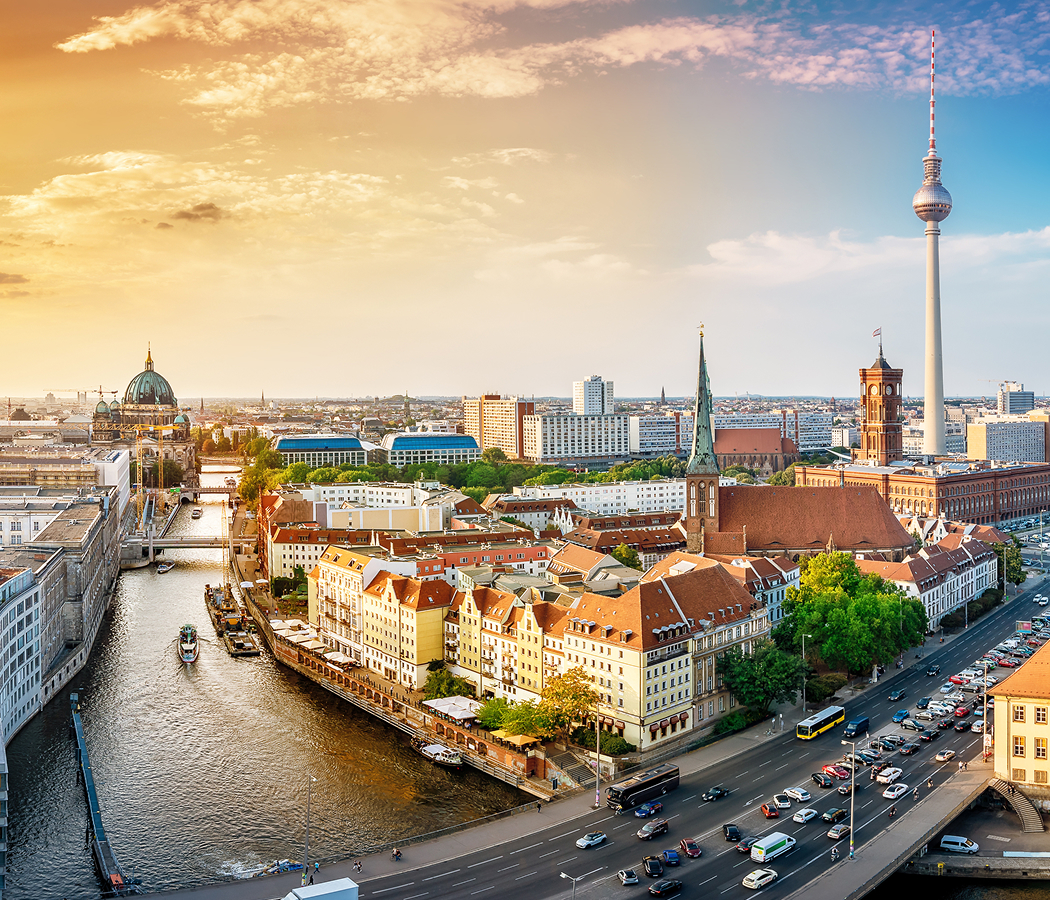
Berlin has become one of Europe's most influential cities by combining centuries of history, remarkable resilience, and a thriving creative culture into a destination unlike any other. Iconic landmarks including the Brandenburg Gate, the Reichstag Building, the Berlin Wall Memorial, and the East Side Gallery have become enduring symbols of Germany's capital, while neighborhoods such as Mitte, Kreuzberg, Prenzlauer Berg, and Charlottenburg each reveal a distinct chapter of Berlin's extraordinary story. Every district contributes to a city where Prussian grandeur, twentieth-century history, and contemporary innovation exist in remarkable harmony.
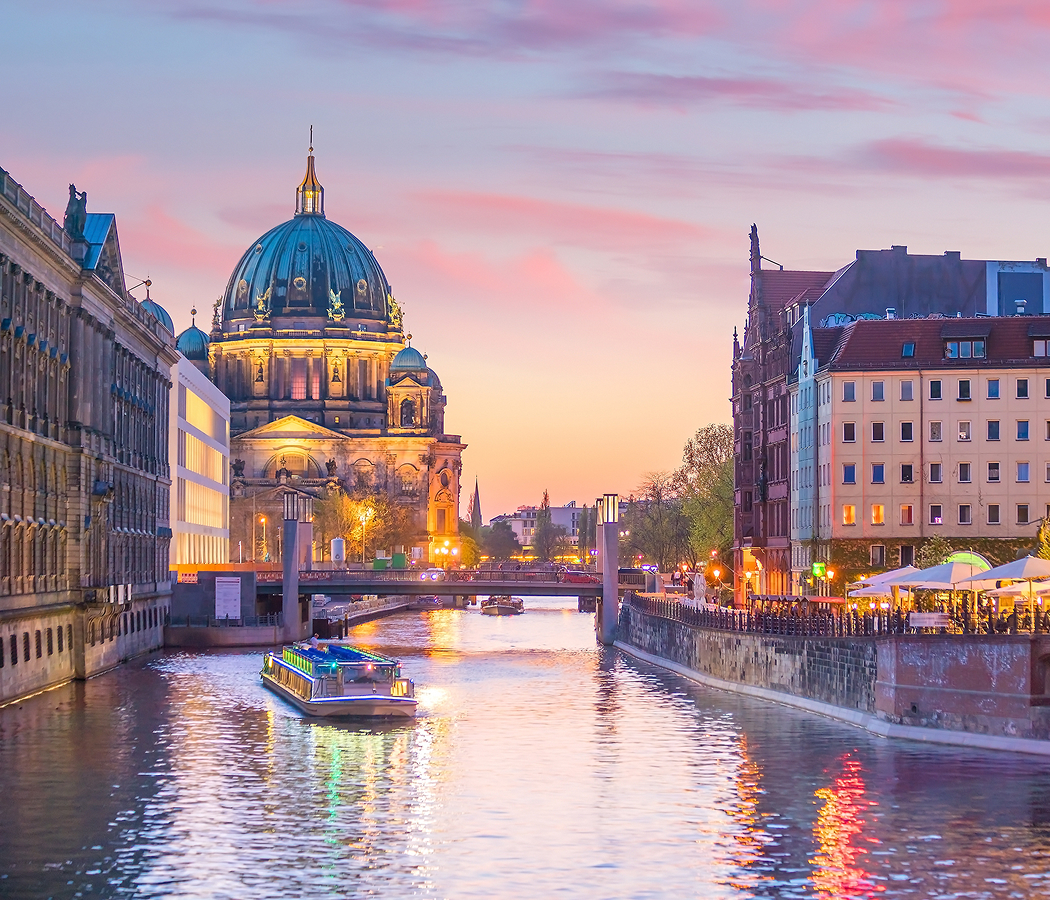
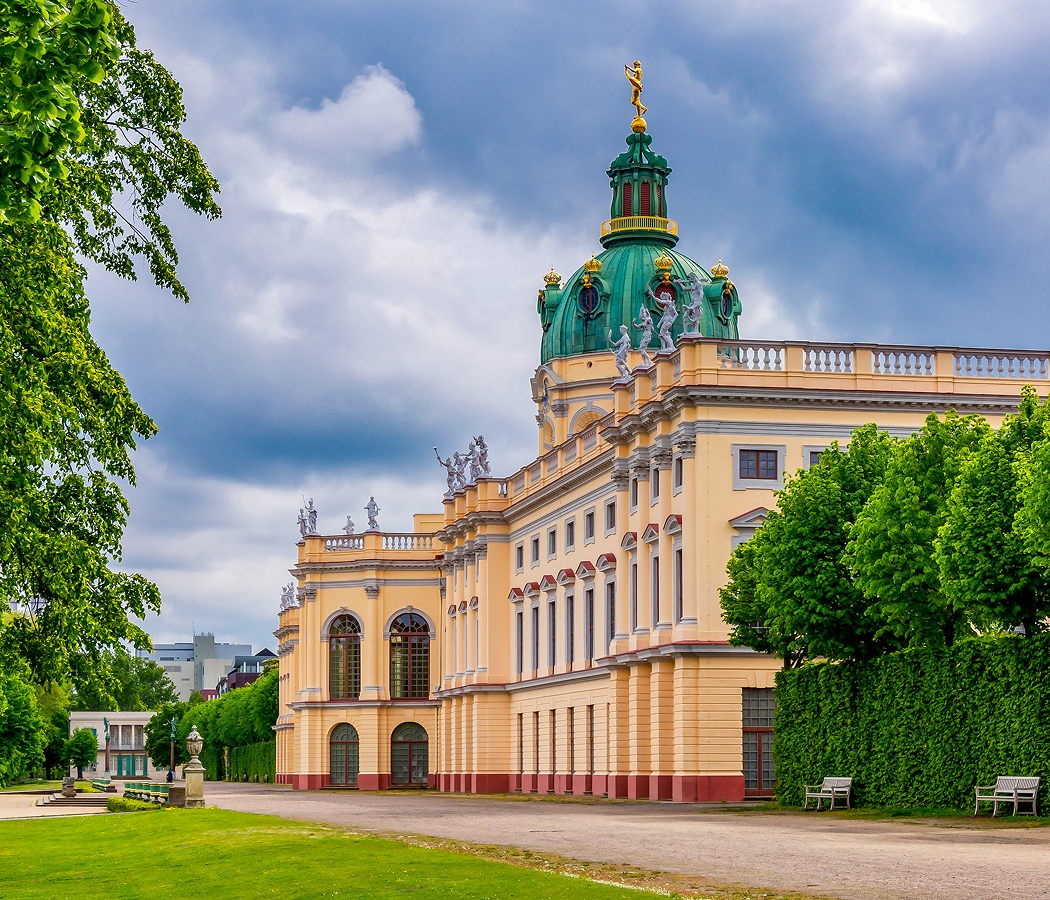
Beyond its celebrated landmarks, Berlin fascinates through an extraordinary concentration of museums, memorials, and cultural institutions. Visitors can explore the world-renowned collections of Museum Island, admire the grand Berlin Cathedral, reflect at the Memorial to the Murdered Jews of Europe, or experience panoramic city views from the Berlin TV Tower. Historic sites including Checkpoint Charlie, Charlottenburg Palace, and Gendarmenmarkt, together with expansive green spaces such as the Tiergarten, demonstrate how Berlin continually preserves its complex past while embracing one of Europe's most energetic artistic and cultural scenes.
Perhaps Berlin's greatest fascination is its remarkable ability to continually reinvent itself without forgetting the events that shaped its identity. Historic palaces stand beside bold contemporary architecture, preserved sections of the Berlin Wall coexist with innovative galleries and performance venues, and creative neighborhoods continue to redefine the city's global reputation. Whether wandering the galleries of Museum Island, cycling through the Tiergarten, exploring the cafés of Kreuzberg, or walking beneath the Brandenburg Gate, visitors quickly discover that Berlin's enduring appeal lies in its extraordinary blend of history, creativity, and constant transformation.
Five fascinations.
5. Berlin contains a museum built around the grand architecture of ancient civilizations.
The Pergamon Museum opened on Museum Island during the twentieth century to house archaeological structures whose enormous scale exceeded conventional gallery displays. Its collections became famous for architectural reconstructions including the Ishtar Gate of Babylon and the Roman Market Gate of Miletus, assembled from excavated ancient material within purpose-built halls. The museum transformed archaeological presentation by allowing visitors to encounter architecture at nearly environmental scale rather than viewing isolated objects in cases. Berlin created a museum whose own architecture became inseparable from the ancient buildings and grand fragments displayed inside it.
4. Berlin pioneered electric public transportation during the nineteenth century.
Industrialist Werner von Siemens demonstrated an electric railway in Berlin in 1879, presenting a small locomotive powered through the track at a major industrial exhibition. Two years later, Siemens opened an electric tramway in Lichterfelde, establishing one of the foundational experiments in electrically powered urban transit. Electric tram systems subsequently expanded throughout Berlin and influenced transportation development far beyond Germany. The city participated directly in the technological transition from animal- and steam-powered movement toward electric urban mobility, a transformation that ultimately reshaped streets and metropolitan transportation systems around the world.
3. Berlin's Reichstag contains a modern glass dome built above a nineteenth-century parliament.
The Reichstag opened in 1894 as the home of Germany's imperial parliament and subsequently endured fire, war, political collapse, and decades beside the divided city's border. After German reunification, architect Norman Foster transformed the damaged historic building for the Bundestag. His reconstruction introduced a vast glass dome above the parliamentary chamber, with spiraling ramps carrying visitors around a mirrored central structure that directs daylight downward. Completed in the 1990s, the intervention deliberately placed the public above the legislature. Berlin turned a building marked by Germany's turbulent political history into an architectural expression of transparency and democratic government.
2. Berlin transformed part of its former dividing wall into one of the world's largest open-air galleries.
After the Berlin Wall opened in November 1989, artists began painting a surviving section along the Spree in Friedrichshain. More than one hundred artists from numerous countries created murals across 1.3 kilometers of the former barrier in 1990, producing what became the East Side Gallery. Works including Dmitri Vrubel's depiction of Leonid Brezhnev and Erich Honecker became internationally recognizable images of the transition from division to reunification. Infrastructure originally engineered to prevent human movement became a public art monument devoted to political transformation, memory, and freedom.
1. Berlin contains a hill built substantially from the rubble of World War II.
Teufelsberg rises above western Berlin as an artificial hill created largely from millions of cubic meters of debris left by wartime destruction. Beneath the accumulated rubble lies the unfinished shell of a Nazi-era military-technical college, which postwar authorities found impractical to demolish completely. During the Cold War, the United States constructed a listening station on the summit, using its elevated position to intercept communications from the Soviet bloc. The abandoned radar domes still define the hill today. Teufelsberg compresses three radically different eras of Berlin history, Nazism, wartime devastation, and Cold War espionage, into a single manufactured landscape.
Where your story begins.
Foresyte Travel reveals places that feel extraordinary long before you arrive.
Enjoy editorial crafted for luxury travelers.
Foresyte may earn a commission when you book.