Fun facts about Ottawa, Ontario.
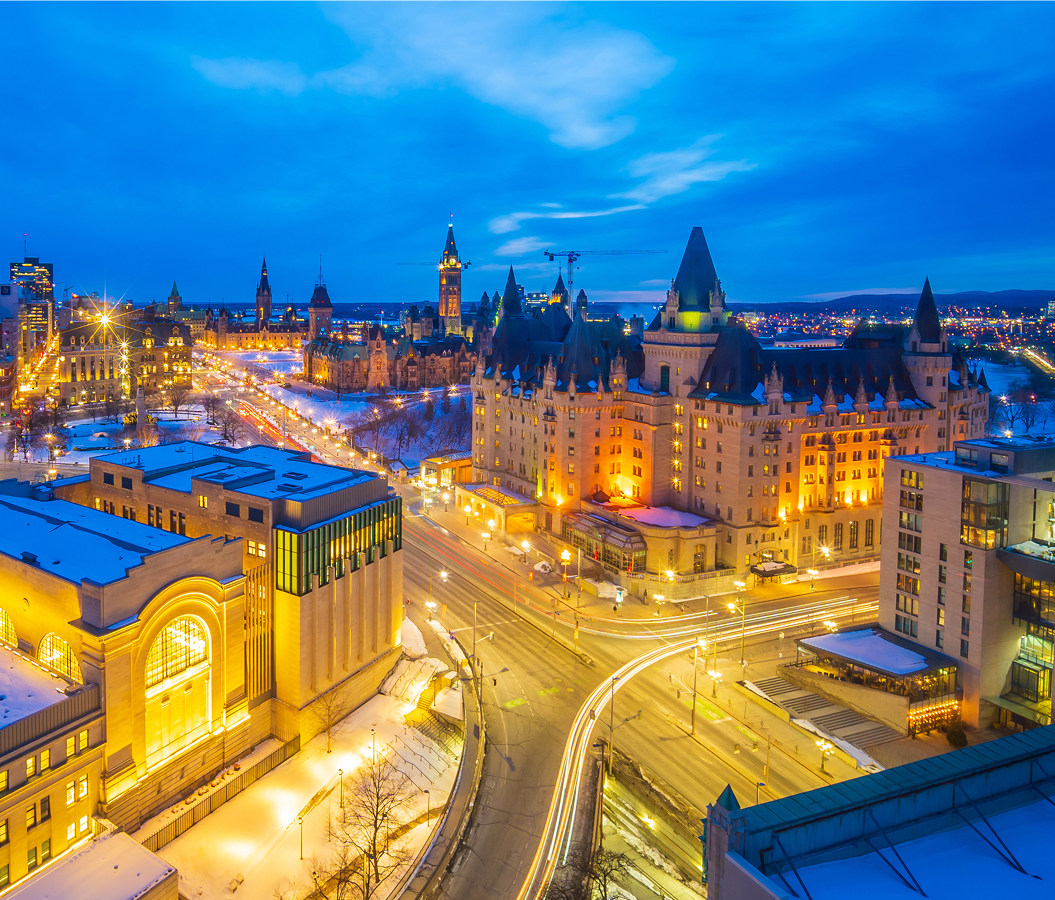
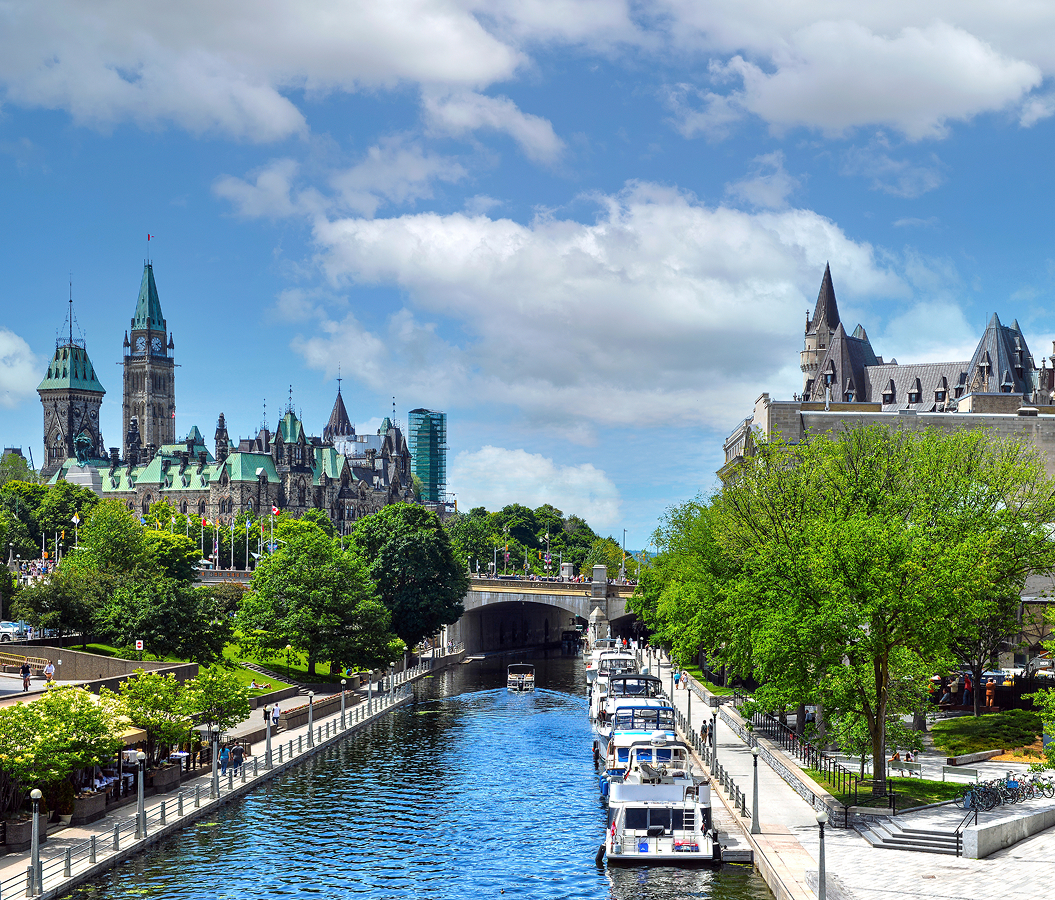
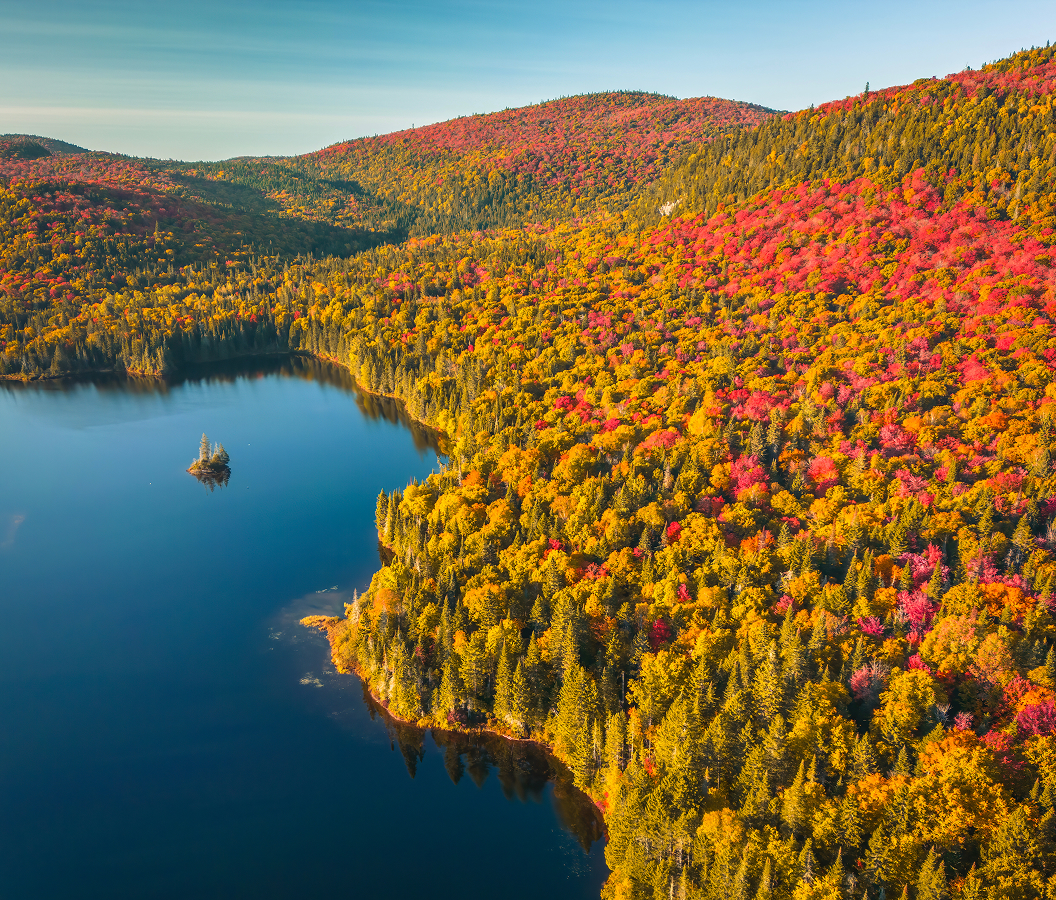
Ottawa stands on the southern bank of the Ottawa River in eastern Ontario, directly across from Gatineau, Quebec, where a network of rivers, canals, wooded parklands, and limestone escarpments shapes the national capital. Parliament Hill occupies the city's most commanding natural elevation, rising above the river through a dramatic composition of Gothic Revival buildings, landscaped grounds, and expansive public spaces. The Centre Block, designed by John Pearson and Jean-Omer Marchand following the 1916 fire, forms the architectural centerpiece, distinguished by pointed arches, elaborate stone carving, copper roofs, and the soaring Peace Tower. The East and West Blocks complete the principal parliamentary ensemble, their asymmetrical towers and intricate masonry reflecting the scenic ambitions of nineteenth-century Canadian civic architecture. Below the escarpment, the Ottawa River flows past the historic Chaudière Falls, whose industrial power supported the region's early lumber mills. East of Parliament Hill, the Rideau Canal enters the Ottawa River through a dramatic flight of eight stone locks beside the historic Château Laurier hotel. The canal extends southward through the city, passing landscaped parkways, residential neighborhoods, and recreational spaces before continuing toward Kingston. Its engineering works form part of a UNESCO World Heritage Site, and its central section becomes a celebrated skating corridor during suitable winter conditions. The Fairmont Château Laurier, opened in 1912, occupies a prominent position above the canal locks, its limestone walls, steep copper roofs, and château-style silhouette contributing to the expansive landscape surrounding Parliament Hill. Nearby, Confederation Square contains the National War Memorial, framed by major civic buildings and ceremonial streets. Wellington Street connects Parliament Hill with the Supreme Court of Canada, Library and Archives Canada, and other federal institutions, establishing a concentrated governmental corridor. Southward, Centretown contains a dense mixture of historic houses, apartment buildings, offices, and neighborhood businesses arranged along the city's nineteenth-century street grid. The Glebe extends beside the Rideau Canal through tree-lined residential streets and the commercial corridor of Bank Street, with Lansdowne Park providing a major gathering place for sports, markets, and public events. East of the canal, Sandy Hill preserves substantial nineteenth-century residences and institutional buildings associated with the University of Ottawa. The adjoining ByWard Market district occupies one of the city's oldest commercial areas, with market buildings, restaurants, galleries, and historic streets extending toward the river. The nearby Notre-Dame Cathedral Basilica presents a striking combination of Gothic Revival architecture and a richly decorated interior. Across Sussex Drive, the National Gallery of Canada occupies a modern glass-and-granite building designed by Moshe Safdie, its expansive Great Hall framing views of Parliament Hill and the Ottawa River. Major's Hill Park connects the gallery and market district through landscaped grounds overlooking the canal locks and riverfront. Farther east, New Edinburgh contains historic residential architecture, diplomatic properties, and Rideau Hall, the official residence of Canada's governor general. West of downtown, Hintonburg and Wellington West combine former industrial and working-class streets with independent businesses, galleries, and contemporary residential development. The Canadian War Museum occupies a sculptural building near LeBreton Flats, where former industrial lands are undergoing substantial redevelopment. Across the Ottawa River, Gatineau contributes another essential dimension to the capital's geography, with the Canadian Museum of History occupying a prominent waterfront site opposite Parliament Hill. Beyond the urban core, Gatineau Park extends into the forested hills of the Canadian Shield, providing lakes, hiking trails, scenic overlooks, and winter recreation within easy reach of the capital. Ottawa's physical character reflects the deliberate placement of national institutions within a river landscape whose historic waterways, expansive architecture, and extensive public green spaces give the city an unusually open civic setting.
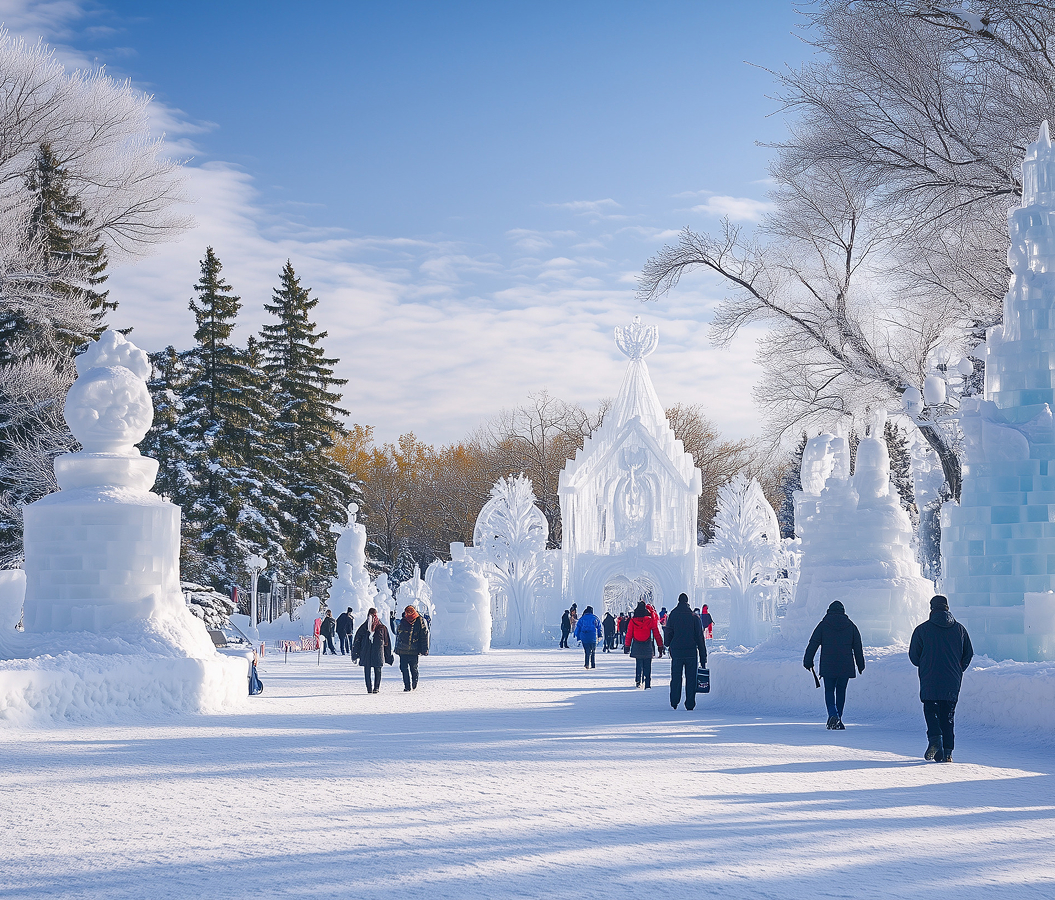
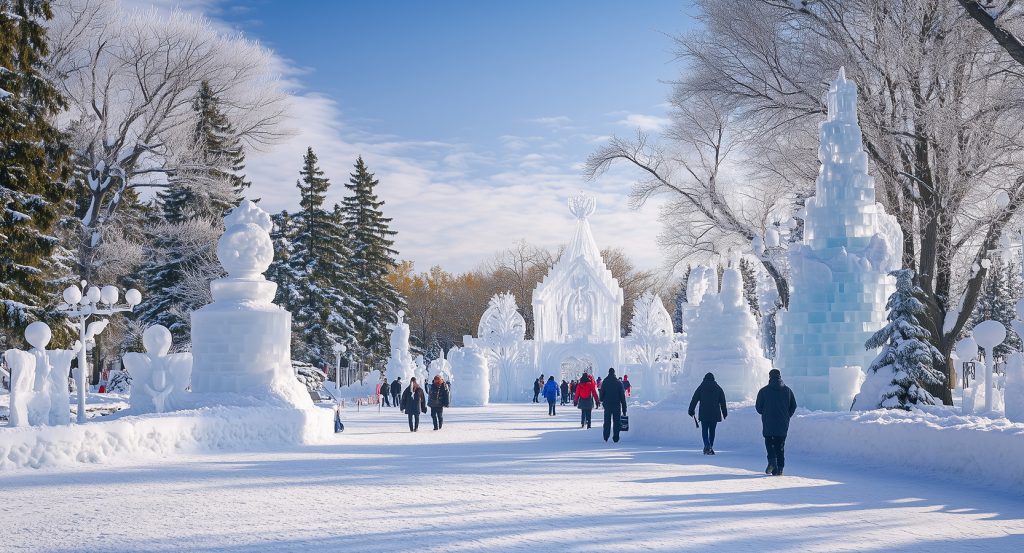
Canadian political and cultural institutions converge in Ottawa, where the traditions of parliamentary government, bilingual public life, and national commemoration shape a distinctive capital-city atmosphere. English and French occupy prominent places in the metropolitan region, reflecting Ottawa's position beside Quebec and its role as the administrative center of a bilingual federal government. The city also maintains longstanding connections with Algonquin Anishinaabe communities, whose history and contemporary cultural presence are integral to the Ottawa River region. The National Gallery of Canada houses one of the country's principal collections of Canadian and international art, including important works by Indigenous artists, historical Canadian painters, and major European figures. Its holdings encompass the Group of Seven, whose interpretations of northern landscapes contributed to the development of modern Canadian painting. The Canadian Museum of History in Gatineau explores the country's human history through archaeological collections, cultural objects, and exhibitions addressing Indigenous civilizations and successive periods of Canadian settlement. The museum's Grand Hall, with its expansive windows overlooking Parliament Hill, contains an important collection of Northwest Coast Indigenous expansive art. The Canadian War Museum examines Canada's military history through artifacts, vehicles, personal accounts, and exhibitions addressing conflicts from the colonial period to the present. The National Arts Centre, situated beside the Rideau Canal, supports orchestral music, theater, dance, and Indigenous performance through productions in both official languages. Its resident orchestra, the National Arts Centre Orchestra, has played a major role in Canadian classical music since its founding in 1969. Ottawa's literary and intellectual community draws upon its universities, research institutions, public libraries, and national archives, supporting scholarship, publishing, and public discussion across a wide range of disciplines. The city's annual cultural calendar includes Winterlude, a winter festival associated with ice sculptures, skating, and seasonal celebrations along the Rideau Canal and surrounding public spaces. Canada Day brings major public festivities to the capital on July 1, connecting national commemoration with concerts, ceremonies, and community gatherings. The Canadian Tulip Festival celebrates the historical relationship between Canada and the Netherlands, rooted in the refuge provided to members of the Dutch royal family during the Second World War and the subsequent gift of tulip bulbs. Each spring, large tulip displays transform Commissioners Park beside Dow's Lake into one of the capital's most recognizable seasonal landscapes. The Ottawa International Animation Festival has established an international reputation for animated filmmaking, attracting artists, filmmakers, and audiences from around the world. The Ottawa Jazz Festival and Ottawa Bluesfest contribute substantial live music programming, bringing Canadian and international performers to venues across the city. Ottawa's culinary traditions reflect the agricultural resources of eastern Ontario, the French Canadian heritage of neighboring Quebec, and the contributions of immigrant communities. BeaverTails, a fried pastry topped with ingredients such as cinnamon sugar or chocolate, became closely associated with Ottawa through its longstanding presence in the ByWard Market. Tourtière, a savory meat pie associated with French Canadian cooking, appears in regional restaurants and holiday meals. Maple syrup, local cheeses, freshwater fish, and seasonal produce connect the city's food culture with surrounding farms and rural communities. The ByWard Market remains an important gathering place for food vendors, restaurants, and specialty merchants, and neighborhoods such as Little Italy and Chinatown contribute longstanding culinary communities. Ottawa's cultural distinction lies in the everyday proximity of national institutions and neighborhood life: parliamentary ceremonies unfold above the river, international exhibitions occupy major museums, and seasonal festivals draw residents onto the same canals, parks, and public squares that define the capital's landscape.
Five fascinations.
5. Ottawa became Canada's capital partly because Queen Victoria selected it as a political compromise.
In 1857, Queen Victoria chose Ottawa as the permanent capital of the Province of Canada after years of political disagreement and movement between competing cities. The settlement then known as Bytown occupied a defensible inland position near the boundary between predominantly English-speaking Canada West and French-speaking Canada East. Its location also placed it farther from the American border than several rival candidates. Ottawa subsequently became the capital of the new Dominion of Canada at Confederation in 1867. A relatively modest lumber town evolved into the political center of a transcontinental country, with its national role rooted directly in the geography and political tensions of nineteenth-century British North America.
4. The Rideau Canal was built for military security and became one of Ottawa's defining recreational landscapes.
Construction of the Rideau Canal began after the War of 1812 exposed the vulnerability of supply routes along the St. Lawrence River. Lieutenant Colonel John By supervised a system linking the Ottawa River with Lake Ontario through rivers, lakes, excavated channels, dams, and locks. Completed in 1832, the waterway helped stimulate the settlement originally called Bytown in his honor. Its strategic military purpose eventually faded, yet the canal became embedded in the capital's physical identity. During sufficiently cold winters, a maintained section through Central Ottawa becomes the Rideau Canal Skateway, transforming nineteenth-century defensive infrastructure into a remarkable seasonal public space.
3. Parliament's original Centre Block was destroyed by fire in the middle of World War I.
On February 3, 1916, a fire swept through the Centre Block of Canada's Parliament Buildings, destroying most of the structure as the country fought in World War I. The Parliamentary Library survived largely because iron doors separated it from the burning building, preserving its distinctive polygonal form and extensive collections. Reconstruction began rapidly, producing the present Gothic Revival Centre Block and its dominant Peace Tower. The tower was conceived as a memorial to Canadians who died during World War I and became one of the country's most recognizable national symbols. Ottawa's defining parliamentary skyline emerged partly from catastrophe, wartime remembrance, and reconstruction.
2. Ottawa and Gatineau form a national capital divided by both a river and a provincial boundary.
The Ottawa River separates Ontario from Québec directly through the metropolitan core, placing Ottawa opposite Gatineau within a single interconnected urban region. Bridges carry commuters between the two provinces, while federal institutions, museums, parks, and government workplaces occupy both sides of the water. The arrangement gives the capital region an unusually visible relationship with Canada's English- and French-speaking traditions. Parliament Hill rises above the Ontario shoreline, while major national institutions extend into Québec across the river. Canada's capital is not confined to a single municipal landscape: its national functions deliberately span two cities, two provinces, and two major linguistic traditions.
1. Ottawa transformed former industrial land into an enormous ceremonial boulevard facing Parliament.
Confederation Boulevard links many of the capital's principal national institutions across Ottawa and Gatineau, creating a ceremonial route around Parliament Hill and across the Ottawa River. Its development formed part of a much broader twentieth-century effort to reshape a city whose waterfronts and central districts had long carried railways, lumber operations, warehouses, and other industrial infrastructure. Jacques Gréber's mid-century planning vision accelerated the removal of central railway lines and expansion of parkways, green space, and expansive federal precincts. Modern Ottawa's spacious governmental landscape emerged through a deliberate transformation of an industrial river city into a capital designed to express national institutions through urban form.
Where your story begins.
Foresyte Travel reveals places that feel extraordinary long before you arrive.
Enjoy editorial crafted for luxury travelers.
Foresyte may earn a commission when you book.