Fun facts about French Polynesia.
Bora Bora rises from an immense coral lagoon through the eroded remains of an ancient volcano, creating one of the Pacific's most distinctive combinations of mountainous terrain, shallow tropical waters, and encircling reef islands. Mount Otemanu dominates the central island at 727 meters, its steep volcanic spires forming a dramatic landmark visible across the lagoon and surrounding ocean. Nearby Mount Pahia contributes another rugged summit, with forested slopes descending toward narrow coastal settlements and cultivated land. The island's mountainous interior reflects its volcanic origins, with successive periods of erosion exposing resistant rock formations and carving valleys into the original volcanic structure. A barrier reef surrounds much of Bora Bora, separating the relatively calm lagoon from the open Pacific and supporting an intricate marine environment of coral formations, reef fish, rays, and other tropical species. The Teavanui Pass provides the principal navigable opening through the reef on the western side, connecting the lagoon with deeper ocean waters and establishing a natural maritime entrance used by generations of islanders. Along the reef, low-lying coral islets known as motu form a discontinuous ring around the central island, their sandy shores, coconut groves, and shallow surrounding waters creating a striking contrast with the dark volcanic peaks. Motu Mute accommodates Bora Bora Airport, whose runway extends across a narrow reef island and introduces arriving travelers to the lagoon's remarkable geography. The main settlement of Vaitape lies along the western coast, where the waterfront, small harbor, shops, and municipal buildings form the island's principal commercial center. A coastal road circles the main island, passing residential communities, churches, cultivated gardens, and waterfront viewpoints that reveal changing perspectives of the mountains and reef. On the southern coast, Matira Beach extends along a slender peninsula distinguished by pale sand, gently shelving water, and expansive views across the lagoon. The nearby shoreline supports a concentration of restaurants, small accommodations, and recreational facilities, connecting the island's inhabited coastal landscape with its most accessible swimming areas. Across the lagoon, the eastern motu contain many of Bora Bora's celebrated resorts, whose overwater villas extend above shallow coral waters on timber platforms supported by pilings. Their arrangement reflects the unusual opportunities presented by the lagoon's sheltered conditions, creating an intimate relationship between hospitality design, marine scenery, and the surrounding volcanic landscape. The lagoon's changing colors reveal variations in water depth, sandy substrate, coral formations, and sunlight, ranging from pale turquoise across shallow flats to deeper blue near channels and reef passages. Beneath the surface, coral gardens support diverse marine communities, although warming seas, coastal development, and other environmental pressures have increased the importance of reef conservation. Bora Bora's landscape is defined by the geological relationship between a volcanic island gradually reshaped by erosion and a surrounding coral system that continues to influence settlement, transportation, and daily life.
Polynesian traditions give Bora Bora a cultural character rooted in ancestral relationships, ocean knowledge, communal ceremony, and the rhythms of island life. The Tahitian language connects the island with the wider linguistic inheritance of the Society Islands, preserving concepts of kinship, place, genealogy, and customary practice that remain central to local identity. Oral traditions transmit accounts of ancestral voyages, chiefly lineages, sacred landscapes, and the spiritual significance of particular mountains and coastal sites. Traditional dance and music provide important expressions of this inheritance, particularly through the performances associated with the Heiva celebrations held throughout French Polynesia. The ʻori Tahiti dance tradition combines precise rhythmic movement with percussion, song, and elaborate costumes, creating performances that convey narratives of ancestry, courtship, celebration, and community. Instruments including the pahu drum and toʻere slit drum contribute distinctive rhythmic patterns, supporting a musical style closely associated with Tahitian ceremonial and festive life. The preparation of traditional food reflects the island's maritime environment and agricultural resources, with fresh fish, coconut milk, breadfruit, taro, and tropical fruit forming essential elements of local cuisine. Poisson cru, prepared from raw fish marinated with citrus juice and coconut milk, has become one of French Polynesia's most recognizable dishes, combining the freshness of lagoon and ocean seafood with ingredients deeply associated with island cooking. Communal meals may feature food prepared in an ahimaʻa, an earth oven that uses heated stones and covered cooking pits to slowly roast meat, fish, and root vegetables. Bora Bora's craftsmanship also preserves traditions of weaving, woodcarving, shell ornamentation, and the preparation of decorative materials from plants and marine resources. Floral crowns and garlands play a prominent role in celebrations and welcoming ceremonies, with fragrant blossoms and tropical foliage contributing to the visual language of Polynesian hospitality. The island's religious life reflects the lasting influence of Protestant Christianity, whose churches and congregational traditions became important elements of community organization during the nineteenth century. Contemporary cultural expression incorporates these inherited practices alongside the influences of French administration, international travel, and an economy closely connected to hospitality. Bora Bora's resorts have introduced Polynesian music, dance, cuisine, and decorative craftsmanship to visitors from around the world, although the island's cultural traditions extend far beyond the settings of luxury tourism. Fishing, family gatherings, church activities, and community celebrations continue to shape everyday life in the coastal settlements. The lagoon remains essential to local character through the practical knowledge required to navigate reef passages, recognize marine conditions, and understand the changing behavior of ocean currents and tides. Bora Bora brings together the ancestral inheritance of eastern Polynesia, the resilience of an island society shaped by colonial encounters, and the intimate connection between human settlement and a volcanic lagoon, preserving a Pacific cultural landscape whose significance reaches far beyond its celebrated scenery.
Five fascinations.
5. Bora Bora is the eroded remnant of an ancient volcano.
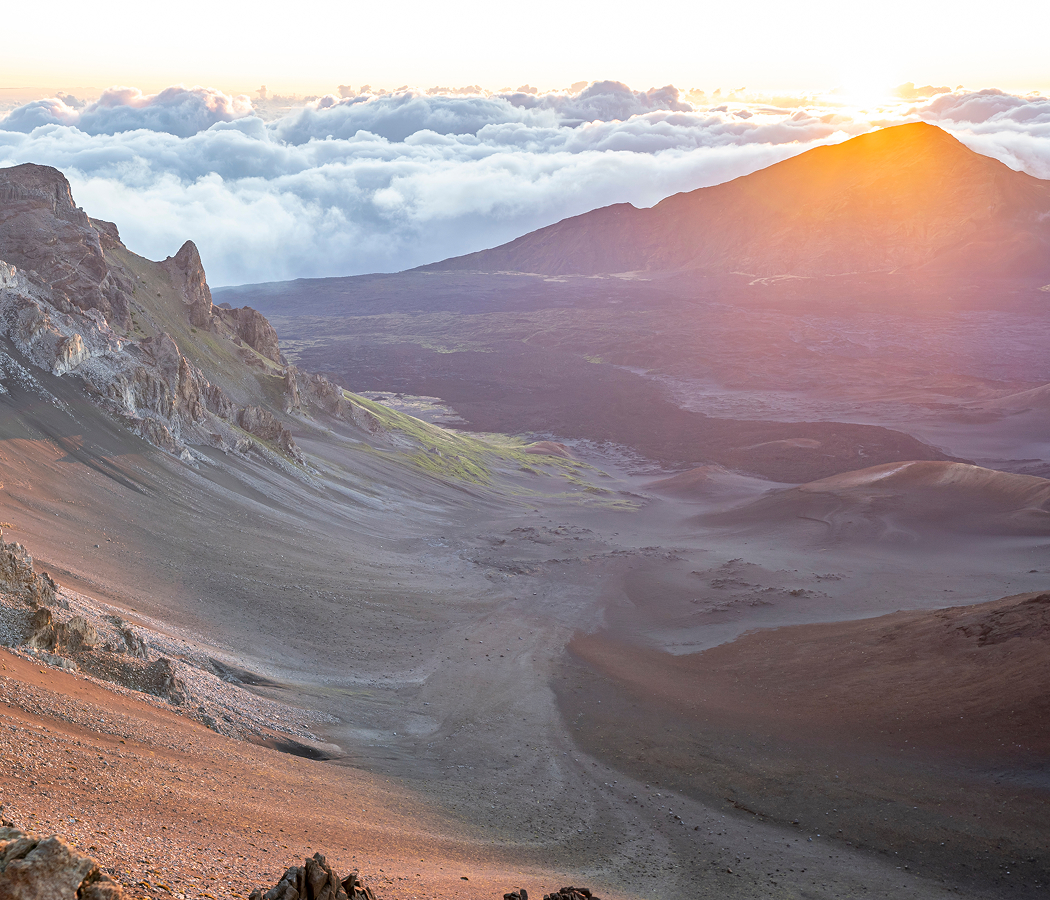
Bora Bora's dramatic geography began with volcanic activity millions of years ago. The island's central peaks, including Mount Otemanu and Mount Pahia, are remnants of the ancient volcanic core, whose outer slopes gradually eroded and subsided. Coral growth continued around the sinking landmass, producing the barrier reef and luminous lagoon that now define Bora Bora from the air. The result is an extraordinary geological composition: rugged volcanic rock survives at the center, a broad lagoon surrounds it, and a ring of coral islets marks the former perimeter of a much larger island.
4. Bora Bora became an American military base during World War II.
After the attack on Pearl Harbor, the United States selected Bora Bora as a strategic South Pacific supply base. Operation Bobcat brought thousands of American servicemen to the island beginning in 1942, along with artillery positions, roads, fuel storage, harbor facilities, and other infrastructure. Eight large naval guns were installed at commanding points around Bora Bora to defend its lagoon and anchorage, although the island never experienced combat. Several guns remain in place today, embedding an unexpected layer of World War II history within one of the Pacific's most celebrated resort landscapes.
3. Bora Bora's first airfield was built by the United States military.
Operation Bobcat permanently changed transportation to Bora Bora. American forces constructed an airstrip on Motu Mute during World War II, creating an aviation link on the reef surrounding the island. The airfield later became Bora Bora Airport and served as an important gateway to French Polynesia before the opening of Tahiti's international airport at Faa'a in 1960. Its unusual geography survives today: arriving passengers land on a narrow coral islet separated from Bora Bora's main island and complete the final stage of the journey across the lagoon by boat.
2. Bora Bora's famous overwater-bungalow tradition began in French Polynesia.
The overwater bungalow now appears at tropical resorts around the world, yet its modern tourism history is deeply connected to French Polynesia. During the 1960s, three American hoteliers known as the Bali Hai Boys developed overwater accommodations on neighboring Raiatea, extending traditional Polynesian-inspired structures above the lagoon and incorporating glass panels that revealed the water below. The concept soon reached Bora Bora, where the combination of shallow turquoise lagoon, coral motu, and volcanic scenery provided an extraordinary setting. The architectural idea eventually became inseparable from Bora Bora's international identity.
1. Bora Bora was once called Pora Pora because the Tahitian language has no letter B.
The island's Polynesian name was traditionally rendered Pora Pora, commonly associated with the idea of being “first born.” Tahitian does not contain the consonant sound represented by the English letter B, and European visitors transformed the name as it passed into Western usage. The resulting Bora Bora became internationally famous even though it reflects an outsider's rendering of the original Polynesian pronunciation. The familiar name of one of the world's most recognizable islands preserves a small linguistic artifact of the encounters between Polynesian culture and European exploration.
Where your story begins.
Foresyte Travel reveals places that feel extraordinary long before you arrive.
Enjoy editorial crafted for luxury travelers.
Foresyte may earn a commission when you book.