Fun facts about South Carolina.
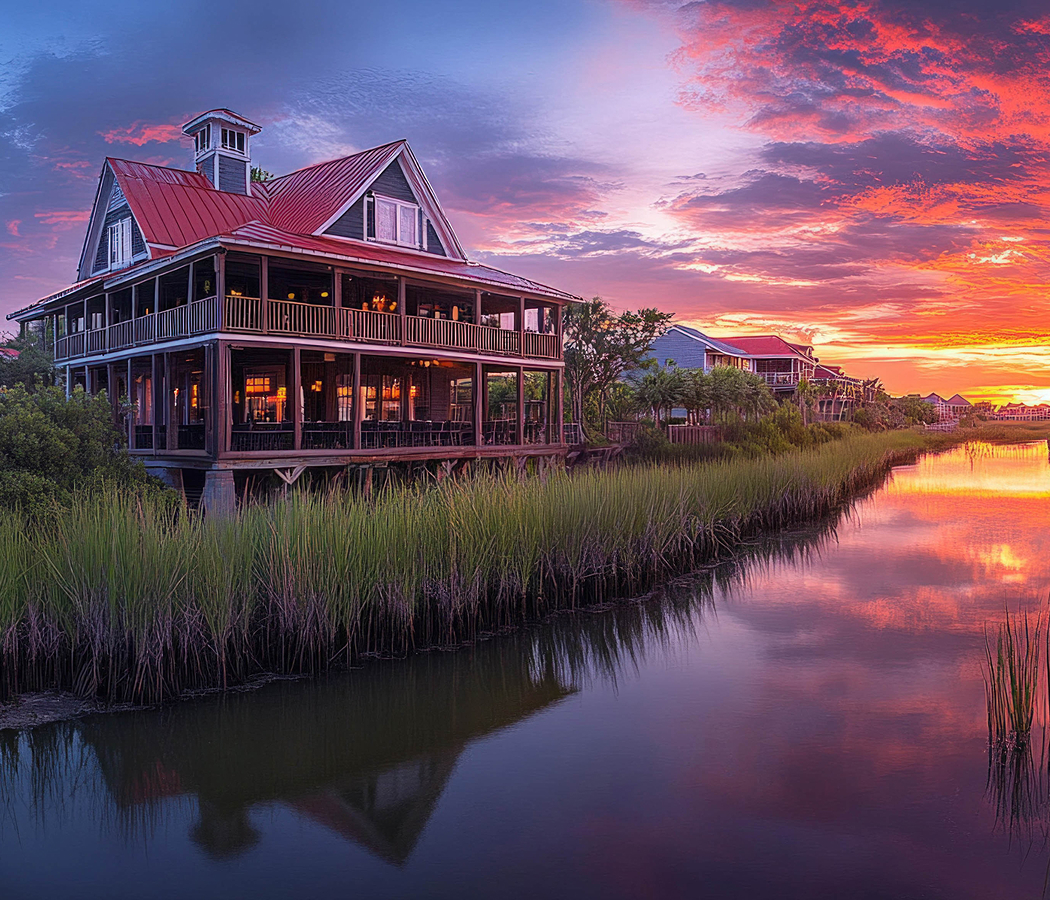
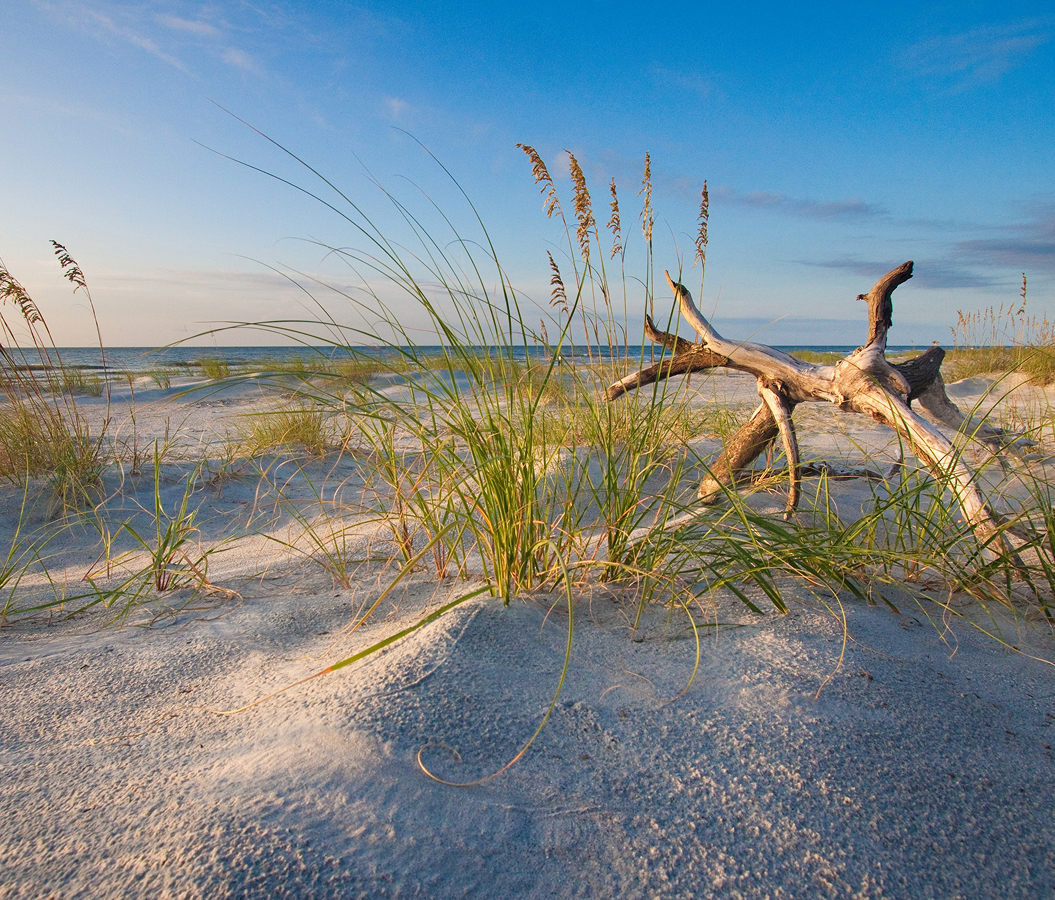
Hilton Head lies along South Carolina's southern Atlantic coast, twenty miles northeast of Savannah, Georgia, within a landscape of tidal creeks, salt marshes, maritime forests, and broad sandy beaches. The island extends twelve miles from north to south and five miles across at its widest point, bordered by the Atlantic Ocean to the east and the sheltered waterways of Calibogue Sound and Port Royal Sound to the west and north. Its low-lying terrain belongs to the Sea Islands, a coastal chain shaped by changing sea levels, sediment deposition, and the movement of tidal waters through extensive estuarine systems. The eastern shoreline contains twelve miles of beaches, where gentle slopes and broad tidal ranges create expansive stretches of firm sand at low tide. Coligny Beach forms one of the island's principal public waterfront areas, connecting the Atlantic shoreline with pedestrian promenades, shops, restaurants, and recreational facilities. Farther south, the Sea Pines community occupies an extensive landscape of maritime forest, lagoons, golf courses, and residential neighborhoods. Harbour Town forms its best-known architectural center, distinguished by a compact marina, waterfront shops, and the red-and-white-striped Harbour Town Lighthouse. Completed in 1970, the lighthouse rises above the yacht basin as a recognizable landmark of the island's modern resort era. The surrounding Harbour Town Golf Links incorporates narrow fairways, mature trees, and coastal views, with its finishing holes extending toward Calibogue Sound. Nearby, the Sea Pines Forest Preserve protects extensive woodland, wetlands, and freshwater habitats, preserving an important portion of the island's interior ecosystem. The preserve contains trails, boardwalks, lakes, and archaeological remains associated with earlier Indigenous occupation. North of Sea Pines, the Palmetto Dunes community extends across the island through beachfront residential districts, golf courses, lagoons, and recreational waterways. Shelter Cove Harbour occupies a sheltered marina complex connected to Broad Creek, providing access to boating, waterfront dining, and coastal excursions. Broad Creek forms one of Hilton Head's principal tidal waterways, extending through the island's interior and supporting extensive marsh habitats. Its banks contain residential communities, marinas, and protected natural areas where tidal channels provide habitat for fish, shellfish, wading birds, and dolphins. The island's northern districts include Port Royal Plantation, Hilton Head Plantation, and several established residential communities developed around wooded landscapes and coastal waterways. The Coastal Discovery Museum occupies the historic Honey Horn property, preserving substantial grounds containing live oaks, gardens, salt marshes, and educational exhibits focused on the region's natural and cultural history. Nearby, the Pinckney Island National Wildlife Refuge protects an extensive island landscape of salt marsh, tidal creeks, maritime forest, and freshwater ponds between Hilton Head and the mainland. Its trails provide access to habitats supporting herons, egrets, alligators, and migratory birds. The island's architecture reflects a combination of contemporary coastal residences, resort hotels, golf clubhouses, and commercial villages governed by development standards emphasizing restrained building heights and substantial tree cover. Live oaks draped with Spanish moss, palmetto trees, and pine forests contribute to a landscape in which buildings are frequently screened by vegetation. Hilton Head's physical distinction comes from the close integration of planned resort communities, protected coastal ecosystems, extensive recreational landscapes, and a shoreline whose tidal rhythms remain central to everyday island life.
South Carolina's Lowcountry heritage finds one of its most important living centers on Hilton Head, where Gullah communities preserve cultural practices rooted in the experiences of enslaved Africans and their descendants along the Atlantic coast. The relative isolation of the Sea Islands helped sustain distinctive linguistic, religious, culinary, and artistic traditions that developed through generations of African American community life. Gullah, an English-based creole language influenced by West and Central African languages, remains an important element of regional cultural history. Traditional basket weaving, storytelling, spiritual music, and food preparation reflect the continuity of knowledge passed through families and community institutions. The island's historic African American neighborhoods include Stoney, Squire Pope, and other settlements associated with families whose ancestors acquired or retained land following emancipation. The Gullah Museum of Hilton Head supports the preservation of this heritage through educational programs, exhibitions, and cultural interpretation. The Historic Mitchelville Freedom Park commemorates the community established during the Civil War, preserving the history of formerly enslaved residents who organized schools, churches, and local government under Union protection. The site occupies a significant place in the broader history of African American self-determination during emancipation. The Coastal Discovery Museum contributes another important institution through exhibitions addressing Gullah history, regional archaeology, coastal ecology, and traditional Lowcountry livelihoods. Hilton Head's contemporary cultural institutions include the Arts Center of Coastal Carolina, which presents theatrical productions, musical performances, and educational programs. The Art League of Hilton Head supports local and regional artists through exhibitions, classes, and community initiatives. The island also maintains an active calendar of festivals and sporting events associated with its resort economy. The RBC Heritage golf tournament, held annually at Harbour Town Golf Links, has become one of the PGA Tour's most recognizable coastal events, attracting leading professional golfers and substantial international attention. The tournament's distinctive tartan traditions reflect its historical connections to the Heritage Classic established in 1969. The Hilton Head Seafood Festival celebrates the region's fishing communities and culinary traditions through events featuring local chefs, seafood preparations, and coastal food heritage. Lowcountry cuisine draws upon the agricultural and maritime resources of the South Carolina coast, emphasizing shrimp, oysters, blue crab, rice, okra, and seasonal vegetables. Shrimp and grits combines fresh coastal shrimp with stone-ground corn grits, reflecting the interaction of African American cooking traditions and regional seafood. Frogmore stew, also known as Lowcountry boil, brings together shrimp, corn, potatoes, and sausage in a communal preparation associated with coastal gatherings. She-crab soup, a rich seafood dish traditionally prepared with crab roe, represents another longstanding regional specialty. Oyster roasts remain an important seasonal gathering tradition, particularly during cooler months when locally harvested oysters are served at outdoor communal meals. The island's contemporary restaurants combine these regional preparations with modern coastal cooking, frequently emphasizing fresh seafood and produce from the surrounding Lowcountry. Hilton Head's cultural importance rests upon the preservation of Gullah heritage, the historical significance of emancipation-era communities, and the development of a coastal recreation culture that has influenced resort planning throughout the American Southeast.
Five fascinations.
5. Hilton Head contains traces of Indigenous life extending back thousands of years.
Long before resorts and golf courses reshaped Hilton Head, Indigenous peoples occupied and traveled through the surrounding Lowcountry. The Sea Pines Shell Ring provides one of the island's most remarkable surviving traces: a circular accumulation of shell dating back 4,000 years. Oyster shell, animal remains, pottery fragments, and other archaeological material connect the site with communities living along the Atlantic coast during the Late Archaic period. Its precise social function remains debated, yet its scale reveals sustained human activity centuries before European colonization. Hilton Head's modern landscape overlays an exceptionally deep history rooted in the productive estuaries and maritime environment of the South Carolina coast.
4. Hilton Head became an important center of freedom during the Civil War.
Union forces captured Hilton Head in November 1861 after the Battle of Port Royal, establishing a major military base around Port Royal Sound. Thousands of formerly enslaved people subsequently sought refuge behind Union lines across the surrounding Sea Islands, creating communities where emancipation began taking practical form before slavery ended nationally. Nearby Mitchelville became particularly consequential as a self-governed town established for formerly enslaved African Americans in 1862. Residents built homes, operated businesses, established churches, and organized civic life. Hilton Head became part of an extraordinary Lowcountry experiment in freedom, self-government, education, and community building during the Civil War.
3. The Gullah culture surrounding Hilton Head developed through generations of relative geographic isolation.
Enslaved Africans and their descendants profoundly shaped the Sea Islands of South Carolina and Georgia, developing the distinctive Gullah Geechee culture across coastal plantations and communities. After emancipation, geographic separation from mainland development helped preserve linguistic, culinary, spiritual, artistic, and agricultural traditions with strong connections to West and Central Africa. Hilton Head remained home to longstanding Gullah families even as twentieth-century resort development transformed much of the island. Historic communities, family land, foodways, storytelling, basketry, and cultural institutions continue to preserve this heritage. Hilton Head's character extends far beyond tourism into one of America's most significant surviving African diasporic cultural landscapes.
2. Hilton Head's modern resort landscape grew from an unusually strict approach to preserving the island's natural appearance.
Developer Charles Fraser began shaping Sea Pines during the 1950s with a philosophy that integrated buildings and roads into Hilton Head's existing maritime forest. Large live oaks and pines were preserved, signage was restrained, commercial architecture remained relatively subdued, and development followed the contours of the landscape. Sea Pines became influential within American resort planning by demonstrating how substantial tourism development could be embedded within a heavily vegetated coastal environment. That approach helped establish the visual character now associated with Hilton Head: winding roads, dense tree cover, limited visual clutter, and buildings frequently concealed behind vegetation.
1. Hilton Head's iconic lighthouse was built as a centerpiece of a modern resort, not as a historic navigational lighthouse.
The red-and-white-striped Harbour Town Lighthouse looks like a traditional maritime landmark, yet it dates only to the late twentieth century. Charles Fraser commissioned the structure as part of Harbour Town in Sea Pines, and construction was completed in 1970. The lighthouse became the visual anchor of a carefully planned marina district combining boats, shops, restaurants, residences, and pedestrian spaces beside Calibogue Sound. Its silhouette subsequently became synonymous with Hilton Head and the RBC Heritage golf tournament played nearby. One of the island's most recognizable symbols is a deliberately created piece of resort architecture whose cultural character eventually became much larger than its original decorative function.
Where your story begins.
Foresyte Travel reveals places that feel extraordinary long before you arrive.
Enjoy editorial crafted for luxury travelers.
Foresyte may earn a commission when you book.