Fun facts about Savannah, Georgia.
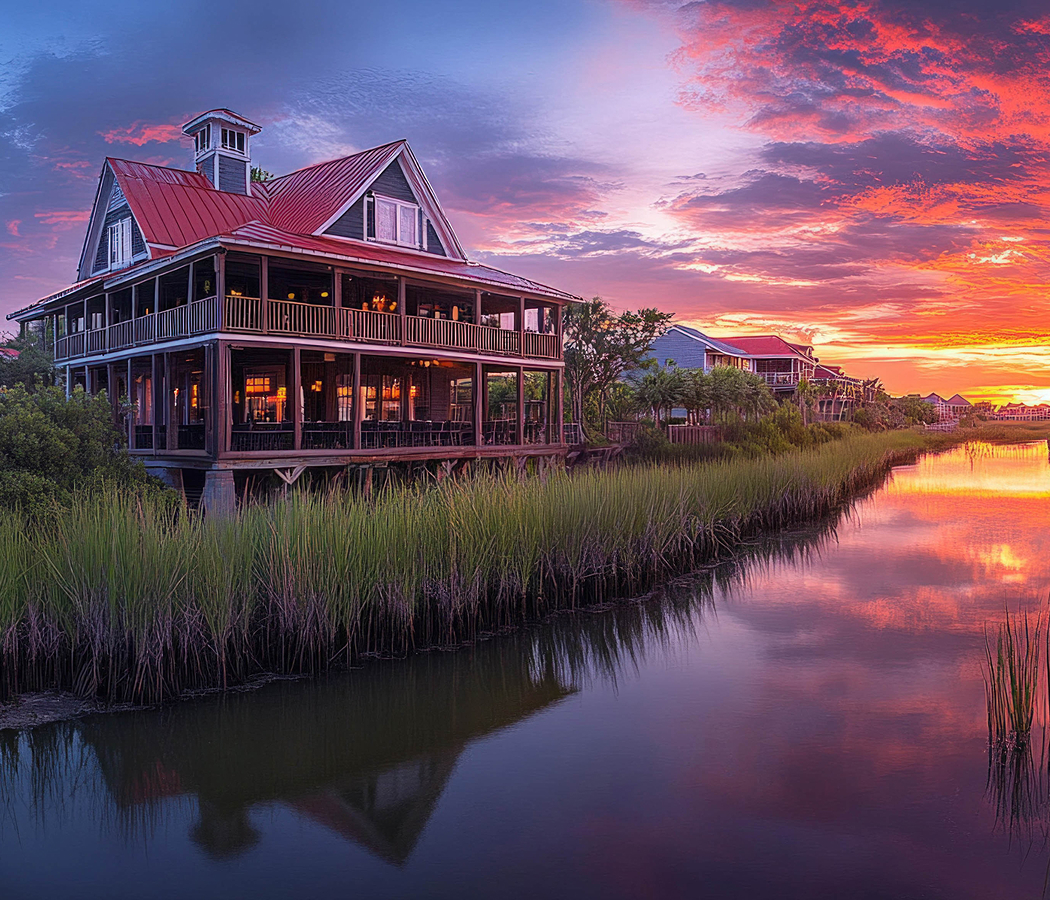
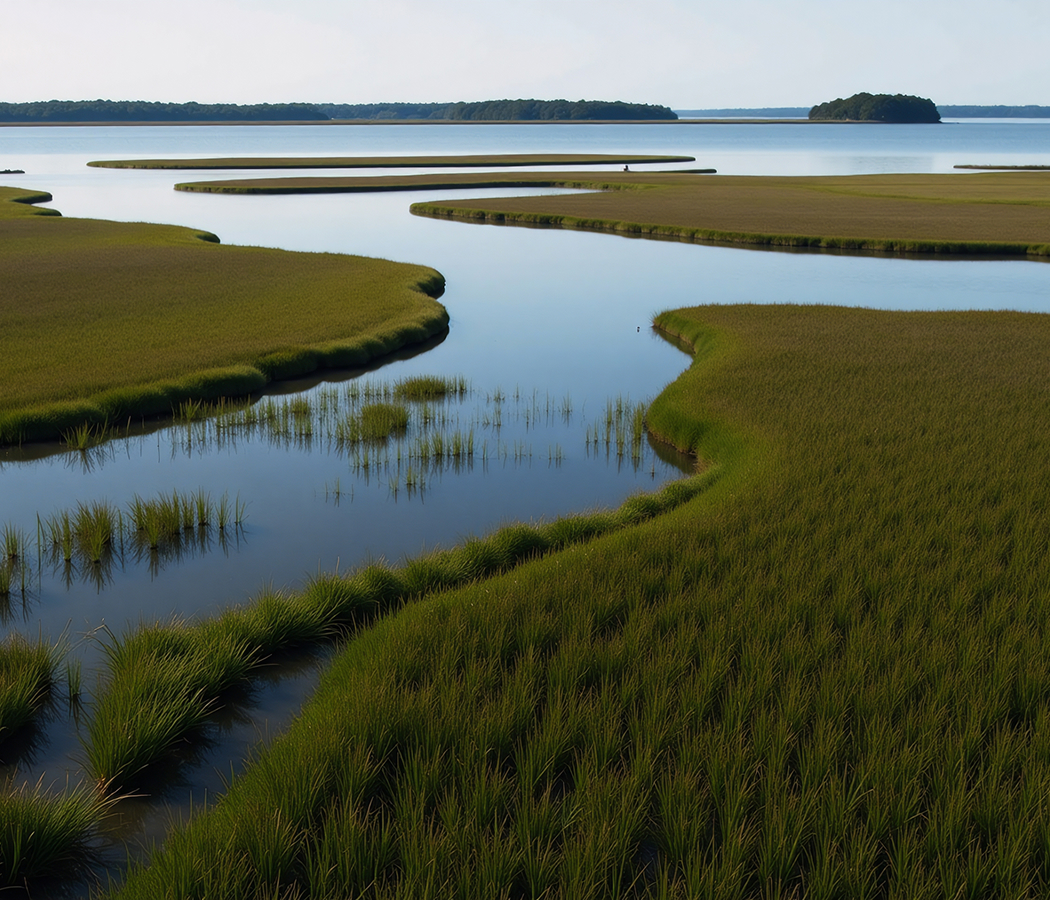
Savannah occupies a gently elevated bluff above the Savannah River, eighteen miles inland from the Atlantic Ocean, where tidal marshes, maritime forests, and an unusually coherent historic street plan establish the city's distinctive physical identity. The surrounding landscape belongs to Georgia's low coastal plain, a region of slow-moving rivers, sandy soils, freshwater wetlands, and expansive salt marshes influenced by the Atlantic tides. The Savannah River forms the city's northern boundary, separating Georgia from South Carolina and connecting the inland commercial district with one of the southeastern United States' busiest container ports. The historic center follows the Oglethorpe Plan, an innovative arrangement of residential and civic wards organized around public squares. Each original ward incorporated a central square, surrounding residential lots, and larger parcels reserved for civic and institutional buildings, creating a repeating pattern of streets and green spaces that remains fundamental to Savannah's urban geography. Twenty-two historic squares survive, forming an interconnected landscape of shaded gardens, monuments, churches, and residential architecture. Bull Street provides a principal north-south axis through the historic district, connecting several of the city's most recognizable public spaces. Chippewa Square contains a monument to James Oglethorpe, surrounded by mature trees and historic buildings. Madison Square preserves an important collection of nineteenth-century architecture, including the Green-Meldrim House, a Gothic Revival mansion distinguished by its ornate cast-iron details and association with Sherman's occupation of Savannah. Monterey Square contains a monument honoring Casimir Pulaski and is bordered by substantial historic residences, including the Mercer-Williams House. Farther south, Forsyth Park extends across thirty acres, establishing the city's largest central historic green space. Its celebrated cast-iron fountain, installed in 1858, anchors a formal landscape of pathways, lawns, and live oaks draped with Spanish moss. Savannah's architectural fabric encompasses Georgian, Federal, Greek Revival, Gothic Revival, and Italianate buildings, reflecting the prosperity and changing aesthetic preferences of successive generations. The Owens-Thomas House, designed by English architect William Jay and completed in 1819, presents an exceptional example of Regency architecture, with carefully proportioned interiors and a surviving urban slave quarters complex that reveals the relationship between elite domestic life and enslaved labor. The Davenport House preserves an earlier Federal-style residence whose restoration helped initiate the city's modern preservation movement. Along the riverfront, River Street follows the former commercial waterfront through a series of nineteenth-century cotton warehouses and brick buildings connected by cobblestone streets and steep passages descending from the bluff. Factors Walk occupies a distinctive intermediate level between Bay Street and the river, where iron bridges, elevated walkways, and former commercial offices recall the organization of Savannah's cotton trade. The Cathedral Basilica of St. John the Baptist introduces an expansive French Gothic presence through twin spires, stained-glass windows, and an elaborate interior. Nearby, Colonial Park Cemetery preserves eighteenth- and nineteenth-century burial grounds within the historic urban grid. East of the center, the Victorian District contains rows of late-nineteenth-century houses distinguished by decorative woodwork, porches, and varied rooflines. Beyond the historic neighborhoods, the city extends toward tidal creeks, wooded islands, and coastal communities connected by causeways and bridges. Bonaventure Cemetery occupies a landscaped bluff overlooking the Wilmington River, where elaborate funerary monuments stand among immense live oaks and subtropical vegetation. Farther east, the road to Tybee Island crosses extensive marshlands before reaching the Atlantic beaches and the historic Tybee Island Light Station. Savannah's physical distinction arises from the disciplined geometry of its public squares, the architectural richness of its historic neighborhoods, and the intimate relationship between its riverfront setting and the coastal wetlands of southeastern Georgia.
Georgian cultural traditions find a particularly influential expression in Savannah, where African American heritage, Southern literature, architectural preservation, visual art, and Lowcountry foodways intersect within a city shaped by the Atlantic world. The cultural foundations of the surrounding coast include the Gullah Geechee communities, descendants of enslaved Africans whose language, agricultural knowledge, spiritual practices, and artistic traditions developed across the coastal regions of Georgia and South Carolina. Their cultural inheritance preserves important connections to West and Central African traditions, particularly through oral storytelling, music, basket weaving, and rice cultivation. The First African Baptist Church, organized in the late eighteenth century, occupies an important place in Savannah's Black religious history, reflecting the development of independent African American institutions during slavery and emancipation. The city's African American heritage also includes the work of educator and civil rights leader W. W. Law, whose preservation efforts helped protect historically significant Black neighborhoods and institutions. The Ralph Mark Gilbert Civil Rights Museum explores Savannah's civil rights movement, including the campaigns for desegregation and political equality that transformed the city during the twentieth century. Savannah's literary reputation is closely associated with Flannery O'Connor, who spent part of her childhood in the city before developing a body of fiction distinguished by Southern Gothic imagery, religious conflict, and penetrating examinations of human behavior. Her childhood home on Lafayette Square preserves a direct connection to her early life and literary development. The city acquired another prominent place in American popular culture through John Berendt's Midnight in the Garden of Good and Evil, published in 1994, whose portrait of Savannah's social circles, historic houses, and eccentric personalities introduced the city to an international readership. The subsequent film adaptation directed by Clint Eastwood reinforced Savannah's association with Southern Gothic storytelling. Savannah's visual arts environment developed substantially through the Savannah College of Art and Design, founded in 1978, which transformed numerous historic buildings into academic facilities, galleries, and exhibition spaces. The SCAD Museum of Art occupies a restored nineteenth-century railway complex, connecting contemporary artistic practice with the city's industrial architectural heritage. The Telfair Museums encompass another important cultural institution, including the Telfair Academy, the Owens-Thomas House & Slave Quarters, and the contemporary Jepson Center designed by Moshe Safdie. Savannah's performing arts traditions include the Savannah Music Festival, established in 1989, whose programming brings classical, jazz, folk, and international performers into historic theaters and concert venues. The city's annual St. Patrick's Day celebration reflects the influence of Irish immigration and Catholic community life, drawing large crowds for one of the country's most established holiday parades. Culinary traditions connect Savannah with the broader Lowcountry, where tidal waterways, rice agriculture, and African American cooking practices shaped a distinctive regional cuisine. Shrimp and grits, she-crab soup, fried seafood, and rice-based dishes reflect the abundance of coastal ingredients and the influence of generations of Black cooks. Savannah red rice preserves particularly important connections between West African culinary knowledge and the agricultural history of the American Southeast. The city's restaurant culture also maintains traditions of Southern baking, barbecue, and communal dining, supported by ingredients drawn from Georgia's farms and coastal fisheries. Contemporary chefs reinterpret these foodways through seasonal produce and increasingly explicit engagement with their African American origins. Savannah's cultural importance rests in the enduring relationship between Gullah Geechee heritage, Southern literary imagination, historic preservation, and the artistic institutions that continue to give the city's remarkable urban landscape a living cultural purpose.
Five fascinations.
5. Savannah was designed around public squares from the beginning.
James Oglethorpe founded Savannah in 1733 using an unusually systematic urban plan organized around wards, each centered on a public square. Residential lots, civic parcels, and commercial spaces were arranged around these shared open areas as the settlement expanded. New wards repeated the pattern, eventually producing a network of landscaped squares distributed throughout the historic district. Many survive beneath immense live oaks today. Savannah's celebrated intimacy originates in its foundational city plan: green space was embedded directly into the street system, creating a distinctive urban structure that has shaped movement, architecture, and public life for nearly three centuries.
4. Savannah contains one of America's most influential nineteenth-century cemeteries.
Bonaventure Cemetery occupies a dramatic bluff above the Wilmington River on land once belonging to a plantation established by the Tattnall family. The property became a cemetery during the nineteenth century and developed into an extraordinary landscape of live oaks, Spanish moss, ornamental plantings, elaborate monuments, and winding paths. Its design reflects the rural cemetery movement, which transformed burial grounds into places intended for contemplation as well as commemoration. Bonaventure later became internationally recognizable through Midnight in the Garden of Good and Evil, but its deeper significance lies in the fusion of funerary art, landscape design, and Savannah's distinctive coastal environment.
3. Savannah's famous fountain was ordered from a catalog.
The ornate fountain at the center of Forsyth Park looks like a distinctive monument created specifically for Savannah, yet it originated from a commercially manufactured design. Installed in 1858, the cast-iron fountain belonged to a nineteenth-century tradition in which elaborate architectural and decorative elements could be selected from catalogs and reproduced in multiple cities. Similar fountains appeared elsewhere in the United States and abroad. Savannah nevertheless transformed its example into one of the city's defining landmarks by placing it within Forsyth Park's formal landscape. An industrially produced object ultimately became so closely associated with Savannah that it now appears inseparable from the city's visual identity.
2. Savannah preserved its historic core after women organized to stop a landmark from being demolished.
In 1955, plans to demolish the Isaiah Davenport House galvanized a group of Savannah women into creating the Historic Savannah Foundation. The organization purchased the threatened Federal-style house and used its preservation as the starting point for a broader campaign to protect endangered historic buildings. Its revolving-fund strategy subsequently helped rescue properties that could be restored and returned to productive use. The effort profoundly influenced the survival of Savannah's architectural landscape during an era when urban renewal was erasing historic districts across the United States. A threatened house became the catalyst for a preservation movement that reshaped the future of the city.
1. Savannah's live-oak landscape was shaped by an enormous nineteenth-century tree-planting campaign.
The immense live oaks arching over Savannah's streets and squares are now fundamental to the city's identity, but their abundance also reflects deliberate civic stewardship. The Savannah Park and Tree Commission was established in 1896, with responsibility for the trees and landscaped spaces that distinguished the city's public realm. Generations of planting and maintenance reinforced a canopy already favored by the warm, humid coastal climate. Live oaks subsequently became structural elements of Savannah's streetscape, shading squares, framing monuments, and forming tunnel-like corridors above roads. The city's celebrated greenery represents both its subtropical ecology and more than a century of organized urban forestry.
Where your story begins.
Foresyte Travel reveals places that feel extraordinary long before you arrive.
Enjoy editorial crafted for luxury travelers.
Foresyte may earn a commission when you book.