Fun facts about Boston, Massachusetts.
Boston's architectural landscape follows the contours of a historic harbor city whose original peninsula expanded through extensive land reclamation, producing an intricate relationship between colonial streets, nineteenth-century residential districts, expansive civic buildings, and contemporary waterfront development. The North End preserves some of the oldest surviving streets in the city, where narrow passageways and brick buildings reflect centuries of maritime commerce and immigrant settlement. The Paul Revere House, constructed 1680, survives as one of Boston's oldest residential structures, connecting the neighborhood with the political history of the American Revolution. Nearby, Old North Church, completed in 1723, became associated with the lantern signals that preceded Paul Revere's famous ride in April 1775. The surrounding waterfront subsequently developed through commercial wharves, warehouses, and shipping facilities, with Long Wharf preserving a physical connection to Boston's historic maritime economy. Beacon Hill introduces a contrasting architectural environment through its Federal-style townhouses, brick sidewalks, ornamental ironwork, and gas lamps. The Massachusetts State House, designed by Charles Bulfinch and completed in 1798, crowns the neighborhood with its prominent gilded dome, establishing a defining landmark of American civic architecture. Boston Common, established in 1634, preserves the city's historic public gathering ground, adjoining the landscaped Public Garden, whose nineteenth-century design introduced ornamental plantings, a lagoon, and the celebrated Swan Boats. The Back Bay district developed during the nineteenth century through the filling of tidal flats, creating an orderly street grid distinguished by Victorian brownstones, broad avenues, and prestigious cultural institutions. Trinity Church, designed by Henry Hobson Richardson and completed in 1877, became a defining achievement of Richardsonian Romanesque architecture through its expansive masonry, broad arches, and richly decorated interior. The nearby Boston Public Library's McKim Building, opened in 1895, introduced a major expression of American Renaissance architecture through its classical façade, grand reading rooms, and landscaped courtyard. Along the Charles River, the Esplanade provides a continuous recreational landscape connecting waterfront paths, parkland, and views toward Cambridge. The city's industrial inheritance remains visible in former manufacturing districts and warehouse complexes, particularly around Fort Point, where brick industrial buildings have been adapted for studios, commercial establishments, and contemporary cultural uses. The transformation of the Seaport District introduced a new concentration of glass towers, public waterfront spaces, and commercial development along the harbor. Boston's Central Artery/Tunnel Project, widely known as the Big Dig, subsequently reshaped the downtown transportation network by relocating major highway infrastructure underground and creating the Rose Kennedy Greenway. The city's physical character emerges from these successive interventions, revealing how colonial geography, engineered land expansion, nineteenth-century civic ambition, and contemporary infrastructure have shaped one of America's most historically layered urban environments.
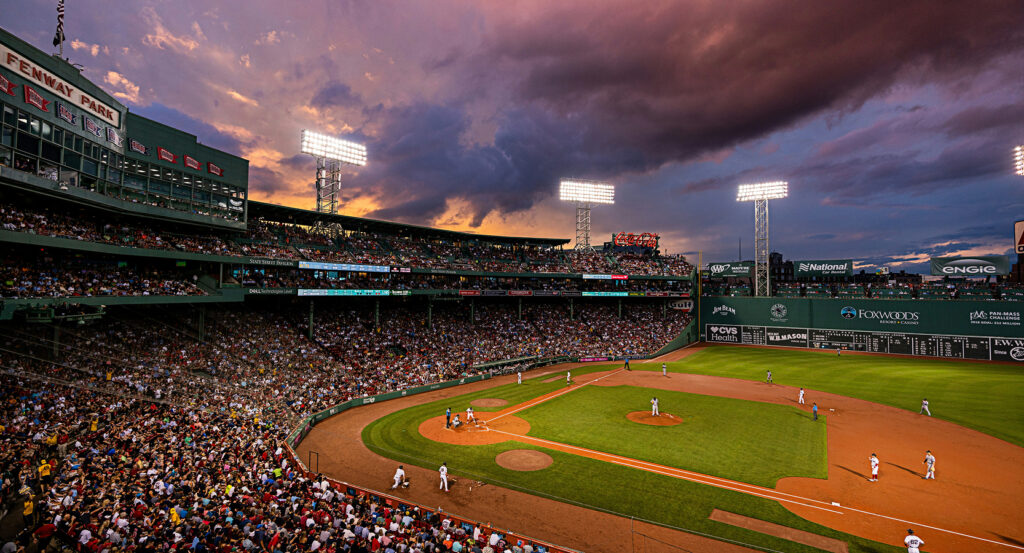
New England's intellectual and cultural traditions acquired particular influence in Boston, where universities, publishing houses, reform movements, musical institutions, and immigrant communities established a distinctive relationship between education and civic life. During the nineteenth century, the city's literary circles helped shape American Romanticism and transcendentalist thought, with writers including Nathaniel Hawthorne, Henry Wadsworth Longfellow, and Oliver Wendell Holmes Sr. contributing to a flourishing regional literary culture. The Atlantic Monthly, founded in Boston in 1857, became an influential forum for literature, politics, and social criticism, publishing major American writers and strengthening the city's reputation as a center of intellectual debate. Boston's abolitionist movement developed through the activities of William Lloyd Garrison, whose newspaper The Liberator began publication in 1831, and through networks of activists who challenged slavery and supported the Underground Railroad. The city's musical institutions acquired international prominence through the founding of the Boston Symphony Orchestra in 1881, followed by the establishment of Symphony Hall in 1900, whose acoustically sophisticated design became an influential model for concert venues. The New England Conservatory, founded in 1867, contributed to the development of American classical music education, attracting generations of composers, instrumentalists, and performers. Boston's visual arts culture expanded through the establishment of the Museum of Fine Arts in 1870, whose collections encompass ancient civilizations, European painting, Asian art, and American decorative traditions. The Isabella Stewart Gardner Museum introduced another distinctive cultural institution through its Venetian-inspired palace and carefully assembled collection of paintings, sculpture, textiles, and architectural fragments. The museum's infamous 1990 art theft, involving thirteen stolen works, became one of the most consequential unsolved crimes in the history of American museums. Boston's culinary traditions reflect the influence of New England's maritime economy and successive immigrant communities, with clam chowder, baked beans, lobster dishes, and seafood preparations associated with the region's coastal inheritance. The North End developed a particularly strong Italian America character through its bakeries, restaurants, religious festivals, and family businesses, preserving traditions established through generations of immigration. The city's Irish American communities contributed substantially to its political culture, neighborhood institutions, and musical traditions, particularly through the growth of local folk music and community celebrations. Boston also developed an influential sporting character through the Boston Red Sox, founded in 1901, whose historic home at Fenway Park opened in 1912 and became one of the most celebrated venues in American baseball. The Boston Marathon, first held in 1897, established another enduring international sporting tradition, attracting elite competitors and recreational runners to the region each spring. Boston's contemporary creative environment extends through its universities, independent theaters, research institutions, and innovative technology companies, reinforcing the relationship between intellectual ambition and cultural production. New England's enduring influence finds a defining expression in Boston, where revolutionary political thought, literary achievement, scientific inquiry, and the traditions of immigrant communities continue to shape the civic character of an American cultural capital.
Five fascinations.
5. Boston once filled in an enormous tidal bay to create an entire neighborhood.
Much of Back Bay did not exist as dry land when Boston was founded. The area was originally a tidal basin west of the historic Shawmut Peninsula, increasingly altered by dams and industrial development during the nineteenth century. Beginning in the 1850s, an immense landmaking project filled the basin with gravel transported by train from Needham. Streets and blocks gradually advanced westward as new ground emerged. The transformation created Back Bay's celebrated residential district and permanently changed Boston's geography, making some of the city's most valuable real estate literally manufactured land.
4. Boston built America's first subway to solve a traffic problem.
By the late nineteenth century, streetcars overwhelmed Central Boston as competing lines converged on narrow downtown streets. The solution went underground. The Tremont Street Subway opened in 1897, becoming the first subway in the United States and moving streetcars beneath some of the city's busiest intersections. Portions of that pioneering infrastructure remain incorporated into today's MBTA Green Line. Boston entered the era of underground urban transportation before New York, giving one of America's oldest cities another distinction: it pioneered a technology that would eventually become fundamental to modern metropolitan life.
3. The Great Molasses Flood sent a destructive wave through the North End.
On January 15, 1919, a massive storage tank containing 2.3 million gallons of molasses ruptured in Boston's North End. The collapse unleashed a fast-moving wave through surrounding streets, smashing structures, damaging the elevated railway, and killing 21 people. The disaster produced years of litigation and intensified scrutiny of industrial construction and corporate responsibility. Its almost surreal cause has made the Great Molasses Flood famous, yet the human and legal consequences were substantial. One of Boston's strangest historical episodes ultimately became an important chapter in the evolution of engineering accountability and public safety.
2. The USS Constitution earned its famous nickname during a battle at sea.
Launched in Boston in 1797, USS Constitution became one of the most celebrated warships in American history during the War of 1812. In combat with HMS Guerriere, British cannon fire appeared to rebound from the American frigate's extraordinarily strong oak hull. A sailor exclaimed that her sides were made of iron, helping create the nickname “Old Ironsides.” The wooden vessel survived the age of sail and remains afloat at the Charlestown Navy Yard. More than two centuries after its launch, the world's oldest commissioned naval warship still afloat remains inseparable from Boston's maritime identity.
1. Boston saved Quincy Market by turning preservation into an urban experiment.
By the twentieth century, the historic commercial district surrounding Faneuil Hall and Quincy Market had deteriorated as wholesale activity shifted elsewhere. A major redevelopment completed during the 1970s restored the nineteenth-century market buildings and transformed them into a pedestrian-oriented collection of shops, restaurants, and public spaces. Developer James Rouse and architect Benjamin Thompson helped establish what became known as the festival-marketplace model. Its success influenced waterfront and downtown redevelopment projects across the United States, turning the rehabilitation of an aging Boston market district into an influential experiment in American urban planning.
Where your story begins.
Foresyte Travel reveals places that feel extraordinary long before you arrive.
Enjoy editorial crafted for luxury travelers.
Foresyte may earn a commission when you book.