Fun facts about Zürich, Switzerland.
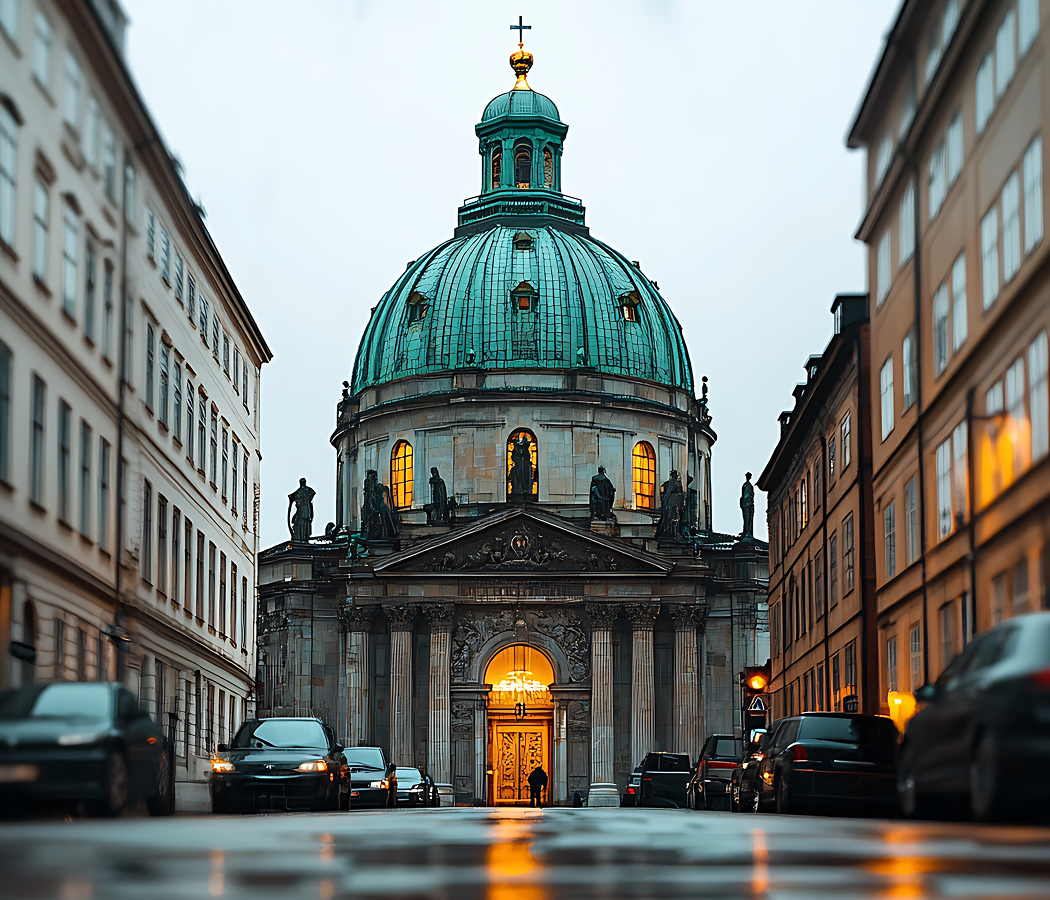
Zürich extends around the northern end of Lake Zürich, where the Limmat River flows from the lake through a compact historic center surrounded by wooded hills, residential neighborhoods, and a highly developed transportation network. The city occupies a landscape shaped by Alpine glaciation, with the lake filling an elongated basin carved by ancient ice sheets and the surrounding hills preserving the contours of glacial deposits and eroded rock formations. The Limmat divides the historic center into two principal districts, creating a distinctive urban composition of riverfront churches, medieval streets, stone bridges, and commercial buildings. On the eastern bank, the Altstadt rises through narrow lanes and historic squares toward the Grossmünster, whose twin towers establish one of Zürich's most recognizable architectural landmarks. The Romanesque church developed during the twelfth and thirteenth centuries, with its prominent towers later receiving distinctive neo-Gothic upper sections. Across the river, the Fraumünster preserves another important medieval landmark, distinguished by its slender tower and stained-glass windows created by Marc Chagall in the twentieth century. Nearby, St. Peter's Church incorporates one of Europe's largest church clock faces, overlooking the historic streets of the western Old Town. The Lindenhof occupies an elevated terrace above the Limmat, preserving the location of Roman fortifications and offering expansive views across the river, surrounding rooftops, and historic churches. Below the hill, the narrow streets of the Schipfe district follow the river through an intimate environment of historic buildings, workshops, and pedestrian passages. Bahnhofstrasse extends southwest from Zürich Hauptbahnhof toward the lake, forming a major commercial boulevard lined with banks, department stores, luxury retailers, and substantial nineteenth-century buildings. Its development followed the filling of a former defensive moat during the nineteenth century, transforming an element of medieval fortification into one of Europe's prominent shopping streets. Paradeplatz occupies an important intersection along the boulevard, historically associated with Switzerland's banking institutions. Zürich Hauptbahnhof anchors the city's transportation system through an expansive railway station whose nineteenth-century architecture connects with an extensive network of national and international rail services. The surrounding urban districts introduce substantial architectural variety, particularly through the nineteenth-century residential buildings of Aussersihl, the institutional architecture of the university quarter, and the contemporary developments of Zürich-West. The University of Zürich's main building, designed by Karl Moser and completed in 1914, rises above the eastern Old Town through an expansive composition overlooking the city. Nearby, the ETH Zürich campus occupies another elevated site, with its historic main building designed by Gottfried Semper establishing an important landmark of European academic architecture. Along the lakefront, Bürkliplatz connects the central city with broad promenades, public gardens, and passenger boat services operating across Lake Zürich. The surrounding shoreline contains landscaped parks, swimming facilities, and residential districts that integrate the lake into everyday urban life. East of the center, Zürichhorn extends into the water through a park landscape containing mature trees, walking paths, and cultural installations. The Chinese Garden, established as a gift from Zürich's sister city of Kunming, introduces a distinctive architectural environment within the lakeside park. West of the historic center, Zürich-West occupies former industrial land transformed through the adaptive reuse of factories, warehouses, and railway infrastructure. The district contains contemporary offices, cultural venues, restaurants, and residential buildings, including the Prime Tower, whose glass-clad structure rises above the surrounding urban landscape. The Uetliberg forms the principal wooded ridge southwest of the city, reaching 870 meters above sea level and providing extensive views across Zürich, the lake, and the distant Alps. Zürichberg rises northeast of the center, supporting residential neighborhoods, institutional buildings, and wooded recreational landscapes. Zürich's physical distinction arises from the close integration of its medieval riverfront, expansive financial and academic architecture, efficient public transportation, and a lake-and-hill setting that remains fundamental to the city's urban identity.
Swiss cultural life finds one of its most intellectually influential expressions in Zürich, where Protestant scholarship, modernist literature, experimental art, classical music, and contemporary design have developed within a city shaped by international commerce and academic institutions. Zürich's cultural foundations reflect the intellectual consequences of the Reformation, particularly through the theological work of Huldrych Zwingli and Heinrich Bullinger, whose ideas contributed to the development of Reformed Protestantism across Europe. The city's printing houses and scholarly networks supported religious debate, humanist learning, and the circulation of influential texts. During the eighteenth century, Zürich developed a substantial literary and philosophical community, including the writer and critic Johann Jakob Bodmer, whose work contributed to debates concerning aesthetics, literature, and the German Enlightenment. The nineteenth century brought further intellectual distinction through the novelist Gottfried Keller, whose fiction explored Swiss society, political ideals, and the complexities of individual identity. Zürich subsequently became an important refuge for European writers, artists, and political dissidents during periods of continental instability. During the First World War, the city provided the setting for the emergence of Dada, an avant-garde movement that challenged conventional artistic expression and responded to the destruction of European warfare. In 1916, Hugo Ball and Emmy Hennings established the Cabaret Voltaire on Spiegelgasse, attracting artists and writers including Tristan Tzara, Hans Arp, and Marcel Janco. Their performances, poetry, visual experiments, and distinctive artistic practices helped establish one of the twentieth century's most influential movements in modern art. Zürich's visual arts institutions preserve a broad range of European and Swiss artistic traditions, particularly through the Kunsthaus Zürich, whose collections include major works by Alberto Giacometti, Ferdinand Hodler, and leading figures of European modernism. The museum's expansion designed by David Chipperfield introduced substantial new exhibition spaces and strengthened its role within the city's cultural landscape. The Museum Rietberg contributes another distinctive institution through collections devoted to art from Asia, Africa, the Americas, and Oceania, housed within historic villas and contemporary gallery spaces near the lake. Zürich's musical traditions encompass classical performance, opera, contemporary composition, and electronic music. The Tonhalle-Orchester Zürich occupies an important position in European orchestral life, with its principal concert hall celebrated for its acoustics and architectural refinement. Opernhaus Zürich contributes another major cultural institution through opera and ballet productions presented within a nineteenth-century theater overlooking Sechseläutenplatz. The city's annual Sechseläuten festival preserves a distinctive springtime tradition associated with Zürich's historic guilds, culminating in the burning of the Böögg, a snowman-shaped effigy symbolizing winter. Contemporary cultural life also reflects Zürich's influence on electronic music and nightlife, particularly through the Street Parade, established in 1992 and developed into one of Europe's largest electronic dance music events. The city's culinary traditions reflect the agricultural resources of the Swiss Plateau and the historical prosperity of its merchant communities. Zürcher Geschnetzeltes, a preparation of sliced veal in a creamy mushroom sauce, remains a defining local specialty, commonly accompanied by rösti. The city's confectionery traditions include Luxemburgerli, delicate filled macarons associated with the Zürich confectioner Sprüngli. Swiss cheeses, freshwater fish, seasonal vegetables, and regional wines contribute to a food culture shaped by both Alpine agriculture and metropolitan refinement. The vineyards surrounding Lake Zürich and the nearby wine-growing districts of the canton preserve an important connection between the city and its agricultural hinterland. Zürich's contemporary restaurant culture combines these regional traditions with international influences reflecting its diverse population and substantial global connections. The city's cultural importance lies in the remarkable continuity between Reformation scholarship, European literary modernism, avant-garde experimentation, and the sophisticated artistic institutions that have made Zürich an enduring center of Swiss intellectual and creative life.
Five fascinations.
5. Zürich began as a Roman customs station beside the Limmat.
Long before Zürich became a global financial center, the Romans maintained a settlement called Turicum near the point where the Limmat flows from Lake Zürich. Its position allowed authorities to oversee movement along important regional routes and collect customs duties on transported goods. Archaeological remains around Lindenhof preserve traces of this Roman presence beneath the medieval and modern city. Zürich's commercial importance has remarkably deep geographic roots: nearly two thousand years before banks became synonymous with the city, its strategic position between lake, river, and Alpine trade routes had already made it a place for controlling commerce.
4. Zürich's Bahnhofstrasse occupies the line of the city's former fortifications.
The elegant shopping boulevard running from Zürich Hauptbahnhof toward Lake Zürich emerged only after the city dismantled its extensive defensive works during the nineteenth century. Sections of the former moat were filled as Zürich expanded beyond its historic boundaries, and Bahnhofstrasse was developed along the transformed corridor beginning in the 1860s. Banks, department stores, hotels, and increasingly prestigious retailers subsequently established themselves along the avenue. One of Europe's best-known commercial streets owes its unusually direct path through Central Zürich to obsolete military infrastructure, turning a defensive edge of the old city into a principal axis of the modern one.
3. Zürich helped launch Dada from a tiny nightclub during World War I.
In 1916, Hugo Ball and Emmy Hennings opened Cabaret Voltaire on Spiegelgasse in Zürich's Old Town. Switzerland's neutrality had attracted artists, writers, intellectuals, and political exiles during World War I, creating the environment in which figures including Tristan Tzara, Hans Arp, and Marcel Janco gathered around the venue. Performances combined experimental poetry, music, costumes, manifestos, and deliberate absurdity in rejection of conventional artistic values and the European culture surrounding the war. From this compact Zürich space emerged Dada, an international movement whose influence extended through Surrealism, conceptual art, performance, graphic design, and later avant-garde culture.
2. Zürich turned an industrial viaduct into the backbone of a reinvented neighborhood.
The railway arches beneath the nineteenth-century Letten Viaduct once belonged primarily to Zürich's transportation and industrial landscape. As Zürich-West evolved from a manufacturing district into a major center of contemporary urban life, the viaduct acquired an entirely different role. Its masonry arches were adapted for shops, restaurants, studios, and other businesses, with pedestrian and cycling infrastructure integrated alongside the elevated railway. The project retained the massive physical presence of the historic structure as the surrounding district changed around it. Zürich transformed transportation infrastructure into an organizing element of neighborhood regeneration while preserving a conspicuous artifact of its industrial expansion.
1. Zürich has turned lake water into part of its municipal drinking-water system.
Lake Zürich functions as far more than the striking body of water defining the city's southern edge. Zürich draws a substantial portion of its drinking water from the lake, treating it through sophisticated filtration and purification systems before distributing it through the municipal network. Groundwater and spring water provide additional sources, creating a diversified supply closely connected to the region's natural hydrology. The relationship between city and lake extends directly into everyday domestic life: the same Alpine-fed water surrounding Zürich's promenades, boats, and swimming areas also forms a major component of the drinking water delivered throughout the city.
Where your story begins.
Foresyte Travel reveals places that feel extraordinary long before you arrive.
Enjoy editorial crafted for luxury travelers.
Foresyte may earn a commission when you book.