Fun facts about Montréal, Québec.
Montréal extends across an island in the St. Lawrence River, where Mount Royal rises above a dense urban landscape of historic stone buildings, tree-lined residential streets, commercial boulevards, and expansive waterfront districts. The mountain, a prominent feature of the Monteregian Hills, gives the city its name and establishes its principal geographic landmark. Mount Royal Park, designed by Frederick Law Olmsted and inaugurated in 1876, occupies the mountain's wooded slopes through winding paths, landscaped overlooks, and recreational spaces. The Kondiaronk Belvedere provides an expansive view over downtown, the St. Lawrence River, and the distant Montérégie landscape. Below the mountain, Downtown Montréal contains a concentration of commercial towers, department stores, cultural institutions, and historic buildings arranged along streets such as Sainte-Catherine and Sherbrooke. The city's Underground City connects shopping complexes, transit stations, office buildings, and public facilities through an extensive network of interior passages particularly valuable during Québec's severe winters. West of the central business district, the Golden Square Mile preserves substantial residences and institutional buildings associated with Montréal's nineteenth-century industrial and financial elite. The McGill University campus occupies a landscaped setting at the base of Mount Royal, where historic academic buildings and contemporary facilities contribute to the district's architectural character. Eastward, the Quartier des Spectacles forms a major cultural district centered on Place des Arts, with theaters, concert halls, public squares, and outdoor festival spaces. South of downtown, Old Montréal preserves the historic colonial core through cobblestone streets, stone warehouses, former banks, and expansive religious architecture. Notre-Dame Basilica, completed in 1829, presents an imposing Gothic Revival façade and an elaborate interior distinguished by deep blue vaulting, gilded ornament, and intricate woodwork. Nearby, Place d'Armes forms a historic square surrounded by buildings reflecting successive phases of commercial development. The Old Port extends along the St. Lawrence waterfront through promenades, public spaces, historic quays, and recreational attractions, connecting the former commercial harbor with contemporary civic life. Bonsecours Market occupies an expansive Neoclassical building near the eastern end of the district, distinguished by its prominent silver dome. North of the historic center, the Plateau-Mont-Royal contains densely built residential streets lined with colorful houses, exterior staircases, wrought-iron balconies, and mature trees. Commercial corridors such as Saint-Denis and Mont-Royal support independent shops, cafés, bookstores, and restaurants within a distinctive neighborhood setting. Mile End, northwest of the Plateau, combines former industrial buildings, artist studios, traditional bakeries, and multicultural residential streets. Little Italy extends around Jean-Talon Market, among the city's principal public food markets, with produce stalls, specialty merchants, and longstanding neighborhood businesses. Southwest of downtown, Griffintown and the Lachine Canal corridor preserve elements of Montréal's industrial landscape through converted factories, warehouses, contemporary residences, and waterfront cycling paths. The canal's historic locks and former manufacturing districts provide a physical connection to the city's nineteenth-century commercial expansion. Across the St. Lawrence, Parc Jean-Drapeau occupies Île Sainte-Hélène and Île Notre-Dame, incorporating landscapes and structures associated with Expo 67. The Biosphere, housed within Buckminster Fuller's former American Pavilion, remains one of Montréal's most recognizable modern architectural landmarks. Farther east, the Olympic Stadium presents an expansive concrete structure distinguished by its inclined tower, standing beside the Montréal Botanical Garden and other institutions within the Espace pour la vie complex. The city's extensive metro system, with stations designed by different architects and artists, contributes another distinctive element to its urban environment. Montréal's physical appeal emerges through the proximity of a wooded mountain, a historic river port, compact residential neighborhoods, and ambitious modern architecture developed across more than three centuries.
Québécois culture finds one of its most influential centers in Montréal, where French-language literature, experimental theater, contemporary music, visual art, and a distinctive culinary tradition have developed through generations of cultural exchange. The city's French-speaking majority gives it a linguistic character unusual among North America's largest metropolitan centers, supporting an extensive network of publishers, broadcasters, theaters, universities, and cultural institutions. Montréal's literary heritage includes novelist Gabrielle Roy, whose work explored urban poverty, social change, and the experiences of French-speaking Canadians. Michel Tremblay transformed Québec theater through plays that brought the everyday language of working-class Montréal onto the stage, particularly through Les Belles-Soeurs, first performed in 1968. The city's literary community also includes Mordecai Richler, whose novels portrayed Jewish life in Montréal through sharp humor and detailed neighborhood observation. Leonard Cohen, born in the city in 1934, became an internationally celebrated poet, novelist, and singer-songwriter whose work drew upon spiritual inquiry, romantic longing, and the complexities of human experience. Montréal's music scene encompasses francophone popular music, jazz, indie rock, electronic music, and classical performance. The Montréal International Jazz Festival attracts major international performers and large audiences through concerts staged across the central city. The Orchestre symphonique de Montréal, founded in 1934, has achieved international recognition through its recordings, touring, and interpretations of major orchestral repertory. The city's independent music community has produced influential artists including Arcade Fire, whose recordings contributed to Montréal's prominence within twenty-first-century alternative rock. Contemporary electronic music and experimental performance also maintain substantial audiences through clubs, festivals, and independent venues. The Montréal Museum of Fine Arts contains major collections of Canadian, international, and decorative art, and the Musée d'art contemporain de Montréal supports contemporary artistic practice through exhibitions and public programming. The Canadian Centre for Architecture, founded by Phyllis Lambert, maintains internationally significant collections devoted to architectural history, design, and the built environment. Montréal's cinematic culture is closely associated with the National Film Board of Canada, whose documentary and animation traditions have influenced filmmakers internationally. The city's annual festivals encompass comedy, cinema, circus arts, music, and contemporary performance, contributing to an unusually active cultural calendar. Cirque du Soleil originated in Québec during the 1980s and established its international headquarters in Montréal, reinforcing the region's prominence in contemporary circus performance. Culinary traditions reflect French Canadian cooking, Jewish immigration, and the diverse communities that have shaped the city. Montréal-style bagels, traditionally hand-rolled, boiled in honey-sweetened water, and baked in wood-fired ovens, are distinguished by their compact texture and subtly sweet flavor. Smoked meat, served in generous portions on rye bread with mustard, remains another celebrated local specialty. Poutine, combining fries, cheese curds, and gravy, developed in Québec and has become a familiar feature of Montréal's casual dining culture. Tourtière, maple-based desserts, and dishes featuring regional cheeses, game, and seasonal produce connect contemporary menus with Québec's agricultural heritage. The Jean-Talon and Atwater markets provide important centers for regional food commerce, bringing together farmers, cheesemakers, butchers, fishmongers, and specialty producers. Montréal's restaurants encompass traditional Québécois cooking alongside influential Haitian, Lebanese, Vietnamese, Italian, Portuguese, and other culinary traditions. Neighborhood cafés, bakeries, wine bars, and independent restaurants contribute to a dining culture that combines European influences with the particular ingredients and social traditions of Québec. Winter festivals, outdoor skating, summer concerts, and lively neighborhood terraces reflect the city's ability to sustain public gathering through sharply contrasting seasons. Montréal's cultural distinction is especially apparent in the relationship between its French-language institutions, historic immigrant neighborhoods, ambitious festival programming, and everyday rituals of food, music, and conversation.
Five fascinations.
5. Montréal takes its name from the mountain rising directly from the middle of the city.
Mount Royal rises more than 200 meters above sea level and gave Montréal the name that eventually replaced the settlement's earlier French name, Ville-Marie. The hill belongs to the Monteregian Hills, a series of ancient igneous intrusions formed deep underground millions of years ago and later exposed through erosion. During the nineteenth century, Frederick Law Olmsted designed Mount Royal Park around its slopes, preserving a substantial natural landscape as the surrounding city expanded. Montréal's defining geographic landmark is simultaneously ancient geology, the source of the city's name, and a vast public landscape embedded within the modern metropolis.
4. Old Montréal contains a basilica whose dramatic interior was designed to overwhelm visitors with color.
Notre-Dame Basilica developed from Montréal's growing nineteenth-century Catholic community and became one of the city's defining architectural landmarks. Irish-American architect James O'Donnell designed its expansive Gothic Revival exterior, completed during the 1820s, while later interior work transformed the sanctuary into an extraordinarily theatrical composition of deep blue vaulting, gilded ornament, carved wood, sculpture, and stained glass. The windows depart from conventional biblical programs by depicting episodes from Montréal's religious and civic history. The basilica functions as more than an expansive church: its interior turns the history and character of Montréal itself into an immersive architectural narrative.
3. Montréal built an enormous subterranean pedestrian network beneath its downtown.
Cold winters and dense commercial development encouraged Montréal to connect office towers, shopping centers, hotels, universities, transit stations, and entertainment complexes through an extensive system of underground passages. The network began taking shape during the redevelopment surrounding Place Ville Marie and the Montréal Metro in the 1960s, then expanded as neighboring properties created additional connections. Today, tens of kilometers of interior routes extend beneath Central Montréal, allowing pedestrians to move between major destinations largely protected from outdoor weather. The system commonly called the Underground City is not a separate subterranean metropolis, but an extraordinary second circulation layer woven directly through downtown.
2. Expo 67 transformed islands in the St. Lawrence River to create an entire world's fair landscape.
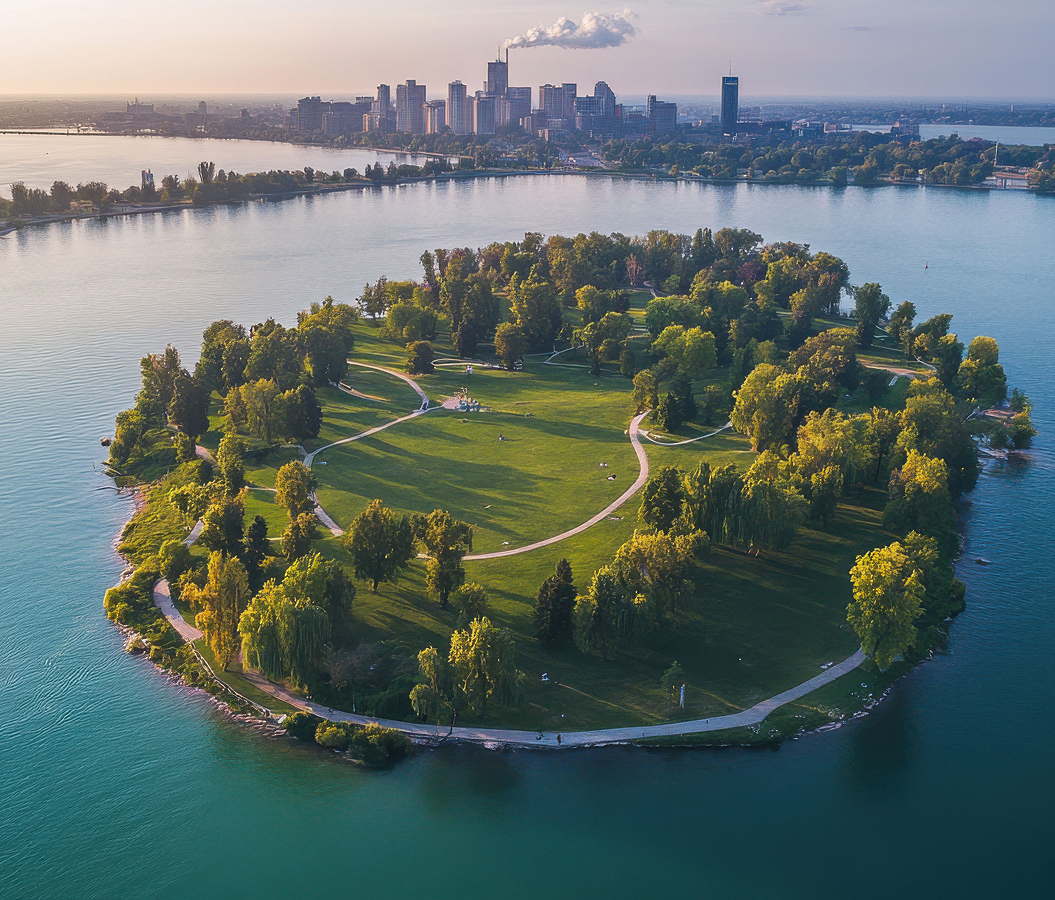
Montréal hosted Expo 67 during Canada's centennial year, constructing an enormous international exposition across Île Sainte-Hélène and the newly created Île Notre-Dame. Excavated material from Montréal's expanding Metro system contributed to the land-building effort that enlarged the fairgrounds in the St. Lawrence River. Nations erected experimental pavilions showcasing architecture, technology, culture, and competing visions of the future. Several structures became permanent landmarks, most famously Buckminster Fuller's immense geodesic dome and Moshe Safdie's Habitat 67 housing complex. Montréal used a six-month world's fair to reshape its geography and create some of the most enduring architecture of twentieth-century Canada.
1. Montréal converted an Olympic velodrome into an indoor ecosystem containing thousands of animals and plants.
The 1976 Summer Olympics left Montréal with an extensive collection of purpose-built sports architecture, including a velodrome beside Olympic Stadium. During the following decades, the former cycling venue acquired an entirely different purpose. The Montréal Biodome opened there in 1992, transforming the vast interior into recreated ecosystems containing vegetation, animals, water, rockwork, and carefully controlled environmental conditions. Tropical rainforest, Laurentian forest, Gulf of St. Lawrence, and subpolar environments allow radically different ecological worlds to exist beneath the same roof. Montréal repurposed an expansive piece of Olympic infrastructure into an immersive institution devoted to the biological environments of the Americas.
Where your story begins.
Foresyte Travel reveals places that feel extraordinary long before you arrive.
Enjoy editorial crafted for luxury travelers.
Foresyte may earn a commission when you book.