Fun facts about Paris, France.
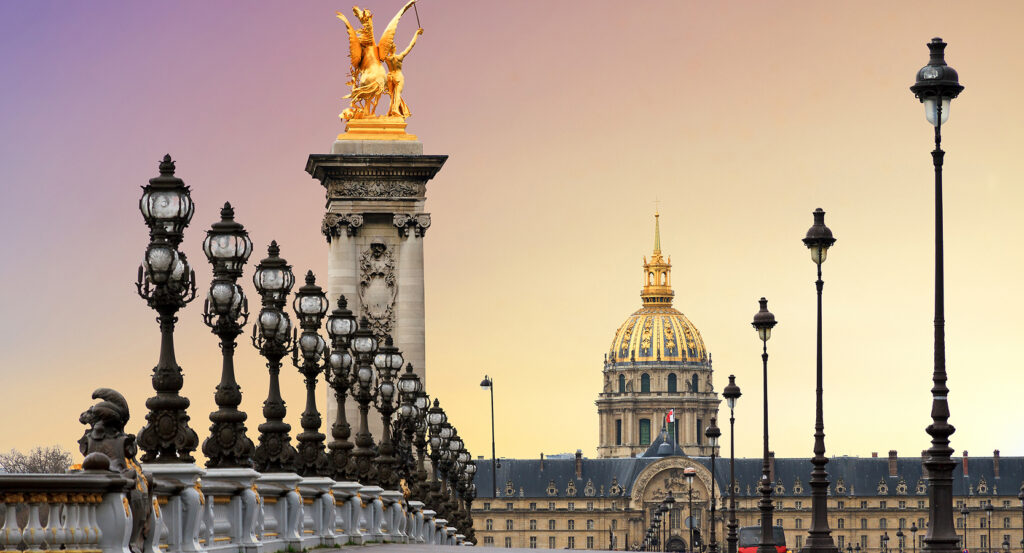
Paris has shaped global culture for centuries through an extraordinary blend of art, architecture, history, and innovation, creating a city where medieval streets, grand boulevards, and world-famous landmarks define one of the world's most celebrated capitals. Icons including the Eiffel Tower, the Louvre Museum, Notre-Dame Cathedral, and the Arc de Triomphe have become enduring symbols of France, while neighborhoods such as Le Marais, Saint-Germain-des-Prés, Montmartre, and the Latin Quarter each reveal a distinct chapter of the city's remarkable story. Every Arrondissement contributes to a destination where history and modern life exist in seamless harmony.
Beyond its iconic skyline, Paris fascinates through an unparalleled concentration of artistic and cultural treasures. Visitors can admire masterpieces inside the Musée d'Orsay, stroll through the formal gardens of the Jardin des Tuileries and the Jardin du Luxembourg, browse the elegant boutiques along the Champs-Élysées, or explore the grand halls of the Palace of Versailles just beyond the city. The cafés of Saint-Germain-des-Prés, the bookshops lining the Seine, and architectural landmarks such as Palais Garnier and Sainte-Chapelle demonstrate how centuries of creativity continue to influence everyday life throughout the French capital.
Perhaps Paris' greatest fascination is its remarkable ability to preserve its timeless character while continually inspiring new generations of artists, designers, chefs, and travelers. Whether climbing the steps to Sacré-Coeur Basilica, wandering the galleries of the Centre Pompidou, enjoying a cruise along the Seine River, or discovering hidden courtyards throughout the city's historic neighborhoods, visitors quickly realize that every street reveals another layer of Parisian history and culture. From celebrated cuisine and haute couture to grand monuments and intimate neighborhood cafés, Paris continues to captivate the world through an elegance and character unlike anywhere else on Earth.
Five fascinations.
5. The Eiffel Tower was once successfully “sold” by a con man.
Victor Lustig arrived in Paris during the 1920s and devised one of history's most audacious frauds after encountering discussion of the Eiffel Tower's maintenance costs. Posing as a government official, he invited scrap-metal dealers to a confidential meeting and claimed the city intended to dismantle the monument. Dealer André Poisson paid Lustig for the supposed right to purchase its 7,300 tons of iron, then remained silent after discovering the deception out of embarrassment. Lustig escaped to Austria and later returned to Paris to attempt essentially the same scheme again.
4. The Statue of Liberty was assembled in Paris before it ever reached New York.
Frédéric Auguste Bartholdi's colossal Statue of Liberty first rose above Paris as its copper sections were assembled between 1881 and 1884 near Parc Monceau. Gustave Eiffel designed the internal iron structure that supported the enormous sculpture years before completing his namesake tower. Once finished, the statue stood above the surrounding Parisian rooftops before workers dismantled it and shipped it across the Atlantic aboard the French vessel Isère. New York received the pieces in 1885, making one of America's defining monuments an extraordinary product of nineteenth-century Parisian art and engineering.
3. Paris' oldest surviving bridge is called the “New Bridge.”
Pont Neuf translates literally as “New Bridge,” yet the structure is the oldest surviving bridge across the Seine in Paris. Henri III laid its first stone in 1578, and construction continued into the reign of Henri IV before completion in the early seventeenth century. Its name originally reflected genuine innovation. The stone bridge departed from the crowded urban model of earlier Parisian crossings by eliminating the houses traditionally built across bridge decks and opening the river to unobstructed views. Centuries of replacement and destruction eventually transformed the revolutionary “new” bridge into the oldest one left standing.
2. The Eiffel Tower survived partly because it became useful for radio.
The Eiffel Tower was conceived for the 1889 Exposition Universelle and initially faced substantial opposition from prominent French artists and intellectuals. Its future became more secure as Gustave Eiffel promoted scientific experiments from the structure and its extraordinary height proved valuable for wireless communication. Radio transmission ultimately gave the iron monument strategic importance far beyond its original role as an exposition centerpiece. By the time Eiffel died in 1923, the structure had evolved from a controversial temporary attraction into communications infrastructure as well as an increasingly powerful symbol of Paris.
1. Paris transformed its underground quarries into an empire of the dead.
Beginning in the late eighteenth century, authorities confronted dangerously overcrowded and unsanitary Parisian cemeteries by transferring human remains into abandoned underground quarry galleries. The operation eventually created the Paris Catacombs, where bones from generations of Parisians were reorganized beneath the city into immense subterranean ossuaries. The passages expose an extraordinary physical relationship between two versions of Paris: limestone excavated underground helped construct the city above, then the resulting voids became repositories for its dead. Today, only a small portion of this enormous underground landscape forms the publicly accessible Catacombs.
Where your story begins.
Foresyte Travel reveals places that feel extraordinary long before you arrive.
Enjoy editorial crafted for luxury travelers.
Foresyte may earn a commission when you book.