Fun facts about Detroit, Michigan.
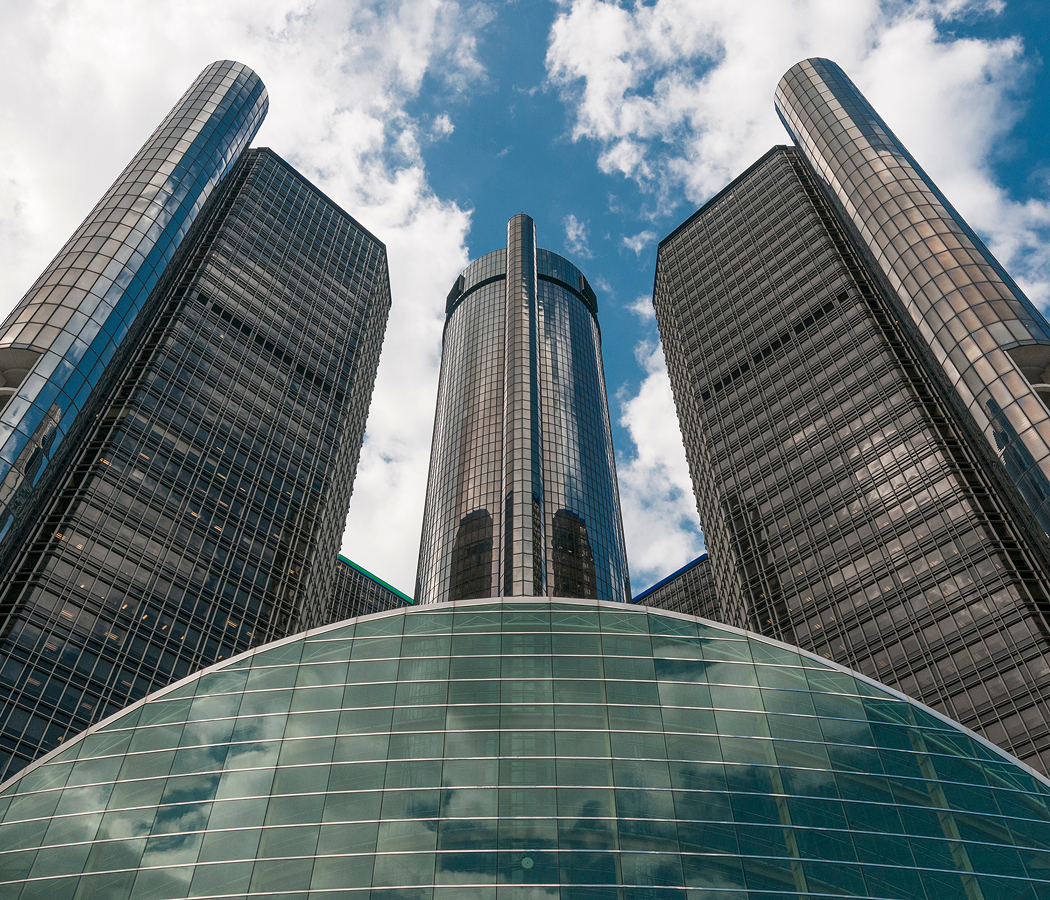
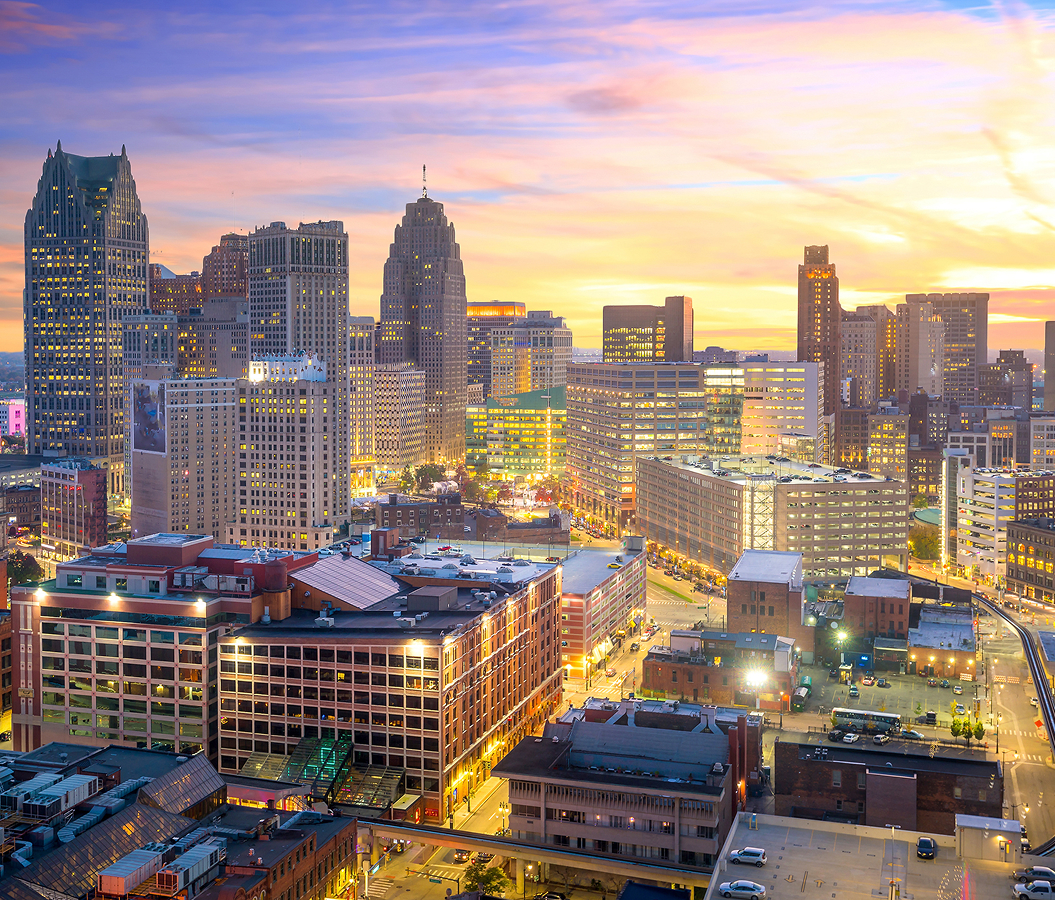
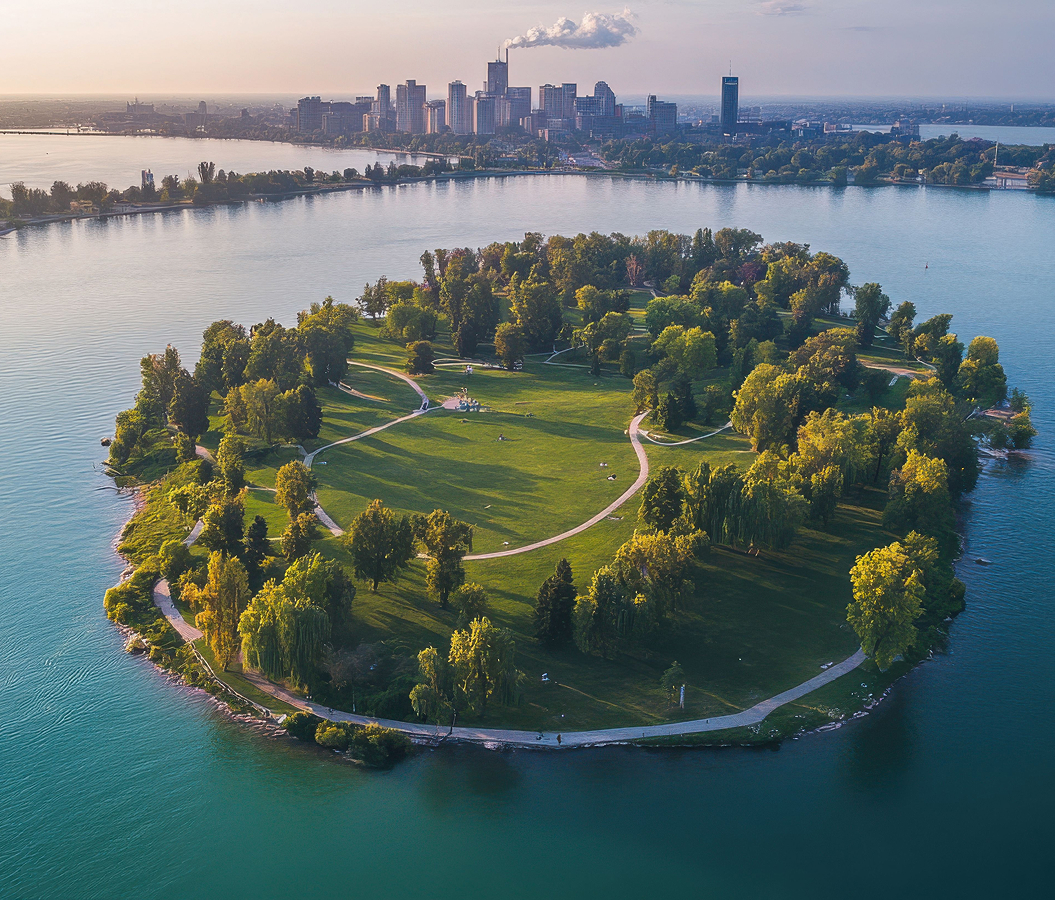
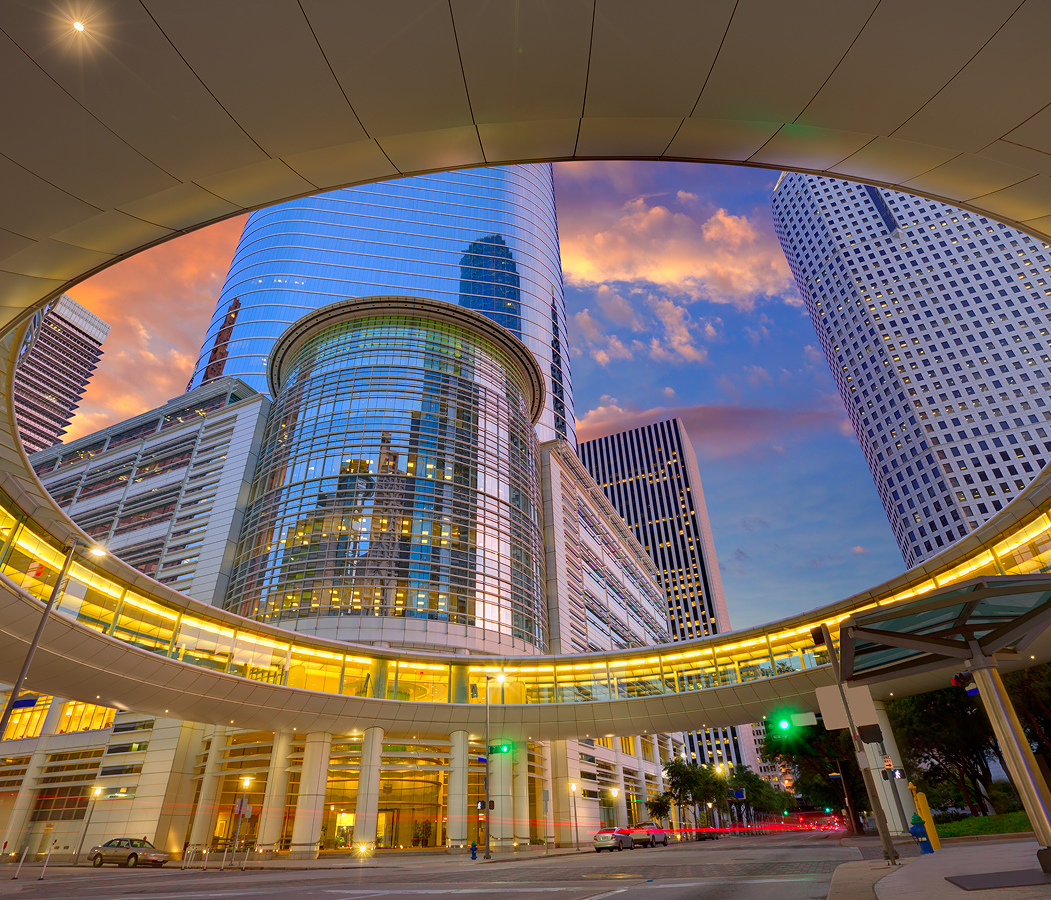
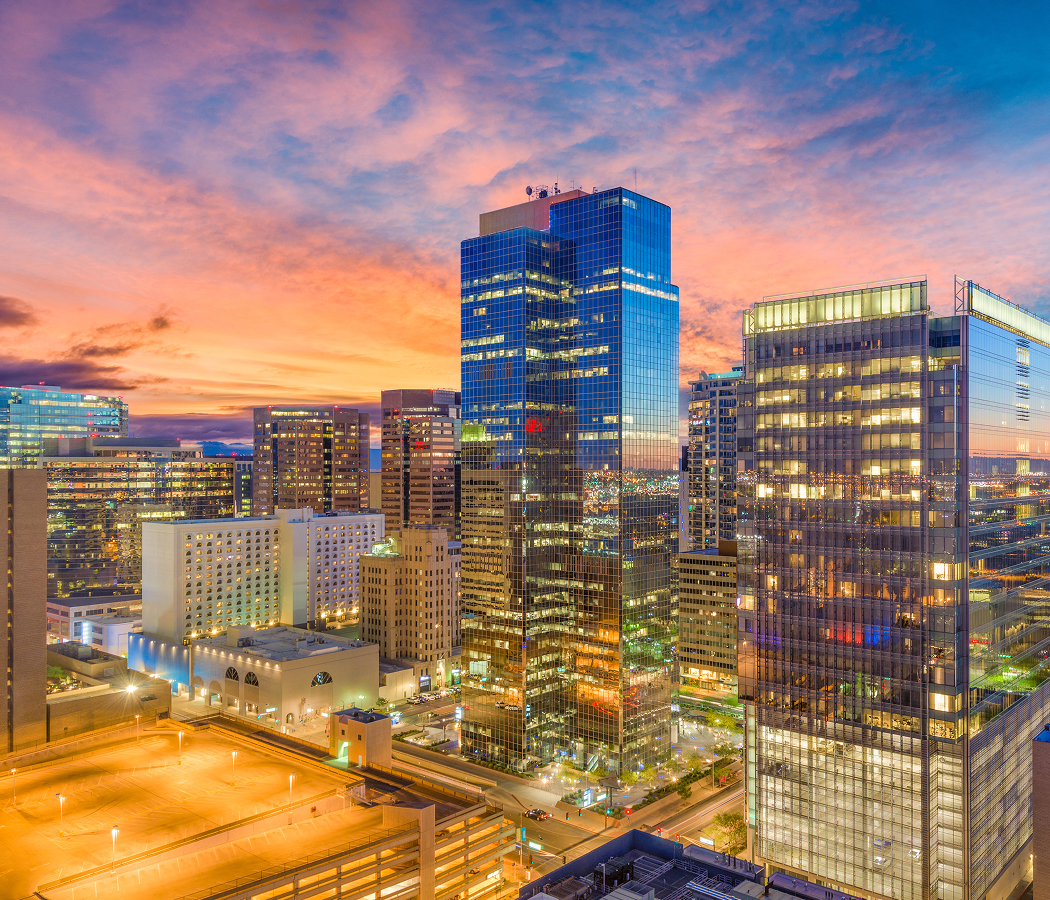
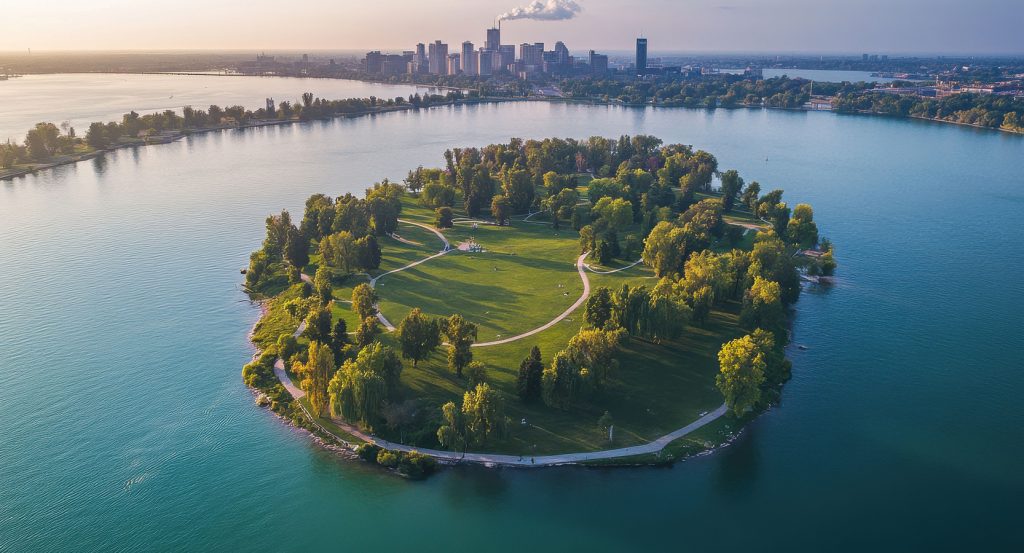
Detroit extends along the northwestern bank of the Detroit River, directly across from Windsor, Ontario, where an international waterway connects the industrial heartland of the Great Lakes with the Atlantic shipping system. The river forms the city's defining geographic feature, separating two countries through a relatively narrow channel bordered by commercial towers, historic industrial sites, waterfront parks, and residential neighborhoods. Downtown occupies a broad riverfront plain organized around a distinctive street network combining radial avenues with a rectangular grid. Campus Martius Park forms a central civic gathering space, surrounded by office buildings, commercial streets, and prominent landmarks associated with the city's financial history. Nearby, the Guardian Building presents one of America's most remarkable examples of Art Deco architecture, distinguished by its richly colored brick exterior, geometric ornamentation, and elaborate interior tilework. The Penobscot Building and other early twentieth-century skyscrapers preserve the architectural ambitions of Detroit's industrial prosperity. The Renaissance Center rises along the riverfront through a cluster of modernist glass towers, forming a prominent feature of the downtown skyline. The Detroit Riverwalk follows the waterfront through landscaped promenades, public plazas, and recreational spaces, connecting former industrial territory with contemporary civic infrastructure. Hart Plaza occupies a substantial riverfront site containing public monuments and gathering spaces used for festivals and cultural events. Northward, Woodward Avenue establishes the principal axis connecting downtown with Midtown, New Center, and the city's northern neighborhoods. The Fox Theatre, completed in 1928, presents an elaborate interior influenced by Asian decorative traditions and remains one of the city's principal historic entertainment landmarks. Nearby, the Detroit Opera House occupies another grand theater building associated with the city's performing arts heritage. Midtown contains a concentration of major cultural institutions, including the Detroit Institute of Arts, whose Beaux-Arts building houses internationally significant collections. The Detroit Public Library's Main Library stands across Woodward Avenue, distinguished by its Italian Renaissance-inspired architecture and richly decorated interiors. The Charles H. Wright Museum of African American History occupies a substantial complex nearby, connecting the district with the city's Black cultural heritage. Farther north, the Fisher Building rises above New Center through an elaborate Art Deco composition designed by Albert Kahn, incorporating marble, bronze, mosaics, and a dramatic illuminated tower. The surrounding district developed as an important commercial center associated with the automobile industry. East of downtown, Eastern Market occupies an extensive historic wholesale district of market sheds, warehouses, food businesses, and commercial streets. Its large covered market structures support one of the country's most established public market traditions. Corktown, southwest of downtown, preserves some of Detroit's oldest residential architecture, with nineteenth-century houses, former industrial buildings, and neighborhood commercial corridors reflecting successive immigrant communities. Michigan Central Station dominates the district through its grand Beaux-Arts railway architecture, restored after decades of abandonment and reopened in 2024 as a center for technology and innovation. Westward, the former industrial landscape of the Rouge complex in nearby Dearborn preserves the extraordinary scale of automobile manufacturing through factories, rail infrastructure, and riverfront production facilities. Detroit's residential neighborhoods extend across a broad metropolitan landscape, containing historic brick houses, Craftsman residences, substantial early twentieth-century apartment buildings, and districts of vacant or redeveloped land. Indian Village and Boston-Edison preserve concentrations of architecturally distinguished homes associated with the city's industrial elite. Belle Isle occupies a large island park in the Detroit River, with landscaped grounds, historic structures, and views toward the American and Canadian waterfronts. Designed in part by Frederick Law Olmsted, the park contains the Belle Isle Conservatory, aquarium, and extensive recreational spaces. Detroit's physical character reflects the grand scale of its industrial heritage, the architectural confidence of its commercial districts, and the changing relationship between neighborhoods, manufacturing sites, and the international river that first established its importance.
American popular music acquired several of its most influential modern forms in Detroit, where Black musical innovation, industrial working-class communities, and an extensive network of clubs, churches, and recording studios produced sounds that transformed global culture. Berry Gordy Jr. founded Motown Records in 1959, establishing a recording enterprise that brought Detroit soul music to international audiences. Operating from the modest house known as Hitsville U.S.A. on West Grand Boulevard, Motown developed a distinctive sound through sophisticated songwriting, disciplined studio production, and the instrumental brilliance of the Funk Brothers. Artists including the Supremes, Marvin Gaye, Stevie Wonder, the Temptations, and Smokey Robinson and the Miracles became defining figures of twentieth-century popular music. The Motown Museum preserves the original recording studio and offices associated with this extraordinary period of musical creativity. Detroit also played a foundational role in the development of techno during the 1980s, when Juan Atkins, Derrick May, and Kevin Saunderson pioneered electronic dance music influenced by synthesizers, funk, European electronic composition, and the city's industrial atmosphere. Their work established Detroit as an international center of electronic music, with the annual Movement festival continuing this legacy through performances by leading DJs and producers. The city's rock heritage includes MC5, the Stooges, and Bob Seger, whose recordings reflected the energy and social tensions of industrial America. Detroit's jazz traditions developed through clubs, orchestras, and musicians associated with the city's energetic Black cultural community, including pianist Barry Harris and saxophonist Yusef Lateef. The Detroit Jazz Festival brings major international performers to downtown stages each year, sustaining one of the country's prominent free jazz celebrations. The Detroit Institute of Arts contains major collections of European, American, African, Asian, and contemporary art, with Diego Rivera's Detroit Industry Murals forming one of its most significant artistic achievements. Completed in 1933, the murals depict automobile production, industrial labor, and the technological complexity of modern manufacturing within the museum's central court. The Charles H. Wright Museum of African American History explores the experiences, achievements, and struggles of African Americans through exhibitions addressing slavery, migration, civil rights, and cultural production. Detroit's literary heritage includes poet Robert Hayden, whose work examined history, memory, and African American experience, and novelist Jeffrey Eugenides, whose fiction draws upon the city's neighborhoods and social transformations. The city's culinary traditions reflect generations of migration and the food culture of industrial working communities. Detroit-style pizza, developed during the twentieth century, is distinguished by its rectangular shape, thick yet airy crust, caramelized cheese edges, and tomato sauce applied in distinctive stripes. Coney dogs, typically topped with chili, mustard, and chopped onions, remain a familiar specialty associated with longstanding downtown restaurants. Eastern Market supports a diverse network of produce merchants, butchers, specialty food businesses, and regional agricultural producers. Detroit's substantial Arab American community, particularly in neighboring Dearborn, contributes a rich culinary landscape of Lebanese, Yemeni, Iraqi, and other Middle Eastern traditions. Polish, Italian, Greek, and Mexican food cultures also maintain longstanding connections with the metropolitan region. Contemporary restaurants, bakeries, breweries, and cafés have expanded across downtown, Midtown, Corktown, and surrounding neighborhoods, frequently occupying restored industrial and commercial buildings. Detroit's cultural influence is visible in the relationship between its factories and recording studios, its public murals and neighborhood music venues, and the enduring creative contributions of communities that transformed an industrial city into a major force in American art, music, and everyday culture.
Five fascinations.
5. Detroit's street plan still reflects a failed attempt to rebuild the city around grand diagonal avenues.
After a devastating fire destroyed much of Detroit in 1805, Judge Augustus B. Woodward proposed an ambitious new plan based on broad avenues radiating from public spaces. The concept drew inspiration from Pierre L'Enfant's Washington plan and European Baroque city design, although only portions were ultimately realized. Woodward Avenue became the most consequential surviving axis, extending outward from downtown and later shaping metropolitan growth far beyond the original city. Detroit's irregular combination of radial streets and conventional grids preserves fragments of an extraordinarily ambitious reconstruction scheme conceived when the settlement contained only a fraction of its eventual population.
4. The moving assembly line transformed automobile manufacturing in Detroit.
Henry Ford's Highland Park plant introduced the moving assembly line for automobile production in 1913, radically changing how complex manufactured goods were built. Instead of workers repeatedly moving around a stationary automobile, production advanced through specialized stages as components and vehicles traveled between workers. Assembly time for the Model T fell dramatically, supporting enormous increases in output and helping reduce its purchase price. The system influenced factories far beyond the automobile industry and became a defining mechanism of twentieth-century mass production. Detroit's rise as the Motor City produced an industrial innovation that reshaped manufacturing, labor, consumer markets, and urban economies around the world.
3. Detroit's population boom helped create one of America's most influential Black cultural centers.
The Great Migration brought hundreds of thousands of African Americans to Detroit during the twentieth century as families left the South for industrial employment and new opportunities in northern cities. Black Bottom and Paradise Valley became major centers of Black business, entertainment, and community life, with clubs hosting performers who helped establish Detroit as an important musical destination. Urban renewal and freeway construction later destroyed much of these neighborhoods, particularly through the development of Interstate 375. Their cultural influence survived through institutions, artists, businesses, and communities across the city. Detroit's industrial expansion produced profound demographic and cultural transformations extending far beyond the automobile factories themselves.
2. Motown created some of the twentieth century's most influential music inside an ordinary Detroit house.
Berry Gordy purchased a modest house on West Grand Boulevard in 1959 and converted it into the headquarters and recording center known as Hitsville U.S.A. Motown developed an extraordinarily disciplined system of songwriting, production, performance training, and recording there, launching artists including the Supremes, Stevie Wonder, Marvin Gaye, and the Temptations. Studio A operated around the clock as musicians known collectively as the Funk Brothers helped construct the label's distinctive sound. Records created within this compact residential building reached audiences around the world. Detroit turned a former photographer's studio into one of the most consequential sites in the history of popular music.
1. Detroit built an enormous factory complex designed to turn raw materials into finished automobiles almost entirely on one site.
Ford's River Rouge complex developed in Dearborn into one of the most ambitious experiments in vertically integrated manufacturing ever attempted. Iron ore, coal, rubber, and other materials entered a sprawling industrial landscape containing docks, blast furnaces, steelmaking facilities, glass production, power generation, rail infrastructure, and automobile assembly operations. At its twentieth-century peak, the Rouge employed tens of thousands of workers and embodied Henry Ford's effort to control nearly every stage of automobile production. The complex became both a symbol of American industrial power and a major arena of labor history. Metropolitan Detroit concentrated an extraordinary portion of the modern manufacturing process within a single interconnected industrial system.
Where your story begins.
Foresyte Travel reveals places that feel extraordinary long before you arrive.
Enjoy editorial crafted for luxury travelers.
Foresyte may earn a commission when you book.