Perfect weekend in Cairo, Egypt.
Cairo's position at the intersection of the Nile Valley and the Mediterranean world has shaped more than a millennium of Islamic scholarship, imperial government, commercial exchange, and architectural achievement. Situated near the southern apex of the Nile Delta, the Egyptian capital occupies a region whose historical importance extends to the earliest periods of pharaonic civilization. Ancient Memphis served as a royal and administrative center of Egypt from the third millennium BCE, establishing the surrounding territory as a focal point of political authority and religious activity. Following the Roman conquest of Egypt in 30 BCE, the fortress of Babylon developed near the eastern bank of the Nile, becoming an important military installation during the Roman and Byzantine periods. The Arab conquest of Egypt in 641 introduced a new political order, with the commander Amr ibn al-As establishing Fustat as the country's first Islamic capital. The Fatimid dynasty founded al-Qahira in 969, creating a fortified royal city whose name became the Arabic designation for Cairo. Under the Ayyubid and Mamluk dynasties, the expanding metropolis acquired distinguished mosques, religious schools, hospitals, and commercial institutions that strengthened its position within the Islamic world. Ottoman conquest in 1517 incorporated Egypt into a vast imperial trading network, although Cairo retained considerable economic importance through commerce linking Africa, Arabia, and the Mediterranean. Muhammad Ali Pasha's nineteenth-century reforms accelerated military, industrial, and administrative modernization, followed by major construction projects under Khedive Ismail that introduced European-inspired boulevards and public buildings. British occupation began in 1882, preceding the Egyptian Revolution of 1919 and the declaration of Egyptian independence in 1922. The revolution of 1952 subsequently ended the monarchy, establishing Cairo as the political center of republican Egypt and one of Africa's largest metropolitan regions.
Egyptian civilization provides Cairo with an artistic and intellectual inheritance extending from ancient religious traditions to medieval scholarship, modern literature, cinema, and contemporary visual art. The Egyptian Museum, inaugurated in its purpose-built premises in 1902, became one of the world's foremost institutions devoted to ancient Egyptian antiquities, assembling sculptures, funerary objects, royal artifacts, and archaeological collections spanning thousands of years. Al-Azhar University traces its origins to the Fatimid establishment of Al-Azhar Mosque in 970, developing into an influential institution of Islamic religious learning and Arabic scholarship. The Museum of Islamic Art preserves distinguished collections of ceramics, manuscripts, textiles, metalwork, and architectural ornamentation associated with artistic traditions throughout the Islamic world. Cairo's literary history includes Naguib Mahfouz, whose novels explored Egyptian society across generations and earned him the Nobel Prize in Literature in 1988. The city's musical traditions achieved international prominence through performers including Umm Kulthum, whose extraordinary vocal career transformed twentieth-century Arabic music, and composer Mohammed Abdel Wahab, whose compositions contributed to the development of modern Egyptian popular song. Cairo also became the principal center of the Egyptian film industry, producing motion pictures that circulated throughout Arabic-speaking countries and influenced regional popular culture. Egyptian cuisine draws upon Nile Valley agriculture, Mediterranean trade, and centuries of exchange with neighboring Middle Eastern and North African societies. Traditional preparations include koshari, a combination of rice, lentils, pasta, chickpeas, and spiced tomato sauce; ful medames, prepared from slow-cooked fava beans; and molokhia, a leafy green stew served with rice or bread. Other specialties include hawawshi, stuffed vegetables, and desserts incorporating honey, nuts, and aromatic syrups. Cairo rewards a weekend of exploration with extraordinary historical depth, centuries of architectural craftsmanship, influential artistic traditions, and the enduring culinary practices of Egypt's Nile Valley.
Three day itinerary.
Day 1: Khan el-Khalili
Khan el-Khalili is best known for preserving the commercial intensity of medieval Cairo within the expansive fabric of the historic Islamic city. Emir Jaharkas al-Khalili established a major caravanserai on the site during the fourteenth-century Mamluk period, anchoring merchants within a district already shaped by centuries of trade and religious construction. Sultan al-Ghuri substantially reorganized the commercial quarter during the early sixteenth century, adding structures that reinforced its role in Cairo's mercantile economy. Goldsmiths, metalworkers, textile merchants, perfumers, spice sellers, and other specialized trades subsequently concentrated throughout its lanes. The surrounding district connects the market directly with al-Hussein Mosque and the architectural corridor of al-Muizz Street. Khan el-Khalili captures the commercial institutions that helped make Cairo one of the preeminent trading cities of the medieval Islamic world.
Day 1: Khufu's Restaurant
Khufu's Restaurant is best known for chef Mostafa Seif's contemporary interpretation of Egyptian cuisine beside the Giza pyramids. Egyptian grains, legumes, vegetables, spices, poultry, and meat form the foundations of cooking that draws directly from the country's historic recipes and regional traditions. Seif develops those foundations through refined technique, giving familiar preparations new structural precision while preserving their Egyptian character. The restaurant's position on the Giza Plateau creates an extraordinary physical relationship between the food and one of the civilizations that shaped the agricultural history behind it. Khufu's rose to number one on Middle East and North Africa's 50 Best Restaurants in 2026, becoming the first Egyptian restaurant to lead the regional ranking. That achievement established an unprecedented international position for contemporary Egyptian gastronomy.
Day 2: Giza Necropolis
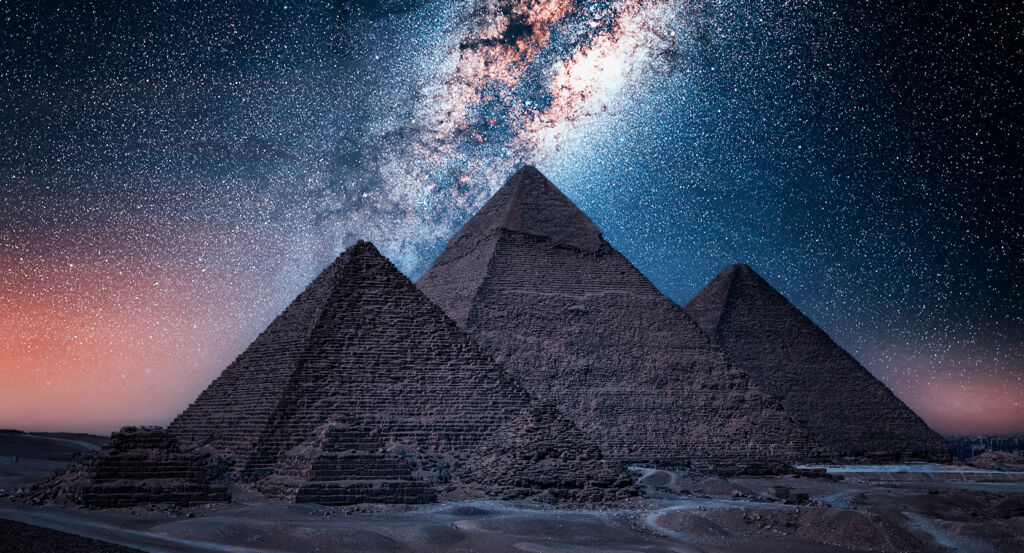
Giza Necropolis is best known for preserving the expansive funerary landscape created for the Fourth Dynasty rulers Khufu, Khafre, and Menkaure during Egypt's Old Kingdom. Khufu's Great Pyramid emerged during the twenty-sixth century BCE from an immense organization of quarrying, transport, surveying, labor, and stone construction. Khafre's pyramid, associated valley temple, causeway, and the Great Sphinx expanded the plateau into an expansive ceremonial landscape. Menkaure subsequently established a smaller pyramid complex accompanied by subsidiary structures. Workers' settlements, cemeteries, temples, boat pits, and surrounding tombs reveal an organized society extending far beyond the royal monuments themselves. The Great Pyramid survives as the only substantially intact member of the Seven Wonders of the Ancient World, giving Giza an unmatched position within the architectural inheritance of antiquity.
Day 2: Zööba
Zööba is best known for transforming Egyptian street food into a focused contemporary restaurant format grounded in the everyday cooking of Cairo. Ta'ameya made from fava beans anchors a repertoire extending through koshari, ful, hawawshi, baladi bread, pickles, eggs, and intensely seasoned Egyptian sauces. These preparations draw their authority from inexpensive ingredients that have sustained Egyptian households and street kitchens across generations. The kitchen preserves their recognizable foundations while applying tighter control to sourcing, preparation, and presentation. Zooba subsequently carried Egyptian street-food traditions beyond the country through international expansion, demonstrating the strength of a cuisine frequently subsumed abroad into broader Middle Eastern categories. Its Zamalek restaurant ranked number 32 in Middle East and North Africa's 50 Best Restaurants for 2026.
Day 2: Saladin Citadel
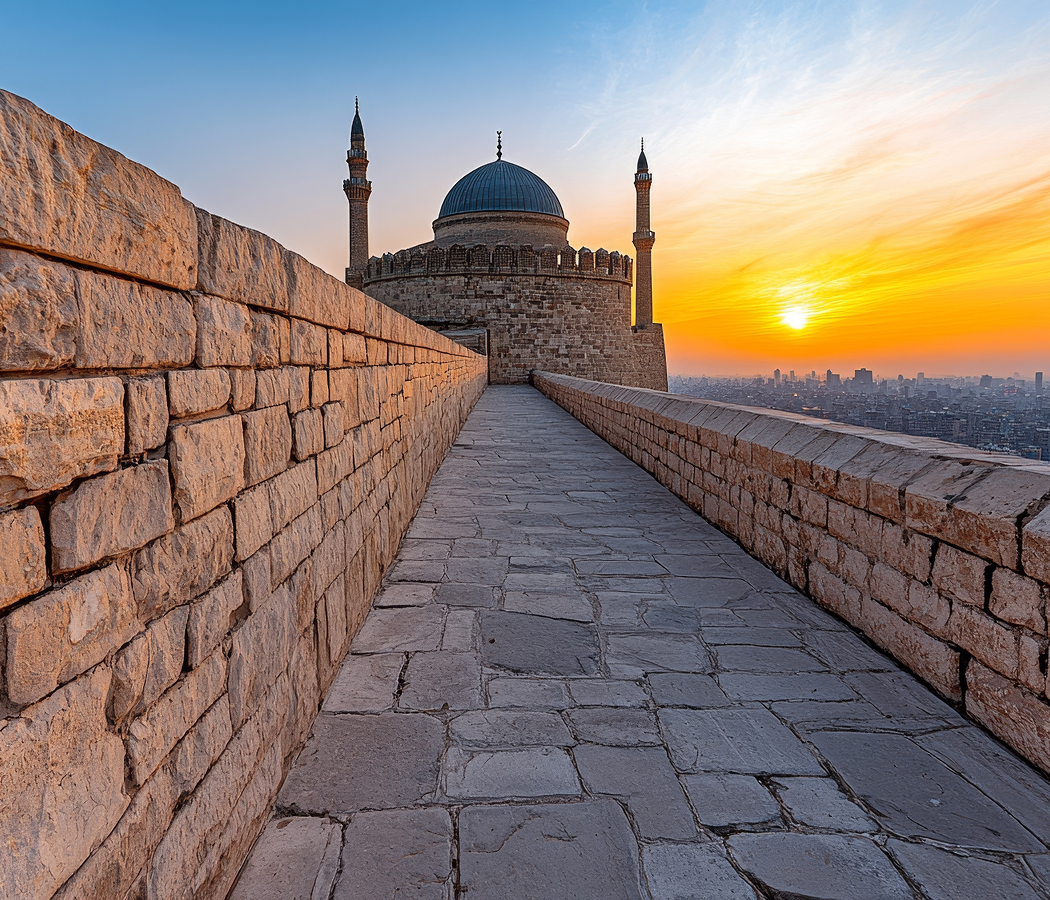
Saladin Citadel is best known for concentrating nearly seven centuries of Egyptian political power within a fortified complex above the historic city. Salah al-Din began constructing the citadel during the twelfth century as part of a defensive system intended to protect Cairo and Fustat during the Crusades. Subsequent Ayyubid, Mamluk, and Ottoman rulers repeatedly altered the complex as military technology, court life, and political authority evolved. Muhammad Ali transformed its skyline during the nineteenth century through the immense Ottoman-influenced mosque bearing his name. His dynasty governed from the citadel until Egypt's political center shifted to Abdeen Palace. Fortifications, mosques, palaces, gates, terraces, and commanding views across Cairo preserve an architectural record of successive regimes that governed Egypt from the medieval period into the modern state.
Day 2: Abou El Sid Restaurant
Abou El Sid Restaurant is best known for building its character around the traditional dishes of the Egyptian household. Molokhia, stuffed pigeon, fatta, mahshi, kofta, liver, lentils, rice, and slow-cooked meats place the country's domestic repertoire at the center of the kitchen. These preparations emerged from an agricultural culture shaped by the Nile Valley's grains, legumes, vegetables, herbs, livestock, and long exchange with the eastern Mediterranean and North Africa. Rich stews and stuffed vegetables preserve techniques whose importance lies in accumulation of flavor and careful handling of modest ingredients. Decorative references to twentieth-century Egypt extend that cultural grounding into the dining room. Abou El Sid gives the evening a broad survey of Egyptian culinary inheritance through dishes deeply embedded in national food culture.
Day 3: Zitouni
Zitouni is best known for presenting a broad repertoire of Egyptian cooking from a dining room overlooking the Nile. Breakfast brings ful medames, ta'ameya, breads, cheeses, eggs, vegetables, pastries, and other preparations embedded in Egyptian morning culture into a polished hospitality setting. Legumes and bread occupy particularly deep positions in the country's food history, connecting everyday breakfast with agricultural patterns extending across millennia. Regional dishes broaden the kitchen beyond Cairo into the wider Egyptian table. The riverfront position adds geographic significance to a cuisine formed within a civilization dependent upon the Nile and its fertile valley. Zitouni gives brunch both destination-level refinement and a direct relationship with the foundational foods of Egypt.
Day 3: Tahrir Square
Tahrir Square is best known for concentrating the political history of modern Egypt within Cairo's central civic space. The district took shape during the nineteenth-century transformation of Cairo under Khedive Ismail, whose urban ambitions radically altered the city west of its older Islamic core. Originally associated with Ismailia Square, the space acquired its liberation-oriented name after the political transformations surrounding the 1952 Egyptian Revolution. Government buildings, major streets, hotels, and the Egyptian Museum established the square as a focal point of metropolitan Cairo. Mass demonstrations during the 2011 Egyptian Revolution subsequently turned Tahrir into an internationally recognized symbol of popular political mobilization. Its physical openness and central location have repeatedly placed Egyptian state power and public political expression within the same urban arena.
Day 3: Coptic Museum
Coptic Museum is best known for preserving the world's foremost concentration of material culture associated with Egypt's Coptic Christian civilization. Marcus Simaika founded the museum in 1908 within the historic precinct of Coptic Cairo, where churches, the Roman fortress of Babylon, and layers of Christian settlement surround the collection. Textiles, manuscripts, carved stone, woodwork, metal objects, icons, frescoes, and architectural fragments trace Egyptian Christianity across centuries of political and artistic change. Individual works reveal intersections among Pharaonic, Greco-Roman, Byzantine, and early Islamic artistic traditions within distinctly Egyptian Christian forms. The museum's setting gives those objects direct geographic continuity with one of Cairo's oldest inhabited districts. Coptic Museum establishes Christianity as an essential civilization within the broader historical development of Egypt.
Day 3: Sachi Heliopolis
Sachi Heliopolis is best known for establishing a homegrown Egyptian fine-dining concept within Cairo's modern restaurant culture. Baky Hospitality developed the original Heliopolis restaurant around a cosmopolitan kitchen combining Mediterranean foundations with Asian and European techniques. Seafood, meat, raw preparations, sauces, and carefully constructed plates established a culinary character markedly different from Cairo's traditional Egyptian institutions. The restaurant subsequently became the foundation for Sachi's expansion within Egypt, demonstrating the ability of an independent Cairo concept to grow into a broader luxury hospitality brand. Its significance rests in the development of sophisticated contemporary dining authored within Egypt itself. Sachi ranked number 37 in Middle East and North Africa's 50 Best Restaurants for 2026, placing the original Cairo institution within the region's upper culinary tier.
Where your story begins.
Foresyte Travel reveals places that feel extraordinary long before you arrive.
Enjoy editorial crafted for luxury travelers.
Foresyte may earn a commission when you book.