Perfect weekend in Sedona, Arizona.
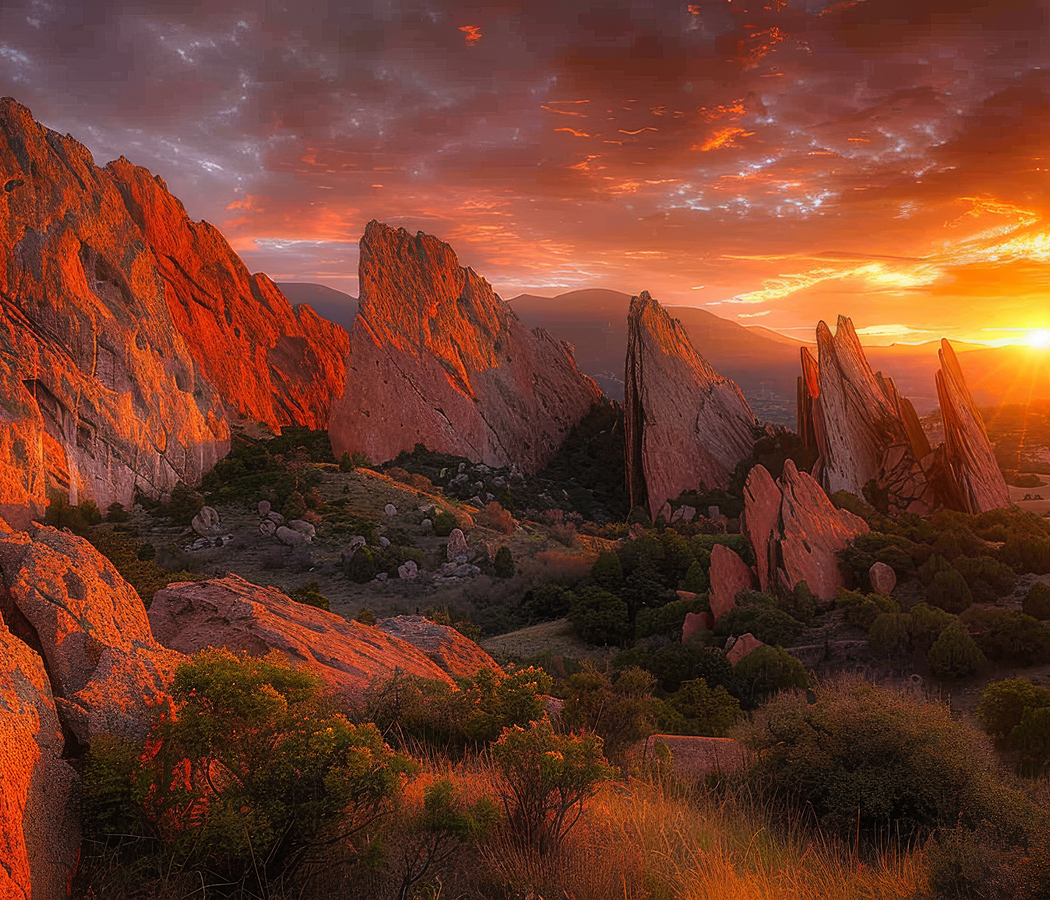
Sedona's dramatic red sandstone formations, ancient Indigenous heritage, and artistic traditions have established this northern Arizona community as one of the American Southwest's most distinctive destinations. Situated within the Verde Valley at the southern edge of the Colorado Plateau, Sedona occupies a landscape shaped by millions of years of geological activity, erosion, and sedimentary deposition. Its towering cliffs and sculpted rock formations belong primarily to the Schnebly Hill Formation, whose iron-rich sandstone produces the deep red coloration associated with the surrounding terrain. Human settlement in the region extends thousands of years into the past, with the Sinagua culture developing agricultural communities, ceremonial structures, and sophisticated relationships with the desert environment between 600 and 1400 CE. The neighboring Verde Valley contains significant archaeological sites, including Montezuma Castle and Tuzigoot, which preserve evidence of the region's pre-Columbian civilizations. The Yavapai and Apache peoples subsequently maintained enduring cultural and ancestral connections to the surrounding mountains, waterways, and valleys. Euro-American settlement expanded during the late nineteenth century, when ranching and agriculture became important activities along Oak Creek. The community received its name in 1902 in honor of Sedona Arabella Miller Schnebly, the wife of early settler and postmaster Theodore Carlton Schnebly. During the twentieth century, Hollywood productions brought international attention to Sedona's desert scenery, with filmmakers using the surrounding rock formations as settings for Western films. The expansion of tourism, artistic communities, and outdoor recreation subsequently transformed the former agricultural settlement into an internationally recognized center of Southwestern culture and landscape appreciation.
Sedona's artistic heritage developed through the arrival of painters, sculptors, writers, and craftspeople attracted to the region's distinctive geology and Southwestern cultural traditions. The Sedona Arts Center traces its origins to the Canyon Kiva, founded in 1958 by Egyptian sculptor Nassan Gobran, whose efforts helped establish the community as a destination for artistic education and exhibitions. The center subsequently supported generations of regional artists through workshops, galleries, and public cultural programs. Tlaquepaque Arts & Shopping Village, developed during the 1970s by Abe Miller, drew architectural inspiration from traditional Mexican villages, incorporating courtyards, fountains, and artisan workshops into a commercial setting. Sedona's association with spiritual exploration expanded during the late twentieth century as alternative healing practices, meditation retreats, and beliefs concerning concentrated natural energies attracted visitors interested in the surrounding landscape. The region's Indigenous cultural heritage remains an important element of its historical significance, with archaeological preservation and tribal traditions connecting contemporary communities to centuries of settlement. Sedona's culinary traditions draw upon Arizona agriculture, Native American ingredients, Mexican regional cooking, and the broader food heritage of the Southwest. Prickly pear, mesquite, chiles, corn, and locally cultivated produce contribute to dishes that connect desert ingredients with contemporary culinary techniques. The Verde Valley's developing wine industry has further expanded the region's gastronomic reputation through vineyards and tasting rooms associated with Arizona viticulture. A perfect weekend in Sedona brings together ancient cultural history, exceptional geological scenery, Southwestern artistic traditions, and regional gastronomy within the red rock landscapes of northern Arizona.
Three day itinerary.
Day 1: Cathedral Rock
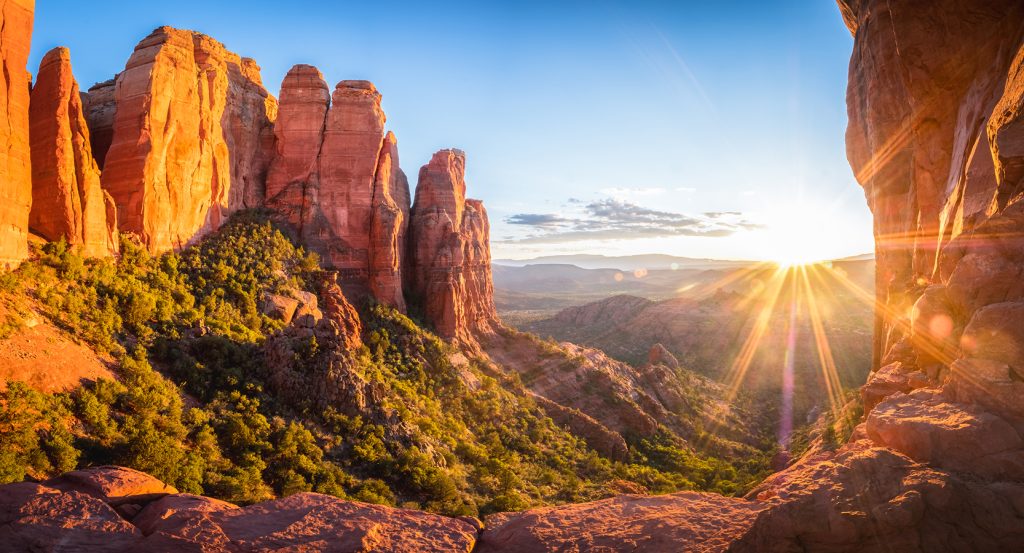
Cathedral Rock is best known for the paired sandstone towers that form one of the defining geological profiles of Sedona's red-rock country. The formation belongs to the Schnebly Hill Formation, a sequence of Permian sandstone and related sedimentary rock deposited more than 250 million years ago. Iron oxides within the sediments produce the intense red and orange coloration that distinguishes the surrounding cliffs, buttes, and mesas. Erosion progressively isolated Cathedral Rock from the larger plateau, carving saddles and vertical faces from layers with differing resistance to weathering. Oak Creek passes through the landscape below, joining riparian vegetation to the exposed desert geology. Cathedral Rock concentrates the sedimentary history, erosion, color, and vertical relief that make the Sedona landscape geologically exceptional.
Day 1: Mariposa Latin Inspired Grill
Mariposa Latin Inspired Grill is best known for Lisa Dahl's combination of Latin American culinary influences, live-fire cooking, and the grand red-rock landscape surrounding Sedona. Dahl developed the restaurant as the flagship of a culinary career that has made her one of the city's most consequential restaurateurs. Argentine parrilla traditions give the wood-fired grill a central role, shaping steaks, seafood, vegetables, and other preparations through flame and smoke. South American ingredients and techniques broaden that foundation through chimichurri, chiles, citrus, grains, and regional flavor structures. The restaurant's hilltop architecture frames expansive views toward Capitol Butte and surrounding formations, joining Dahl's cooking directly to the physical geography that defines Sedona.
Day 2: Chapel of the Holy Cross
Chapel of the Holy Cross is best known for embedding modern religious architecture directly into the red sandstone formations above Sedona. Marguerite Brunswig Staude conceived the project after being inspired by the geometric relationship between architecture and the cross, eventually selecting the Sedona landscape for its construction. Architects Richard Hein and August K. Strotz developed the chapel under the supervision of Anshen & Allen, and construction was completed in 1956. Two immense concrete walls rise from the rock and frame a central cross that dominates the glazed southern elevation. The compact sanctuary projects outward from the formation with minimal separation between architecture and geology. Its design transformed Sedona's red rock from scenic background into a structural and spiritual component of one of Arizona's most distinctive works of twentieth-century religious architecture.
Day 2: Elote Cafe
Elote Cafe is best known for Jeff Smedstad's deeply researched interpretation of Mexican cooking through the agricultural products and culinary traditions of the American Southwest. Smedstad spent decades traveling through Mexico, including Oaxaca, Veracruz, and Puebla, developing direct familiarity with regional ingredients and cooking traditions before establishing Elote in Sedona. Corn, chiles, squash, beans, seeds, citrus, slow-cooked meats, and complex sauces form the foundation of a cuisine linking southern and interior Mexico with Arizona. Fire-roasted corn prepared as elote became the restaurant's defining dish, distilling that broader culinary project into a preparation built around chile, lime, and cheese. Smedstad's sustained engagement with Mexican regional cooking established Elote as one of Sedona's most consequential independent restaurants.
Day 2: Devil's Bridge Trail
Devil's Bridge Trail is best known for reaching the largest natural sandstone arch in the Sedona area through terrain shaped by the erosion of the Colorado Plateau. The bridge consists of resistant sandstone left standing after weathering progressively removed weaker surrounding material. Its narrow upper span rises above a deeply eroded drainage framed by piñon, juniper, and the layered red formations characteristic of the Coconino National Forest. The approach climbs from broad desert terrain into increasingly exposed sandstone before reaching the arch itself. Differential erosion, runoff, freeze-thaw cycles, and the structural characteristics of the rock continue to shape the formation. Devil's Bridge gives Sedona an unusually concentrated demonstration of the geological processes responsible for carving arches, cliffs, alcoves, and isolated formations across the surrounding landscape.
Day 2: Cress on Oak Creek
Cress on Oak Creek is best known for placing refined seasonal cooking directly beside the riparian corridor of Oak Creek at L'Auberge de Sedona. The restaurant occupies a wooded section of creek bank where flowing water, cottonwoods, sycamores, and canyon vegetation create a physical setting sharply different from Sedona's exposed sandstone formations. Seasonal ingredients, vegetables, seafood, meats, and carefully developed sauces structure a culinary program oriented toward composed multicourse dining. Oak Creek gives the restaurant an unusually direct connection to the water system responsible for sustaining one of the region's richest ecological corridors. Cress joins contemporary fine dining to a landscape formed by the interaction of perennial water, riparian habitat, and the red-rock geology surrounding Central Sedona.
Day 3: Casa Sedona Restaurant
Casa Sedona Restaurant is best known for turning breakfast and brunch into a destination meal within the intimate setting of Casa Sedona Inn. Morning cooking centers on eggs, breads, fruit, vegetables, Southwestern ingredients, and substantial composed dishes prepared specifically for daytime service. The restaurant occupies a secluded property in West Sedona beneath the surrounding red-rock formations, giving the meal a close relationship with the desert environment beyond the dining room. Southwestern flavors place familiar breakfast preparations within Arizona's regional culinary context through chiles, corn, herbs, and ingredients associated with the borderlands. Casa Sedona's concentration on morning and midday cooking gives Sedona a polished brunch institution whose culinary character is specifically aligned with its service format.
Day 3: Slide Rock State Park
Slide Rock State Park is best known for the natural sandstone chute formed by Oak Creek within the steep walls of Oak Creek Canyon. Flowing water polished the creek bed into a smooth channel whose combination of gradient, sandstone, and current created the natural slide that gave the park its modern name. Frank L. Pendley established an agricultural homestead there during the early twentieth century and developed an apple orchard using irrigation systems adapted to the narrow canyon environment. Historic cabins, orchard structures, and agricultural remnants preserve this earlier phase of settlement beside the creek. The state park combines one of Arizona's best-known natural swimming environments with the physical remains of small-scale agriculture sustained by Oak Creek's unusual abundance of water.
Day 3: Airport Mesa Vortex
Airport Mesa Vortex is best known for occupying an elevated sandstone position that exposes the geological structure of Sedona across an unusually broad panorama. The mesa rises near the center of the city, creating sightlines toward formations including Coffee Pot Rock, Chimney Rock, Courthouse Butte, Bell Rock, and Cathedral Rock. Horizontal sedimentary layers reveal the erosional processes that separated cliffs, mesas, buttes, and spires from the surrounding plateau over immense spans of geological time. The site also became associated with Sedona's modern vortex tradition, a spiritual culture that interprets particular red-rock locations as concentrations of natural energy. Airport Mesa brings the city's physical geology and its distinctive twentieth-century metaphysical culture together on the same elevated terrain.
Day 3: Dahl & Di Luca Ristorante Italiano
Dahl & Di Luca Ristorante Italiano is best known for establishing Lisa Dahl's culinary presence in Sedona through an enduring interpretation of Italian cooking. Dahl opened the restaurant during the 1990s, laying the foundation for the group of restaurants that subsequently made her one of the city's dominant culinary figures. Handmade pasta, seafood, meats, vegetables, olive oil, and carefully developed sauces anchor a menu drawing heavily from traditional Italian technique. Dahl's cooking emphasizes ingredient quality and the measured construction of familiar preparations, giving the restaurant a distinctly classical character within Sedona's dining culture. Its longevity transformed Dahl & Di Luca from an individual restaurant into the starting point of a culinary enterprise that materially shaped the city's modern restaurant landscape.
Where your story begins.
Foresyte Travel reveals places that feel extraordinary long before you arrive.
Enjoy editorial crafted for luxury travelers.
Foresyte may earn a commission when you book.