
Why Casa Sedona Restaurant matters.
Casa Sedona Restaurant is a Southwestern breakfast destination where West Sedona's red-rock landscape meets Mani Subra's desert architecture, three generations of family hospitality and a distinctive culinary tradition developed within one of the city's established boutique inns.
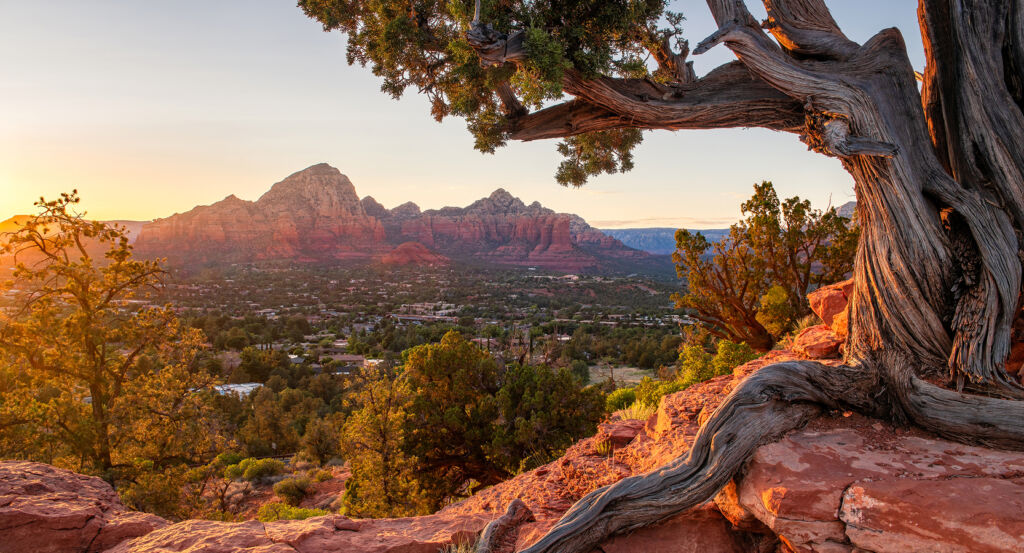
Set along Hozoni Drive near Southwest Drive and Thunder Mountain Road, Casa Sedona Restaurant occupies a secluded residential pocket north of State Route 89A, with Dry Creek Road to the east and Capitol Butte rising above West Sedona's surrounding juniper-covered hillsides. The restaurant forms part of an adobe-style property whose natural stonework, rounded architectural forms and landscaped courtyards establish a close relationship with the surrounding desert terrain. A garden patio extends beneath mature junipers, with flowering plants, stone pathways and shaded dining areas framing views toward the red sandstone formations beyond the neighborhood. Inside, fireplaces and Southwestern decorative details complement a breakfast kitchen whose preparations combine regional Mexican influences with classical European techniques, from chile rellenos and ranchero sauces to eggs Benedict and delicate crêpes. The result is a restaurant whose garden setting, distinctive desert architecture and carefully composed breakfast dishes connect Sedona's natural landscape with an intimate tradition of Southwestern hospitality.
What defines Casa Sedona Restaurant.
Casa Sedona Restaurant is best known for developing a distinctive breakfast and brunch tradition within an architecturally significant Sedona inn whose evolution connects Frank Lloyd Wright's design influence, family restoration and contemporary Southwestern cooking. The property originated as a private residence before its transformation into Casa Sedona Inn in 1992, establishing the architectural setting from which the restaurant subsequently developed. Designer Mani Subra, who studied under Frank Lloyd Wright, conceived the building around Sedona's natural terrain, incorporating adobe-inspired forms, stonework and gardens into a composition oriented toward the surrounding red rocks. The architectural approach brought the principles associated with Wright's organic design tradition into a smaller hospitality property, preserving an intimate relationship between interior spaces and the desert landscape. The inn developed an established reputation for romantic hospitality during the following decades, receiving recognition from travel publications and appearing in 1,000 Places to See Before You Die. Its restaurant became a distinctive component of that reputation, extending the property's intimate character into a breakfast destination accessible to Sedona residents and visitors beyond the inn. Chef Jeremy Geyer contributed an important culinary chapter through a breakfast program built around fresh regional ingredients and individual interpretations of familiar preparations. His kitchen combined Southwestern flavors with European breakfast techniques, establishing a culinary direction exemplified by smoked salmon eggs Benedict, chile rellenos and cinnamon-walnut French toast. The restaurant's development also incorporated the garden patio as an extension of the dining room, connecting its culinary character with the juniper landscape and red-rock views that shaped Subra's original architectural approach. A significant ownership transition followed in 2017 when the father of Erin, among the property's later family operators, purchased Casa Sedona after a professional career devoted to property restoration and intimate boutique hospitality. His acquisition began another period of family stewardship, preserving the architectural character and established restaurant within a property that had already operated for more than two decades. Following his death in 2023, Erin and Scott assumed management, extending the family's involvement into another generation and renewing their commitment to the property's original character. The restaurant maintained its emphasis on food prepared from scratch, developing a broad breakfast and brunch selection that connected Southwestern ingredients with Mediterranean and European influences. Its distinctive preparations included a Baja chile relleno filled with chorizo, sausage, ricotta and Boursin cheese, alongside truffle-brie scrambled eggs accompanied by smoked salmon and a parsley crêpe. The kitchen also developed dishes such as totopos combining wontons, manchego cheese, lemon-butter shrimp and pineapple relish, demonstrating the continued expansion of its cross-cultural culinary approach. Casa Sedona Restaurant received Tripadvisor Travellers' Choice recognition in 2026, extending the reputation of a dining destination established within the inn's longstanding hospitality tradition. Its significance rests on the convergence of Subra's architectural design, Geyer's culinary contribution and successive generations of family stewardship, preserving an intimate Southwestern dining institution whose history remains inseparable from the character of the property surrounding it.
How Casa Sedona Restaurant fits.
Casa Sedona Restaurant works as the morning starting point for a West Sedona outing connecting Tibetan Buddhist spiritual architecture, the agricultural heritage of Oak Creek and the conservation movement that preserved a substantial stretch of Arizona's red-rock landscape.
Begin at Amitabha Stupa and Peace Park, the Tibetan Buddhist sanctuary developed through the vision of Jetsunma Ahkon Lhamo Rinpoche, spiritual director of Kunzang Palyul Chöling. The project brought Buddhist practitioners to Sedona beginning in 2001, establishing a religious community devoted to constructing a sacred monument within the red-rock landscape. Completed in 2004, the stupa became a place for prayer and meditation, incorporating the traditional architectural symbolism associated with Tibetan Buddhist sacred structures. Its establishment connected the teachings of the Nyingma school of Tibetan Buddhism with Sedona's growing international reputation as a destination for spiritual practice. The surrounding grounds subsequently developed into a public sanctuary accessible to people of different religious traditions. Continue to Crescent Moon Ranch, the historic agricultural property established by cattleman John Lee in 1880 beside Oak Creek beneath Cathedral Rock. Henry Schuerman and David Dumas acquired the property in 1905 and developed an extensive fruit-growing operation whose orchards encompassed 1,500 trees by 1916. Andrew and Jane Baldwin purchased the ranch in 1936, establishing another agricultural chapter that included a substantial residence built in 1938 and a productive orchard celebrated for its peaches. The United States Forest Service acquired the property in 1980, protecting the surviving ranch buildings and agricultural landscape from commercial redevelopment. Preservation work subsequently restored the historic residence, irrigation structures and associated buildings, maintaining one of the Verde Valley's important surviving agricultural properties. Conclude at Red Rock State Park, the protected Oak Creek landscape whose establishment grew from Governor Bruce Babbitt's concerns about public access to privately controlled Arizona waterways. During a 1980 hike, Babbitt encountered restrictions on access to a former portion of Smoke Trail Ranch, a property acquired in 1941 by aviation executive Jack Frye and his wife Helen. The incident contributed to efforts to protect the surrounding riparian landscape, and Arizona State Parks acquired the property in 1986. The park opened on October 19, 1991, preserving a section of Oak Creek bordered by sandstone formations and a biologically important corridor of riverside vegetation. Its conservation established a protected landscape encompassing natural habitats and the agricultural history associated with the former ranch. The progression moves from Jetsunma Ahkon Lhamo's Buddhist sanctuary through the preserved orchards of Crescent Moon Ranch into the state conservation initiative that established Red Rock State Park, connecting spiritual patronage, agricultural settlement and environmental preservation across Sedona's western landscape.
Where your story begins.
Foresyte Travel reveals places that feel extraordinary long before you arrive.
Enjoy editorial crafted for luxury travelers.


























































































































