Perfect weekend in Singapore.
Singapore's position at the southern entrance to the Strait of Malacca transformed a small island settlement into one of Asia's foremost centers of maritime commerce, international finance, and political independence. Located between the Malay Peninsula and the Indonesian archipelago, the island occupies a strategic passage connecting the Indian Ocean with the South China Sea. Archaeological discoveries trace substantial trading activity to the fourteenth century, when the settlement of Temasek maintained commercial relationships with merchants from China, India, and the wider Malay world. The island subsequently became associated with the Malay name Singapura, traditionally translated as Lion City. During the early modern period, the surrounding waters formed part of commercial networks influenced by the Malay sultanates and competing European maritime powers. In 1819, Sir Stamford Raffles established a British trading settlement through an agreement with local Malay rulers, initiating the development of a port that attracted merchants from across Asia. Singapore became part of the Straits Settlements in 1826, alongside Penang and Malacca, and subsequently developed into a major commercial center under British colonial administration. The opening of the Suez Canal in 1869 strengthened its position along international shipping routes, accelerating the movement of commodities, passengers, and manufactured goods. Chinese, Indian, Malay, Arab, and European communities contributed to the island's expanding commercial economy, establishing institutions that shaped its multilingual society. Japanese forces captured Singapore in February 1942, beginning an occupation that lasted until the end of the Second World War. The island subsequently experienced political restructuring, labor unrest, and growing demands for self-government. Singapore achieved internal self-government in 1959 under Prime Minister Lee Kuan Yew, joined Malaysia in 1963, and became an independent republic on August 9, 1965. Industrialization, public housing construction, port modernization, and investment in education subsequently transformed the country's economic foundations. Singapore developed into a global center of shipping, aviation, technology, and financial services, combining a densely populated metropolitan landscape with extensive transportation infrastructure and carefully managed urban growth.
Singaporean Peranakan culture developed through centuries of interaction between Chinese settlers and the Malay communities of maritime Southeast Asia, producing distinctive traditions in language, decorative arts, domestic architecture, and cooking. Peranakan families became particularly prominent within the commercial society of the Straits Settlements, developing elaborate ceremonial customs and artistic practices that combined Chinese ancestry with regional influences. The Peranakan Museum preserves examples of intricate beadwork, embroidered textiles, porcelain, jewelry, and domestic objects associated with these communities. Traditional Peranakan craftsmanship includes kasut manek, intricately beaded slippers produced through painstaking handwork, and colorful ceramic tableware used during family celebrations. Singapore's literary history includes writers such as Edwin Thumboo, whose poetry explored national independence, multicultural society, and the development of Singaporean civic consciousness. The National Library's collections preserve important works associated with the country's publishing history and multilingual literary communities. The Esplanade's performing arts institutions contribute to Singapore's theatrical and musical landscape through orchestral concerts, dance, contemporary performance, and productions reflecting the country's diverse artistic communities. The Singapore Symphony Orchestra, founded in 1979, became an important institution for classical music, contributing to the development of professional orchestral performance in Southeast Asia. Singapore's culinary traditions emerged from the convergence of Malay, Chinese, Indian, and Peranakan cooking, supported by the island's historic position along international spice and trading routes. Hainanese chicken rice developed into one of the country's most celebrated dishes, combining poached chicken, fragrant rice, and accompanying sauces influenced by Chinese culinary techniques. Laksa acquired regional variations through the combination of rice noodles, coconut milk, aromatic spices, and seafood, with Katong-style laksa becoming closely associated with Singapore's eastern neighborhoods. Traditional Malay preparations include nasi lemak, satay, and rendang, and Indian communities contributed roti prata, biryani, and numerous regional curry traditions. Hawker centers became essential institutions of Singaporean food culture, bringing specialist vendors together in communal dining spaces that supported affordable meals and the preservation of family cooking traditions. UNESCO inscribed Singapore's hawker culture on its Representative List of the Intangible Cultural Heritage of Humanity in 2020, recognizing its significance to the country's social and culinary life. Contemporary restaurants extend these foundations through regional Asian ingredients, classical European techniques, and ambitious interpretations of Singapore's diverse cooking traditions. A weekend in Singapore brings the commercial history of maritime Southeast Asia into focus through its multicultural neighborhoods, accomplished performing arts institutions, and an extraordinary food culture shaped by generations of migration and exchange.
Three day itinerary.
Day 1: Gardens by the Bay
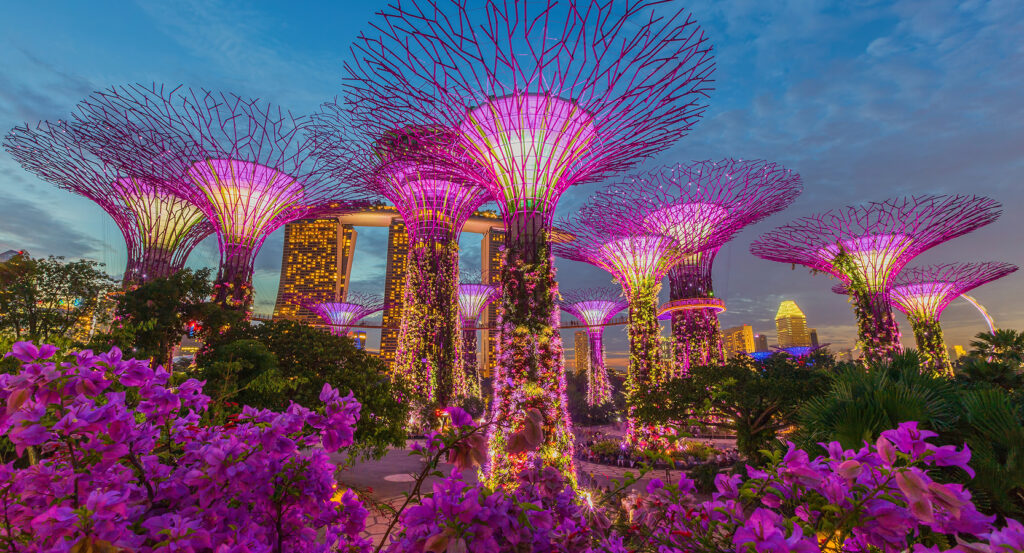
Gardens by the Bay is best known for translating Singapore's ambition to become a “City in a Garden” into 101 hectares of horticulture, architecture, and environmental engineering on reclaimed land at Marina Bay. Grant Associates led the master plan for Bay South Garden, organizing the landscape around Singapore's equatorial climate and botanical diversity. WilkinsonEyre designed the immense cooled conservatories, whose glass-and-steel structures created controlled environments for plant collections drawn from Mediterranean, subtropical, and high-elevation tropical regions. The Supertrees integrate vertical planting with environmental infrastructure, including solar-energy collection and functions supporting the conservatories. Opening in 2012, the project transformed former reclamation ground into one of the most ambitious botanical developments undertaken during Singapore's twenty-first-century expansion.
Day 1: Odette
Odette is best known for Julien Royer's synthesis of French culinary technique with exceptional ingredients sourced across Asia, Europe, and Australia. Royer grew up in France in a farming family whose relationship with produce shaped his ingredient-centered approach to cooking. After establishing his reputation at Jaan, he opened Odette in 2015 inside the National Gallery Singapore and named the restaurant for his grandmother. Artist Dawn Ng developed the principal installation suspended above the dining room, connecting the restaurant's visual environment to the surrounding national art institution. Three MICHELIN stars established Odette at the summit of Singapore fine dining and made Royer one of the defining chefs in the city's emergence as an international gastronomic center.
Day 2: Marina Bay Sands
Marina Bay Sands is best known for transforming Singapore's Marina Bay through three towers joined by an immense elevated SkyPark. Las Vegas Sands commissioned architect Moshe Safdie to design the integrated resort as part of Singapore's strategy to expand tourism, conventions, entertainment, and large-scale urban development. Safdie arranged the towers as paired slabs that curve and separate near their bases, creating immense atriums between the structures. The 340-meter SkyPark spans their rooftops and contains one of the project's defining engineering achievements, a vast cantilever projecting beyond the northern tower. Opening in 2010, Marina Bay Sands rapidly became inseparable from Singapore's skyline and marked a decisive stage in the transformation of reclaimed waterfront land into a dense civic, financial, cultural, and entertainment district.
Day 2: Labyrinth
Labyrinth is best known for chef-owner Han Li Guang's reconstruction of Singaporean food traditions through contemporary technique and intensely local sourcing. Han left a career in banking to open the restaurant in 2014, progressively abandoning an earlier European fine-dining structure as he developed cooking centered on Singapore's culinary heritage. Familiar references to hawker dishes, family recipes, sauces, seafood, vegetables, and regional ingredients became foundations for highly personal compositions connected to memory and place. Han built relationships with Singaporean farmers, fishermen, and independent producers, bringing ingredients from the city-state's limited agricultural landscape into a MICHELIN-starred dining room. Labyrinth turned the foods of everyday Singapore into an examination of national culinary identity, local production, and the preservation of traditions shaped by Chinese, Malay, Indian, and other influences.
Day 2: Sentosa Island
Sentosa Island is best known for its transformation from a fortified military position into Singapore's principal resort island. Known historically as Pulau Blakang Mati, the island became part of Britain's coastal defense system, with installations including Fort Siloso protecting the western entrance to Keppel Harbour. Japanese forces occupied Singapore in 1942, placing the island within one of the most consequential military episodes in Southeast Asian history. Singapore subsequently assumed control of the former British installations and renamed the island Sentosa in 1972 as redevelopment redirected its purpose toward recreation and tourism. Resorts, beaches, cultural attractions, transportation infrastructure, and later Resorts World Sentosa transformed the former defensive landscape into a major leisure district, with Fort Siloso preserving a substantial physical connection to its military past.
Day 2: Waku Ghin
Waku Ghin is best known for Tetsuya Wakuda's translation of Japanese culinary discipline through exceptional international ingredients and intimate counter service. Wakuda left Japan for Australia in 1982 and subsequently built Tetsuya's in Sydney into one of the restaurants that reshaped Australian fine dining. He opened Waku Ghin at Marina Bay Sands in 2010, creating a Singapore counterpart grounded in Japanese technique, luxury seafood, precise sequencing, and close interaction between chefs and diners. The restaurant became particularly associated with pristine shellfish, seafood, wagyu, and preparations that allow ingredient quality to command the plate. MICHELIN recognition established Waku Ghin among Singapore's elite restaurants and extended Wakuda's influence across two of Asia-Pacific's most important dining cities.
Day 3: Burnt Ends
Burnt Ends is best known for Dave Pynt's development of modern barbecue around a custom-built wood-fired kitchen. The Australian chef trained under figures including René Redzepi and Victor Arguinzoniz, whose work with fire helped shape his understanding of live-flame cooking. Pynt opened Burnt Ends in Singapore in 2013 and organized the restaurant around massive ovens and grills engineered to operate across different temperatures and cooking methods. Seafood, meat, vegetables, breads, and even desserts pass through a culinary system in which smoke, embers, radiant heat, and direct flame become precision tools. MICHELIN recognition and sustained international acclaim transformed a counter-driven barbecue restaurant into one of Singapore's defining contemporary dining institutions.
Day 3: Buddha Tooth Relic Temple
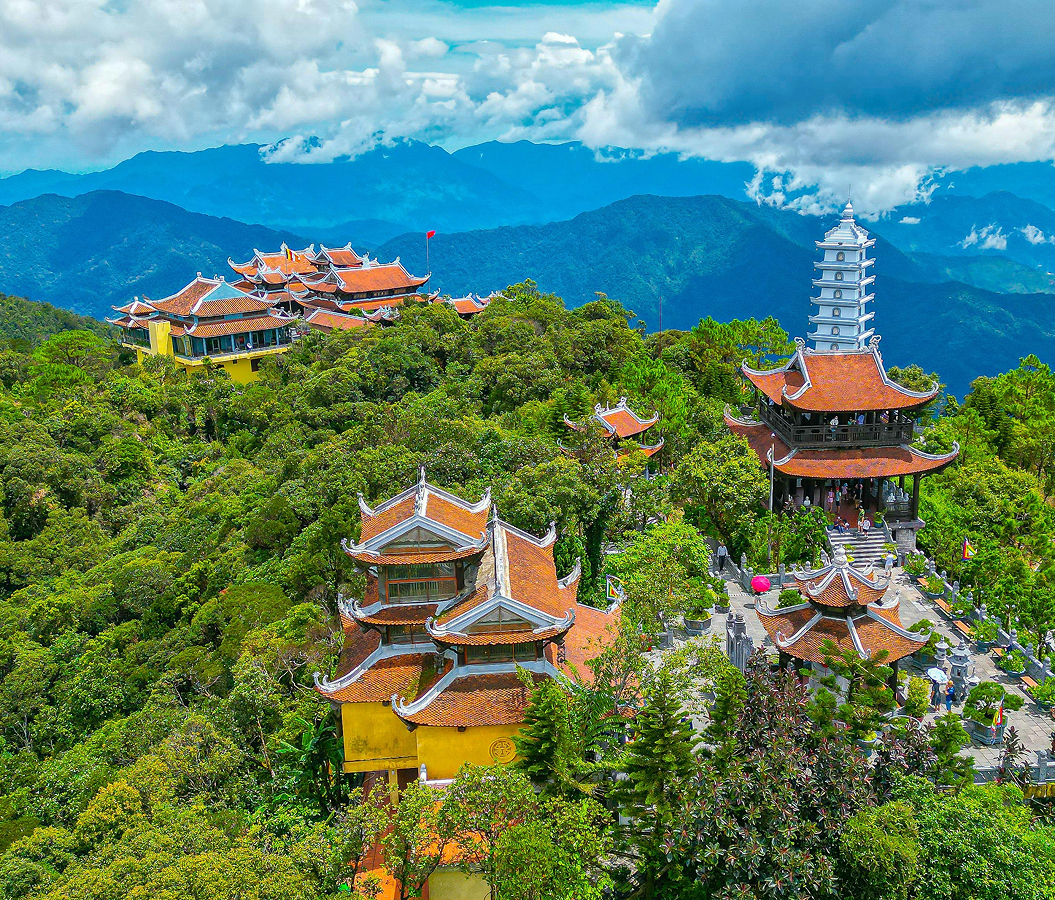
Buddha Tooth Relic Temple is best known for introducing a grand Tang-inspired Buddhist complex into the historic urban fabric of Singapore's Chinatown. Venerable Shi Fa Zhao founded the temple and developed its architectural program around Buddhist mandala principles and forms associated with the Tang dynasty. Completed in 2007, the multi-level complex combines worship halls, museum collections, monastic spaces, gardens, and the Sacred Light Hall. A grand gold stupa occupies the upper portion of the building and houses the relic from which the temple takes its name. Its richly ornamented interiors and disciplined axial organization created a major contemporary Buddhist institution within a district shaped by generations of Chinese migration, commerce, clan associations, religious practice, and urban redevelopment.
Day 3: Orchard Road
Orchard Road is best known for evolving from a nineteenth-century plantation corridor into Singapore's principal luxury shopping district. The road took its name from the fruit orchards, nutmeg plantations, and pepper farms that occupied surrounding land during the colonial period. Cemeteries, private residences, markets, and institutional buildings subsequently appeared as Singapore expanded outward from its historic commercial center. Twentieth-century retail development radically changed the corridor, with department stores and shopping complexes turning Orchard Road into a concentrated commercial destination. Properties including Tangs helped establish its modern retail character before increasingly ambitious malls, hotels, and mixed-use projects intensified the street. Its progression from agricultural outskirts to dense commercial spine mirrors Singapore's broader transformation from colonial port into a highly urbanized global city.
Day 3: Les Amis
Les Amis is best known for establishing a new benchmark for French fine dining in Singapore during the city's emergence as a major Asian culinary center. Restaurateur Desmond Lim and partners opened Les Amis in 1994, building an institution around classical French technique, exceptional ingredients, disciplined service, and one of Singapore's most serious wine programs. The restaurant subsequently became the foundation of the Les Amis Group, which expanded into a major hospitality organization across multiple concepts and cuisines. Chef Sébastien Lepinoy developed its modern culinary era through cuisine deeply grounded in French products and regional traditions. Three MICHELIN stars placed Les Amis among Singapore's highest-ranked restaurants, completing a progression from pioneering independent dining room to one of the city-state's most enduring gastronomic institutions.
Where your story begins.
Foresyte Travel reveals places that feel extraordinary long before you arrive.
Enjoy editorial crafted for luxury travelers.
Foresyte may earn a commission when you book.