Perfect weekend in Mexico.
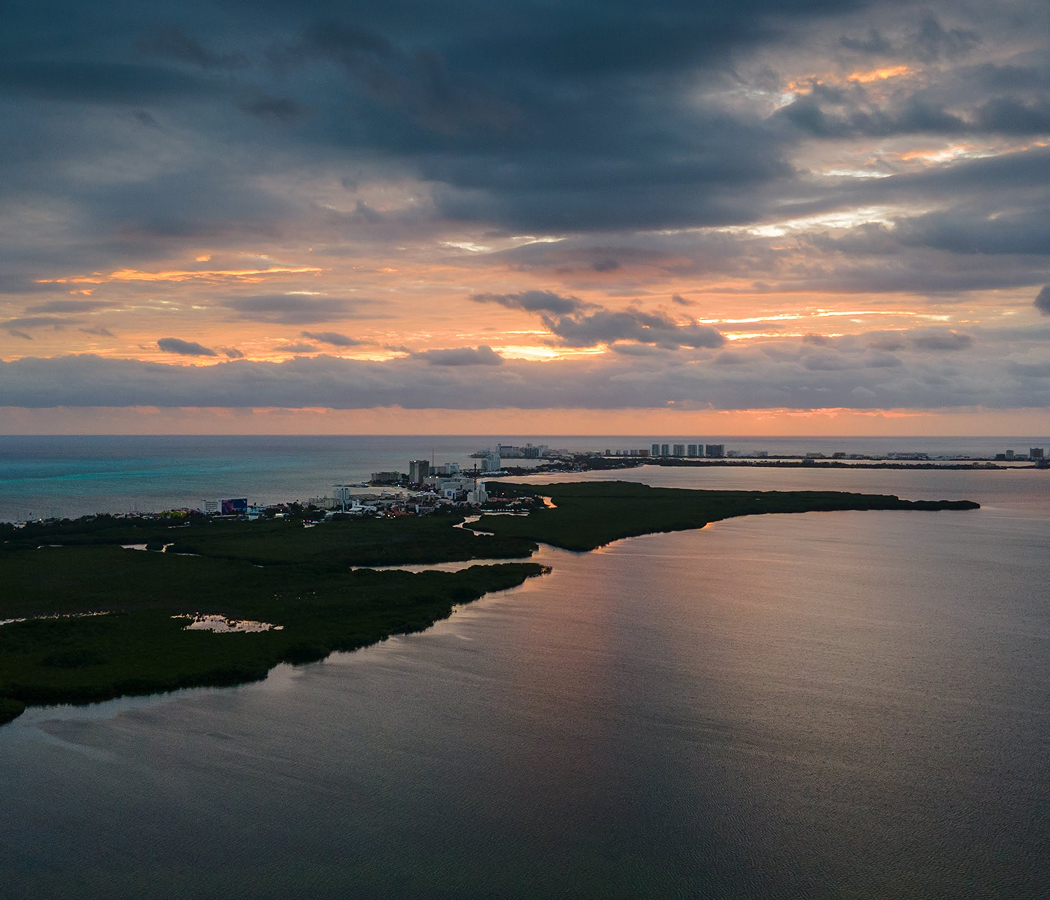
Cancún emerged from the eastern coastline of the Yucatán Peninsula through a combination of ancient Maya civilization, Caribbean maritime commerce, and one of Mexico's most ambitious twentieth-century tourism initiatives. Situated in Quintana Roo, where the peninsula approaches the Caribbean Sea, the region encompasses limestone plains, underground freshwater systems, tropical forests, and extensive coastal wetlands. Maya communities inhabited the surrounding territory for centuries before European contact, establishing settlements connected through agricultural production, maritime trade, and political relationships with the great cities of the northern Yucatán. The coastal region formed part of commercial networks linking inland ceremonial centers with ports along the Caribbean, where merchants transported salt, textiles, honey, cacao, and other commodities. Spanish expeditions reached the peninsula during the early sixteenth century, initiating a prolonged period of conquest and colonial administration. Indigenous resistance remained particularly strong across eastern Yucatán, where dense forests and dispersed settlements complicated Spanish control. During the nineteenth century, the Caste War of Yucatán transformed the political geography of the region, with Maya communities establishing independent centers of authority across substantial portions of the eastern peninsula. The territory of Quintana Roo was created in 1902, strengthening federal administration over the Caribbean frontier. For much of the twentieth century, the coastline surrounding Cancún supported small fishing communities and limited agricultural activity. In 1969, Mexican federal planners selected Cancún for a major tourism development intended to diversify the national economy and attract international investment. Construction began in 1970, with new transportation infrastructure, hotels, and residential areas transforming the previously isolated coastal landscape. Quintana Roo achieved statehood in 1974, the same year Cancún's first major hotels began receiving guests. The expansion of Cancún International Airport subsequently strengthened connections with North America, Europe, and Latin America. Rapid population growth brought extensive residential construction and commercial investment, establishing Cancún as the principal metropolitan center of Mexico's northeastern Caribbean coast.
Mexican Maya traditions retain profound significance across the Yucatán Peninsula, where Indigenous languages, agricultural practices, ceremonial customs, and craftsmanship connect contemporary communities with centuries of regional history. Yucatec Maya remains widely spoken throughout the peninsula, preserving linguistic traditions associated with one of Mesoamerica's most accomplished civilizations. Ancient Maya achievements encompassed mathematics, astronomy, expansive architecture, and sophisticated systems of writing, with surviving inscriptions and codices contributing to the understanding of dynastic history and religious thought. The peninsula's artistic traditions include intricate embroidery, hammock weaving, woodcarving, and the production of textiles incorporating geometric patterns and floral designs. Traditional hipiles, embroidered garments worn by Maya women, preserve regional approaches to clothing and decorative craftsmanship. Music and dance also occupy an established place in Yucatecan celebrations, particularly jarana, a regional performance tradition accompanied by orchestral music and associated with community festivals known as vaquerías. The cultural institutions of Mérida contribute to the preservation and presentation of regional artistic traditions, including the Gran Museo del Mundo Maya, whose collections explore the history and continuing contributions of Maya civilization. The peninsula's culinary character developed through Indigenous agriculture, Spanish colonial influences, and the availability of citrus, tropical fruits, maize, and locally raised livestock. Traditional preparations include cochinita pibil, pork marinated with achiote and sour orange before slow cooking, and sopa de lima, a fragrant soup prepared with poultry, citrus, and crisp tortilla strips. Papadzules combine tortillas with egg and pumpkin seed sauce, preserving ingredients central to pre-Hispanic Maya cooking. Poc chuc, grilled pork accompanied by citrus and onions, demonstrates the importance of regional marinades and wood-fired preparation. Coastal communities contribute seafood dishes featuring grouper, shrimp, octopus, and Caribbean lobster, frequently seasoned with lime, habanero peppers, and local herbs. The peninsula's traditional markets support the continued use of ingredients including chaya, epazote, achiote, and native varieties of maize. Contemporary restaurants throughout the Mexican Caribbean extend these foundations through regional produce, historical preparations, and techniques drawn from international fine dining. A weekend in Cancún brings the ancient achievements of Maya civilization into conversation with the coastal communities, culinary traditions, and tropical landscapes of the northeastern Yucatán Peninsula.
Three day itinerary.
Day 1: Museo Maya de Cancún
Museo Maya de Cancún is best known for preserving the archaeological heritage of the Yucatán Peninsula within a museum devoted to one of Mesoamerica's most sophisticated civilizations. Designed by Mexican architect Alberto García Lascurain, the museum opened in 2012 as a major cultural institution operated by Mexico's National Institute of Anthropology and History. Its collections trace the development of Maya civilization through ceramics, sculpture, architectural fragments, ritual objects, and artifacts associated with political and religious life. Exhibitions connect the northern Yucatán with the broader Maya world, including the great urban centers of present-day Guatemala, Belize, Honduras, and southern Mexico. The surrounding archaeological zone of San Miguelito preserves residential and ceremonial structures within the same coastal landscape. Museo Maya de Cancún establishes the historical depth of a region whose expansive cities, astronomical knowledge, artistic traditions, and political institutions flourished centuries before the development of the modern resort corridor.
Day 1: Le Chique
Le Chique is best known for chef Jonatán Gómez Luna's avant-garde interpretation of Mexican cuisine through an elaborate tasting menu that transforms regional ingredients into technically intricate compositions. Gómez Luna developed his culinary foundation in celebrated European kitchens before bringing molecular techniques and contemporary presentation to the Mexican Caribbean. The restaurant originated at Azul Sensatori, establishing a reputation for theatrical courses grounded in the flavors and products of Mexico. Its subsequent relocation to Hotel Xcaret Arte in 2026 marked a new chapter in the development of the project. Native corn, chilies, tropical fruits, seafood, regional spices, and traditional preparations provide the foundations for an ambitious progression through Mexican culinary culture. Le Chique holds one MICHELIN star, placing it among the Riviera Maya's most accomplished restaurants. Its combination of Mexican authorship, technical innovation, and culinary ambition gives the opening dinner exceptional destination significance.
Day 2: Chichén Itzá
Chichén Itzá is best known for the expansive architecture and extraordinary astronomical sophistication of one of the most influential cities in the ancient Maya world. The settlement developed into a major political, religious, and commercial center during the Terminal Classic and Early Postclassic periods, connecting the northern Yucatán with extensive Mesoamerican exchange networks. El Castillo, the stepped pyramid dedicated to Kukulcán, captures the relationship between ceremonial architecture, calendrical knowledge, and solar observation. The Great Ball Court ranks among the largest surviving examples in Mesoamerica, reflecting the political and ritual importance of the ballgame. The Temple of the Warriors, Group of a Thousand Columns, and Sacred Cenote further reveal the city's expansive scale and ceremonial complexity. Chichén Itzá entered the UNESCO World Heritage List in 1988 and became one of the New Seven Wonders of the World in 2007. Its architecture preserves the achievements of a civilization whose intellectual, artistic, and political influence extended across much of Mesoamerica.
Day 2: Kiosco Verde
Kiosco Verde is best known for preserving Cancún's coastal seafood traditions through a family restaurant whose origins precede the city's emergence as a major international destination. The business began in 1974 when the father of chef Octavio Santiago established a small grocery operation near Puerto Juárez. Santiago subsequently developed the establishment into a restaurant centered on seafood from local fishing communities and the surrounding Caribbean waters. Regional preparations give prominence to fresh fish, octopus, shrimp, lobster, citrus, chilies, and the aromatic foundations of southeastern Mexican cooking. Pulpo zarandeado exemplifies the kitchen's concentration on seafood transformed through grilling and carefully developed seasoning. The open-air palapa retains the informal character of the original coastal settlement. Kiosco Verde occupies a distinctive position in Cancún's culinary history, connecting the modern resort destination with the fishing traditions that preceded its construction.
Day 2: MUSA
MUSA is best known for its expansive collection of submerged sculptures that unite contemporary art, marine conservation, and the underwater landscapes of the Mexican Caribbean. Established in 2009 through a collaboration involving marine park director Jaime González Cano, sculptor Jason deCaires Taylor, and Roberto Díaz Abraham, the museum was conceived to create artificial reef habitats and redirect visitor activity from vulnerable natural coral formations. Its installations occupy underwater sites near Cancún and Isla Mujeres, including the Manchones and Nizuc reef areas. Taylor's The Silent Evolution, comprising more than 400 life-size human figures, forms one of the museum's most ambitious installations, exploring the relationship between humanity and the marine environment. Other notable works include The Banker, The Gardener of Hope, and The Last Supper, whose submerged forms acquire new textures as marine organisms colonize their surfaces. Constructed using marine-grade materials designed to encourage biological growth, the sculptures gradually become habitats for coral, algae, and fish. Visitors encounter the installations through snorkeling, scuba diving, and glass-bottom boat excursions, experiencing an evolving underwater gallery shaped by Caribbean currents and marine life. MUSA represents a distinctive convergence of environmental restoration, public art, and the natural heritage of the Yucatán Peninsula.
Day 2: Cocina de Autor
Cocina de Autor is best known for an ambitious tasting-menu format that combines contemporary culinary technique with ingredients and flavor traditions drawn from Mexico and beyond. The restaurant occupies Grand Velas Riviera Maya, where an intimate dining room provides the setting for a carefully orchestrated sequence of courses. Its culinary development has been associated with chefs Bruno Oteiza and Mikel Alonso, whose careers helped shape modern fine dining in Mexico. Seafood, regional produce, vegetables, spices, fermentation, and elaborate sauces enter compositions built around contrasting textures and concentrated flavors. The kitchen's technical discipline gives the menu a distinctive position within the resort corridor's gastronomic landscape. Cocina de Autor Riviera Maya holds one MICHELIN star, establishing it among the leading fine-dining institutions of Quintana Roo. Its combination of culinary precision and destination-level ambition makes it an exceptional centerpiece for the second evening.
Day 3: La Casa de Las Mayoras
La Casa de Las Mayoras is best known for bringing traditional Mexican breakfast cooking and ingredient-conscious contemporary preparations into a distinctive Cancún daytime restaurant. Its kitchen draws on the culinary foundations of southeastern Mexico, including corn, beans, eggs, regional vegetables, tropical fruit, herbs, chilies, and freshly prepared accompaniments. Familiar breakfast traditions emerge through dishes that emphasize the relationship between local produce and the techniques of Mexican home cooking. The restaurant's approach places particular importance on freshness and the natural character of its ingredients, giving the menu a direct connection with the agricultural products of the Yucatán Peninsula. Its inclusion in the MICHELIN Guide places the establishment within Cancún's recognized independent restaurant culture. La Casa de las Mayoras gives brunch a distinctly Mexican foundation rooted in regional ingredients and domestic culinary traditions.
Day 3: Río Secreto
Río Secreto is best known for revealing an extraordinary subterranean river system beneath the limestone terrain of the Yucatán Peninsula. The region's porous carbonate geology allows rainfall to penetrate the ground, dissolving rock over immense periods and creating interconnected caves, chambers, passages, and underground waterways. Río Secreto occupies part of this extensive karst landscape near Playa del Carmen, where mineral-rich water has produced intricate stalactites, stalagmites, columns, and other cave formations. Its partially flooded passages expose the relationship between geological time, groundwater movement, and the peninsula's unusual hydrology. The cave environment also forms part of the wider freshwater system supporting ecosystems above and below ground. Río Secreto gives the Mexican Caribbean a dramatic geological dimension through an underground landscape shaped by water over thousands of years.
Day 3: Isla Mujeres
Isla Mujeres is best known for combining Caribbean island geography with a maritime history reaching from ancient Maya religious practice to modern fishing and coastal tourism. The island lies northeast of Cancún, separated from the mainland by a narrow channel of exceptionally clear Caribbean water. Spanish explorers encountered female figurines associated with the Maya goddess Ixchel during the sixteenth century, giving rise to the island's enduring name. Fishing subsequently shaped the settlement's economy and social life, establishing a coastal community whose development followed a different trajectory from Cancún's planned resort expansion. Playa Norte occupies the island's northern shoreline, where pale sand and shallow turquoise water create one of the region's most recognizable coastal landscapes. Punta Sur forms a contrasting southern extremity of rocky cliffs and exposed Caribbean views. Isla Mujeres preserves the relationship among Maya heritage, maritime settlement, and the physical geography of Mexico's eastern Caribbean islands.
Day 3: HA'
HA’ is best known for chef Carlos Gaytán's sophisticated interpretation of Mexican cuisine through a tasting menu developed within the extraordinary architectural environment of Hotel Xcaret México. Gaytán became the first Mexican-born chef to earn a MICHELIN star in the United States through his Chicago restaurant Mexique, establishing an international reputation before expanding his culinary work into the Riviera Maya. HA' draws on Mexican ingredients, regional preparations, and contemporary techniques to create compositions shaped by the country's diverse culinary traditions. Corn, seafood, chilies, vegetables, herbs, and carefully developed sauces provide recurring foundations for the kitchen's creative approach. The restaurant's name derives from the Maya word for water, connecting its character with the defining natural element of the Yucatán Peninsula. HA' holds one MICHELIN star, giving the final dinner a chef-driven expression of Mexican gastronomy rooted in the cultural and environmental character of the region.
Where your story begins.
Foresyte Travel reveals places that feel extraordinary long before you arrive.
Enjoy editorial crafted for luxury travelers.
Foresyte may earn a commission when you book.