Why Cocina de Autor matters.
Cocina de Autor is a MICHELIN-starred contemporary Mexican restaurant where Riviera Maya's Caribbean resort culture meets Mikel Alonso and Bruno Oteiza's international culinary foundations, Nahúm Velasco's inventive tasting menus and the emergence of Mexico's eastern coastline as a destination for ambitious fine dining.
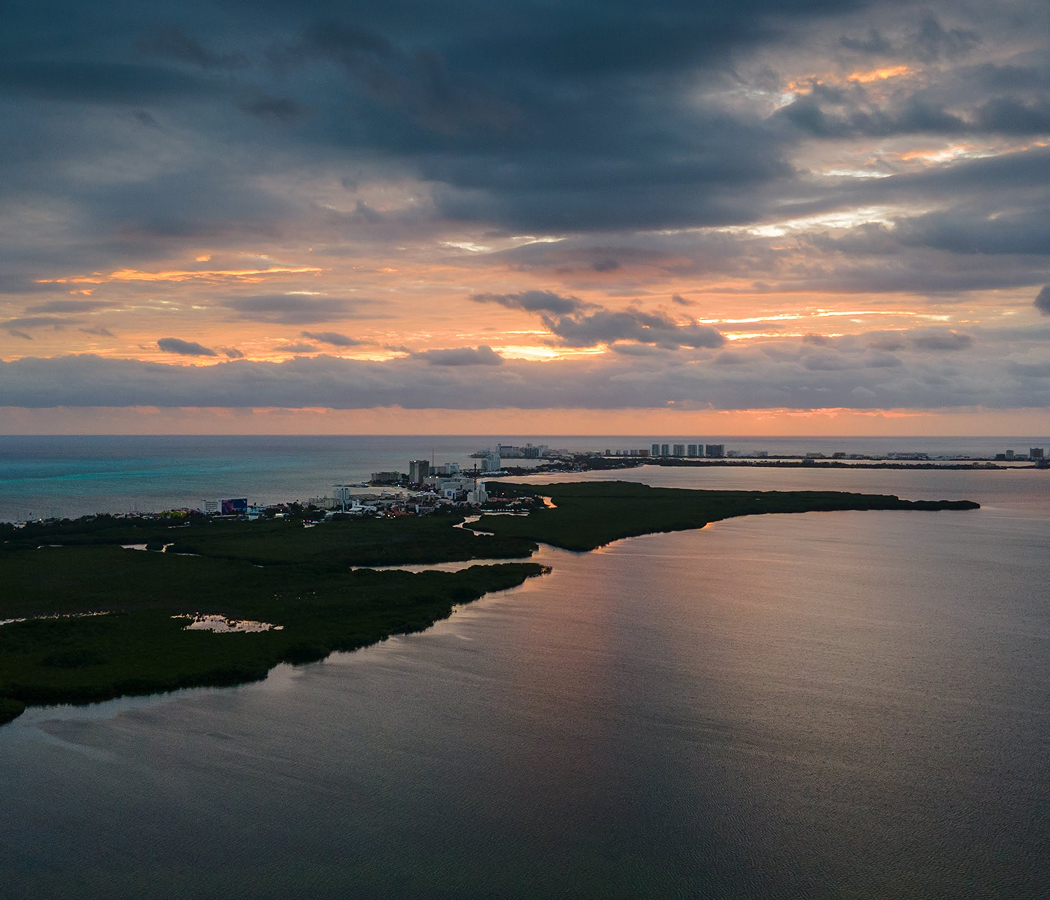
Set along the Cancún, Tulum highway at kilometer 62, north of Central Playa del Carmen and near the coastal developments of Mayakoba, the restaurant occupies Grand Velas Riviera Maya between the Caribbean shoreline and the tropical vegetation extending inland across the Yucatán Peninsula. Its dining room forms part of the resort's beachfront hospitality complex, with expansive windows connecting the interior to the surrounding coastal landscape. Contemporary furnishings, carefully spaced tables and controlled lighting establish an intimate setting for the evening tasting menu. The adjoining hospitality spaces incorporate natural stone, tropical landscaping and architectural elements designed around the region's warm climate. The result is a restaurant whose coastal position, contemporary interiors and integrated resort setting provide a distinctive physical setting for elaborate Mexican cooking.
What defines Cocina de Autor.
Cocina de Autor is best known for bringing internationally informed contemporary cooking to Grand Velas Riviera Maya and becoming one of the first restaurants in Mexico to receive a MICHELIN star when the guide launched its national selection in 2024. The restaurant opened in 2008 alongside the resort, introducing an ambitious tasting-menu concept to a coastline whose hospitality industry had expanded rapidly during the preceding two decades. Xavier Pérez Stone served as its original head chef, helping establish a culinary program that combined European techniques with Mexican ingredients. The restaurant subsequently developed under the creative direction of Mikel Alonso and Bruno Oteiza, two Spanish-born chefs whose careers had become closely associated with contemporary Mexican gastronomy. Alonso trained in the Basque Country and developed his professional career in Mexico, where he became a central figure at Biko in Mexico City. Oteiza, born in San Sebastián in 1970, worked in Spanish and French kitchens before joining Tezka in Mexico City, a restaurant associated with Juan Mari Arzak's culinary influence. Their collaboration at Biko helped establish an influential approach to contemporary cooking that combined Basque technical foundations with ingredients and preparations encountered in Mexico. Cocina de Autor extended that collaboration to the Caribbean coast, adapting its experimental approach to the ingredients and hospitality setting of the Riviera Maya. Nahúm Velasco entered the profession at seventeen and subsequently studied at Centro Culinario Ambrosía in Mexico City. His early professional development included work at Cocina de Autor before he traveled to Copenhagen to join Rasmus Kofoed's kitchen at Geranium. The Danish appointment introduced him to a demanding approach to ingredient selection, precise preparation and seasonal cooking. Velasco returned to the Riviera Maya and worked at Passion, the restaurant associated with Martín Berasategui, before Alonso and Oteiza invited him back to Cocina de Autor. He became executive chef of Grand Velas Riviera Maya in 2024, assuming leadership of the restaurant's culinary program during the introduction of MICHELIN's Mexican guide. The restaurant retained its star in 2025, and its hospitality team received the MICHELIN Service Award that year, recognizing the coordinated service accompanying its tasting menu.
Nahúm Velasco's cooking develops Mexican ingredients through precise European techniques and unconventional combinations of sweetness, acidity, smoke and contrasting textures. The tasting menu begins with small preparations that establish the kitchen's attention to concentrated flavor and carefully controlled portions. Spider crab paired with jackfruit demonstrates this approach through the relationship between delicate shellfish and the fruit's soft, subtly sweet flesh. The preparation places marine richness against tropical sweetness, allowing changes in texture to develop alongside the principal flavors. Tuna accompanied by smoked bacon introduces a stronger contrast, connecting the fish's clean flavor with the concentrated salt and smoke of cured pork. The combination depends upon carefully measured seasoning, preserving the character of the seafood as the bacon contributes depth. Jerusalem artichoke foam with huitlacoche and mushrooms develops a distinctly earthy preparation through the relationship between a delicate vegetable emulsion and two ingredients associated with woodland and agricultural environments. Huitlacoche contributes the dark, savory character of corn fungus, and the mushrooms deepen the preparation through their concentrated umami. The foam introduces a lighter texture, allowing the earthier ingredients to remain prominent across successive mouthfuls. Mexican bald pork loin extends the menu into richer meat preparations, drawing upon a native pig breed associated with traditional husbandry in the Yucatán Peninsula. Bone marrow paired with caviar develops a different expression of richness through the contrast between the marrow's soft fat and the saline intensity of the roe. Freshly caught fish introduces the surrounding coastline through preparations that depend upon careful temperature control and the preservation of delicate flesh. The nine-course format coordinates these contrasting dishes into a sequence that alternates marine ingredients, vegetables and more substantial proteins. Wine pairings place particular emphasis on smaller Mexican producers, connecting the restaurant's international techniques with the development of the country's contemporary wine industry. The kitchen's distinctive character emerges through the controlled combination of ingredients whose contrasting origins and textures create unexpected relationships within a coherent tasting menu.
How Cocina de Autor fits.
Cocina de Autor works as the culinary centerpiece for a Riviera Maya itinerary connecting the peninsula's subterranean freshwater systems, the archaeological inheritance of its coastal Maya settlements and the conservation of the tropical ecosystems surrounding Playa del Carmen.
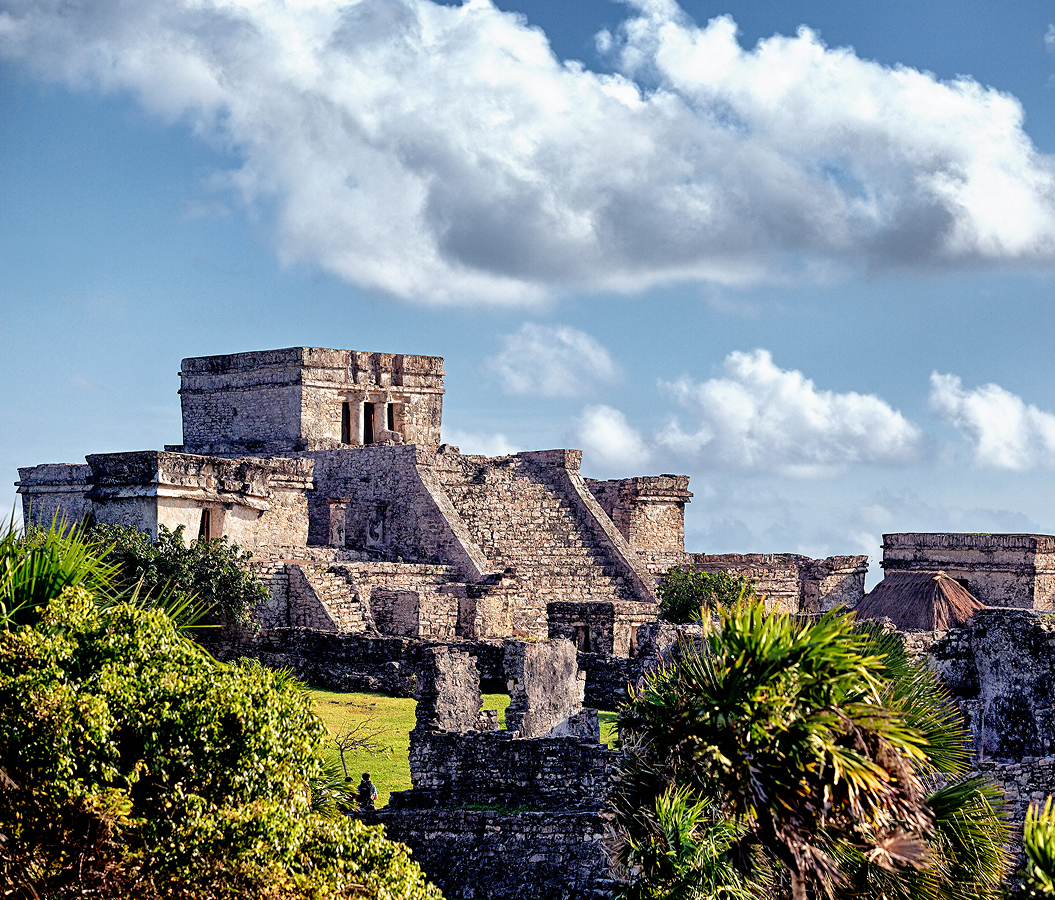
Begin at Cenote Chaak Tun, an underground freshwater system west of Playa del Carmen whose limestone chambers preserve the geological processes that shaped the Yucatán Peninsula. Rainwater gradually dissolved the region's porous carbonate bedrock, creating passages and caverns subsequently filled by groundwater. Stalactites and stalagmites developed through the slow deposition of minerals, forming elaborate structures within the subterranean chambers. The cenote belongs to the wider freshwater network that supported Maya settlements across a landscape containing few permanent surface rivers. Guided routes connect the region's geological history with the environmental importance of its underground water resources. Continue to Xaman-Há Archaeological Site, the remains of a Maya settlement within Playa del Carmen's Playacar district. The coastal community participated in the maritime networks that connected settlements along the eastern Yucatán Peninsula during the Postclassic period. Its position facing Cozumel placed it near routes associated with trade and religious pilgrimage across the Caribbean channel. Surviving masonry platforms and building foundations preserve elements of the settlement's ceremonial and residential organization. The archaeological remains connect Playa del Carmen's modern development with the much longer history of Maya occupation along the peninsula's eastern coastline. Conclude at Punta Venado, a coastal landscape south of Playa del Carmen where tropical forest, limestone terrain and Caribbean shoreline meet. The surrounding environment contains vegetation characteristic of the peninsula's seasonal tropical forests, including trees adapted to thin soils and variable rainfall. Its coastal position demonstrates the close geographical relationship between inland woodland and the marine environments that historically supported fishing communities. Trails and outdoor activities provide access to sections of the forested landscape, revealing the natural terrain that preceded the region's extensive tourism development. The progression moves from the subterranean geology that sustained Maya communities through the remains of their coastal settlements and culminates in the tropical landscape that shaped the Riviera Maya's environmental history.
Where your story begins.
Foresyte Travel reveals places that feel extraordinary long before you arrive.
Enjoy editorial crafted for luxury travelers.
Foresyte may earn a commission when you book.