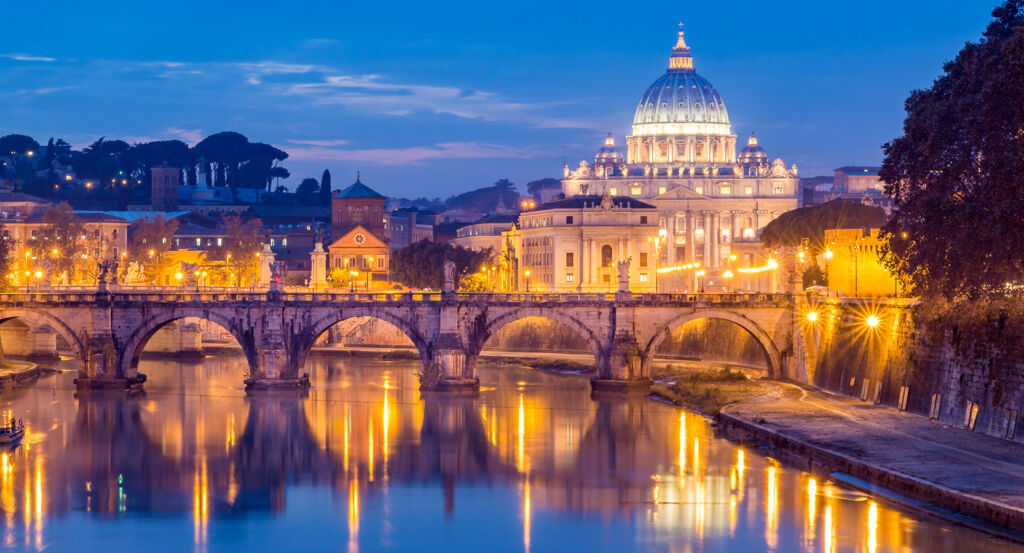
Perfect weekend in Rome, Italy.
Rome became the center of an empire that transformed the Mediterranean world, accumulating more than two thousand years of political authority, architectural ambition, religious influence, and artistic achievement along the banks of the Tiber. Established among seven hills overlooking a strategic river crossing, the settlement developed through the interaction of Latin, Sabine, and Etruscan communities whose agricultural and commercial relationships shaped early Roman society. Tradition places the city's foundation in 753 BCE, although archaeological discoveries trace permanent habitation to the early Iron Age. The overthrow of the Roman monarchy in 509 BCE established a republic governed through elected magistrates, aristocratic institutions, and an expanding body of law. Military victories during the Punic Wars brought Rome control of the western Mediterranean, accelerating the accumulation of wealth, territorial possessions, and political power. Following decades of civil conflict, Augustus established the imperial system in 27 BCE, initiating a period of administrative consolidation and extensive public construction. Successive emperors expanded the city's aqueducts, roads, public baths, and residential infrastructure, supporting a metropolitan population sustained by agricultural production throughout the empire. The decline of western imperial authority during the fifth century altered Rome's political position, although the papacy preserved its religious importance across medieval Europe. Renaissance pontiffs subsequently commissioned churches, palaces, and civic improvements that attracted leading architects and artists from throughout the Italian peninsula. During the seventeenth century, Baroque patronage transformed the capital through theatrical architectural compositions and ambitious urban planning. Rome became the capital of the unified Kingdom of Italy in 1871, following the incorporation of the remaining Papal States. The twentieth century brought Fascist rule, wartime occupation, the establishment of the Italian Republic in 1946, and substantial metropolitan expansion. Across these political changes, Rome retained an extraordinary concentration of ancient infrastructure, medieval religious institutions, Renaissance residences, and modern civic architecture.
Italian Renaissance humanism acquired extraordinary influence in Rome, where papal commissions attracted artists, architects, scholars, and intellectuals whose achievements transformed European culture. Donato Bramante arrived in the city during the late fifteenth century, developing architectural principles inspired by classical antiquity that influenced generations of Renaissance designers. His Tempietto at San Pietro in Montorio became a celebrated example of centralized Renaissance architecture, combining harmonious proportions with references to ancient Roman temples. Raphael subsequently contributed to the artistic ambitions of the papal court through frescoes in the Vatican's Apostolic Palace, including The School of Athens, which assembled ancient philosophers within an idealized classical architectural setting. During the seventeenth century, Gian Lorenzo Bernini transformed Roman sculpture through works including Apollo and Daphne and The Ecstasy of Saint Teresa, developing compositions distinguished by technical virtuosity and dramatic movement. Francesco Borromini introduced innovative architectural geometry through churches including San Carlo alle Quattro Fontane, whose undulating interior and complex dome challenged established classical conventions. Rome's musical traditions developed through the patronage of religious institutions and aristocratic households, with composers including Giovanni Pierluigi da Palestrina contributing to the refinement of Renaissance sacred polyphony. The Accademia Nazionale di Santa Cecilia traces its origins to 1585 and became one of Italy's principal institutions devoted to musical performance and education. The Galleria Borghese preserves major collections of Renaissance and Baroque painting and sculpture within a seventeenth-century villa commissioned by Cardinal Scipione Borghese. Roman cuisine developed through the agricultural resources of Lazio, the traditions of Jewish Roman cooking, and the foodways of working-class neighborhoods. Pasta preparations including carbonara, amatriciana, gricia, and cacio e pepe demonstrate the importance of pecorino romano, cured pork, black pepper, and carefully prepared pasta. Traditional specialties such as carciofi alla giudia, deep-fried artichokes associated with Rome's Jewish community, preserve culinary practices developed over generations. Coda alla vaccinara, a slow-cooked oxtail preparation, emerged from the cooking traditions of the city's former slaughterhouse district. Regional vineyards contribute wines from Frascati and the Castelli Romani, strengthening longstanding connections between Roman dining and the agricultural landscapes surrounding the capital. Contemporary restaurants extend these foundations through seasonal ingredients, regional Italian techniques, and ambitious interpretations of classical dishes. A weekend in Rome unfolds amid the political inheritance of antiquity, the artistic achievements of Renaissance and Baroque masters, and a culinary culture sustained by centuries of neighborhood tradition.
Three day itinerary.
Day 1: Trevi Fountain
Trevi Fountain is best known for transforming the terminal point of an ancient Roman aqueduct into the theatrical culmination of Baroque Rome. The Aqua Virgo first brought water into the city in 19 BCE, establishing the hydraulic lineage that eventually shaped the fountain's location. Pope Clement XII commissioned Nicola Salvi to redesign the site in 1732, embedding the fountain directly into the facade of Palazzo Poli and organizing its composition around the commanding figure of Oceanus. Giuseppe Pannini completed the project after Salvi's death, and the fountain was inaugurated in 1762. Travertine architecture, cascading water, sculpted rock formations, and the confined Piazza di Trevi created an extraordinary fusion of infrastructure, palace architecture, sculpture, and urban theater.
Day 1: La Pergola
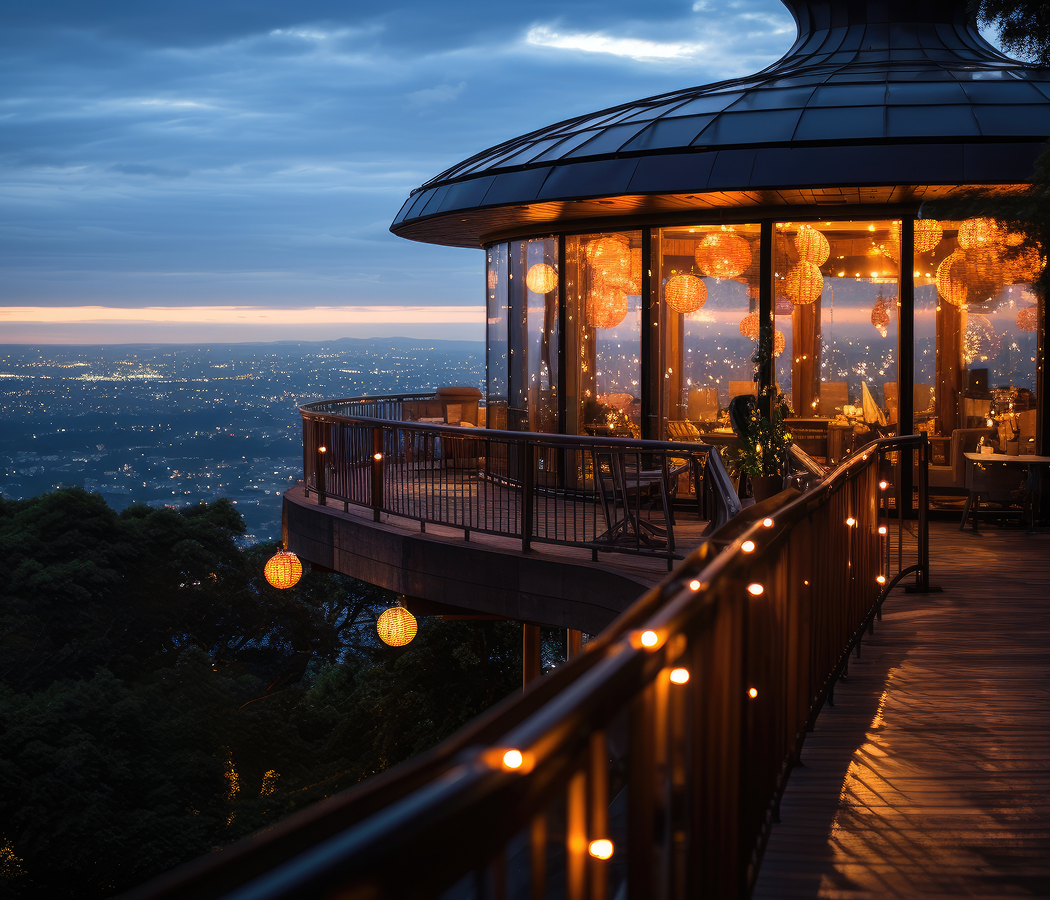
La Pergola is best known for Heinz Beck's transformation of Mediterranean ingredients and Italian culinary traditions through the technical discipline of contemporary haute cuisine. Beck was born in Germany and developed his career through European kitchens before assuming leadership of La Pergola in Rome in 1994. His cooking progressively absorbed Italian regional products, pasta traditions, seafood, herbs, and olive oil into meticulously constructed compositions grounded in lightness and precision. The restaurant occupies the upper level of the Rome Cavalieri on Monte Mario, placing Beck's cuisine above an expansive panorama of the historic city. Three MICHELIN stars established La Pergola as one of Rome's defining fine-dining institutions and made Beck one of the most consequential international chefs working within modern Italian gastronomy.
Day 2: Colosseum
Colosseum is best known for monumentalizing Roman imperial performance through one of antiquity's most sophisticated entertainment structures. Emperor Vespasian began the amphitheater during the Flavian dynasty on land previously absorbed into Nero's Domus Aurea, returning a politically charged section of Central Rome to mass public use. Titus inaugurated the building in 80 CE, and Domitian subsequently expanded its infrastructure. A complex system of corridors, stairways, numbered entrances, seating tiers, and underground service spaces moved enormous crowds and supported gladiatorial contests, animal hunts, executions, and other spectacles. Concrete, travertine, tuff, and brick construction allowed Roman engineers to create an immense freestanding amphitheater whose structural principles influenced stadium architecture for centuries.
Day 2: Roscioli Salumeria con Cucina
Roscioli Salumeria con Cucina is best known for turning a multigenerational Roman food business into one of the city's most concentrated expressions of traditional ingredients and cooking. The Roscioli family's history in Roman baking stretches across generations, with Antico Forno Roscioli establishing a foundation in bread and pizza near Campo de' Fiori. Alessandro and Pierluigi Roscioli subsequently transformed the family delicatessen on Via dei Giubbonari into a restaurant organized around exceptional cured meats, cheeses, preserved products, wine, pasta, and bread. Roman staples including carbonara, amatriciana, cacio e pepe, and gricia sit within a culinary system grounded in carefully selected producers. The result joined salumeria culture, wine collecting, baking, and trattoria cooking within one of contemporary Rome's most influential food institutions.
Day 2: Roman Forum
Roman Forum is best known for concentrating the political, religious, judicial, and ceremonial machinery of ancient Rome within the valley between the Capitoline and Palatine hills. Early communities transformed marshy terrain through drainage works associated with the Cloaca Maxima, creating a civic center that accumulated temples, basilicas, monuments, and government buildings across centuries. The Senate met in the Curia, triumphal processions crossed the Via Sacra, and the Rostra provided a platform for public political speech. Julius Caesar and Augustus reshaped the Forum as republican government gave way to imperial rule, adding buildings that expressed new concentrations of political authority. Successive layers of ruins preserve the physical development of Rome from an early settlement into the administrative center of a Mediterranean empire.
Day 2: Aroma
Aroma is best known for placing contemporary Italian fine dining directly against one of Rome's most consequential ancient monuments. The restaurant occupies the rooftop of Palazzo Manfredi beside the Colosseum, where its terrace establishes an unusually immediate architectural relationship with the Flavian amphitheater. Chef Giuseppe Di Iorio leads a kitchen grounded in Italian ingredients and Mediterranean traditions, refining familiar flavors through contemporary technique and carefully structured presentation. MICHELIN recognition placed Aroma among Rome's distinguished fine-dining restaurants, linking its culinary character to a setting where imperial archaeology dominates the surrounding urban fabric. The restaurant's position above the remains of the Ludus Magnus district further embeds the dining room within the archaeological geography of ancient Rome.
Day 3: Pipero Roma
Pipero Roma is best known for Alessandro Pipero's transformation of Roman hospitality and pasta tradition into a highly personal contemporary restaurant. Pipero developed his reputation as a restaurateur through an unusually visible presence in the dining room, making service, wine, and direct interaction central to the institution bearing his name. Chef Ciro Scamardella subsequently assumed command of the kitchen and built its cooking around Italian ingredients interpreted through modern technique. Carbonara became one of the restaurant's defining preparations, elevating a deeply Roman dish through exact control of pasta, egg, pecorino, guanciale, temperature, and texture. MICHELIN recognition joined that focus on Roman culinary inheritance to a broader tasting-menu format, establishing Pipero as an important contemporary expression of the city's restaurant culture.
Day 3: Sistine Chapel
Sistine Chapel is best known for joining papal ceremony with two of the most consequential achievements of Renaissance painting. Pope Sixtus IV commissioned the chapel during the late fifteenth century, and artists including Sandro Botticelli, Pietro Perugino, Domenico Ghirlandaio, and Cosimo Rosselli decorated its walls with coordinated cycles depicting the lives of Moses and Christ. Julius II commissioned Michelangelo to paint the ceiling beginning in 1508, producing an immense composition centered on scenes from Genesis and expansive prophetic figures. Michelangelo returned decades later to execute The Last Judgment behind the altar for Pope Paul III. Papal conclaves subsequently made the chapel an active instrument of church governance, joining Renaissance art to the continuing election of popes.
Day 3: Pantheon
Pantheon is best known for preserving the most influential expansive concrete interior surviving from ancient Rome. Marcus Agrippa established an earlier temple on the site during the reign of Augustus, and the present building emerged under Emperor Hadrian during the second century CE. Its enormous unreinforced concrete dome spans a cylindrical rotunda whose diameter closely matches its interior height, creating a geometrically unified space beneath a central oculus. Roman builders progressively reduced the weight of the aggregate toward the crown and organized the dome through coffering, producing an engineering solution that influenced architects across subsequent centuries. Conversion into the church of Santa Maria ad Martyres in the seventh century helped preserve the structure, which later became the burial place of Raphael and the first kings of unified Italy.
Day 3: Armando al Pantheon
Armando al Pantheon is best known for preserving Roman trattoria cooking within meters of one of antiquity's greatest surviving buildings. Armando Gargioli opened the restaurant in 1961, and successive generations of the Gargioli family developed it into an enduring expression of the city's domestic culinary traditions. Its cooking centers on Roman pasta, offal, seasonal vegetables, braised meats, and recipes whose identities depend on disciplined treatment of relatively few ingredients. Dishes including gricia, amatriciana, cacio e pepe, and preparations built around quinto quarto connect the dining room to the working-class food traditions that shaped Roman cuisine. Decades of family stewardship established Armando as a rare institution where historic location and traditional cooking possess comparable cultural weight.
Where your story begins.
Foresyte Travel reveals places that feel extraordinary long before you arrive.
Enjoy editorial crafted for luxury travelers.
Foresyte may earn a commission when you book.