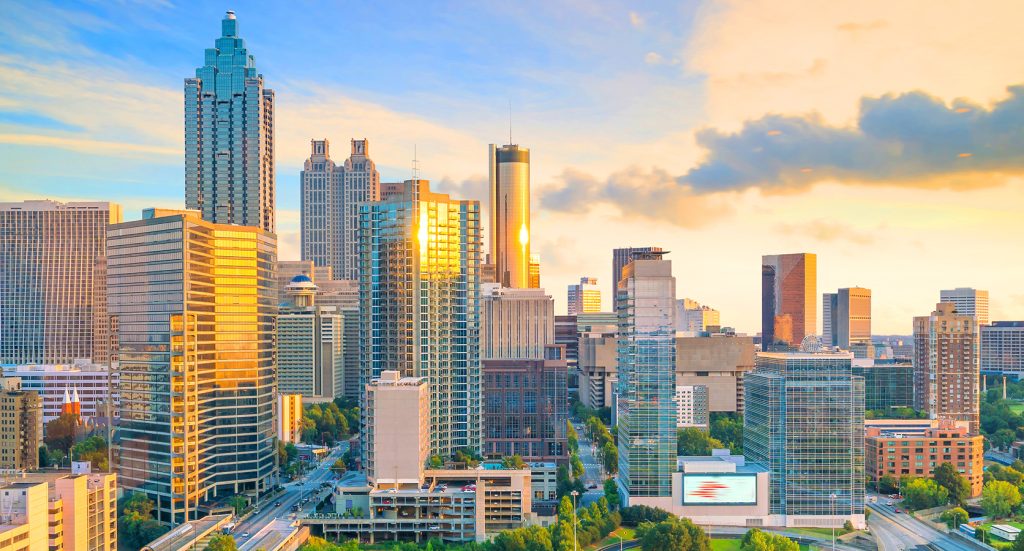
Perfect weekend in Atlanta, Georgia.
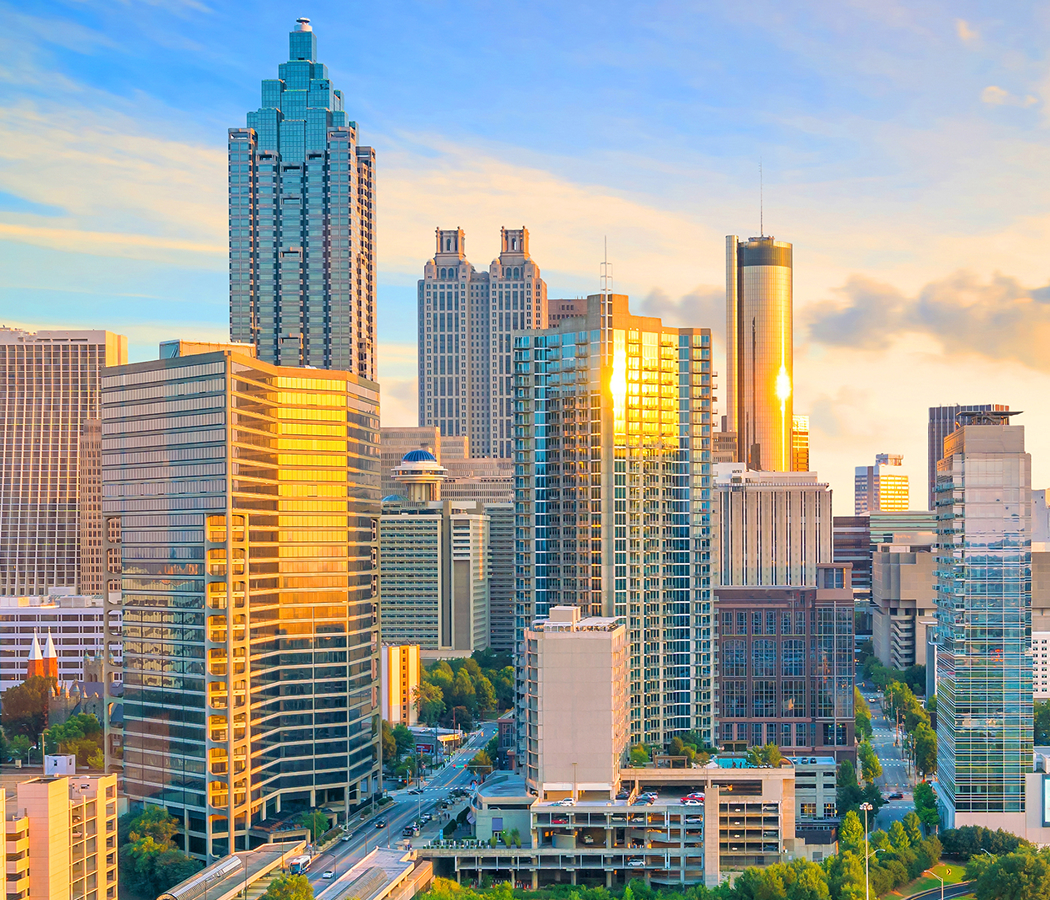
Atlanta rose from a railroad terminus in the Georgia Piedmont to become one of the American South's most consequential centers of commerce, political leadership, and cultural innovation. Situated among the rolling hills and hardwood forests of northern Georgia, the city developed near the Eastern Continental Divide, where transportation routes connected the Atlantic seaboard with the interior of the southeastern United States. The surrounding territory formed part of the ancestral homelands of the Muscogee Creek and Cherokee peoples, whose communities maintained extensive agricultural and trading networks before forced removal during the nineteenth century. In 1837, the Western and Atlantic Railroad selected the area as the southern terminus of a railway connecting Georgia with Tennessee. The settlement initially became known as Terminus, subsequently acquired the name Marthasville, and was incorporated as Atlanta in 1847. Railroad connections accelerated commercial growth, establishing the city as a transportation center for cotton, agricultural commodities, and manufactured goods. During the American Civil War, Atlanta became a critical Confederate supply and manufacturing center before Union forces under General William Tecumseh Sherman captured the city in September 1864. The destruction accompanying the Atlanta Campaign and subsequent military occupation profoundly altered its physical landscape. Reconstruction brought renewed investment in railroads, manufacturing, and commercial institutions, and Atlanta became Georgia's capital in 1868. The establishment of historically Black colleges and universities strengthened the city's educational foundations, creating institutions that subsequently contributed to national movements for racial equality. During the twentieth century, Atlanta developed into a principal center of the American Civil Rights Movement, with Martin Luther King Jr., John Lewis, and other leaders organizing campaigns that reshaped American political and social institutions. The expansion of Hartsfield-Jackson Atlanta International Airport strengthened the city's position in domestic and international transportation. Corporate investment, higher education, film production, and technology subsequently broadened its metropolitan economy, reinforcing Atlanta's significance as a commercial and cultural capital of the American South.
Georgian musical innovation helped establish Atlanta as a major center of American popular culture, with gospel, soul, hip-hop, and contemporary rhythm and blues contributing to the city's national influence. Atlanta's African American churches supported longstanding traditions of sacred music, and the city's performance culture developed through jazz clubs, theaters, and neighborhood entertainment establishments. During the late twentieth century, producers and performers transformed Atlanta into a principal center of Southern hip-hop. Outkast, formed by André 3000 and Big Boi in 1992, brought national attention to the city's distinctive approach to rap through albums including ATLiens, Aquemini, and Stankonia. Producers associated with Organized Noize contributed to the development of a regional sound that combined Southern musical traditions with experimental production. The emergence of trap music during the early twenty-first century further strengthened Atlanta's influence on global popular music, with artists including T.I., Gucci Mane, and Future contributing to its evolution. Atlanta's literary achievements include the work of Margaret Mitchell, whose novel Gone with the Wind received the Pulitzer Prize for Fiction in 1937, and Alice Walker, whose writing explores the lives and historical struggles of Black women in the American South. The Atlanta History Center preserves collections associated with the city's development, including material connected to the Civil War, Southern agriculture, and African American history. The Fox Theatre, completed in 1929, became one of Atlanta's most celebrated performance venues, distinguished by its elaborate Moorish Revival interior and longstanding association with theatrical and musical productions. The city's culinary foundations developed through Georgia's agricultural resources and the cooking traditions of African American communities across the South. Traditional preparations include fried chicken, collard greens, cornbread, black-eyed peas, and slow-cooked meats, with family restaurants and neighborhood establishments sustaining generations of Southern cooking. Georgia peaches, pecans, peanuts, and seasonal vegetables contribute to the state's agricultural cuisine, and Atlanta's historic markets strengthened commercial relationships between rural producers and urban households. The city's growing international communities introduced Korean barbecue, Ethiopian stews, Vietnamese noodle dishes, and regional Indian cooking, expanding the metropolitan dining landscape. Contemporary chefs incorporate Southern ingredients into ambitious menus shaped by French techniques, modern American cooking, and international influences. Atlanta's weekend appeal rests in the extraordinary concentration of Civil Rights history, Southern musical achievement, historic residential communities, and culinary traditions that continue to shape the cultural life of Georgia's capital.
Three day itinerary.
Day 1: Ponce City Market
Ponce City Market is best known for transforming one of Atlanta's largest historic industrial buildings into a major center of the city's twenty-first-century urban revival. Sears, Roebuck and Company developed the expansive complex on Ponce de Leon Avenue during the 1920s as a regional distribution center, retail store, and warehouse connected to the company's enormous mail-order business. Atlanta later acquired the property and used it as City Hall East before Jamestown Properties began an extensive adaptive-reuse project. The redevelopment preserved the building's industrial scale as offices, residences, retail spaces, and a central food hall entered the former Sears complex. Its connection to the Atlanta BeltLine further embedded Ponce City Market within the redevelopment of former transportation and industrial corridors across the city.
Day 1: Lazy Betty
Lazy Betty is best known for Ron Hsu and Aaron Phillips's contemporary tasting menus grounded in the culinary diversity of Atlanta and the American South. Hsu returned to his hometown after developing his career in New York kitchens including Le Bernardin, bringing classical technique into a project shaped by his Chinese-American background and Atlanta upbringing. Phillips joined him in developing menus built around seasonal produce, seafood, meats, fermentation, and globally informed preparations. The restaurant's progression combines exact fine-dining technique with ingredients and cultural references extending beyond a single regional tradition. MICHELIN awarded Lazy Betty two stars, placing the Atlanta-born restaurant at the highest level achieved in the city's MICHELIN selection and establishing it as a defining institution in Atlanta's contemporary culinary development.
Day 2: High Museum of Art
High Museum of Art is best known for joining a major collection of American and international art to one of Atlanta's most significant ensembles of modern architecture. The institution developed from the Atlanta Art Association and took the High name after the family of Harriet Harwell Wilson High donated its Peachtree Street residence for museum use. Richard Meier transformed the institution's physical ambitions with a luminous white museum building completed in 1983, organized around an expansive central atrium. Renzo Piano subsequently designed a major expansion composed of additional buildings surrounding a public piazza, substantially increasing exhibition space and reshaping circulation across the campus. Collections spanning American art, European painting, decorative arts, photography, African art, and contemporary work made the High the principal visual-arts institution in the southeastern United States.
Day 2: The Busy Bee
The Busy Bee is best known for preserving Atlanta's African American culinary and civic history through generations of Southern cooking. Lucy Jackson established the restaurant in 1947 near the campuses of the institutions that form the Atlanta University Center. Fried chicken, collard greens, macaroni and cheese, cornbread, and other Southern preparations made the compact dining room a neighborhood institution as Atlanta became a central arena of the civil rights movement. Martin Luther King Jr. and other figures connected to that movement entered the restaurant's history as the surrounding district produced generations of Black political, educational, and cultural leadership. The James Beard Foundation named Busy Bee an America's Classic in 2022, recognizing a restaurant whose significance extends across food, community, and Atlanta history.
Day 2: World of Coca-Cola
World of Coca-Cola is best known for interpreting the global history of a beverage created in Atlanta in 1886. Pharmacist John Stith Pemberton developed the original Coca-Cola syrup and first sold the drink at Jacobs' Pharmacy, where carbonated water was combined with the formulation at the soda fountain. Asa Candler subsequently acquired control of the business and built Coca-Cola into a rapidly expanding commercial enterprise through aggressive distribution and marketing. The contour bottle introduced during the 1910s gave the product a distinctive physical character as international growth accelerated. The Coca-Cola Company remained headquartered in Atlanta as its beverage portfolio and distribution network expanded across the world, making the brand one of the most internationally recognizable products originating in the city.
Day 2: Bacchanalia
Bacchanalia is best known for Anne Quatrano and Clifford Harrison's foundational role in establishing ingredient-driven fine dining in Atlanta. The chefs opened the restaurant in 1993 after developing their careers in major American kitchens, building its cuisine around relationships with farmers, artisans, and regional producers. Their own Summerland Farm became an important source of ingredients and strengthened the restaurant's connection to Georgia agriculture. Changing prix-fixe menus place seasonal vegetables, seafood, meats, cheeses, and carefully developed sauces within a disciplined contemporary American structure. Bacchanalia subsequently became an anchor for Quatrano and Harrison's broader influence on Atlanta hospitality, and MICHELIN recognition reinforced its position as one of the city's longest-standing institutions of serious contemporary cooking.
Day 3: Bread & Butterfly
Bread & Butterfly is best known for interpreting the European café through the neighborhood culture of Atlanta's Inman Park. The restaurant occupies a compact corner space whose all-day format connects breakfast and lunch to the traditions of French cafés and continental neighborhood dining. Pastries, eggs, breads, composed plates, coffee, and French-influenced preparations form a menu whose scale emphasizes careful execution over the expansive conventions of American brunch. Its location within Inman Park places the restaurant inside one of Atlanta's earliest planned suburbs, a district transformed by preservation and reinvestment after decades of twentieth-century decline. Bread & Butterfly links contemporary Atlanta dining with the walkable urban fabric that returned Inman Park to prominence.
Day 3: Georgia Aquarium
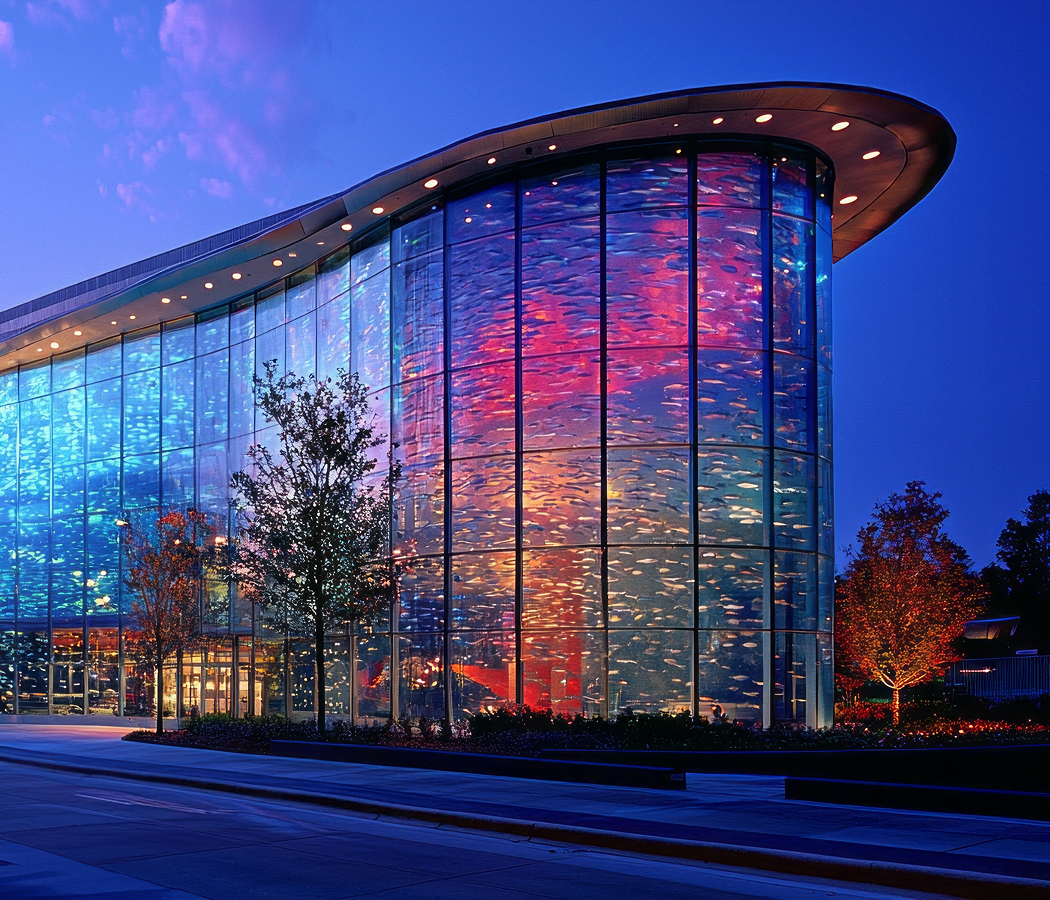
Georgia Aquarium is best known for transforming Atlanta into a major center for large-scale marine exhibition and aquatic research. Home Depot co-founder Bernard Marcus provided the foundational gift for the institution after envisioning an aquarium capable of operating at unprecedented scale. The facility opened in 2005 with immense habitats designed for species requiring enormous volumes of water and highly specialized life-support systems. Whale sharks became its defining animals, placing Georgia Aquarium among the small number of institutions outside Asia to maintain the species. Subsequent expansion introduced additional habitats and research capabilities devoted to marine mammals, sharks, fish, and other aquatic life. Its scale and scientific infrastructure established an internationally significant marine institution hundreds of miles from the nearest ocean.
Day 3: Atlanta Botanical Garden
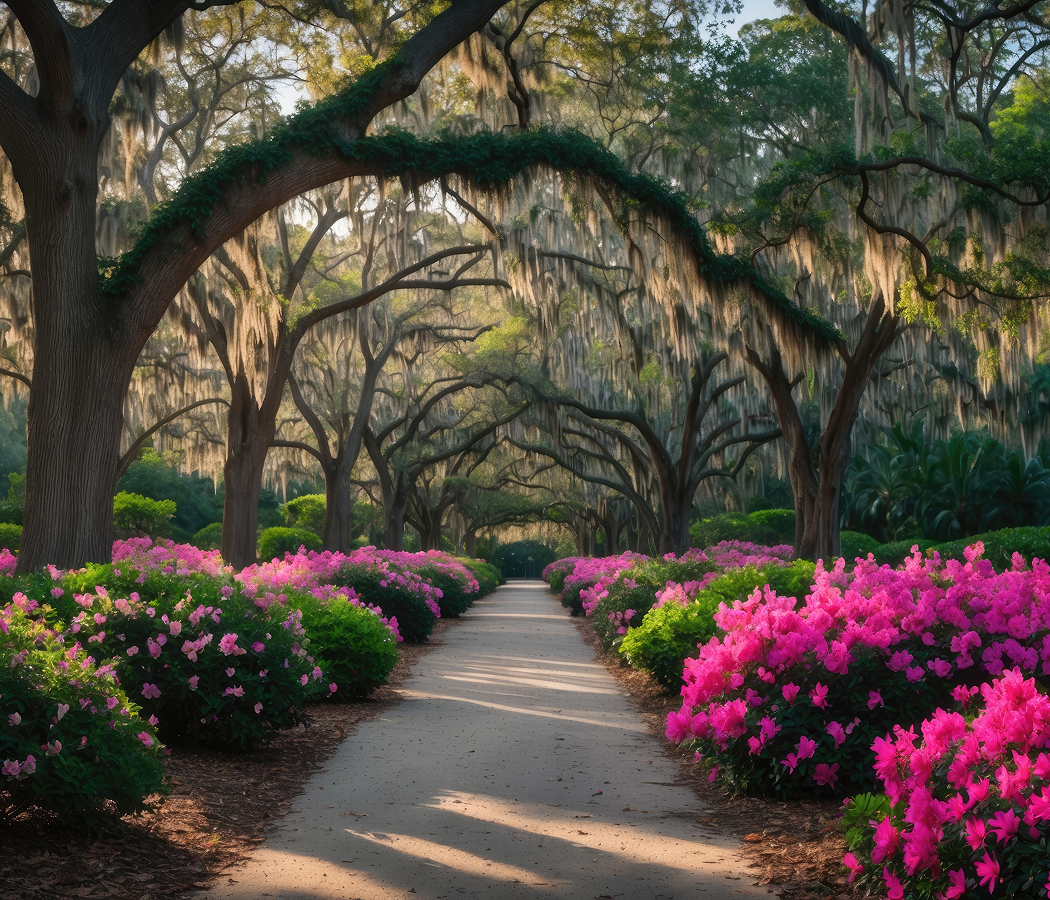
Atlanta Botanical Garden is best known for transforming a compact site beside Piedmont Park into a major horticultural institution devoted to plant conservation, display, and research. The organization formed during the 1970s and progressively developed specialized gardens and collections within Midtown. Its Fuqua Orchid Center created controlled environments supporting an extensive collection of tropical orchids, including species requiring highly specific climatic conditions. Conservation programs subsequently extended into work with rare plants native to the southeastern United States, connecting public horticulture with biodiversity preservation. The Kendeda Canopy Walk elevated visitors through the woodland landscape and expanded the garden's physical relationship with its surrounding forest. Decades of development turned the institution into an important center for horticulture within Atlanta's dense urban core.
Day 3: Atlas
Atlas is best known for combining contemporary American fine dining with an extraordinary collection of twentieth-century art inside the St. Regis Atlanta. The restaurant developed its culinary character around seasonal ingredients, meticulous technique, and close relationships with regional farms and producers. Its dining rooms contain works associated with major artists including Pablo Picasso, Marc Chagall, and Henri Matisse, giving the restaurant an unusual connection between private collecting and hospitality. Chef Freddy Money brought extensive European fine-dining experience to the kitchen and developed an elaborate tasting-menu program around refined sauces, seafood, vegetables, and luxury ingredients. MICHELIN recognition placed Atlas among Atlanta's leading restaurants, joining serious contemporary cooking to one of the city's most significant restaurant art collections.
Where your story begins.
Foresyte Travel reveals places that feel extraordinary long before you arrive.
Enjoy editorial crafted for luxury travelers.
Foresyte may earn a commission when you book.