Why Georgia Aquarium matters.
Georgia Aquarium is a major marine science institution where Downtown's civic redevelopment meets the biology of the world's largest fish, the engineering of enormous aquatic habitats, and the conservation programs advancing scientific understanding of marine ecosystems.
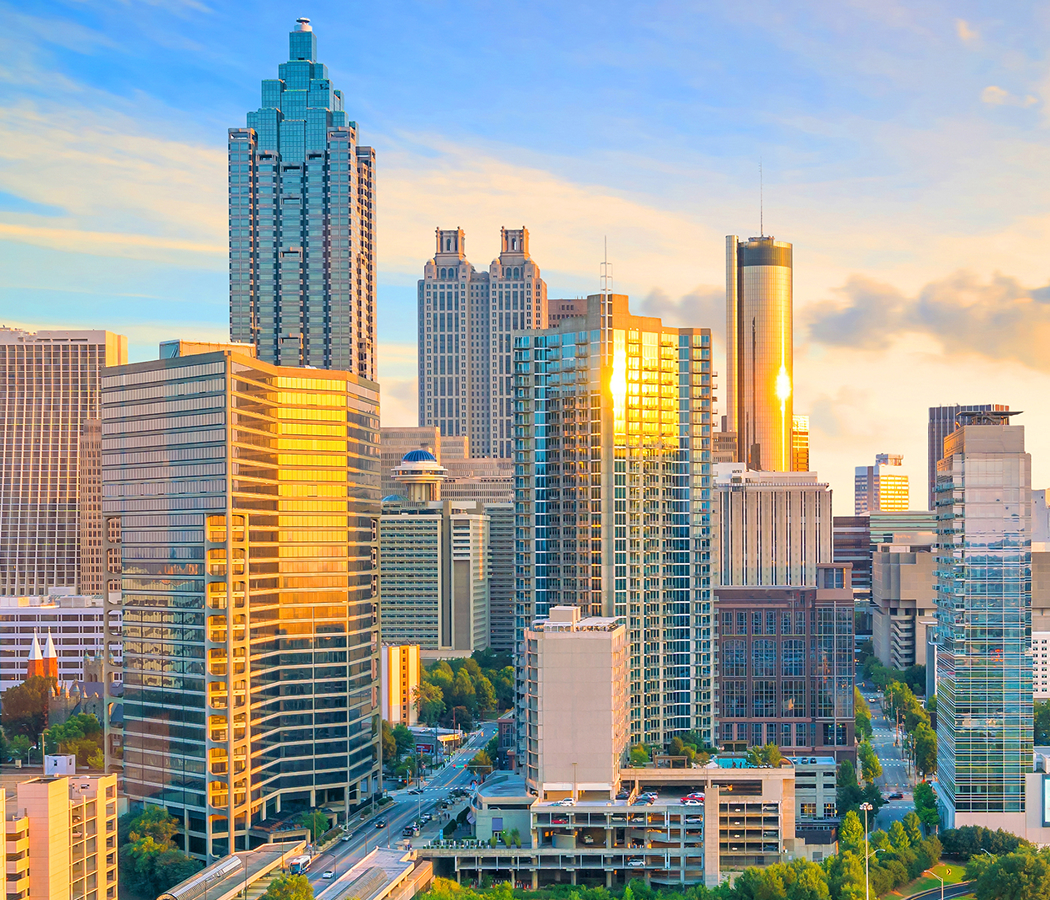
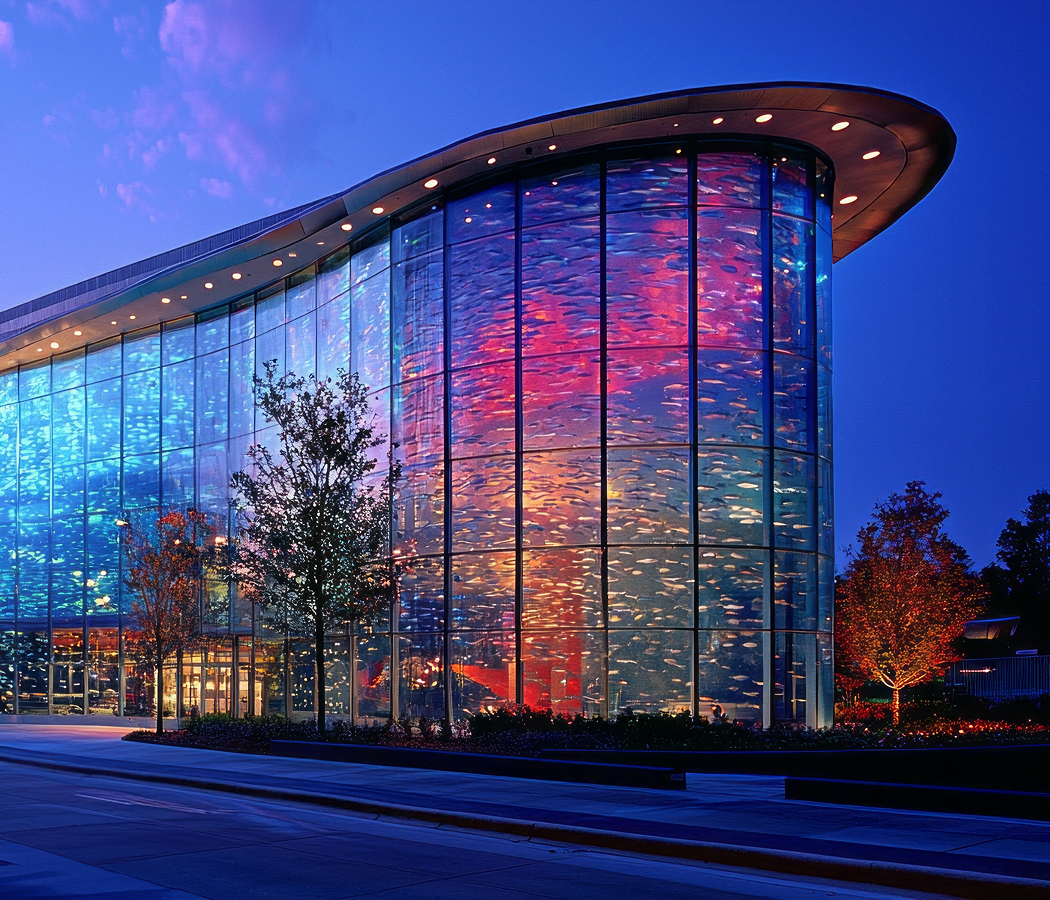
Set along Baker Street near Luckie Street and just north of the Centennial Olympic Park district, the aquarium occupies Pemberton Place's western frontage, where Downtown's convention and entertainment corridors converge around landscaped pedestrian grounds extending toward Ivan Allen Jr. Boulevard. The building's sweeping glass entrance and curving exterior volumes introduce an architectural composition organized around the immense aquatic habitats concealed within its central structure. Inside, expansive exhibition galleries connect through a vaulted circulation hall, with underwater viewing tunnels, panoramic acrylic windows, and multilevel observation areas creating changing perspectives on the aquatic environments. Specialized filtration systems, temperature-controlled habitats, and extensive life-support infrastructure accommodate marine species whose biological requirements range from tropical coral reef conditions to cold-water ocean environments. The result is a marine science complex whose architectural scale, advanced aquatic engineering, and extensive animal collections establish one of the most significant public aquarium institutions in the United States.
What defines Georgia Aquarium.
Georgia Aquarium is best known for becoming the largest aquarium in the world when it opened in November 2005 and for establishing one of the most ambitious collections of large marine animals ever assembled within a public institution. The project originated through the philanthropy of Bernard Marcus, cofounder of The Home Depot, and his wife Billi, whose substantial financial commitment supported the creation of a major aquatic institution in Atlanta. Marcus announced the project in 2001, envisioning an aquarium that would combine public education, scientific research, conservation, and economic development within a single destination. His original $250 million contribution provided the financial foundation for the institution, making the project one of the largest individual philanthropic gifts supporting an American cultural attraction. Construction began in 2003 on a site selected for its proximity to Downtown's developing cultural and entertainment district. The aquarium's design required extensive engineering coordination to accommodate millions of gallons of water within a structure containing specialized filtration systems, massive acrylic viewing panels, and elaborate animal-care facilities. The institution opened on November 23, 2005, introducing more than 100,000 aquatic animals representing 500 species across a collection of themed galleries. Its original aquatic habitats contained more than eight million gallons of water, establishing a scale that exceeded the capacity of existing public aquariums. Ocean Voyager became the project's principal architectural and biological achievement, incorporating a 6.3-million-gallon habitat designed to accommodate whale sharks, manta rays, and other large pelagic species. The exhibition introduced the first whale sharks displayed at an aquarium outside Asia, creating an important center for public education concerning the biology and conservation of the world's largest living fish. The initial whale sharks, Ralph and Norton, arrived from Taiwan in 2005, followed by additional animals during the institution's early development. Their acquisition and care required specialized transport arrangements, extensive veterinary oversight, and carefully controlled water conditions designed to accommodate animals whose natural habitat extends across tropical and subtropical oceans. The aquarium subsequently expanded its collection through the addition of manta rays, becoming the first institution in the United States to display the species. A major expansion completed in 2010 introduced the Dolphin Coast habitat, adding a substantial marine mammal exhibition and associated animal-care facilities. The institution continued developing specialized habitats through the following decade, culminating in the opening of Sharks! Predators of the Deep in 2020. That exhibition introduced a 1.2-million-gallon habitat dedicated to large shark species, extending the aquarium's capacity for research, public education, and the conservation of threatened marine predators.
Ocean Voyager's enormous central habitat contains a carefully managed aquatic environment designed to support the movement, feeding, and physiological requirements of large open-water species. Its principal viewing window measures 61 feet wide and 23 feet high, providing an expansive underwater perspective across a habitat containing whale sharks, manta rays, and numerous schooling fish. A 100-foot acrylic tunnel passes beneath the water, allowing observation of animals moving through the surrounding aquatic environment. The whale shark, Rhincodon typus, is the largest living fish species, reaching lengths exceeding forty feet in the wild and feeding primarily on plankton, small fish, and other organisms filtered from seawater. Its distinctive spotted coloration forms an individual pattern that researchers use to distinguish animals during population studies and conservation investigations. Manta rays occupy a different ecological position within the same habitat, using broad pectoral fins to propel themselves through the water and specialized cephalic lobes to direct food toward their mouths. The aquarium's scientific programs extend beyond its exhibition galleries through partnerships supporting marine animal medicine, reproductive biology, habitat conservation, and the investigation of threatened aquatic species. Researchers have contributed to studies involving whale shark health, manta ray biology, coral reproduction, and the rehabilitation of marine animals affected by environmental disturbances. The institution's veterinary facilities incorporate diagnostic imaging, laboratory testing, surgical capabilities, and specialized treatment environments developed for aquatic organisms. Its coral conservation initiatives include controlled propagation programs intended to support the preservation of reef-building species threatened by warming oceans and changing marine conditions. Cold Water Quest presents another dimension of aquatic biology through habitats accommodating animals adapted to lower temperatures, including beluga whales and sea otters. Tropical Diver incorporates coral reef ecosystems, emphasizing the relationship between marine biodiversity, reef structure, and the environmental conditions supporting tropical aquatic communities. River Scout examines freshwater habitats and the biological adaptations of species inhabiting rivers, lakes, and other inland aquatic environments. Sharks! Predators of the Deep introduces sand tiger sharks, great hammerhead sharks, and other large predatory species through extensive underwater viewing areas. Its exhibitions examine the ecological importance of sharks, whose feeding behavior influences marine food webs and the population structures of other aquatic organisms. The aquarium's educational programming incorporates school partnerships, scientific presentations, and public encounters designed to develop understanding of marine biology and environmental conservation. Its institutional development has connected Atlanta's cultural infrastructure with a substantial scientific program devoted to the study and preservation of aquatic life.
How Georgia Aquarium fits.
Georgia Aquarium works as the marine science centerpiece for an outing connecting Downtown's Olympic-era public spaces, the commercial history of an internationally recognized beverage company, and the civil rights institutions developed within the city's cultural district.
Begin at Centennial Olympic Park, the 22-acre public landscape developed for the 1996 Summer Olympic Games and subsequently incorporated into Downtown's permanent civic infrastructure. The park originated through the leadership of Billy Payne and the Atlanta Committee for the Olympic Games, transforming a collection of underutilized commercial blocks into a central gathering place for the international event. Landscape architects incorporated broad lawns, pedestrian promenades, commemorative plazas, and the Fountain of Rings, an interactive water installation arranged in the form of the five Olympic rings. The park's development accelerated the transformation of the surrounding district, attracting major cultural institutions, hotels, and entertainment facilities during the decades following the Games. Its commemorative features preserve the history of Atlanta's Olympic preparations and the city's emergence as an international destination for sporting and cultural events. Continue to World of Coca-Cola, the corporate history museum devoted to the Atlanta beverage manufacturer whose commercial development began with pharmacist John Stith Pemberton's invention of Coca-Cola in 1886. The company developed through the leadership of Asa Griggs Candler, who incorporated the business in 1892 and expanded its distribution through increasingly sophisticated advertising and bottling operations. The museum originally opened near Underground Atlanta in 1990 before relocating to Pemberton Place in 2007, introducing an extensive collection of historical advertising objects, packaging, manufacturing equipment, and commercial memorabilia. Its exhibitions include Milestones of Refreshment, Vault of the Secret Formula, and an international beverage tasting area presenting products distributed across different national markets. The museum preserves the commercial history of a company whose development helped establish Atlanta's position within the international consumer products industry. Conclude at National Center for Civil and Human Rights, the museum and cultural institution devoted to the American civil rights movement and the international struggle for human rights. The center opened in June 2014 following years of planning and philanthropic support from Atlanta's civic and business communities. Its principal exhibitions examine the history of segregation, the leadership of Martin Luther King Jr., and the political campaigns that challenged racial discrimination across the United States. The museum incorporates historical photographs, documentary recordings, personal artifacts, and interactive installations examining the experiences of civil rights activists and the social conditions surrounding their campaigns. A substantial collection of papers and personal objects associated with King connects the institution to Atlanta's central role in the movement. The progression moves from Centennial Olympic Park's international sporting heritage through World of Coca-Cola's commercial history and culminates at National Center for Civil and Human Rights' examination of American and international human rights, connecting Georgia Aquarium to the institutions that shaped Downtown's cultural redevelopment.
Where your story begins.
Foresyte Travel reveals places that feel extraordinary long before you arrive.
Enjoy editorial crafted for luxury travelers.
Foresyte may earn a commission when you book.