Top places to stay in South Carolina.
Hilton Head's transformation into one of America's most distinguished coastal resort destinations began with a landscape shaped by Indigenous settlement, plantation agriculture, and the maritime geography of South Carolina's Lowcountry. Native communities inhabited the island for thousands of years, relying on its tidal creeks, forests, and surrounding waters for sustenance. English captain William Hilton explored the coast in 1663, lending his name to the headland overlooking Port Royal Sound. During the eighteenth century, plantation owners established agricultural estates devoted to indigo and subsequently Sea Island cotton, supported by the forced labor of enslaved Africans. Their descendants developed the Gullah cultural traditions that remain fundamental to the region's identity. Union forces captured the island in 1861, and thousands of formerly enslaved people sought refuge behind federal lines. The establishment of Mitchelville in 1862 created an early self-governing community of freedpeople, an extraordinary chapter in the island's history. Following Reconstruction, Hilton Head remained relatively isolated, with fishing, farming, and timber harvesting sustaining its small population. Modern resort development began after timber entrepreneur Fred Hack acquired substantial island acreage in the 1940s. Charles Fraser subsequently recognized the potential for a residential resort community that preserved the island's maritime forests and coastal character. His development of Sea Pines Plantation during the 1950s introduced an influential model of environmentally sensitive resort planning, integrating homes, recreational facilities, and visitor accommodation among existing trees. The opening of the Sea Pines Ocean Course in 1962 strengthened the island's emerging golf identity. The completion of the bridge connecting Hilton Head to the mainland in 1956 transformed accessibility and encouraged further investment. The Harbour Town Golf Links opened in 1969, designed by Pete Dye with consultation from Jack Nicklaus, establishing an internationally recognized championship course. The inaugural Heritage golf tournament followed that year, attracting national attention to the developing destination. During the 1970s and 1980s, additional planned communities introduced beachfront hotels, villa complexes, tennis facilities, and private residential neighborhoods. The incorporation of the Town of Hilton Head in 1983 established municipal oversight of development and environmental protection. Contemporary hospitality encompasses prestigious oceanfront resorts, intimate inns, and expansive vacation residences, preserving the island's distinctive relationship between coastal leisure, maritime ecology, and carefully managed resort development.
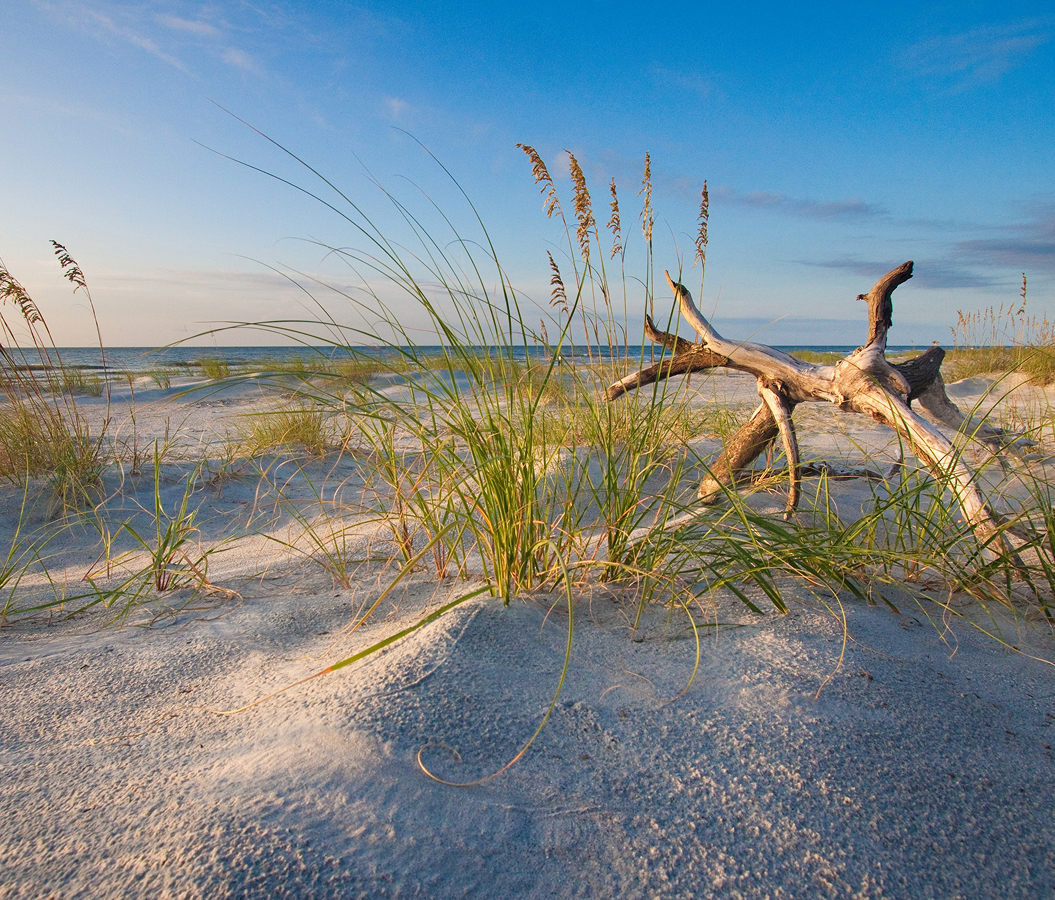
Hilton Head occupies a broad barrier island between the Atlantic Ocean and the intricate tidal waterways of the South Carolina Lowcountry, with accommodation distributed among wooded resort communities, sheltered harbors, and extensive sandy beaches. Sea Pines occupies the island's southernmost peninsula, where mature live oaks, maritime pines, and landscaped residential streets create an exceptionally cohesive resort environment. Luxury villas, private residences, and intimate lodging properties stand near golf courses, sheltered lagoons, and pedestrian pathways extending through substantial preserved green space. Harbour Town forms a distinctive waterfront center within the community, organized around a yacht basin, colorful commercial buildings, and the recognizable red-and-white-striped lighthouse. Accommodation nearby provides access to marina restaurants, recreational facilities, and coastal excursions through Calibogue Sound. Eastward, the Forest Beach area follows a broad stretch of Atlantic shoreline through established residential streets and substantial vacation properties. Beachfront hotels and condominium resorts occupy landscaped sites near public beach access points, offering a convenient setting for swimming, cycling, and coastal recreation. The adjoining Coligny Beach district provides one of the island's liveliest pedestrian environments, with shops, restaurants, and accommodation concentrated around a popular oceanfront gathering place. Northward, North Forest Beach introduces a quieter residential atmosphere through tree-lined lanes, private homes, and smaller vacation properties within easy reach of the shore. Farther northeast, Palmetto Dunes presents an expansive resort landscape of golf courses, freshwater lagoons, and substantial beachfront hotels. Its carefully planned network of paths and waterways creates an environment particularly suited to cycling, kayaking, and extended family stays. The adjoining Shelter Cove area occupies a protected harbor on Broad Creek, with contemporary accommodation, waterfront residences, and restaurants overlooking marina activity. Its inland position provides a contrasting maritime setting connected to the island's central resort districts. Northward, the Folly Field area contains established condominium communities and beachfront accommodation along a quieter section of coastline. The surrounding streets provide convenient access to sandy beaches and recreational facilities within a predominantly residential landscape. Farther north, Port Royal occupies a prestigious coastal setting through private residential neighborhoods, mature maritime forests, and secluded beachfront properties. Luxury accommodation emphasizes spacious grounds, natural landscaping, and proximity to the island's northern shoreline. Westward, the communities surrounding Skull Creek offer another distinctive environment through sheltered waterfront restaurants, marinas, and views across the tidal channels separating the island from the mainland. The surrounding coastal landscape becomes increasingly defined by salt marshes, tidal creeks, and substantial live oak canopies. Across Hilton Head, accommodation ranges from sophisticated oceanfront resorts and intimate harbor properties to secluded villas and residential retreats, with the island's low-rise architecture and extensive vegetation preserving an unusually harmonious relationship between developed spaces and the natural coastline. Foresyte may earn a commission when you book.
Foresyte Travel's top five choices.
5. Omni Hilton Head Oceanfront Resort
Omni Hilton Head Oceanfront Resort occupies the Atlantic edge of Palmetto Dunes, the master-planned community developed during Hilton Head's transformation into a major resort destination. Palmetto Dunes emerged during the late 1960s and 1970s around an ambitious system of lagoons, golf courses, residential neighborhoods, and oceanfront development that extended the island's planned-resort model beyond Sea Pines. The hotel originated as part of this broader coastal development before Omni Hotels & Resorts assumed management and subsequently completed major renovations across the property. Its low-rise form, broad beachfront frontage, and integration with the surrounding lagoon community reflect the planning principles that governed much of modern Hilton Head. Omni Hilton Head captures the second major wave of resort development that established the island's Atlantic shoreline as a nationally recognized leisure destination.
4. The Inn & Club at Harbour Town
The Inn & Club at Harbour Town occupies Sea Pines, the pioneering resort community created by Charles Fraser after his family acquired extensive land on southern Hilton Head during the 1950s. Fraser rejected conventional coastal subdivision patterns in favor of development integrated with maritime forest, waterways, golf, and carefully controlled architecture, establishing principles that profoundly influenced later resort communities. Harbour Town became the symbolic center of that plan through its marina, lighthouse, and Pete Dye-designed golf course, whose collaboration with Jack Nicklaus produced one of American golf's most distinctive tournament settings. The RBC Heritage has been played at Harbour Town Golf Links since 1969, tying the surrounding resort directly to Hilton Head's international golf reputation. The Inn & Club places guests inside the community whose planning philosophy fundamentally shaped the modern development of Hilton Head.
3. Sonesta Resort Hilton Head
Sonesta Resort Hilton Head occupies oceanfront land within Shipyard, among the gated communities developed as Hilton Head's resort economy expanded beyond the pioneering Sea Pines model. Shipyard grew across former agricultural and timber lands into a carefully planned landscape of golf courses, lagoons, residences, and preserved vegetation during the island's rapid late twentieth-century transformation. The hotel operated for years under the Crowne Plaza flag before Sonesta assumed the property in 2012 and undertook an extensive redevelopment. Its broad, low-rise composition sits behind the dunes within dense subtropical landscaping, maintaining the restrained building profile that characterizes much of Hilton Head's oceanfront development. Sonesta reflects the islandwide planning culture that kept large resort properties closely integrated with tree cover, dunes, and the Atlantic landscape.
2. Marriott's Grande Ocean
Marriott's Grande Ocean occupies an Atlantic beachfront site on Hilton Head's southern end near the communities surrounding Forest Beach. The property emerged through Marriott Vacation Club, whose origins trace to Marriott Corporation's 1984 acquisition of American Resorts and subsequent expansion into vacation ownership. Hilton Head became one of the company's most important concentrations of resort properties as vacation ownership grew into a substantial component of the island's hospitality economy. Grande Ocean follows Hilton Head's characteristic low-rise development pattern, distributing residential-scale buildings across landscaped grounds behind the dune line. The property represents the growth of vacation ownership as a defining element of Hilton Head's mature resort economy after the island's formative era of master-planned communities and golf development.
1. Montage Palmetto Bluff
Montage Palmetto Bluff occupies an extensive tract along the May River near Bluffton, where maritime forest, tidal creeks, wetlands, and former plantation lands preserve an unusually large section of the South Carolina Lowcountry landscape. The property's modern history includes the remains of a vast mansion built in the early twentieth century by New York financier Richard T. Wilson Jr., whose estate became known as Palmetto Bluff before the house burned in 1926. Crescent Communities later developed the land as a conservation-oriented residential community, with a village plan structured around waterways, preserved forests, and Lowcountry architectural traditions. Montage assumed management of the resort in 2014 and subsequently expanded the property around Wilson Village and the May River. Palmetto Bluff derives its significance from the extraordinary scale of its coastal setting and a development strategy that made the Lowcountry landscape the organizing element of the entire community.
Where your story begins.
Foresyte Travel reveals places that feel extraordinary long before you arrive.
Enjoy editorial crafted for luxury travelers.
Foresyte may earn a commission when you book.