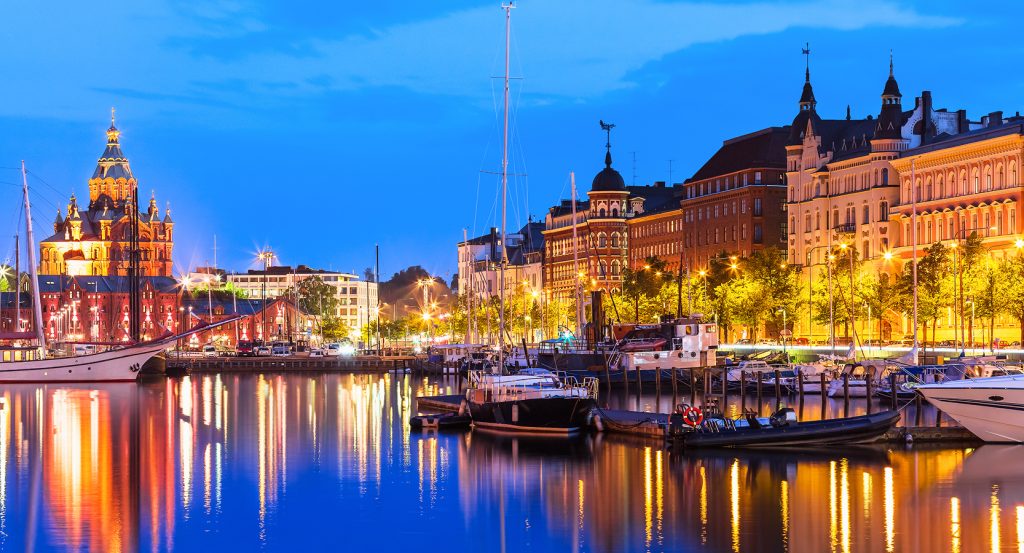
Top places to stay in Helsinki, Finland.
Helsinki's emergence as a Nordic hotel capital followed its transformation from a modest Baltic trading town into the political, commercial, and cultural center of Finland. Founded by King Gustav I of Sweden in 1550 near the mouth of the Vantaa River, the settlement initially struggled to compete with established ports along the Gulf of Finland. Its relocation toward the present harbor during the seventeenth century strengthened maritime commerce, and the construction of the Suomenlinna sea fortress beginning in 1748 brought military personnel, engineers, merchants, and visiting officials to the waterfront. Russia's annexation of Finland in 1809 altered Helsinki's political fortunes. Emperor Alexander I designated the city capital of the Grand Duchy of Finland in 1812, initiating an ambitious rebuilding program under architect Carl Ludvig Engel. The new administrative center attracted diplomats, civil servants, and commercial travelers, encouraging the development of increasingly sophisticated lodging establishments. Railway connections to Hämeenlinna in 1862 and St. Petersburg in 1870 expanded the city's commercial reach and supported international travel. Hotel Kämp opened on Pohjoisesplanadi in 1887 under restaurateur Carl Kämp, establishing an exceptionally prestigious address for artists, politicians, and visiting dignitaries. Its association with composer Jean Sibelius and the Finnish cultural elite made it an important gathering place during the country's struggle for national identity. Finland declared independence in 1917, and Helsinki's hotels entered a new era as institutions serving a sovereign European capital. The functionalist Hotel Torni opened in 1931, introducing an influential modern architectural expression to the city's hospitality landscape. The Helsinki Olympic Games of 1952 accelerated improvements in international accommodation and transportation, bringing athletes, journalists, and spectators from around the world. During the postwar decades, expanding business travel and Nordic commercial integration encouraged substantial modern hotels near railway connections and the city center. The opening of Finlandia Hall in 1971 strengthened Helsinki's international conference profile, complementing its growing cultural institutions. The city's selection as a European Capital of Culture in 2000 stimulated renewed attention to its design heritage and waterfront environments. Contemporary hospitality development has introduced restored landmark buildings, independent design hotels, and sophisticated luxury properties serving visitors attracted to Finland's architecture, cuisine, and distinctive urban relationship with the Baltic Sea.
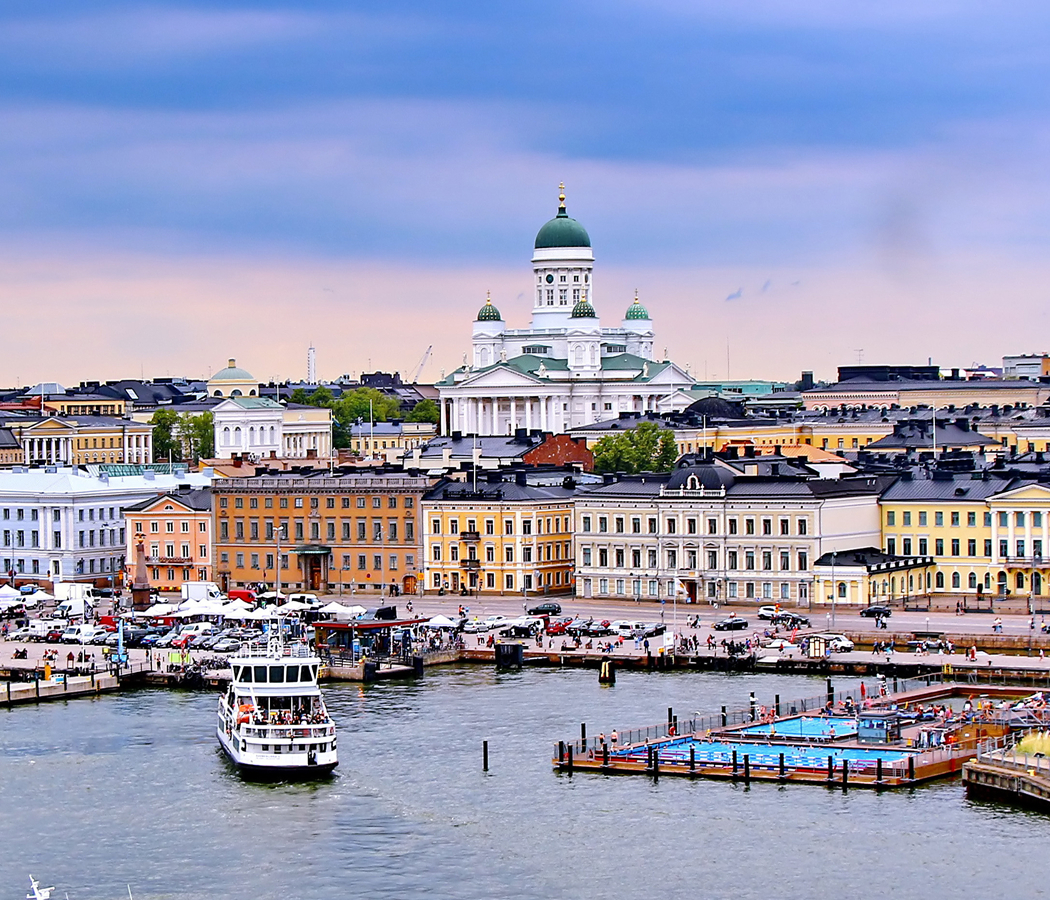
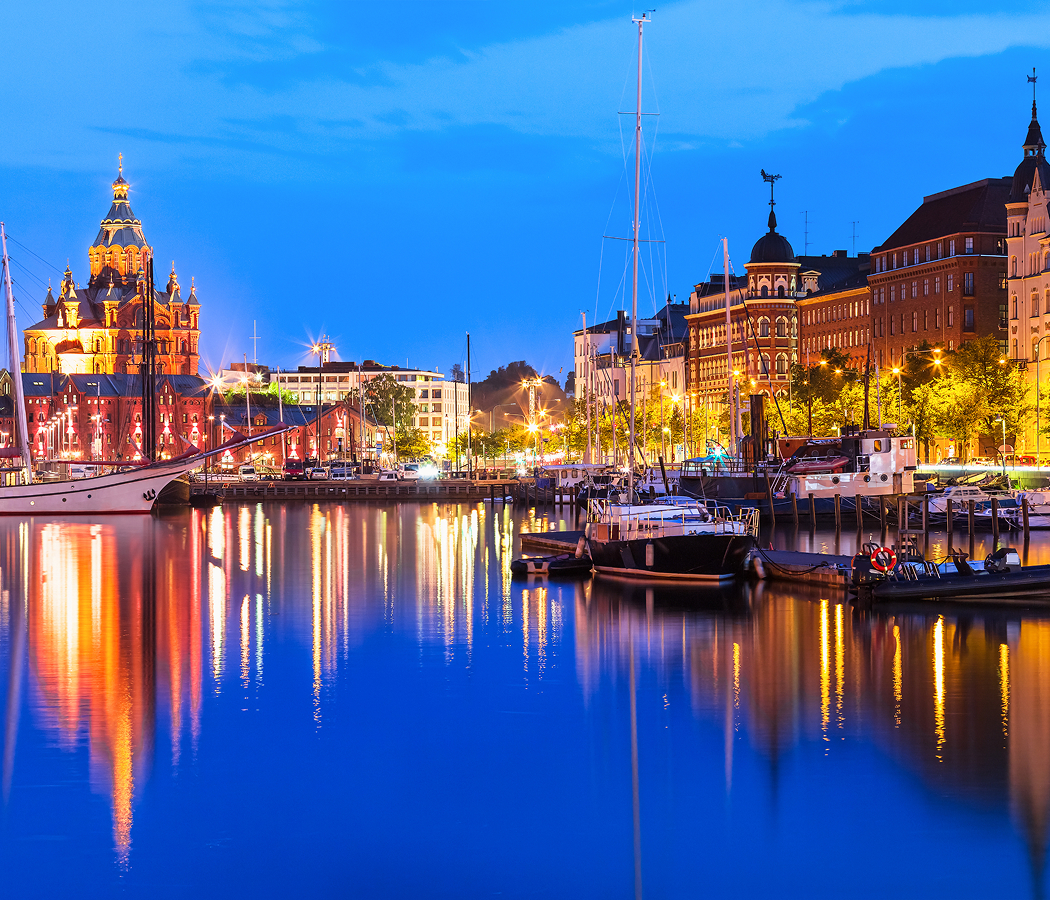
Helsinki's hotel landscape unfolds across a compact peninsula surrounded by sheltered harbors, rocky islands, and residential districts whose architecture reflects successive periods of Nordic urban development. Kluuvi forms the principal commercial heart, with substantial hotels concentrated near Helsinki Central Railway Station, the Stockmann department store, and the pedestrian streets connecting the city's shopping corridors. The district combines expansive stone buildings, early modern commercial architecture, and contemporary interiors, offering convenient access to major transportation connections and cultural institutions. Southward, Kaartinkaupunki introduces an elegant setting near the Market Square and the southern waterfront. Prestigious hotels occupy carefully restored buildings along refined streets, with neoclassical façades, intimate courtyards, and views toward the harbor contributing to the atmosphere. The adjoining Esplanadi park creates a landscaped axis between central commercial streets and the waterfront, supporting an especially appealing environment for visitors seeking architectural character and proximity to established restaurants. Westward, Kamppi presents a more contemporary urban landscape through substantial commercial complexes, residential buildings, and cultural venues arranged around major pedestrian routes. Hotels here range from sophisticated international properties to design-oriented boutique accommodation, with convenient connections to the surrounding districts. South of the commercial center, Punavuori occupies a compact neighborhood of historic apartment buildings, intimate streets, and former industrial premises transformed into independent businesses. Its position within Helsinki's Design District makes it particularly attractive to travelers interested in galleries, furniture studios, and contemporary Nordic craftsmanship. Farther south, Ullanlinna offers a refined residential atmosphere through substantial nineteenth-century buildings, landscaped streets, and elegant properties near the shoreline. The surrounding Kaivopuisto park extends toward the Baltic through wooded slopes and open coastal paths, providing a distinctive environment for waterfront walks. West of the center, Ruoholahti presents a contrasting architectural setting through contemporary office buildings, residential developments, and former industrial waterfronts. Its hotels serve business travelers and visitors seeking access to the western harbor and modern commercial districts. Northward, Töölö offers one of Helsinki's most established residential environments, with substantial apartment buildings, broad streets, and important cultural institutions near the city's central parks. Accommodation occupies quieter surroundings near museums, concert halls, and landscaped waterfront routes. East of the railway district, Kallio presents a more informal urban atmosphere through densely arranged residential buildings, neighborhood restaurants, and independent cafés. Smaller hotels and apartment-style properties provide access to a lively local community. Along the eastern waterfront, Katajanokka occupies a distinctive peninsula connected to the historic center by bridges. Its substantial brick warehouses, Jugendstil apartment buildings, and maritime infrastructure create an atmospheric setting for boutique hotels occupying adapted institutional and commercial properties. Across these districts, Helsinki offers accommodation ranging from prestigious historic addresses and intimate design hotels to contemporary waterfront properties, all shaped by the capital's restrained architectural elegance and close relationship with the sea. Foresyte may earn a commission when you book.
Foresyte Travel's top five choices.
5. Waldorf Astoria Helsinki
Waldorf Astoria Helsinki occupies a group of historic buildings on Mariankatu in Kruununhaka, a district shaped by Helsinki's nineteenth-century development as the capital of the Grand Duchy of Finland. The property originated as Hotel Maria, whose complex incorporated four protected buildings with histories connected to military and government use. A major restoration joined the structures through new interior connections while preserving masonry facades, ceremonial rooms, staircases, and other surviving architectural elements. Hilton brought the property into Waldorf Astoria in 2025, establishing the brand's first hotel in Finland and extending its European presence into the Finnish capital. The hotel gives a substantial collection of Helsinki's historic institutional architecture a new role within the city's highest hospitality tier.
4. Hotel Lilla Roberts
Hotel Lilla Roberts occupies interconnected buildings in Kaartinkaupunki whose history includes service as an electrical facility and a police station. Architect Selim A. Lindqvist designed the oldest portion in the early twentieth century, connecting the property with Helsinki's transition into an electrified modern city. The complex later served the Helsinki police before its conversion into a hotel, preserving an institutional scale distinct from the surrounding residential and commercial buildings. Interior designer Jaakko Puro developed the hospitality transformation around dark surfaces, geometric forms, brass details, and references to the building's early twentieth-century character. Lilla Roberts transforms infrastructure from Helsinki's municipal modernization into a boutique property embedded between the Design District and the historic center.
3. Hotel Haven
Hotel Haven occupies Helsinki's South Harbour near Market Square, placing the property within the maritime district that connected the Finnish capital with Baltic commerce and passenger traffic for generations. The hotel incorporates historic buildings near Unioninkatu, where nineteenth-century urban development produced a dense concentration of mercantile, governmental, and residential architecture beside the harbor. Its principal public spaces preserve a residential scale and architectural details that distinguish the property from Helsinki's larger purpose-built hotels. Haven opened in 2009 as Finland's first member of Small Luxury Hotels of the World, marking an important development in the city's independent high-end hospitality sector. Its position connects contemporary hotel life directly with the harbor, Market Square, and expansive center that defined Helsinki's nineteenth-century expansion.
2. Hotel St. George Helsinki
Hotel St. George occupies a nineteenth-century building beside Old Church Park, placing the property within a central district shaped during Helsinki's rapid growth under Russian imperial rule. Architect Onni Tarjanne designed the structure, completed in 1890 as the headquarters of the Finnish Literature Society, an institution central to the development of Finnish language and national culture. The building later served other institutional purposes before an extensive transformation created Hotel St. George, which opened in 2018. Contemporary art became integral to the project, including Ai Weiwei's expansive white dragon sculpture Tianwu suspended within the building. The hotel connects Finnish literary history, protected architecture, international contemporary art, and Helsinki's modern design culture within a single restored institution.
1. Hotel Kämp
Hotel Kämp opened in 1887 on Pohjoisesplanadi under restaurateur Carl Kämp, becoming a central meeting place for Helsinki's political, artistic, and intellectual life during the decades preceding Finnish independence. Architect Theodor Höijer designed the original hotel as part of the grand nineteenth-century development surrounding Esplanadi, giving the young capital a cosmopolitan institution comparable with major European hotels of the period. Jean Sibelius, Akseli Gallen-Kallela, Eino Leino, and other members of Finland's cultural circles gathered there as artistic nationalism helped shape the country's emerging national consciousness. The original building was demolished in the 1960s and its principal facade reconstructed as part of a new development, with Hotel Kämp returning to the site in 1999. Kämp's history binds Helsinki's late nineteenth-century cultural awakening, Finnish independence-era society, and the modern revival of the city's grand-hotel tradition.
Where your story begins.
Foresyte Travel reveals places that feel extraordinary long before you arrive.
Enjoy editorial crafted for luxury travelers.
Foresyte may earn a commission when you book.