
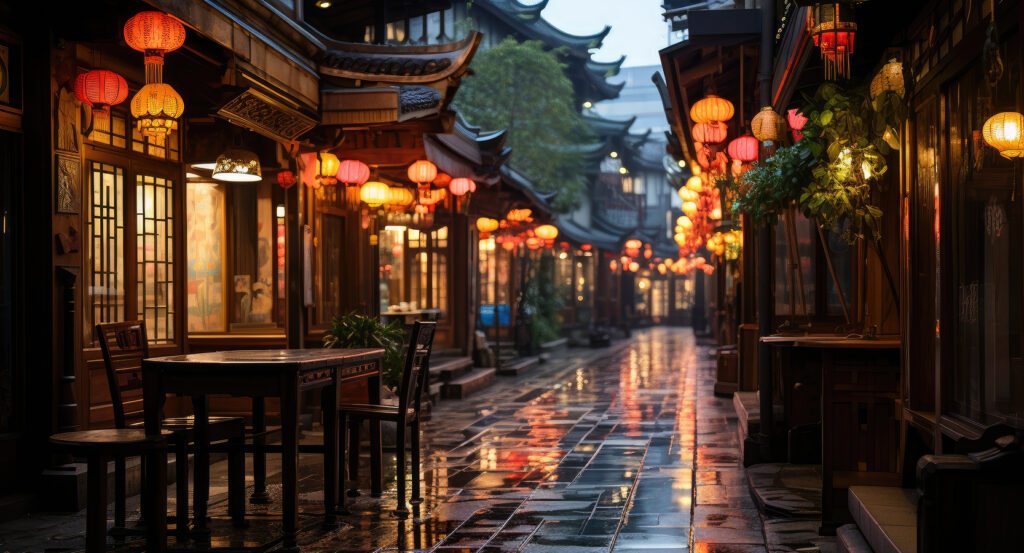
Top places to stay in Shanghai, China.
Shanghai's ascent from a trading port on the Huangpu River to one of Asia's great financial capitals transformed the city into a meeting place for international commerce, political power, and architectural ambition. The settlement developed around maritime trade during the Song and Yuan dynasties, gaining commercial importance through its connections with the Yangtze River Delta. By the Ming and Qing periods, merchants traveled between Shanghai and the prosperous textile-producing communities of Jiangnan. The Treaty of Nanjing opened Shanghai to foreign trade in 1843, initiating a period of rapid urban expansion. Foreign concessions introduced new commercial institutions, shipping companies, and international residential communities, creating demand for increasingly elaborate hospitality establishments. The Astor House Hotel, whose origins date to 1846, became a prominent gathering place for merchants, diplomats, and travelers arriving through the port. The opening of the Shanghai-Nanjing Railway in 1908 strengthened connections with the surrounding commercial region. During the early twentieth century, Shanghai developed an extraordinary concentration of banks, trading houses, entertainment venues, and luxury establishments. The Cathay Hotel opened in 1929 within Victor Sassoon's landmark building on the Bund, combining Art Deco architecture with the cosmopolitan glamour of the city's commercial elite. Across the Huangpu, the growing importance of river transport sustained a busy waterfront economy. The Japanese occupation and subsequent Chinese Civil War disrupted international business and travel, and the establishment of the People's Republic of China in 1949 fundamentally changed the city's commercial institutions. Economic reforms beginning in 1978 gradually reopened Shanghai to international investment. The designation of Pudong as a major development zone in 1990 initiated a dramatic expansion of financial infrastructure and contemporary luxury accommodation. The Grand Hyatt Shanghai opened in 1999 within the Jin Mao Tower, bringing international hospitality into one of the city's defining skyscrapers. The 2010 World Expo accelerated urban improvements and introduced Shanghai to an enormous international audience. Subsequent investment has supported restored historic properties, contemporary architectural landmarks, and increasingly sophisticated boutique establishments. Shanghai's hospitality industry reflects nearly two centuries of commercial transformation, connecting the legacy of treaty-port trade with the extraordinary ambitions of contemporary China.
Shanghai extends across the flat alluvial landscape of the Yangtze River Delta, where the Huangpu River separates historic commercial districts from the expansive skyline of Pudong. The Bund forms the city's most prestigious historic waterfront setting, with imposing banks, former trading houses, and expansive stone façades overlooking the river. Luxury properties occupy carefully restored buildings and substantial contemporary structures along the promenade, offering dramatic views toward the illuminated skyscrapers opposite. Immediately west, the area around Nanjing Road presents a dense metropolitan environment through major shopping streets, established department stores, and substantial commercial buildings. Hotels here provide convenient access to theaters, restaurants, and the city's extensive metro network. Southward, the former French Concession introduces a markedly different atmosphere through plane-tree-lined avenues, historic villas, garden residences, and intimate commercial streets. Boutique accommodation occupies restored mansions and carefully adapted residential buildings, often incorporating enclosed courtyards and restrained contemporary interiors. The surrounding neighborhoods of Xuhui and Huangpu offer access to independent cafés, galleries, and distinguished restaurants within one of Shanghai's most appealing historic environments. Nearby Xintiandi combines preserved shikumen architecture with sophisticated retail and dining spaces, creating an intimate pedestrian district organized around traditional stone-gate houses. Eastward, the Old City preserves a different architectural inheritance through traditional commercial streets, historic gardens, and surviving residential lanes near the former walled settlement. Smaller properties provide access to longstanding markets and cultural landmarks. Across the river, Lujiazui occupies the financial center of Pudong, where extraordinary skyscrapers rise above broad avenues and landscaped public spaces. Luxury accommodation occupies the upper floors of substantial towers, with panoramic views extending across the river and surrounding metropolitan landscape. The district's architecture emphasizes expansive height, glass façades, and ambitious contemporary engineering. Farther east, the Century Park area offers a greener setting through extensive landscaped grounds, residential developments, and modern business properties. Its broad streets and open spaces provide a quieter environment near major cultural and commercial facilities. North of the Bund, Hongkou preserves historic residential neighborhoods and former commercial districts through traditional brick buildings, narrow streets, and surviving early twentieth-century architecture. Contemporary boutique properties increasingly occupy restored structures within this evolving urban landscape. Westward, Jing'an combines prestigious shopping avenues, major office towers, and significant religious landmarks within a sophisticated central district. Hotels near Jing'an Temple offer convenient access to restaurants, cultural venues, and established residential neighborhoods. Farther west, Changning provides substantial contemporary accommodation near international business facilities and transportation connections. Across Shanghai, lodging ranges from distinguished waterfront landmarks and intimate historic residences to ambitious skyscraper properties and sophisticated contemporary urban retreats, with the city's extraordinary architectural contrasts defining the experience of each district. Foresyte may earn a commission when you book.
Foresyte Travel's top five choices.
5. Waldorf Astoria Shanghai on the Bund
Waldorf Astoria Shanghai on the Bund incorporates the former Shanghai Club, completed in 1911 as one of the defining institutional buildings of the city's international settlement era. British architects H. Tarrant and George Christopher Wingrove designed the neoclassical structure for an exclusive club founded by British residents during Shanghai's rise as a global trading port. Its celebrated Long Bar extended across the building facing the Huangpu River, becoming closely associated with the social world of the historic Bund. Waldorf Astoria restored the club building and paired it with a new tower before opening the hotel in 2011. The property gives contemporary hospitality a direct architectural connection with the commercial institutions and foreign communities that shaped the Bund during Shanghai's extraordinary early twentieth-century expansion.
4. Bulgari Hotel, Shanghai
Bulgari Hotel Shanghai opened in 2018 within the Suhe Creek development near the confluence of Suzhou Creek and the Huangpu River. Foster + Partners designed the contemporary tower beside the restored Shanghai Chamber of Commerce building, completed in 1916 during the city's emergence as East Asia's dominant commercial center. Antonio Citterio Patricia Viel developed the hotel interiors through Italian stone, dark timber, metalwork, and furnishings tied to Bulgari's Roman design heritage. The project deliberately places a slender twenty-first-century tower beside a preserved institution from Shanghai's mercantile past, creating a physical discussion between two major periods of urban development. Bulgari Hotel Shanghai links Italian design with the architectural revival of the Suzhou Creek waterfront as former industrial and commercial districts return to prominence.
3. Mandarin Oriental Pudong, Shanghai
Mandarin Oriental Pudong opened in 2013 on the Huangpu riverfront in Lujiazui, the financial district whose skyline emerged from agricultural and industrial land after Pudong's state-directed development accelerated in the 1990s. The hotel forms part of Harbour City, a large mixed-use project occupying a prominent riverfront site north of Shanghai's principal cluster of financial towers. Its architecture extends the dense high-rise development of Lujiazui directly toward the Huangpu, facing the historic Bund across the water that long divided old Shanghai from Pudong. Mandarin Oriental's arrival followed the district's transformation into a concentration of banks, corporate headquarters, hotels, and some of China's tallest buildings. The property captures the extraordinary eastward shift in Shanghai's commercial geography that turned Pudong into the modern counterpart to the historic Bund.
2. The Ritz-Carlton Shanghai, Pudong
The Ritz-Carlton Shanghai, Pudong opened in 2010 within Shanghai IFC, a major mixed-use development at the center of Lujiazui's financial district. César Pelli's architectural firm designed the complex as twin towers beside the Oriental Pearl Tower, placing the hotel within the skyline created by Pudong's rapid development after 1990. The Ritz-Carlton occupies the upper levels of the southern tower, establishing direct sightlines across the Huangpu toward the Bund and its early twentieth-century commercial architecture. Its opening strengthened the concentration of international hospitality surrounding the financial institutions and skyscrapers that had transformed the former eastern riverbank within two decades. The Ritz-Carlton captures the scale and velocity of the development cycle that made Lujiazui one of the defining skylines of modern China.
1. The Peninsula Shanghai
The Peninsula Shanghai opened in 2009 on the Bund, becoming the first major new building constructed along the historic waterfront in decades. The property occupies a site near the former British Consulate at the northern end of the Bund, placing it within the district that concentrated banks, trading houses, consulates, and shipping companies during Shanghai's rise as an international port. Architects incorporated Art Deco references into the limestone exterior and interiors, linking the hotel visually with the architectural period that transformed Shanghai during the 1920s and 1930s. The opening also returned The Hongkong and Shanghai Hotels to a city where the company had operated several prominent hotels before the mid-twentieth century. The Peninsula Shanghai reconnects a historic Asian hotel company with the waterfront that most powerfully expresses Shanghai's commercial ascent and architectural cosmopolitanism.
Where your story begins.
Foresyte Travel reveals places that feel extraordinary long before you arrive.
Enjoy editorial crafted for luxury travelers.
Foresyte may earn a commission when you book.







































































































