Top places to stay in Cape Town, South Africa.
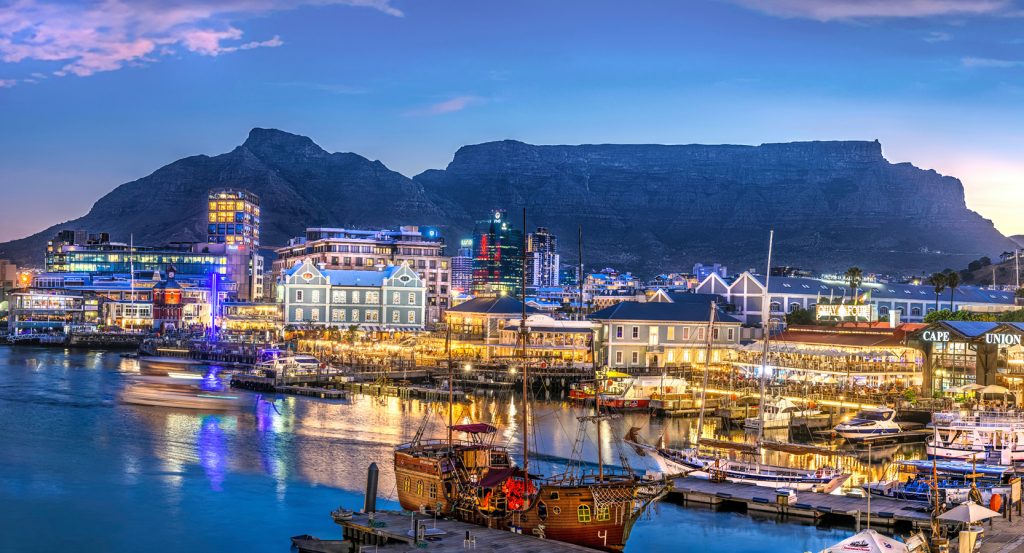
Cape Town began at the maritime crossroads between Europe and Asia, where Table Bay became a vital harbor for ships navigating the Cape of Good Hope. Indigenous Khoekhoe communities occupied the surrounding region long before the Dutch East India Company established a provisioning station beneath Table Mountain in 1652. Under Jan van Riebeeck, the settlement developed gardens, warehouses, and accommodation for company officials and passing sailors. The expansion of colonial commerce brought merchants, military personnel, and travelers to boardinghouses and inns around the harbor. British occupation during the Napoleonic Wars, followed by permanent colonial control in 1806, strengthened Cape Town's administrative importance and maritime connections. The discovery of diamonds in Kimberley during the 1860s and gold on the Witwatersrand in 1886 transformed southern Africa's economy, increasing demand for accommodation among investors, politicians, and international travelers. The Mount Nelson Hotel opened in 1899 on an estate beneath Table Mountain, introducing a grand resort-style establishment amid landscaped gardens. Its position near the expanding city center made it a fashionable address for wealthy visitors and prominent public figures. The opening of the Cape Town railway station's growing regional connections further supported commercial travel, and the city developed substantial hotels serving passengers arriving by sea. During the twentieth century, Cape Town's hospitality industry evolved alongside South Africa's political transformations. Apartheid legislation introduced after 1948 enforced racial segregation across accommodation and public facilities, profoundly restricting access and shaping the geography of tourism. The forced removal of residents from District Six beginning in the 1960s devastated an established multicultural community near the city center. The opening of the Cape Sun Hotel in 1982 reflected the growth of high-rise commercial accommodation during a period of increasing international isolation. South Africa's democratic transition in 1994 initiated a new chapter in international tourism, bringing renewed investment and global attention. The redevelopment of the Victoria & Alfred Waterfront transformed former docklands into a major hospitality and leisure district. Cape Town's selection as a host city for the 2010 FIFA World Cup accelerated improvements to transportation, accommodation, and public infrastructure. Contemporary hospitality now encompasses restored historic buildings, sophisticated urban hotels, and secluded coastal retreats, reflecting a city whose visitor economy has been shaped by maritime trade, colonial expansion, political struggle, and democratic renewal.
Foresyte Travel's top five choices.
5. Cape Grace, A Fairmont Managed Hotel
Cape Grace, A Fairmont Managed Hotel occupies its own quay within Cape Town's Victoria & Alfred Waterfront, placing the hotel inside a harbor whose nineteenth-century expansion transformed the city's relationship with maritime trade. The property opened in 1996 as the waterfront redevelopment converted working docklands into a major mixed-use district of restored industrial structures, commercial spaces, cultural institutions, and hospitality. Its position between the yacht marina and working harbor gives the building an unusually complete physical relationship with the port infrastructure surrounding it. Fairmont assumed management in 2024 following an extensive transformation led by interior and architecture studio 1508 London, beginning a new chapter for one of the Waterfront's earliest high-end hotels. Cape Grace captures the conversion of Cape Town's historic docks into a contemporary urban district while retaining the harbor as its defining physical context.
4. The Silo Hotel
The Silo Hotel occupies the upper levels of Cape Town's former grain elevator complex, completed in 1924 as a critical component of South Africa's agricultural export infrastructure. The industrial structure stored and processed grain for shipment through the adjacent harbor before operations ceased in 2001, leaving a massive concrete complex at the V&A Waterfront. Heatherwick Studio transformed the surviving structure for a combined hotel and museum project, carving the neighboring silos into the Zeitz Museum of Contemporary Art Africa and inserting enormous pillowed glass windows into the hotel tower. The Royal Portfolio opened The Silo in 2017 above the museum, with founder Liz Biden directing interiors filled with contemporary African art. The project converted one of Cape Town's most imposing pieces of port infrastructure into a cultural and hospitality complex centered on African artistic production.
3. Ellerman House
Ellerman House occupies a Cape Edwardian mansion overlooking the Atlantic in Bantry Bay, originally built in 1906 for shipping magnates Sir John and Lady Ellerman. The residence passed through successive private owners before becoming a hotel in 1992, preserving the domestic scale and elevated coastal setting of its original purpose. Its South African art collection traces major periods of the country's artistic development through works by figures including Irma Stern, Gerard Sekoto, Maggie Laubser, and William Kentridge. Contemporary additions expanded the property through architecture integrated into the steep mountainside above the Atlantic, extending the original house. Ellerman House joins Cape Town's early twentieth-century mercantile wealth with one of the country's most concentrated privately assembled presentations of South African art.
2. Mount Nelson, A Belmond Hotel, Cape Town
Mount Nelson, A Belmond Hotel, Cape Town opened in 1899 beneath Table Mountain as Cape Town prepared for increased passenger traffic associated with the expanding British presence in southern Africa. The property was developed by the Castle Shipping Line and painted its distinctive pink in 1918, establishing the exterior treatment that became inseparable from the hotel's physical presence in Gardens. Its history spans the South African War, two world wars, apartheid, and the country's democratic transition, giving the property an unusual continuity across successive eras of Cape Town's modern development. Nelson Mandela appeared at the hotel during the 1990s, adding another chapter to a property long associated with political figures, writers, performers, and international travelers. Mount Nelson binds Cape Town's grand-hotel tradition to more than a century of political and social transformation beneath Table Mountain.
1. One&Only Cape Town
One&Only Cape Town opened in 2009 within the Victoria & Alfred Waterfront during a major period of investment preceding South Africa's hosting of the 2010 FIFA World Cup. Kerzner International, founded by South African hotelier Sol Kerzner, developed the resort as a major home-country project after building an international hospitality portfolio that included Sun City and Atlantis. Dennis Fabian & Berman designed the complex around a marina basin, with a central tower oriented toward Table Mountain and lower accommodation structures distributed across landscaped islands. The project introduced the large-scale urban resort model to a Waterfront historically shaped by docks, warehouses, ship repair, and maritime commerce. One&Only Cape Town represents Kerzner's return to South Africa through a property embedded in the harbor redevelopment that fundamentally reshaped Central Cape Town's relationship with its working waterfront.
Where your story begins.
Foresyte Travel reveals places that feel extraordinary long before you arrive.
Enjoy editorial crafted for luxury travelers.