Why Cape Grace, A Fairmont Managed Hotel matters.
Cape Grace, A Fairmont Managed Hotel is a maritime hotel where V&A Waterfront's working harbor meets South African craftsmanship, Louis Karol's Cape architecture and three decades of luxury hospitality.
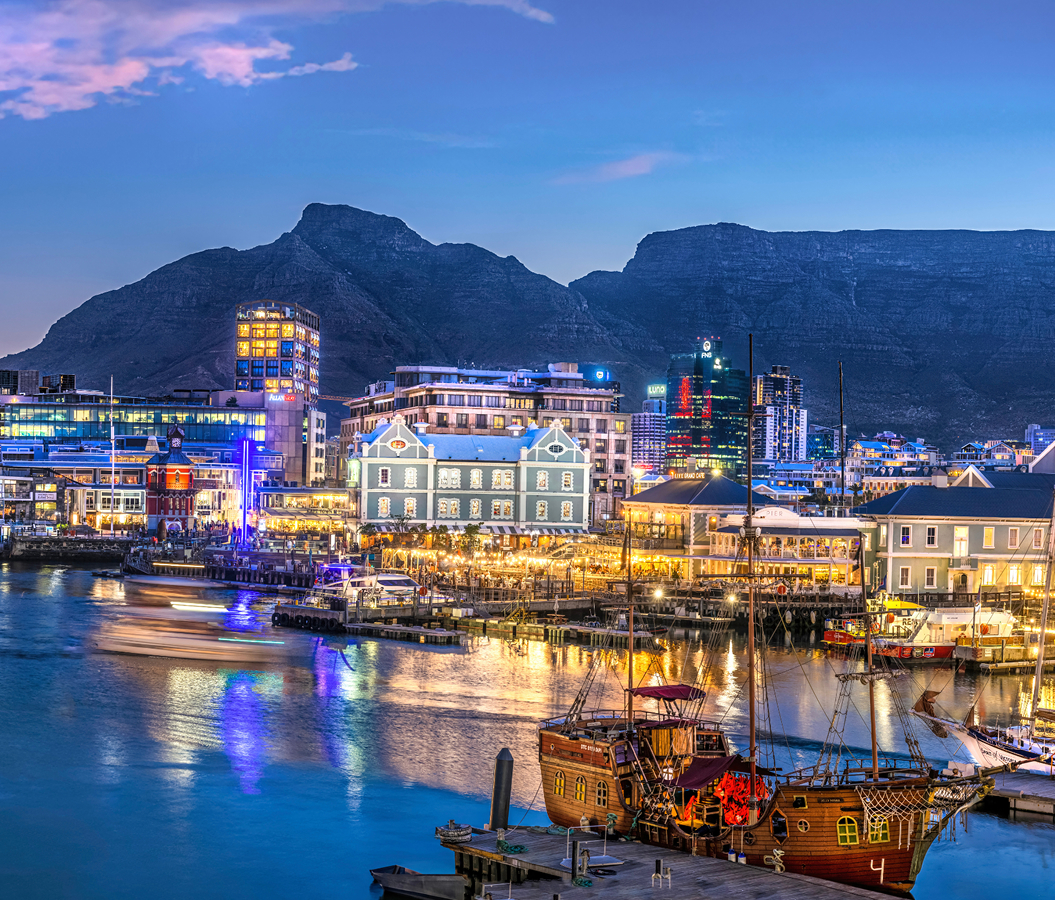
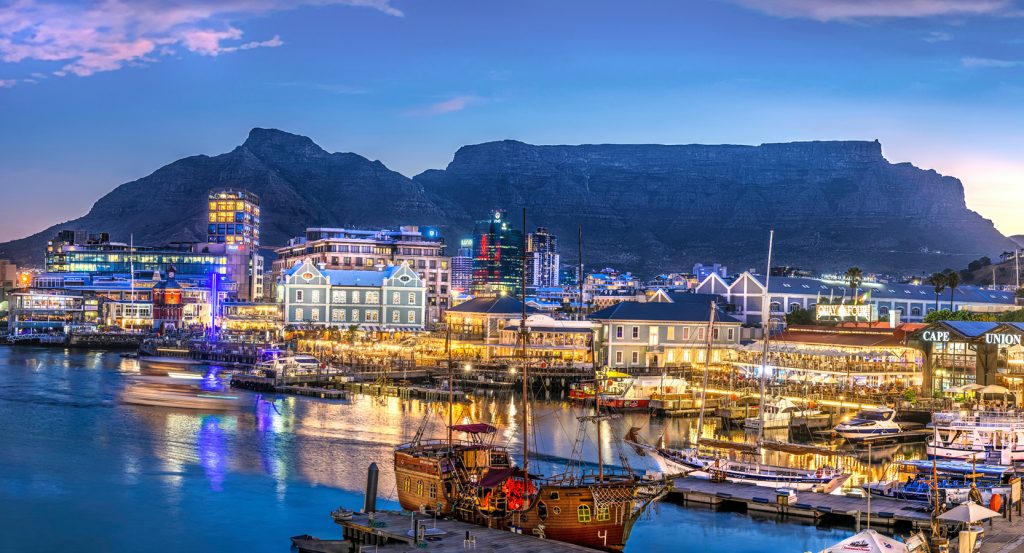
Set on a private quay between the V&A Waterfront and the yacht marina, the hotel occupies West Quay Road beside the harbor basin, with Table Mountain rising directly beyond the water and Signal Hill visible across the western skyline. The five-storey building uses mansard rooflines, white balustrades and symmetrical windows to give its waterfront facade the proportions of a Cape residence. Its position at the end of the quay separates the hotel from the larger retail and entertainment concentration farther inland, creating a distinct architectural edge against the marina. The result is an intimate waterfront hotel whose scale, roofline and placement connect contemporary hospitality with Cape Town's maritime setting.
What defines Cape Grace, A Fairmont Managed Hotel.
Cape Grace, A Fairmont Managed Hotel is best known for becoming one of Cape Town's enduring luxury hotels after the Brand family conceived the property in 1994 and brought it to completion at the V&A Waterfront in 1996. South African architect Louis Karol designed the hotel as a five-storey Cape residence with a maritime orientation, giving the property mansard roofs, white-painted balustrades and carefully ordered windows above the private quay. The 122-room hotel opened in December 1996 as the V&A Waterfront itself was establishing a new commercial and hospitality district on Cape Town's working harbor. The Brand family's hospitality interests already included Mount Grace in Magaliesburg, giving Cape Grace a place within a South African hotel group developed before the family expanded into other properties. Cape Grace subsequently became associated with international political and entertainment figures, including Bill Clinton, Clint Eastwood and Matt Damon, as its position on the waterfront made it a favored base for prominent visitors to Cape Town. The hotel entered a new ownership chapter when the Brand family's financial pressures contributed to the sale of its remaining 50 percent share to Meikles in 2001. Accor later acquired the property and selected Fairmont to manage it, ending the hotel's independent Brand-family chapter after nearly three decades. A nine-month closure preceded the April 2024 reopening, when Cape Grace became the first Fairmont hotel in South Africa. The refurbishment reduced the room count from 121 to 112, creating larger accommodations across twelve categories. Cape Grace received Two MICHELIN Keys in 2025, and its international recognition expanded in 2026 through Condé Nast Traveller's Triple Crown Award and inclusion in Travel + Leisure's Best 500 Hotels. The hotel's history links the V&A Waterfront's late-twentieth-century emergence with a South African hospitality enterprise that survived ownership changes, a comprehensive redesign and a transition into an international luxury brand.
1508 London reshaped Cape Grace through a nine-month renovation completed in 2024, extending its work across the foyer, reception, 112 rooms and suites, Heirloom restaurant, Library Lounge, Bascule Bar, spa and pool. The designers drew directly from Cape Town's landscapes and cultural traditions, using deep blue, green and maroon tones alongside bespoke rugs, local artwork and craftwork in ceramics, glass, wood and bronze. South African artists and artisans became part of the renewed interior program, giving contemporary works a prominent role alongside the hotel's older decorative vocabulary. Bascule Bar retained its maritime connection through whisky, wine and cocktail service beneath a design scheme referencing the harbor and the building's seafaring character. Heirloom Restaurant subsequently became the hotel's principal culinary room, with Executive Chef Wesli Jacobs directing contemporary South African cooking and a monthly Terroir & Table series bringing South African winemakers into the dining program. The hotel's 2025 Two MICHELIN Keys followed the reopening, adding formal recognition to the redesigned property. Cape Grace also received the 2024 Luxe Travel Awards Design Hotel of the Year distinction and a 2025 Luxe Diamond Star Award. The renewed property joins local art, Cape architecture, South African cuisine and international hospitality within a single design language developed for its waterfront position.
How Cape Grace, A Fairmont Managed Hotel fits.
Cape Grace, A Fairmont Managed Hotel works as the base for a Cape Town outing connecting contemporary African art, a buried Dutch colonial fortification and the preserved domestic architecture of the city's historic Malay community.
Begin at Zeitz MOCAA, created through Jochen Zeitz's donation of his contemporary African art collection to the V&A Waterfront. Heatherwick Studio transformed the historic Grain Silo complex, built in 1921 and once the tallest building in Cape Town, by carving 42 concrete storage tubes into a cathedral-like central atrium. The museum opened in 2017 with more than 100 galleries across nine floors, making the repurposed silo one of the largest institutions devoted exclusively to contemporary African art. Continue to Chavonnes Battery Museum, where excavations exposed the remains of a Dutch fortification constructed in 1714 under Governor Maurice Pasques de Chavonnes. The battery formed part of the defensive system protecting Cape Town's anchorage and remained buried beneath later waterfront development until archaeological work during the 1990s brought its walls, foundations and associated artifacts back into view. The surviving structures now reveal the scale of military infrastructure that once guarded ships entering the early Cape settlement. Conclude at Bo-Kaap Museum, housed in a house constructed in the 1760s and recognized as one of the oldest surviving buildings in the Bo-Kaap. The museum opened in 1978 as the first museum in South Africa devoted to Cape Muslim history, preserving the domestic architecture associated with families descended from enslaved people brought to the Cape from Indonesia, India, Sri Lanka and other parts of Asia. Its collections trace Islamic scholarship, family life and community formation through the neighborhood's distinctive houses and mosques. The progression moves from Heatherwick Studio's conversion of industrial infrastructure into a major African art museum through the recovered military foundations of the colonial harbor and culminates inside an eighteenth-century home preserving the cultural history of Cape Town's Muslim community.
Where your story begins.
Foresyte Travel reveals places that feel extraordinary long before you arrive.
Enjoy editorial crafted for luxury travelers.
Foresyte may earn a commission when you book.