Perfect weekend in Seoul, South Korea.
Seoul's development into the capital of South Korea spans more than two millennia of Korean state formation, dynastic government, architectural achievement, and economic reinvention. Situated along the Han River in the northwestern Korean Peninsula, the city occupies a basin surrounded by granite mountains, including Bukhansan, Inwangsan, and Namsan, whose ridgelines influenced its historical defenses and settlement patterns. The surrounding territory supported communities during the prehistoric period and became strategically important to the Three Kingdoms of Korea, particularly Baekje, which established an early capital in the Han River basin in 18 BCE. Control of the region subsequently passed between competing kingdoms before the unification of much of the peninsula under Silla during the seventh century. Seoul acquired its enduring political importance in 1394 when King Taejo, founder of the Joseon dynasty, established Hanyang as the royal capital. The city's location followed principles of Korean geomancy, with surrounding mountains providing natural protection and the Han River supporting transportation and commerce. Under the Joseon monarchs, Hanyang developed into a center of Confucian scholarship, royal administration, craftsmanship, and urban trade. King Sejong's reign during the fifteenth century brought significant advances in scientific instrumentation, astronomical observation, and the creation of Hangul, the Korean writing system promulgated in 1446. Japanese colonial rule between 1910 and 1945 transformed the city's administration and built environment, followed by liberation and the establishment of the Republic of Korea in 1948. The Korean War inflicted extensive destruction upon Seoul between 1950 and 1953, preceding decades of reconstruction, industrialization, and rapid population growth. South Korea's economic expansion subsequently transformed Seoul into a center of advanced technology, international finance, higher education, and contemporary Korean creative industries.
Korean artistic traditions have flourished in Seoul through royal patronage, Confucian scholarship, literary innovation, contemporary cinema, and the international expansion of popular music. The National Museum of Korea preserves extensive collections spanning prehistoric archaeology, Buddhist sculpture, royal ceramics, calligraphy, and decorative arts, including distinguished examples of Goryeo celadon and Joseon white porcelain. The National Museum of Modern and Contemporary Art maintains a substantial presence in the capital, supporting exhibitions devoted to Korean modernism and contemporary artistic practice. Seoul's literary history includes the poet Yun Dong-ju, whose writing explored conscience and national belonging during Japanese colonial rule, and novelist Han Kang, whose work examines historical trauma, human relationships, and the consequences of political violence. Han Kang received the Nobel Prize in Literature in 2024, becoming the first South Korean writer to receive the award. Korean cinema achieved international prominence through directors including Bong Joon-ho, whose film Parasite won the Academy Award for Best Picture in 2020, and Park Chan-wook, whose work contributed to the international recognition of contemporary Korean filmmaking. Seoul also became the principal center of the K-pop industry, supporting entertainment companies, recording studios, and performers whose music reached audiences across Asia, Europe, and the Americas. The city's culinary traditions draw upon Korean agricultural practices, fermented foods, regional specialties, and the elaborate dining customs historically associated with royal households. Kimchi, doenjang, and gochujang contribute foundational flavors to dishes incorporating vegetables, rice, seafood, and carefully prepared meats. Traditional specialties include seolleongtang, a long-simmered ox-bone soup; naengmyeon, chilled buckwheat noodles; and galbi, marinated beef ribs prepared over charcoal. Korean barbecue, traditional rice cakes, and seasonal banchan contribute further depth to the capital's dining traditions, accompanied by contemporary restaurants exploring regional ingredients and historical cooking techniques. A weekend in Seoul connects the intellectual achievements of the Joseon dynasty with traditional neighborhoods, contemporary Korean arts, and a culinary tradition shaped by centuries of craftsmanship and regional exchange.
Three day itinerary.
Day 1: Insadong
Insadong is best known for preserving a dense concentration of Korean traditional arts, crafts, antiques, calligraphy, ceramics, and tea culture within Central Seoul. The district developed near the political and ceremonial heart of Joseon-era Hanyang, placing generations of scholars, officials, artists, and merchants within the surrounding neighborhoods. Antique dealing expanded significantly during the twentieth century as collections from old households entered the commercial market. Galleries and specialist shops subsequently strengthened Insadong's position as a center for Korean painting, paper, brushes, pottery, and handcrafted objects. Traditional tea houses occupy converted hanok and narrow side streets branching from the principal commercial corridor. Insadong gives Seoul an unusually concentrated connection between historic urban fabric and artistic traditions that survived the capital's extraordinary twentieth-century transformation.
Day 1: Mingles
Mingles is best known for chef Kang Min-goo's transformation of Korean culinary traditions through fermentation, seasonal ingredients, and techniques developed across Korea and international kitchens. Kang trained under Martín Berasategui in Spain before working with Nobu, experiences that preceded his return to Seoul and the opening of Mingles in 2014. Jang, grains, roots, seafood, vegetables, broths, and preserved ingredients form the foundations of a cuisine whose sophistication remains anchored in Korean flavor structures. Fermented sauces give individual courses depth accumulated across time, connecting contemporary preparation with one of the oldest mechanisms in Korean cooking. Mingles holds three MICHELIN stars in 2026, the only restaurant in Seoul at that level, and ranks fourth on Asia's 50 Best Restaurants. Its ascent places modern Korean gastronomy at the summit of the city's restaurant culture.
Day 2: Gyeongbokgung Palace
Gyeongbokgung Palace is best known as the principal royal palace of the Joseon dynasty and the architectural center of the capital established by King Taejo. Construction followed the dynasty's founding in 1392 and the transfer of the capital to Hanyang, organizing royal government around ceremonial halls, residential compounds, gates, gardens, and administrative spaces. Japanese forces destroyed much of the palace during the invasions of the 1590s, leaving the complex largely abandoned for centuries. Regent Heungseon Daewongun directed an immense reconstruction during the nineteenth century, restoring Gyeongbokgung as a symbol of royal authority. Japanese colonial rule subsequently brought extensive demolition and alteration to the grounds. Long-term restoration has recovered major structures and spatial relationships, making Gyeongbokgung an architectural record of Joseon statecraft, dynastic disruption, colonial intervention, and Korean cultural recovery.
Day 2: Onjium
Onjium is best known for preserving and advancing Korean culinary heritage through rigorous engagement with historical recipes, regional ingredients, and techniques transmitted across generations. Its cooking draws particular strength from Joseon royal and aristocratic food traditions, placing broths, vegetables, seafood, grains, fermentation, sauces, and carefully developed seasonings within highly refined courses. The restaurant operates near Gyeongbokgung, creating a direct geographic relationship with the royal capital that shaped many of those culinary traditions. Historical foundations remain recognizable as the kitchen develops them through exact contemporary execution. Onjium holds one MICHELIN star and ranked fourteenth on Asia's 50 Best Restaurants in 2026. Its concentration on Korean culinary inheritance makes it an overwhelming upgrade over Hongdae Dakgalbi for this position.
Day 2: Bukchon Hanok Village
Bukchon Hanok Village is best known for preserving a substantial concentration of traditional Korean houses between Gyeongbokgung Palace and Changdeokgung Palace. Its location within the northern neighborhoods of Joseon-era Seoul placed the area close to royal institutions and made it a desirable residential district for members of the governing elite. Hanok architecture organizes timber frames, tiled roofs, courtyards, heated ondol floors, and raised wooden maru spaces around responses to Korea's climate and domestic customs. Many surviving houses reflect twentieth-century urban adaptations that compressed traditional architectural principles into increasingly dense residential parcels. Workshops, cultural institutions, residences, and small businesses subsequently entered the district. Bukchon preserves the domestic scale of historic Seoul beside the grand palace architecture that once structured the political life surrounding it.
Day 2: Eatanic Garden
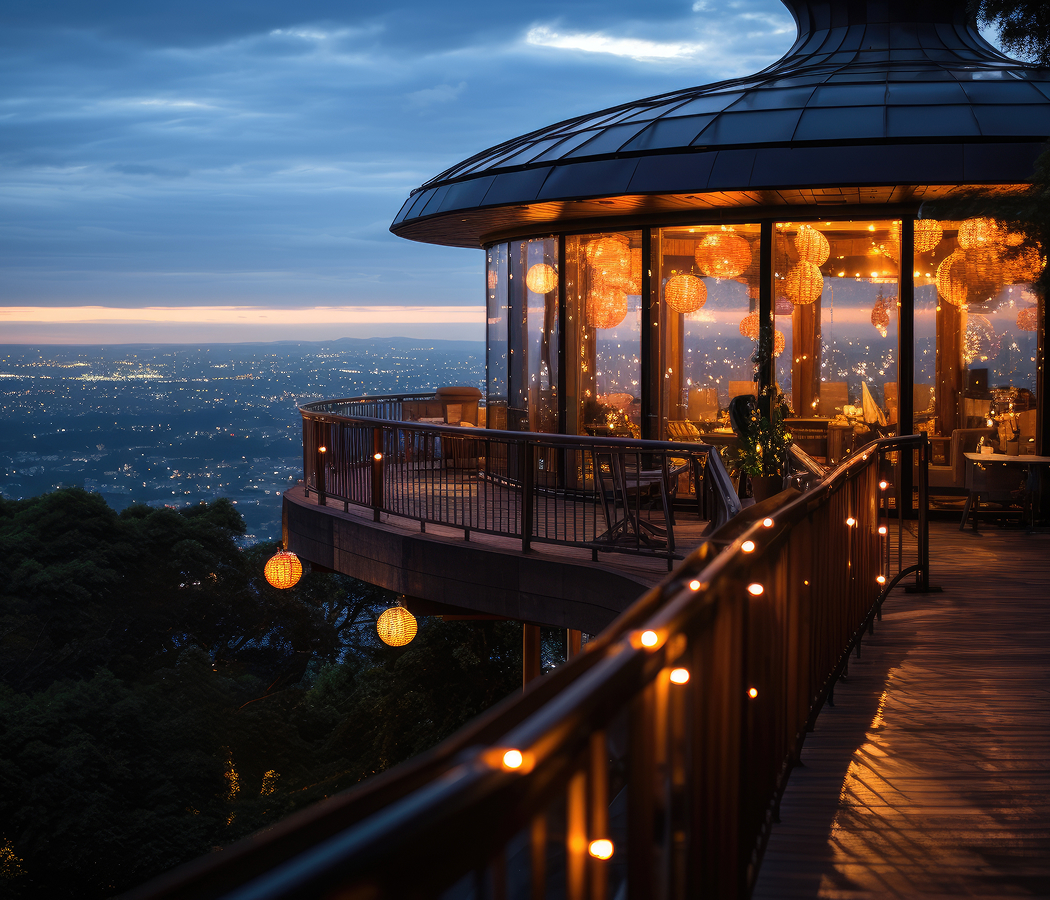
Eatanic Garden is best known for chef Son Jong-won's contemporary interpretation of Korean ingredients from the thirty-sixth floor of Josun Palace. Seasonal products determine the sequence of the menu, with individual courses built around ingredients including Korean rice varieties, seafood, vegetables, herbs, and products drawn from the country's agricultural traditions. Illustrated cards introduce the central ingredient behind each composition, making Korean produce the organizing principle of the meal. Son combines those foundations with modern technique and highly controlled presentation, giving traditional flavors new structural forms. Eatanic Garden holds one MICHELIN star and ranks twenty-sixth on Asia's 50 Best Restaurants in 2026. Its Korean culinary authorship and commanding relationship with Seoul make it a decisive elevation over Margaux Grill.
Day 3: Gwangjang Market
Gwangjang Market is best known for preserving one of Seoul's most concentrated expressions of traditional market food within a commercial institution dating to the final years of the Korean Empire. The market developed as Korean merchants sought greater control over domestic commerce during a period of increasing foreign economic influence. Textile trading became a major component of its identity, joined by food stalls serving dishes deeply embedded in Seoul's everyday culinary culture. Bindaetteok, mayak gimbap, noodles, dumplings, offal, rice dishes, and fermented accompaniments create a dense survey of inexpensive Korean cooking. Grinding mung beans, sizzling griddles, steaming broths, and communal counters make preparation inseparable from the market itself. Gwangjang gives the daytime meal direct contact with Seoul's commercial and street-food history.
Day 3: N Seoul Tower
N Seoul Tower is best known for giving Seoul a telecommunications monument at the summit of Namsan, the mountain rising immediately south of the historic city center. Completed during the 1970s, the tower consolidated broadcasting infrastructure at a commanding elevation above the capital. Public observation facilities subsequently transformed a utilitarian communications structure into one of Seoul's principal metropolitan viewpoints. Namsan itself had long occupied a strategic position within the geography of Joseon Seoul, where the city wall crossed its slopes and beacon systems communicated information toward the capital. The tower extended that communications role into the electronic age. Its observation levels expose the immense urban basin encircled by mountains, making Seoul's relationship between historic core, twentieth-century expansion, topography, and infrastructure legible from a single point.
Day 3: Dongdaemun Design Plaza
Dongdaemun Design Plaza is best known for Zaha Hadid Architects' transformation of a historic urban site into one of Seoul's most ambitious works of contemporary architecture. The building opened in 2014 with sweeping aluminum surfaces, continuous curves, exhibition halls, public spaces, and circulation routes that dissolve conventional distinctions between facade, roof, landscape, and interior. Digital modeling and advanced fabrication made its complex geometry possible at architectural scale. Construction exposed archaeological remains associated with Seoul's former defensive and military landscape, requiring the project to incorporate historic material into the surrounding precinct. The building occupies an area long associated with Dongdaemun's textile and fashion industries. Dongdaemun Design Plaza gives physical form to Seoul's convergence of design, manufacturing, digital technology, archaeology, and relentless urban reinvention.
Day 3: Born and Bred
Born and Bred is best known for turning Korean beef into an intensive study of animal selection, butchery, aging, grilling, and the culinary possibilities of individual cuts. The restaurant grew from a family business in Seoul's Majang meat market, among the city's major centers for wholesale meat distribution. Hanwoo occupies the center of the operation, allowing different muscles, textures, fat structures, and preparations to unfold across an extended meal. Butchery knowledge shapes the cooking before meat reaches the grill, connecting restaurant technique directly with the market trade from which the business emerged. Korean grilling traditions provide the foundation, joined by preparations that explore raw, seared, grilled, and slow-cooked expressions of beef. Born and Bred gives the final dinner a distinctly Korean subject with deep roots in Seoul's food economy.
Where your story begins.
Foresyte Travel reveals places that feel extraordinary long before you arrive.
Enjoy editorial crafted for luxury travelers.
Foresyte may earn a commission when you book.