
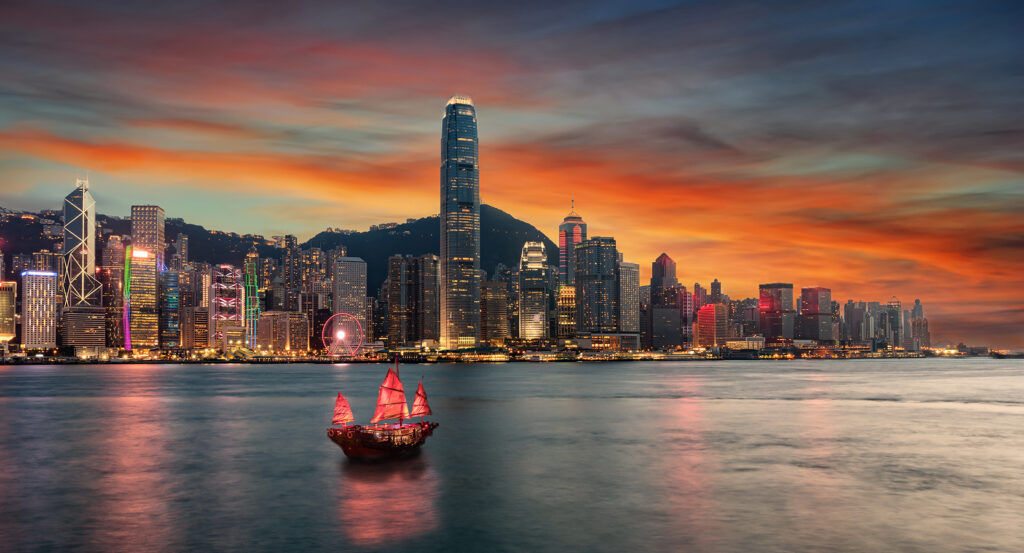
Perfect weekend in Hong Kong.
Hong Kong's emergence as one of Asia's foremost financial and commercial centers developed through centuries of maritime trade, Chinese settlement, British colonial administration, and the extraordinary expansion of international shipping and manufacturing. Situated along the southern coast of China at the eastern edge of the Pearl River Delta, Hong Kong encompasses a mountainous island, the Kowloon Peninsula, the New Territories, and more than 200 surrounding islands. Archaeological discoveries trace human settlement in the region to prehistoric communities whose livelihoods depended upon fishing, coastal agriculture, and maritime exchange. During the Qin and Han dynasties, the territory became increasingly integrated into the political and commercial systems of southern China. Fishing villages, salt production, and pearl harvesting subsequently contributed to the coastal economy, with communities including the Tanka and Hakka developing distinct traditions across the surrounding waterways and rural settlements. British colonial control began in 1842 following the First Opium War, when the Treaty of Nanjing transferred Hong Kong Island to Britain. The Kowloon Peninsula south of Boundary Street was ceded in 1860, followed by the 99-year lease of the New Territories in 1898. Hong Kong's deep natural harbor encouraged the expansion of shipping, banking, and commercial enterprises connecting China with international markets. Japanese occupation between 1941 and 1945 inflicted severe hardship upon the population, preceding a period of substantial postwar immigration and industrial growth. During the second half of the twentieth century, textile manufacturing, electronics production, and international finance transformed Hong Kong into one of the world's most prosperous trading economies. The transfer of sovereignty to China in 1997 established the Hong Kong Special Administrative Region under the constitutional arrangement known as “one country, two systems,” beginning another chapter in the territory's political and economic history.
Chinese artistic traditions, Cantonese performing arts, and Hong Kong's influential film industry have contributed substantially to the territory's position within the creative life of East Asia. The Hong Kong Museum of Art, established in 1962, developed extensive collections of Chinese painting, calligraphy, antiquities, and modern art, including works associated with the Lingnan School of painting. The Hong Kong Heritage Museum in Sha Tin explores regional history, traditional craftsmanship, popular entertainment, and the development of local artistic institutions. Cantonese opera occupies an important place in southern Chinese theatrical traditions, combining elaborate costumes, instrumental music, stylized movement, and dramatic performances derived from historical and literary subjects. Hong Kong's cinema achieved international prominence during the twentieth century through performers and filmmakers including Bruce Lee, Jackie Chan, John Woo, and Wong Kar-wai, whose contributions influenced martial arts filmmaking, action choreography, and contemporary cinematic aesthetics. The territory's literary history includes Eileen Chang, whose fiction explored Chinese society and personal relationships, and Xi Xi, whose writing examined the transformations of Hong Kong's neighborhoods and social institutions. Hong Kong's culinary traditions draw upon Cantonese cooking, coastal seafood, regional Chinese ingredients, and the international influences introduced through centuries of maritime commerce. Dim sum developed into a central feature of local dining, encompassing preparations such as har gow, siu mai, and steamed barbecue pork buns served alongside traditional Chinese tea. Other established specialties include wonton noodles, roast goose, claypot rice, and egg tarts, with cha chaan teng cafés contributing a distinctive tradition of Hong Kong-style milk tea, baked goods, and Chinese interpretations of Western dishes. Contemporary restaurants have expanded these foundations through refined Cantonese techniques, regional Chinese cuisines, and international culinary approaches. A weekend in Hong Kong connects maritime history, extraordinary metropolitan geography, influential artistic traditions, and the culinary sophistication of one of Asia's most celebrated harbor cities.
Three day itinerary.
Day 1: Victoria Peak
Victoria Peak is best known for its extraordinary panorama of Victoria Harbour, Hong Kong's skyscrapers, and the densely developed mountainsides of Hong Kong Island. Rising 552 meters above sea level, the mountain became an exclusive residential district during the nineteenth century as British colonial officials and wealthy merchants sought relief from the heat and congestion of the waterfront. The Peak Tram began operating in 1888, transforming access to the upper slopes through one of Asia's earliest cable-hauled railway systems. Its steep ascent established a distinctive relationship between the city's commercial center and the elevated residential landscape overlooking the harbor. The Peak Tower, designed by British architect Terry Farrell, introduced a dramatic contemporary architectural feature to the summit area during the late twentieth century. Walking paths along Lugard Road preserve exceptional views of the harbor's narrow channel, surrounding islands, and the mountain ridges of Kowloon. Victoria Peak represents the defining geographical relationship between Hong Kong's extraordinary vertical urban development and the mountainous terrain that shaped its growth.
Day 1: The Chairman Restaurant
The Chairman Restaurant is best known for its sophisticated interpretation of traditional Cantonese cooking through exceptional regional ingredients and meticulous culinary technique. Founded by Danny Yip in 2009, the restaurant developed a culinary character centered on the preservation of established Cantonese preparations and the agricultural traditions of southern China. Its kitchen emphasizes fresh seafood, seasonal vegetables, carefully sourced meats, and traditional techniques involving steaming, braising, roasting, and slow cooking. The celebrated steamed flowery crab with aged Shaoxing wine and chicken oil exemplifies the restaurant's concentration on ingredient quality and the refinement of familiar Cantonese flavors. Yip's approach places particular importance on sourcing produce from regional farms and maintaining direct relationships with suppliers. The Chairman became the first Hong Kong restaurant to receive the top position on Asia's 50 Best Restaurants list, achieving that distinction in 2021. The restaurant represents one of the most consequential contemporary expressions of Cantonese culinary heritage through its commitment to regional ingredients and traditional cooking methods.
Day 2: Hong Kong Palace Museum
Hong Kong Palace Museum is best known for presenting extraordinary collections of Chinese imperial art and cultural artifacts within an expansive contemporary building overlooking Victoria Harbour. Opened in 2022 as part of the West Kowloon Cultural District, the museum emerged through a partnership with the Palace Museum in Beijing, whose collections preserve the artistic and political heritage of China's imperial dynasties. Architect Rocco Yim designed the building around a distinctive arrangement of stacked volumes, elevated galleries, and architectural references to traditional Chinese spatial organization. Exhibitions explore imperial ceramics, painting, calligraphy, decorative arts, court objects, and the material culture of successive dynasties. The museum's collections and exhibition program connect the artistic traditions of the Forbidden City with Hong Kong's role as an international cultural center. Its waterfront setting establishes a direct relationship with the broader development of West Kowloon as a major arts district. Hong Kong Palace Museum represents a significant achievement in the presentation of Chinese imperial heritage through contemporary museum architecture and international cultural collaboration.
Day 2: Tin Lung Heen
Tin Lung Heen is best known for its refined Cantonese cuisine and extraordinary elevated dining room within The Ritz-Carlton, Hong Kong. Located on the 102nd floor of the International Commerce Centre, the restaurant occupies one of the highest formal dining settings in the world, overlooking Victoria Harbour and the surrounding metropolitan landscape. Its kitchen draws on classical Cantonese culinary traditions through carefully prepared seafood, premium meats, dim sum, soups, and intricate preparations that emphasize the natural flavors of individual ingredients. Traditional techniques involving steaming, roasting, braising, and precise temperature control form the foundation of its culinary program. The restaurant's extensive tea and wine selections complement a dining approach associated with the ceremonial traditions of Chinese fine dining. Tin Lung Heen has received MICHELIN recognition for its technical refinement and commitment to Cantonese culinary heritage. The restaurant represents an exceptional convergence of traditional Chinese gastronomy and Hong Kong's extraordinary contemporary skyscraper architecture.
Day 2: M+ Museum
M+ Museum is best known for its ambitious collection of twentieth- and twenty-first-century visual culture within Hong Kong's West Kowloon Cultural District. Opened in 2021, the museum was designed by Herzog & de Meuron in collaboration with TFP Farrells and Arup, establishing an expansive architectural presence along Victoria Harbour. Its collections encompass contemporary art, design, architecture, moving images, and visual culture from Hong Kong, mainland China, Asia, and the wider international artistic community. The museum's extensive holdings of Chinese contemporary art include works associated with the extraordinary artistic transformations that followed China's economic and cultural reforms during the late twentieth century. Its architecture incorporates a vast horizontal podium and a distinctive vertical tower whose LED facade displays moving images across the harbor. Exhibition galleries connect international modernism with the development of Asian artistic practices and contemporary visual media. M+ represents one of Asia's most significant institutions devoted to the interpretation of modern and contemporary visual culture.
Day 2: Caprice
Caprice is best known for its exceptional interpretation of classical French haute cuisine within the Four Seasons Hotel Hong Kong overlooking Victoria Harbour. The restaurant developed into one of Asia's leading French fine-dining institutions through a culinary program centered on premium European ingredients, precise technique, and elaborate contemporary presentations. Chef Guillaume Galliot brought extensive international experience to the kitchen, developing a distinctive approach that integrates classical French foundations with influences from his culinary career across Asia. Its menu emphasizes carefully prepared seafood, premium meats, seasonal vegetables, complex sauces, and refined compositions shaped by French gastronomic traditions. An extensive cheese collection and sophisticated wine program reinforce the restaurant's relationship with established European fine dining. Caprice has earned three MICHELIN stars, placing it among Hong Kong's most celebrated culinary institutions. The restaurant represents a defining expression of French haute cuisine in Asia through its combination of technical precision, international culinary influence, and extraordinary harborfront setting.
Day 3: Luk Yu Tea House
Luk Yu Tea House is best known for preserving the atmosphere and culinary traditions of a historic Cantonese teahouse within Hong Kong's Central district. Established in 1933, the institution developed during a period when traditional teahouses formed important centers of commercial and social life in the colonial city. Its interior preserves carved wooden furnishings, traditional decorative elements, and a dining environment associated with the established customs of Cantonese tea culture. The kitchen specializes in dim sum and traditional Cantonese preparations, including steamed dumplings, buns, pastries, and dishes whose recipes reflect generations of regional culinary practice. Tea service occupies a central position in the restaurant's identity, connecting the meal with longstanding Chinese traditions of hospitality and social gathering. Luk Yu Tea House represents an important surviving institution of Hong Kong's twentieth-century culinary heritage through its preservation of traditional Cantonese dining customs.
Day 3: Man Mo Temple
Man Mo Temple is best known for its elaborate traditional Chinese architecture and its dedication to the gods of literature and martial achievement within Hong Kong's historic Sheung Wan district. Constructed during the nineteenth century, the temple became an important religious and community institution for Chinese residents of the expanding colonial port. Man Cheong, the god of literature, and Mo Tai, the god of martial arts, represent complementary ideals associated with scholarship, civic virtue, and disciplined achievement. The temple's interior contains ornate altars, carved wooden furnishings, ceremonial objects, and enormous suspended incense coils whose smoke creates a distinctive atmosphere beneath the roof beams. Its architectural composition reflects the traditions of southern Chinese temple construction through richly decorated roofs, courtyards, and ceremonial spaces. The temple historically served broader community functions connected with local associations and the administration of social affairs. Man Mo Temple preserves a consequential chapter in Hong Kong's religious and cultural history through its relationship with traditional Chinese belief and the development of the colonial city.
Day 3: Tai Kwun
Tai Kwun is best known for transforming Hong Kong's former Central Police Station compound into one of the city's most significant cultural and architectural institutions. The complex encompasses the historic Central Police Station, Central Magistracy, and Victoria Prison, whose buildings developed across successive phases of British colonial administration. Its oldest surviving structures date to the nineteenth century, preserving the architectural character of Hong Kong's early policing and judicial institutions. A major conservation project restored the historic buildings and introduced contemporary structures designed by Herzog & de Meuron, creating new spaces for exhibitions, performances, and cultural programming. The project opened to the public in 2018, establishing a substantial arts and heritage destination within the dense urban fabric of Central. Its courtyards, prison cells, galleries, and restored institutional interiors connect the history of colonial governance with contemporary cultural life. Tai Kwun represents an exceptional achievement in adaptive reuse through the transformation of a former judicial and correctional complex into a major public cultural institution.
Day 3: Lung King Heen
Lung King Heen is best known for its exceptional Cantonese cuisine and its historic distinction as the first Chinese restaurant in the world to receive three MICHELIN stars. Located within the Four Seasons Hotel Hong Kong, the restaurant developed under the leadership of chef Chan Yan Tak, whose culinary career spans decades of experience in traditional Cantonese kitchens. Its menu emphasizes refined dim sum, carefully prepared seafood, premium meats, seasonal vegetables, and classical Cantonese techniques that preserve the natural character of individual ingredients. Steaming, roasting, braising, and precise control of texture form the foundations of a culinary approach distinguished by technical discipline and restraint. The restaurant's dining room overlooks Victoria Harbour, connecting its gastronomic character with Hong Kong's maritime and commercial landscape. Its historic MICHELIN achievement helped establish Cantonese cuisine as a central component of international fine dining. Lung King Heen represents one of the most influential institutions in modern Chinese gastronomy through its elevation of traditional Cantonese cooking to the highest levels of global culinary recognition.
Where your story begins.
Foresyte Travel reveals places that feel extraordinary long before you arrive.
Enjoy editorial crafted for luxury travelers.
Foresyte may earn a commission when you book.







































































































