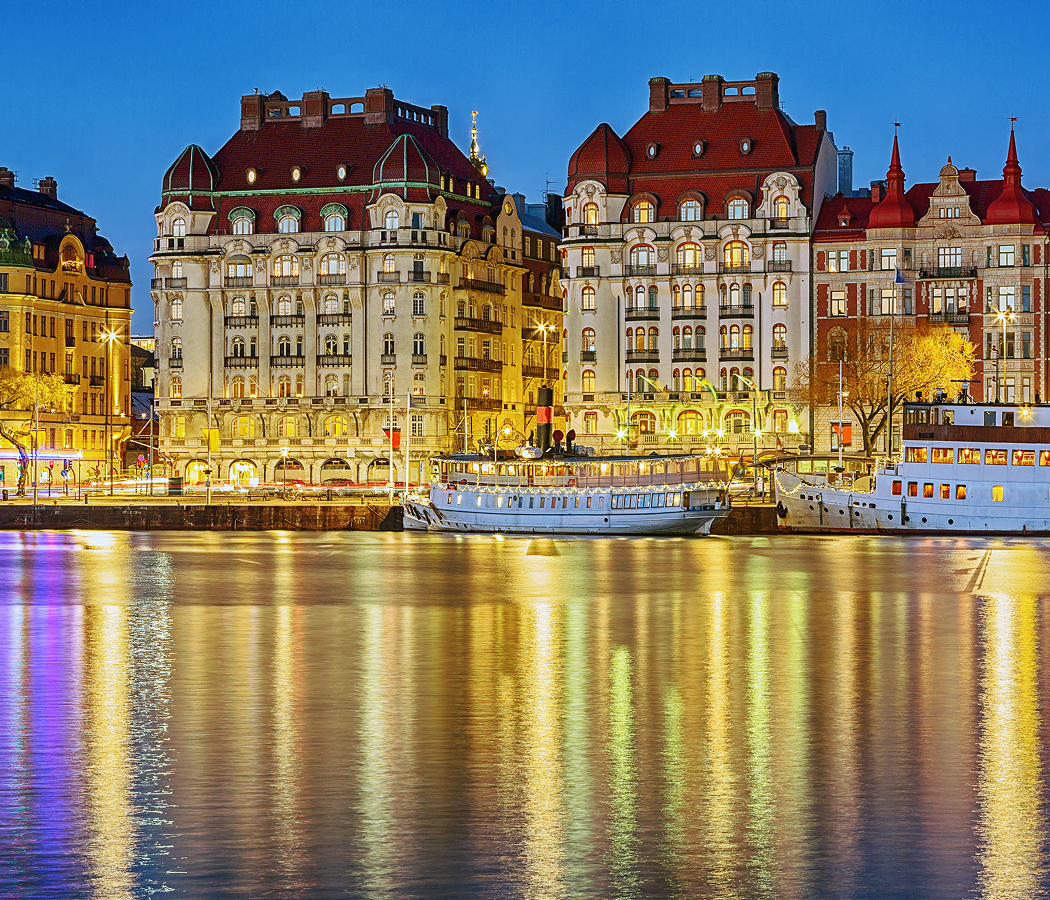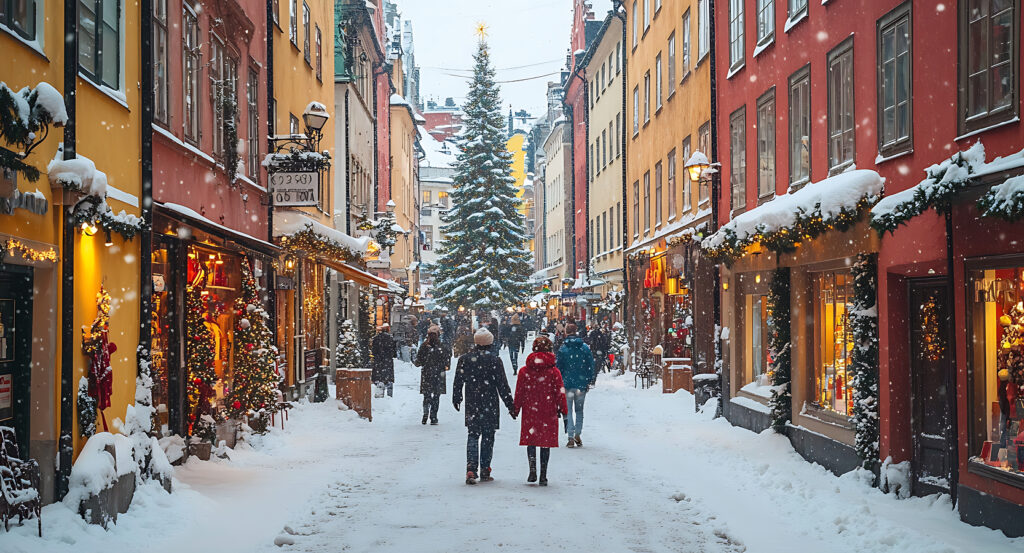
Perfect weekend in Stockholm, Sweden.
Stockholm's emergence as Sweden's political and cultural capital developed through centuries of Baltic commerce, royal ambition, maritime expansion, and Scandinavian innovation. Situated where Lake Mälaren connects with the Baltic Sea, the city occupies an archipelago of islands whose strategic position supported trade between the Swedish interior and northern Europe's commercial networks. Stockholm first appeared in written history in 1252, during the lifetime of Birger Jarl, the statesman traditionally associated with its foundation. The settlement expanded through medieval commerce, attracting German merchants whose commercial relationships connected Sweden with the Hanseatic League. During the sixteenth century, Stockholm became central to the consolidation of Swedish royal authority under Gustav Vasa, whose accession in 1523 marked the establishment of an independent Swedish kingdom following the dissolution of the Kalmar Union. The Swedish Empire's expansion during the seventeenth century transformed Stockholm into an administrative and commercial center of considerable European importance, financing royal construction, naval infrastructure, and aristocratic residences. The Great Northern War subsequently weakened Sweden's imperial position, although Stockholm retained its importance as the country's principal seat of government. During the eighteenth century, the reign of Gustav III encouraged theatrical performance, architectural patronage, and the development of cultural institutions influenced by the European Enlightenment. Industrialization during the nineteenth century brought substantial population growth, manufacturing enterprises, and improvements in transportation infrastructure. Stockholm subsequently became associated with Swedish engineering, scientific research, and social reform, contributing to the development of modern Scandinavian institutions and international technological enterprise.
Stockholm's cultural heritage encompasses Scandinavian design, scientific achievement, literary innovation, and a culinary tradition shaped by Sweden's forests, agricultural regions, and surrounding seas. The Nationalmuseum, established during the eighteenth century and housed in its present building since 1866, preserves extensive collections of European painting, sculpture, and decorative arts, including important examples of Swedish craftsmanship. The Moderna Museet, founded in 1958, became an influential institution for modern and contemporary art, supporting exhibitions of international movements alongside the work of Swedish artists. Stockholm's literary heritage includes August Strindberg, whose plays and novels transformed modern European drama, and Astrid Lindgren, whose children's literature achieved international recognition through characters including Pippi Longstocking. Alfred Nobel's scientific and industrial career contributed to the establishment of the Nobel Prizes, first awarded in 1901, with Stockholm hosting the annual ceremonies for the prizes in physics, chemistry, physiology or medicine, literature, and economic sciences. Swedish design traditions developed through craftsmanship, functionalist architecture, and the international influence of Scandinavian modernism, emphasizing practical construction and carefully considered relationships between form and purpose. Stockholm's culinary heritage draws upon Baltic seafood, freshwater fish, game, root vegetables, cultivated grains, and preservation techniques adapted to northern European winters. Traditional preparations include gravlax, pickled herring, kroppkakor, and dishes featuring lingonberries, dill, and seasonal mushrooms. The Swedish custom of fika sustains a longstanding social tradition centered on coffee, conversation, and baked goods, including cinnamon buns and cardamom pastries. Contemporary Stockholm restaurants have expanded these foundations through Nordic ingredients, fermentation, open-fire cooking, and close relationships with regional agricultural producers. A perfect weekend in Stockholm brings together Baltic maritime history, Scandinavian architecture, literary traditions, and the distinctive gastronomy of Sweden's island capital.
Three day itinerary.
Day 1: Gamla Stan
Gamla Stan is best known for preserving Stockholm's medieval core on the island where the city developed into the political and commercial center of Sweden. Settlement expanded around the thirteenth-century fortified town, whose position between Lake Mälaren and the Baltic created a strategic point for controlling trade. Stortorget became its principal public square, surrounded by narrow streets and merchant houses that preserve the compact dimensions of the medieval city. The Stockholm Bloodbath unfolded there in 1520 when Danish king Christian II executed Swedish nobles and opponents, intensifying the conflict that culminated in Gustav Vasa's rise to power. The Royal Palace subsequently gave the district expansive Baroque architecture beside its older street network. Gamla Stan concentrates medieval commerce, royal government, Reformation-era conflict, and centuries of urban development within Stockholm's historic center.
Day 1: Frantzén
Frantzén is best known for Björn Frantzén's synthesis of Nordic ingredients, Japanese precision, and classical European technique within Sweden's most internationally accomplished restaurant. Frantzén developed his culinary career in leading European kitchens before establishing his Stockholm restaurant with Daniel Lindeberg in 2008. The project evolved from an intimate dining room into a multilevel townhouse restaurant whose spaces control the progression from arrival through the final courses. Scandinavian seafood, meat, vegetables, dairy, preserved ingredients, and luxury products enter cooking shaped by fermentation, fire, exact temperature control, and exceptionally concentrated sauces. Frantzén became Sweden's first restaurant to receive three MICHELIN stars in 2018. Its ascent established Stockholm as a major destination within contemporary European fine dining.
Day 2: Skansen
Skansen is best known for pioneering the open-air museum as a means of preserving Swedish buildings, crafts, traditions, and rural life during rapid industrialization. Artur Hazelius founded the institution in 1891 on Djurgården after collecting objects and structures threatened by the social transformations reshaping nineteenth-century Sweden. Historic farmhouses, workshops, churches, manor buildings, and other structures were relocated from different regions and reconstructed within the grounds. Costumed interpreters and working crafts gave architecture a living social context extending into traditional trades and seasonal customs. Nordic animals subsequently became another defining component of the institution. Skansen influenced the development of open-air museums throughout Europe and established an enduring model for preserving style architecture and intangible cultural traditions together.
Day 2: Meatballs for the People
Meatballs for the People is best known for treating the Swedish meatball as a culinary subject in its own right. The Södermalm restaurant is best known for köttbullar, expanding the familiar preparation across different meats and ingredient combinations while preserving its association with mashed potatoes, cream sauce, lingonberries, and pickled cucumber. Swedish meatballs became deeply embedded in domestic cooking and twentieth-century national food culture, giving the restaurant an unusually focused foundation in an everyday dish. Variations involving game extend the format toward ingredients connected with Sweden's forests and hunting traditions. Its specialization provides a deliberate counterweight to Stockholm's tasting-menu restaurants. Retained for cultural specificity and a lunch format that gives a foundational Swedish dish sustained attention.
Day 2: Vasa Museum
Vasa Museum is best known for preserving the seventeenth-century warship Vasa, which sank on its maiden voyage in Stockholm harbor in 1628 and survived beneath the water for more than three centuries. Gustav II Adolf commissioned the heavily armed vessel during Sweden's expansion as a Baltic military power. Its towering superstructure, elaborate carved decoration, and two enclosed gun decks produced a ship whose ambitions exceeded its stability. Vasa capsized after sailing only a short distance, killing members of the crew and passengers aboard. Salvage teams raised the remarkably intact hull in 1961, beginning decades of conservation devoted to stabilizing its waterlogged timbers. The museum turns a striking naval failure into an extraordinary material record of shipbuilding, craftsmanship, monarchy, warfare, and daily life during Sweden's imperial age.
Day 2: AIRA
AIRA is best known for Tommy Myllymäki's contemporary Nordic cooking on Stockholm's Royal Djurgården. Myllymäki built his reputation through major Swedish kitchens and international culinary competition before establishing AIRA as a purpose-designed restaurant beside the water. Swedish seafood, vegetables, meat, game, berries, herbs, and seasonal products form the foundations of menus shaped by classical technique and modern Scandinavian restraint. The building's relationship with the shoreline extends the restaurant's engagement with Nordic landscape beyond the ingredients themselves. Precise sauces and carefully controlled preparations give familiar regional products unusual depth. Two MICHELIN stars place AIRA within Stockholm's highest culinary tier beneath Frantzén, making it a decisive elevation over Milos Greek Taverna.
Day 3: Café Pascal
Café Pascal is best known for placing specialty coffee, artisan baking, and carefully sourced daytime food within Stockholm's modern café culture. The family-run business developed a reputation around coffee prepared from high-quality beans alongside sourdough bread, pastries, sandwiches, eggs, and seasonal ingredients. Swedish café life carries unusual cultural weight through fika, the social practice of interrupting the day for coffee, baked goods, and conversation. Pascal approaches that tradition through contemporary craft, giving roasting, extraction, fermentation, and baking greater technical emphasis than the conventional neighborhood café. Its morning character remains unmistakably Stockholm in scale and rhythm. Café Pascal gives the brunch position a stronger relationship with Swedish coffee culture than Paganini's Italian restaurant format.
Day 3: Stockholm City Hall
Stockholm City Hall is best known for Ragnar Östberg's expansive expression of Swedish National Romantic architecture and its association with the Nobel Prize celebrations. Construction began in 1911 on the eastern edge of Kungsholmen, where Östberg combined millions of bricks with arcades, courtyards, towers, and interiors drawing from Swedish and broader European architectural traditions. The Blue Hall became the setting for the annual Nobel banquet despite Östberg abandoning the blue finish originally intended for the room. Above it, the Golden Hall contains Einar Forseth's immense mosaic program assembled from millions of pieces of glass and gold. The 106-meter tower terminates in Sweden's Three Crowns emblem. City Hall joins municipal government, architecture, decorative art, and Nobel ceremonial culture within one of Stockholm's defining twentieth-century buildings.
Day 3: Monteliusvägen
Monteliusvägen is best known for tracing the heights of Södermalm above Lake Mälaren with expansive views across Stockholm's historic center. The pedestrian path follows the steep northern edge of the island, where exposed rock and dramatic elevation reveal the geological structure underlying the city's archipelago setting. Riddarholmen, Gamla Stan, Stockholm City Hall, and the waters separating the islands unfold directly across the channel. The surrounding Mariaberget district preserves wooden houses and later urban buildings associated with Södermalm's transformation from a working-class periphery into one of Stockholm's most distinctive residential quarters. Its compact distance concentrates an unusually legible cross-section of the capital's geography. Monteliusvägen reveals Stockholm as a city organized by water, islands, bedrock, bridges, and contrasting historic districts.
Day 3: Restaurant Ekstedt
Restaurant Ekstedt is best known for Niklas Ekstedt's transformation of live-fire cooking into the governing mechanism of a sophisticated contemporary Swedish restaurant. Ekstedt built the kitchen around combustion itself, eliminating conventional electric and gas cooking from the central culinary process in favor of wood fire, smoke, embers, cast iron, and heated surfaces. Seafood, meat, vegetables, and seasonal Nordic ingredients acquire distinct textures as they move through different forms of direct and indirect heat. The method draws conceptual force from older Scandinavian cooking practices yet subjects them to the precision of a modern fine-dining kitchen. A MICHELIN star recognizes a restaurant whose technical character remains unusually distinctive within Stockholm. Ekstedt gives the final dinner a distinctly Swedish culinary argument rooted in fire, ingredients, and craft.
Where your story begins.
Foresyte Travel reveals places that feel extraordinary long before you arrive.
Enjoy editorial crafted for luxury travelers.
Foresyte may earn a commission when you book.