Why Café Pascal matters.
Café Pascal is an influential Stockholm specialty-coffee café where Vasastan's established fika culture meets the Seropian siblings' Armenian coffee heritage, connecting independent roasting, contemporary Swedish baking and carefully prepared breakfast and lunch dishes within one of the capital's most celebrated neighborhood cafés.
Norrtullsgatan descends from Observatoriegatan toward Odenplan, placing the café at the corner of Norrtullsgatan and Surbrunnsgatan, near Studentpalatset and the residential blocks surrounding Stockholm's historic university quarter. Large street-facing windows illuminate a compact corner premises whose brick exterior belongs to Vasastan's dense nineteenth-century streetscape. Exposed interior brickwork, concrete flooring and visible ceiling installations establish a restrained industrial character softened by wooden furnishings. Marble-topped tables and closely arranged seating accommodate the steady movement between the coffee counter, pastry display and dining area. The result is a distinctive urban café whose tactile materials, natural light and intimate proportions connect contemporary specialty-coffee culture with Stockholm's traditional neighborhood coffeehouses.
What defines Café Pascal.
Café Pascal is best known for siblings Hosep Seropian, Arman Seropian and Jannet Seropian Marioli establishing an award-winning specialty-coffee business that expanded from a single Vasastan café into a Stockholm hospitality group with its own bakery and coffee roastery. The siblings grew up in Linköping within a family of Armenian heritage, developing an interest in food and coffee that eventually brought them into Stockholm's independent hospitality industry. Their choice of name commemorates Pascal, an Armenian associated with the introduction of coffeehouse culture to Paris in 1672. His establishment near the Saint-Germain fair became an early commercial expression of the coffee-drinking traditions that subsequently spread throughout European cities. The siblings opened their first café at Norrtullsgatan 4 in spring 2014, introducing a business built around carefully selected specialty coffee and a substantial food program. Stockholm's coffee culture already possessed deep historical foundations through fika, the Swedish custom of gathering over coffee and something to eat. Pascal brought a more specialized approach to that tradition through independently roasted beans, alternative brewing methods and an emphasis on the agricultural origins of coffee. Early suppliers included Swedish specialty roasters Koppi, da Matteo and Love Coffee Roasters, whose work connected the café with Scandinavia's developing independent roasting industry. American roaster Supersonic also appeared among its early selections, extending the sourcing program beyond the Nordic market. The café received Dagens Nyheter's Gulddraken award for Stockholm's best café in 2015, securing a major distinction shortly after opening. Its reputation developed through the combination of technical coffee preparation, substantial breakfast dishes and pastries produced through specialist baking partnerships. The siblings expanded to Södermalm in 2018, opening a second Pascal at Skånegatan 76 in premises previously occupied by Urban Deli's bakery. That development introduced dedicated bread and pastry production, giving the business greater control over products served across its cafés. A third location followed at Sturegatan 8 in Östermalm in 2023, extending the brand into Stockholm's eastern commercial district through a smaller coffee-bar format. The family subsequently established Bageri Kompass at Sockenvägen 477 in Enskede in 2024, developing a separate production facility for bread and sweet pastries. The bakery supplied Pascal's cafés and Komet Stockholm, connecting the family's coffee operations with a broader professional baking business. Another major expansion followed in spring 2025 with a fourth Pascal location at Gävlegatan 22 in Hagastaden. The new premises incorporated a dedicated micro-roastery, completing the transition from purchasing coffee through independent suppliers to controlling roasting within the family business. Arman Seropian developed the roasting operation after several years of using equipment belonging to other businesses, establishing a production facility with an annual target of twenty metric tons. The investment created opportunities to supply neighboring offices, restaurants and independent cafés, extending Pascal's commercial activities beyond its own hospitality premises. Recognition continued through the Falstaff Coffee Guide Nordics 2026, which awarded the original Odenplan café 95 points, including 39 out of 40 for coffee. The company's development connects Armenian family heritage with Sweden's specialty-coffee movement, demonstrating how a neighborhood café evolved into an integrated business encompassing sourcing, roasting, baking and retail hospitality.
Hosep Seropian's commitment to specialty coffee centers on the character of individual growing regions, with carefully selected beans prepared to preserve their distinctive acidity, sweetness and aromatic complexity. The café's coffee program incorporates espresso-based drinks, batch brewing and manually prepared filter coffee, allowing different extraction methods to develop contrasting characteristics from the same agricultural product. Espresso concentrates soluble compounds through finely ground coffee, controlled water temperature and pressure, producing a dense beverage whose balance depends on the relationship between sweetness, acidity and bitterness. Milk-based preparations extend those characteristics through carefully textured steamed milk, creating a softer expression of the underlying coffee. Hand brewing introduces a complementary emphasis on clarity, allowing the individual qualities of lightly roasted beans to develop through controlled water distribution and extraction time. The V60 method provides particular flexibility through its conical filter and adjustable pouring technique, supporting the preparation of coffees whose floral, citrus and fruit characteristics benefit from a lighter body. Beans from Ethiopia contribute another dimension through the aromatic complexity associated with the country's diverse coffee-growing regions and processing traditions. Naturally processed coffees develop pronounced fruit characteristics through the drying of whole coffee cherries, creating a different flavor profile from washed preparations. The café's interest in rare and competition-grade lots extends to varieties such as Gesha, whose distinctive floral character has become internationally associated with exceptional specialty coffee. Pascal's roasting program supports these differences through careful development of each batch, connecting green-bean selection with the final extraction performed by its baristas. Swedish fika provides the complementary culinary foundation through pastries designed to accompany coffee throughout the day. Cinnamon buns combine enriched yeast dough with butter, sugar and cinnamon, creating a balance between soft interior texture and aromatic sweetness. Cardamom introduces a distinctly Scandinavian fragrance, its citrus and eucalyptus-like qualities complementing coffees with pronounced fruit acidity. Laminated pastries contribute contrasting textures through layers of butter and dough, producing crisp exteriors surrounding tender interiors. Croissants incorporating pistachio praline or bergamot develop these relationships through nut richness, citrus aromatics and controlled sweetness. Seasonal fruit extends the pastry repertoire through combinations such as rhubarb with almond and vanilla cream, allowing natural acidity to balance richer components. Bageri Kompass supplies the business with professionally developed bread and sweet pastries, establishing consistency across the different café locations. Savory preparations connect the baking program with a more substantial breakfast and lunch service. Toasted sandwiches use carefully prepared bread as their foundation, developing contrasts between crisp crusts, melted cheese and fresh accompaniments. Egg-based dishes introduce richness and soft textures, including preparations incorporating Gruyère and prosciutto. Vegetable-focused lunches extend the repertoire through grains, roasted produce and carefully balanced dressings, allowing the café to accommodate dining occasions beyond the traditional coffee break. Café Pascal's distinctive character emerges from this relationship between technically prepared specialty coffee, professional baking and substantial café cooking, preserving the social importance of Swedish fika through a modern, ingredient-conscious approach.
How Café Pascal fits.
Café Pascal works as the concluding destination for a Vasastan walking itinerary connecting Stockholm's scientific heritage, expansive civic architecture and the religious institutions that shaped the district's development during the nineteenth and early twentieth centuries.
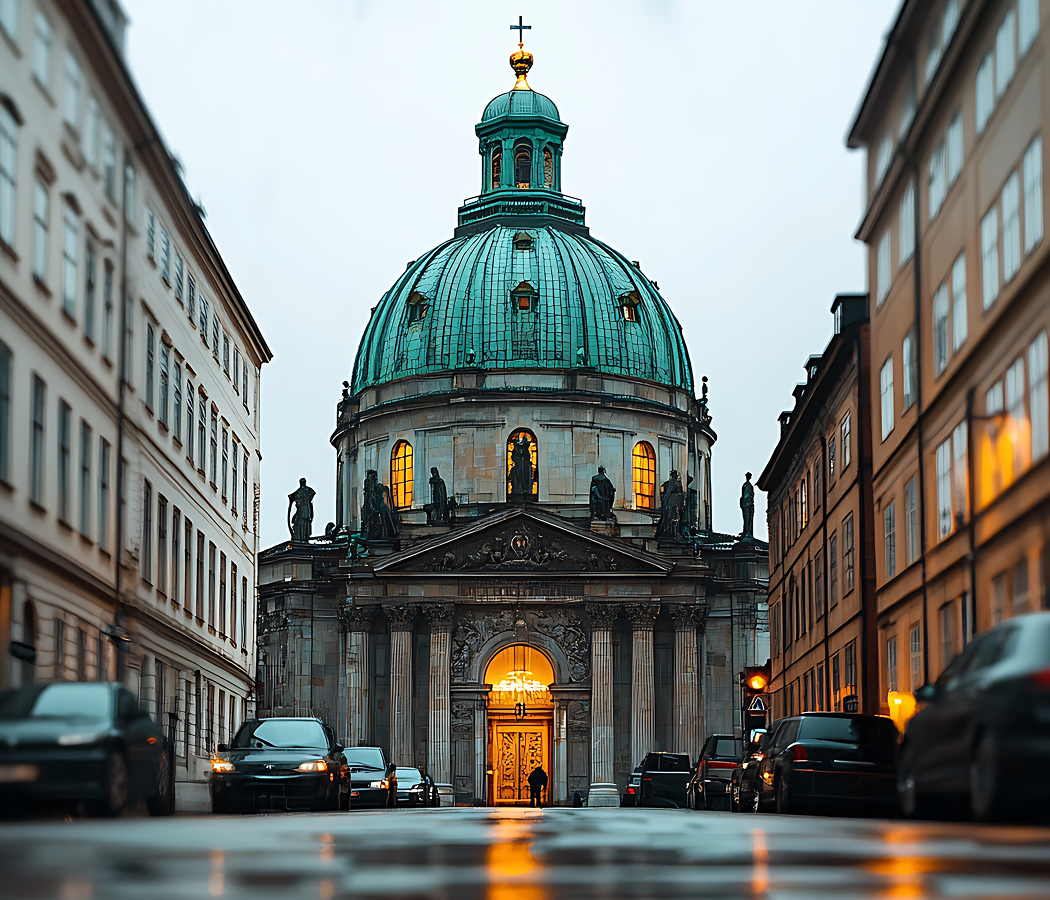
Begin at Observatorielunden, the elevated public park occupying the hill historically associated with Stockholm's astronomical research. The Royal Swedish Academy of Sciences commissioned architect Carl Hårleman to design an observatory on the site during the eighteenth century, creating a permanent institution for the systematic observation of celestial phenomena. The observatory opened in 1753, establishing an important scientific facility above the surrounding city. Its prominent position provided clear views across Stockholm during a period when astronomy contributed directly to navigation, geographic measurement and the development of scientific knowledge. The surrounding grounds subsequently became a public park, preserving the hill's association with scientific inquiry and the architectural ambitions of the Swedish Enlightenment. Continue to Stockholm Public Library, the influential civic building designed by architect Gunnar Asplund and inaugurated in 1928. Asplund developed the structure through a transition from Nordic Classicism toward the emerging principles of modern architecture, creating a composition dominated by an expansive cylindrical reading room. Its circular interior rises above surrounding book galleries, organizing the library's collection around a dramatic central public space. The building became an internationally influential example of twentieth-century library architecture, demonstrating how public access to knowledge could shape the organization of a major civic institution. Conclude at Gustav Vasa Church, the substantial religious building occupying a prominent position beside Odenplan. Architect Agi Lindegren designed the church in a Baroque Revival style, developing a centralized composition crowned by a substantial copper-clad dome. Construction began in 1901, and the church was consecrated in 1906 during a period of rapid residential expansion across northern Stockholm. Its interior incorporates an expansive eighteenth-century altarpiece by Burchard Precht, connecting the building's early twentieth-century architecture with Sweden's established Baroque artistic tradition. The progression moves from the scientific ambitions of eighteenth-century Stockholm through the civic architecture of public education and culminates in the religious institution that accompanied Vasastan's development into a substantial residential district.
Where your story begins.
Foresyte Travel reveals places that feel extraordinary long before you arrive.
Enjoy editorial crafted for luxury travelers.
Foresyte may earn a commission when you book.