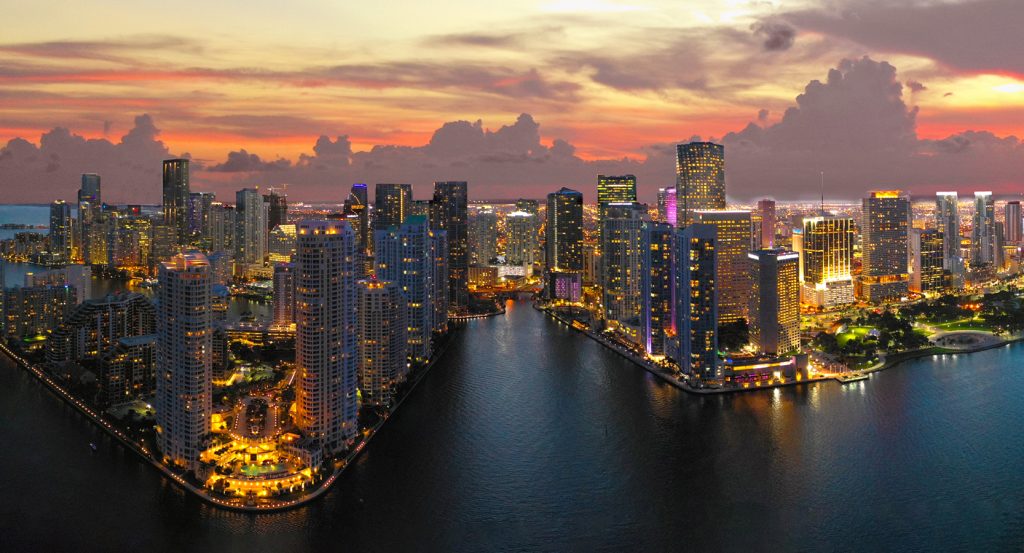
Perfect weekend in Miami, Florida.
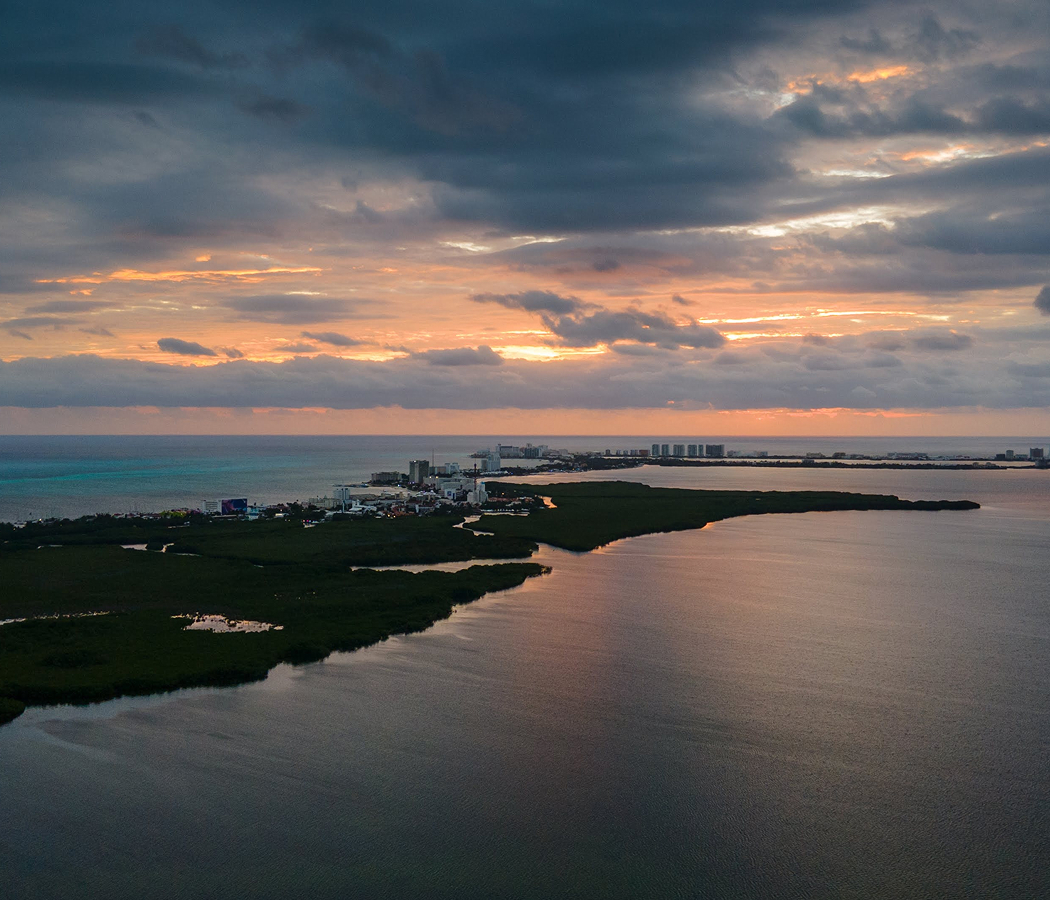
Miami's position between the Atlantic Ocean and the Everglades shaped its development from a subtropical frontier settlement into a major center of international commerce, Caribbean migration, and American cultural life. The city occupies the southeastern coast of the Florida peninsula, where Biscayne Bay separates the mainland from a chain of barrier islands and coastal waterways. The Tequesta people inhabited the region for centuries before European colonization, establishing communities near the mouth of the Miami River and maintaining extensive relationships with the surrounding fisheries, wetlands, and coastal forests. Spanish expeditions reached southeastern Florida during the sixteenth century, although permanent European settlement developed slowly amid the region's difficult terrain and Indigenous resistance. During the nineteenth century, the Seminole Wars brought military activity and increasing American settlement to southern Florida. Fort Dallas was established near the Miami River in 1836, preceding the development of agricultural enterprises and small waterfront communities. Julia Tuttle acquired substantial property along the river during the 1890s and encouraged railroad magnate Henry Flagler to extend his Florida East Coast Railway southward. The railroad reached Miami in April 1896, and the city incorporated that July, beginning a period of rapid commercial and residential growth. Early twentieth-century developers transformed coastal properties into planned resort communities, attracting wealthy seasonal residents and substantial architectural investment. The Florida land boom of the 1920s accelerated construction before the devastating 1926 hurricane and subsequent economic collapse brought widespread financial difficulties. During the Second World War, Miami became an important center of military training and transportation, supporting further population growth. The Cuban Revolution of 1959 initiated a major period of migration that transformed the city's political, economic, and cultural institutions. Subsequent arrivals from Haiti, Nicaragua, Colombia, Venezuela, and other countries strengthened Miami's position as a multilingual metropolitan center. The expansion of international banking, aviation, shipping, and media established enduring commercial connections between Miami, Latin America, and the Caribbean.
Floridian modern art acquired a distinctive international character in Miami, where Caribbean and Latin American artists contributed to the development of a major contemporary cultural center. The Pérez Art Museum Miami traces its institutional origins to 1984 and subsequently expanded its collections and exhibitions devoted to modern and contemporary art from the Americas, Africa, and the wider world. Its waterfront building, designed by Herzog & de Meuron and opened in 2013, incorporates extensive shaded terraces and tropical landscaping adapted to South Florida's climate. The Institute of Contemporary Art, Miami, contributes to the city's artistic institutions through exhibitions of emerging and established international artists. Art Basel Miami Beach, inaugurated in 2002, strengthened the region's connections to the international art market, attracting galleries, collectors, and artists from across the world. Miami's musical history developed through Cuban son, salsa, Haitian compas, Caribbean dance music, and African American performance traditions. Gloria Estefan and Miami Sound Machine achieved international success during the 1980s, bringing Latin pop and Cuban musical influences to a broad international audience. The New World Symphony, founded in 1987 by Michael Tilson Thomas and Lin and Ted Arison, established an important institution for the professional development of young orchestral musicians. Miami's culinary traditions developed through the agricultural resources of South Florida and the cooking practices of communities from Cuba, Haiti, the Bahamas, and Latin America. Cuban immigrants established restaurants and bakeries specializing in ropa vieja, picadillo, croquetas, and pressed sandwiches, with strong espresso becoming an enduring feature of neighborhood commerce. Haitian communities contributed griot, diri kole, pikliz, and other preparations rooted in the culinary history of Hispaniola. Bahamian cooking introduced longstanding traditions involving conch, seafood stews, tropical ingredients, and richly seasoned rice dishes. Miami's coastal fisheries supply stone crab, snapper, grouper, and spiny lobster, and the agricultural districts of southern Miami-Dade County produce avocados, mangoes, guavas, and other tropical fruits. Contemporary chefs combine these ingredients with Caribbean seasonings, Latin American techniques, and modern approaches to seafood and regional produce. Miami rewards a weekend devoted to the extraordinary convergence of tropical geography, international art, Caribbean musical traditions, and the culinary achievements of communities that transformed South Florida into a cultural crossroads.
Three day itinerary.
Day 1: South Beach
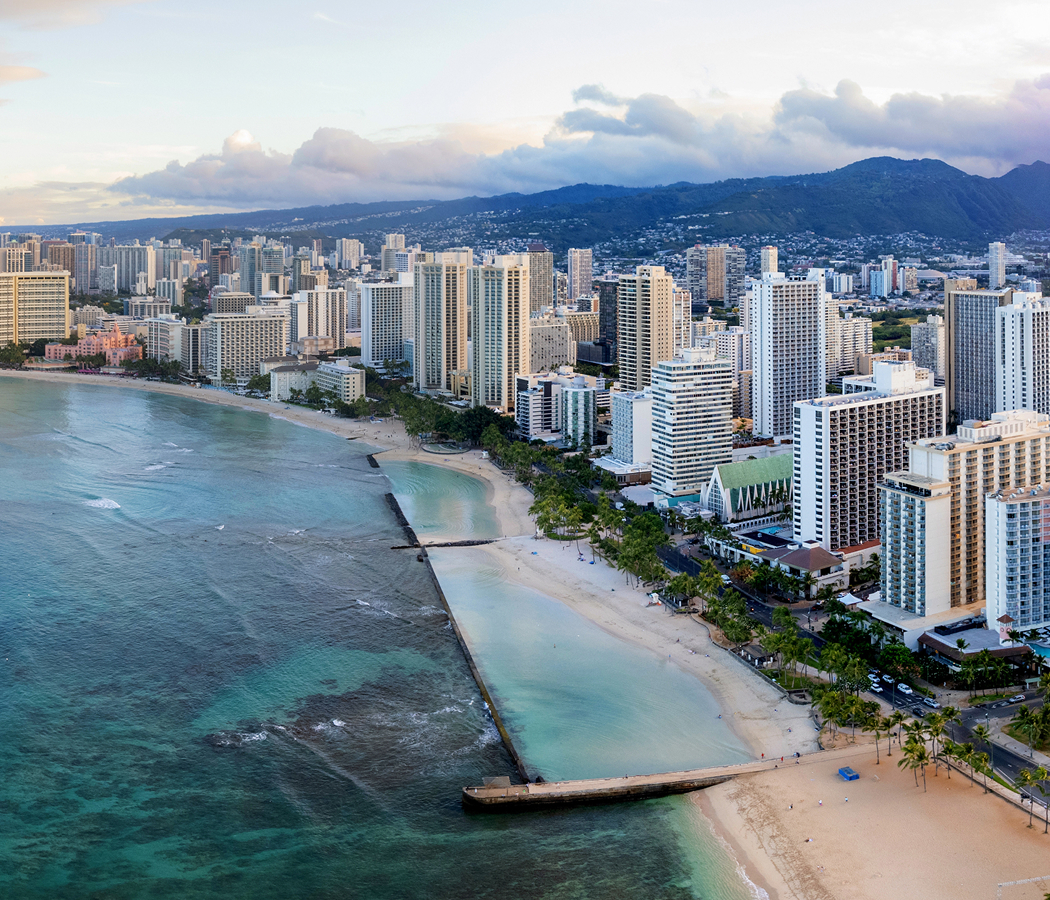
South Beach is best known for concentrating Miami Beach's defining relationship among Atlantic coastline, resort development, modern architecture, and international popular culture. Developers including Carl Fisher transformed mangrove-covered barrier islands during the early twentieth century through dredging, land reclamation, causeway construction, and aggressive real-estate development. Hotels and apartment buildings multiplied during the 1930s and 1940s as architects adapted Streamline Moderne and Art Deco forms to South Florida's climate and tourism economy. Preservation campaigns later protected much of the historic building stock as redevelopment intensified across Miami Beach. Fashion, nightlife, photography, film, and successive waves of migration subsequently gave South Beach a cultural reach far beyond its compact geography, making the district one of the most recognizable urban beachfronts in the United States.
Day 1: Stubborn Seed
Stubborn Seed is best known for Jeremy Ford's ingredient-driven tasting menus and meticulous contemporary cooking in South Beach. Ford developed his career in major American kitchens before becoming executive chef at Matador Room under Jean-Georges Vongerichten and subsequently establishing Stubborn Seed in 2017. His cooking builds complexity through fermentation, preservation, precise temperature control, concentrated sauces, and close attention to vegetables alongside seafood and meat. Florida products give the menu a regional foundation within a broader contemporary American structure. MICHELIN awarded Stubborn Seed a star in its inaugural Florida selection, establishing Ford's independent restaurant as one of the institutions that moved Miami Beach fine dining beyond the international luxury-hotel model.
Day 2: Little Havana
Little Havana is best known for becoming the cultural center of Miami's Cuban exile community after the Cuban Revolution transformed the city's population. Thousands of Cubans settled in Miami during the 1960s, and the neighborhood surrounding Southwest 8th Street developed businesses, restaurants, social clubs, newspapers, political organizations, and cultural institutions serving the growing community. Calle Ocho became its principal commercial artery, with cigar makers, cafeterias, bakeries, music venues, and gathering places sustaining traditions carried from Cuba. Máximo Gómez Park developed into a celebrated center for domino games and neighborhood social life. Later migration from across Latin America broadened the district's cultural composition, leaving Little Havana as a physical record of the demographic transformation that fundamentally reshaped modern Miami.
Day 2: Ariete
Ariete is best known for Michael Beltran's integration of Cuban-American culinary memory with the techniques of contemporary fine dining. Beltran grew up in Miami in a Cuban-American family and developed his professional career through South Florida kitchens before opening Ariete in Coconut Grove in 2016. His cooking draws on ingredients, flavors, and preparations associated with Cuban food, then develops them through French technique, live-fire cooking, and a broader engagement with South Florida products. The restaurant's character reflects Miami's cultural history through food rooted in Beltran's own family and city. MICHELIN awarded Ariete a star when its Florida guide debuted, making Beltran one of the chefs who brought Miami's Cuban heritage directly into the city's highest tier of contemporary gastronomy.
Day 2: Wynwood Walls
Wynwood Walls is best known for accelerating Wynwood's transformation from an industrial warehouse district into an international center for large-scale street art. Developer Tony Goldman established the project in 2009, using windowless warehouse walls as grand surfaces for artists working in graffiti and mural traditions. Shepard Fairey, Os Gêmeos, Kenny Scharf, Maya Hayuk, and artists from numerous countries contributed works as the project expanded. Its success helped concentrate galleries, studios, restaurants, businesses, and visitors throughout the surrounding neighborhood, fundamentally altering Wynwood's economic and cultural profile. The project also moved art forms historically associated with unsanctioned urban surfaces into a curated institutional setting, making Wynwood Walls an influential site in the global evolution of street art.
Day 2: Boia De
Boia De is best known for Luciana Giangrandi and Alex Meyer's transformation of a compact strip-mall dining room into one of Miami's most consequential independent restaurants. The chefs developed their partnership through professional kitchens before opening the restaurant in 2019 beneath a fluorescent exclamation-point sign in Little Haiti. Their cooking draws from Italian traditions through handmade pasta, vegetables, seafood, offal, and intensely developed sauces, with contemporary American influences shaping the broader menu. The modest physical setting places nearly all emphasis on the kitchen's technical execution and distinctive combinations. MICHELIN awarded Boia De a star in its inaugural Florida selection, demonstrating the growing influence of chef-owned neighborhood restaurants within a Miami dining culture long associated with large hospitality groups and luxury properties.
Day 3: Los Félix
Los Félix is best known for centering Mexican cooking on heirloom corn and the agricultural traditions surrounding the crop. The Coconut Grove restaurant developed its kitchen around nixtamalization, the ancient alkaline process that transforms dried corn into masa and increases its nutritional value. Heirloom varieties become tortillas and other preparations that connect contemporary restaurant cooking to food systems cultivated across Mesoamerica for millennia. The broader menu draws from regional Mexican techniques through chiles, seafood, vegetables, grilling, fermentation, and carefully sourced ingredients. MICHELIN awarded Los Félix a star in the inaugural Florida guide, placing a restaurant organized around corn, masa, and traditional agricultural knowledge within Miami's highest tier of recognized dining.
Day 3: Ocean Drive
Ocean Drive is best known for presenting the architectural and cultural image most closely associated with Miami Beach to the Atlantic waterfront. The avenue developed along the eastern edge of the barrier island as hotels and apartment buildings multiplied during the interwar expansion of Miami Beach. Architects including Henry Hohauser and L. Murray Dixon shaped the surrounding streetscape through compact hotels using geometric ornament, rounded corners, horizontal banding, neon lighting, and other forms associated with Art Deco and Streamline Moderne design. Late twentieth-century preservation and rehabilitation protected buildings threatened by demolition and renewed the corridor's economic life. Film, television, fashion photography, nightlife, and tourism subsequently carried Ocean Drive's pastel facades and illuminated marquees into global popular culture.
Day 3: Art Deco Historic District
Art Deco Historic District is best known for preserving the extraordinary concentration of interwar architecture that gave Miami Beach its defining visual character. Hundreds of hotels, apartment buildings, and commercial structures emerged during the 1920s, 1930s, and early 1940s as the resort city expanded rapidly. Architects adapted Art Deco, Streamline Moderne, and Mediterranean Revival influences to narrow lots, tropical conditions, and a tourism economy that favored dramatic street-facing facades. Barbara Baer Capitman and the Miami Design Preservation League led a preservation campaign during the 1970s as demolition threatened substantial portions of the district. Federal historic designation in 1979 strengthened protection for the architectural ensemble, helping turn preservation itself into a major force in the economic and cultural revival of South Beach.
Day 3: L'Atelier de Joël Robuchon Miami
L'Atelier de Joël Robuchon Miami is best known for extending Joël Robuchon's revolutionary counter-centered fine-dining concept into the Miami Design District. Robuchon developed L'Atelier in Paris and Tokyo around an open kitchen that dismantled the physical separation between haute cuisine and the dining room. Counter seating places culinary preparation directly before diners, with small plates allowing classical French technique to operate through a flexible experience. The Miami restaurant continues that system through meticulously executed vegetables, seafood, meats, sauces, and Robuchon signatures grounded in exceptional technical control. MICHELIN awarded it two stars in the inaugural Florida guide, placing L'Atelier at the highest level reached by a Miami restaurant in that selection.
Where your story begins.
Foresyte Travel reveals places that feel extraordinary long before you arrive.
Enjoy editorial crafted for luxury travelers.
Foresyte may earn a commission when you book.