Perfect weekend in Whistler, British Columbia.
Whistler's emergence as an internationally celebrated mountain destination began in the rugged Coast Mountains of British Columbia, where Indigenous heritage, alpine exploration, and the development of winter sports shaped a community surrounded by some of Canada's most striking mountain scenery. Located north of Vancouver within the traditional territories of the Squamish Nation and Lil'wat Nation, the region has supported Indigenous communities for thousands of years through seasonal hunting, fishing, gathering, and established routes across the mountain valleys. European settlement expanded during the early twentieth century following the construction of the Pacific Great Eastern Railway, which connected the region to coastal communities and encouraged the development of recreational tourism. In 1914, Alex and Myrtle Philip established Rainbow Lodge on Alta Lake, attracting visitors interested in fishing, boating, and the surrounding wilderness. The area's transformation into a winter sports destination accelerated during the 1960s, when Vancouver businessmen pursued an ambitious proposal to bring the Winter Olympic Games to British Columbia. Whistler Mountain opened for skiing in 1966, initiating decades of investment in alpine infrastructure and international sporting events. The municipality of Whistler was incorporated in 1975, creating a foundation for coordinated resort planning and residential expansion. The development of Blackcomb Mountain during the following decade substantially expanded the region's recreational opportunities, strengthening its position within the international skiing community. Whistler achieved another historic milestone during the 2010 Winter Olympic and Paralympic Games, hosting alpine skiing, Nordic competitions, and other events that brought global attention to the mountains and communities of southwestern British Columbia.
Whistler's cultural traditions combine Indigenous artistic achievement, mountain sports heritage, environmental conservation, and a culinary scene shaped by the agricultural resources of the Pacific Northwest. The Audain Art Museum, designed by Patkau Architects and opened in 2016, houses an extensive collection of British Columbian art, including historical Indigenous works, contemporary First Nations creations, and paintings by Emily Carr. Its exhibitions connect regional artistic movements with the landscapes and cultural histories of Canada's Pacific coast. The Whistler Museum preserves the community's development through historical photographs, sporting artifacts, and exhibitions devoted to the pioneers of mountain recreation. The Whistler Film Festival, established in 2001, became an important gathering for Canadian filmmakers and international cinema, contributing to the region's cultural calendar beyond its sporting traditions. Indigenous craftsmanship remains central to the artistic heritage of the surrounding territories, with traditional weaving, carving, and ceremonial practices maintaining profound connections to the natural environment. Whistler's culinary traditions draw upon British Columbia's coastal seafood, Fraser Valley agriculture, regional game, and the expanding wine industry of the Okanagan Valley. Pacific salmon, Dungeness crab, wild mushrooms, and seasonal berries feature prominently in contemporary mountain cuisine, accompanied by wines produced throughout British Columbia's established growing regions. The surrounding forests and alpine ecosystems also support a strong tradition of environmental education and conservation. A perfect weekend in Whistler brings together Indigenous cultural heritage, alpine sporting history, contemporary Canadian art, and Pacific Northwest gastronomy amid the towering peaks and glacial valleys of the Coast Mountains.
Three day itinerary.
Day 1: Whistler Village
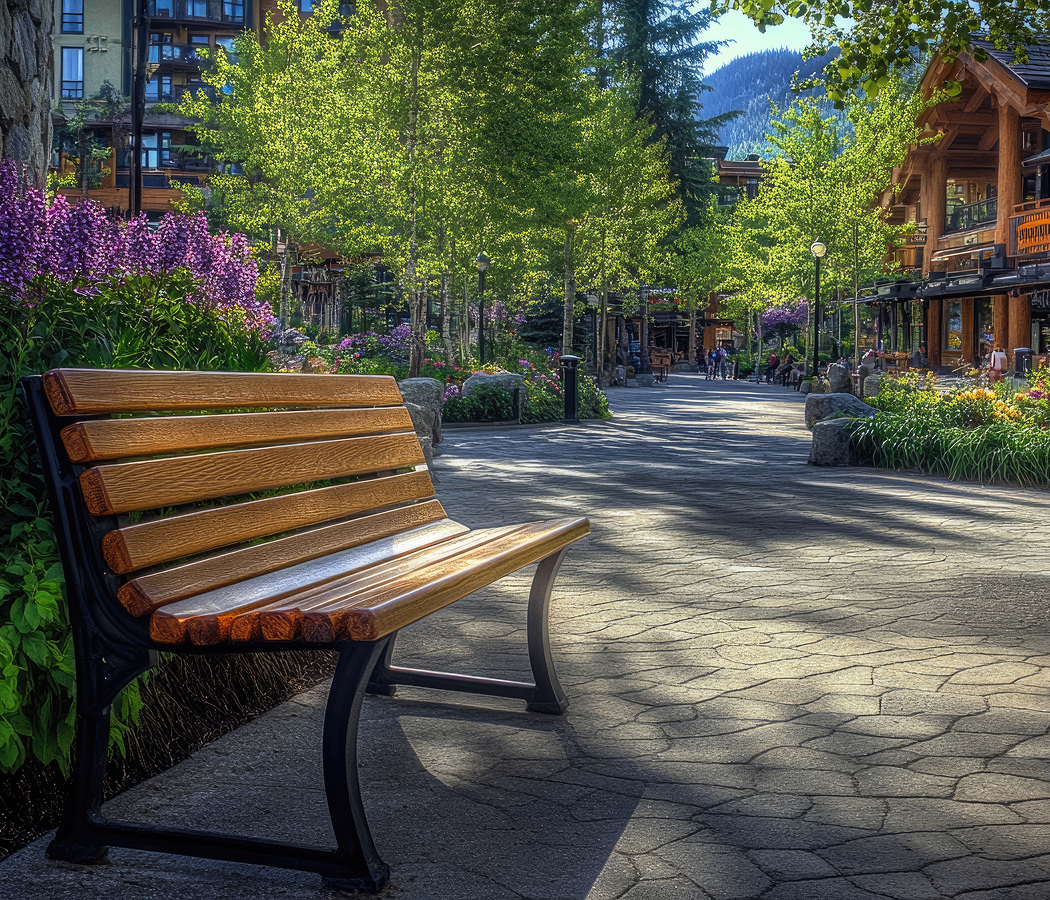
Whistler Village is best known for its pedestrian-only alpine streets, mountain architecture, and central role in transforming Whistler into one of North America's premier four-season resort destinations. The village emerged from a comprehensive development strategy during the late 1970s, when planners established a new commercial center at the base of Whistler and Blackcomb mountains. Its design drew on European alpine resort traditions through compact streets, interconnected plazas, pitched roofs, and a carefully organized relationship between lodging, restaurants, retail, and mountain access. Village Square and Mountain Square became important gathering places within a network of pedestrian corridors designed around year-round activity. The development helped shift Whistler from a collection of dispersed recreational facilities into an internationally recognized mountain community. The village subsequently became a central gathering place during the 2010 Winter Olympic and Paralympic Games, connecting its architectural character with one of Canada's most consequential sporting events. Whistler Village represents a defining achievement in Canadian resort planning through its integration of mountain recreation, pedestrian urbanism, and alpine hospitality.
Day 1: Araxi Restaurant + Oyster Bar
Araxi Restaurant + Oyster Bar is best known for establishing a sophisticated interpretation of Pacific Northwest cuisine within Whistler's internationally recognized restaurant scene. Founded in 1981 and named after Araxi, the wife of original owner Jack Evrensel, the restaurant developed alongside Whistler Village during the resort's formative expansion. Its kitchen emphasizes British Columbia seafood, regional meats, seasonal vegetables, and ingredients associated with the agricultural landscapes of the Pacific Northwest. Oysters, carefully prepared fish, and contemporary interpretations of regional produce form the foundations of a menu shaped by the province's coastal and mountain environments. Chef James Walt played an important role in developing Araxi's reputation for ingredient-driven cooking and relationships with regional producers. The restaurant's extensive wine program complements its culinary character through a particular emphasis on British Columbia and international selections. Araxi represents a foundational institution in Whistler's fine-dining history through its sustained commitment to regional ingredients and refined Canadian hospitality.
Day 2: Whistler Blackcomb
Whistler Blackcomb is best known for combining two immense alpine mountains into one of North America's most celebrated ski and snowboard destinations. Whistler Mountain began operating as a ski resort in 1966, following a development campaign associated with local entrepreneurs who envisioned the region as a potential Olympic host. Blackcomb Mountain opened in 1980, establishing a second major resort whose terrain and infrastructure expanded the area's international significance. The mountains subsequently developed extensive networks of lifts, alpine bowls, glaciers, and interconnected trails across an unusually varied landscape. Their combined skiable terrain exceeds 8,000 acres, encompassing environments ranging from forested lower slopes to exposed high-alpine ridges. The resort hosted alpine skiing events during the 2010 Winter Olympic Games, further establishing its position within international winter sports. Whistler Blackcomb represents one of the most consequential mountain recreation developments in Canada through its scale, technical infrastructure, and extraordinary alpine geography.
Day 2: Steeps Grill On Whistler Mountain
Steeps Grill On Whistler Mountain is best known for combining refined alpine dining with panoramic views of the Coast Mountains from its elevated setting within Whistler Blackcomb. Located in the Roundhouse Lodge complex on Whistler Mountain, the restaurant occupies a distinctive position within one of North America's largest interconnected ski destinations. Its culinary character centers on contemporary Canadian mountain cuisine, incorporating regional ingredients, seasonal produce, and Pacific Northwest influences into a more sophisticated interpretation of traditional slopeside dining. British Columbia's agricultural and maritime resources provide the foundation for dishes featuring locally sourced meats, seafood, vegetables, and carefully composed accompaniments. The restaurant's sit-down dining format establishes a distinctive experience within a mountain environment otherwise dominated by casual ski lodges and quick-service facilities. Its location connects the culinary experience directly to the infrastructure that transformed Whistler into an internationally celebrated winter sports destination, including the mountain's extensive lift network and the nearby PEAK 2 PEAK Gondola. Steeps represents the evolution of alpine hospitality in British Columbia, bringing regional culinary traditions and restaurant-level service into the dramatic high-elevation landscape of the Canadian Rockies' Pacific Coast counterpart.
Day 2: PEAK 2 PEAK Gondola
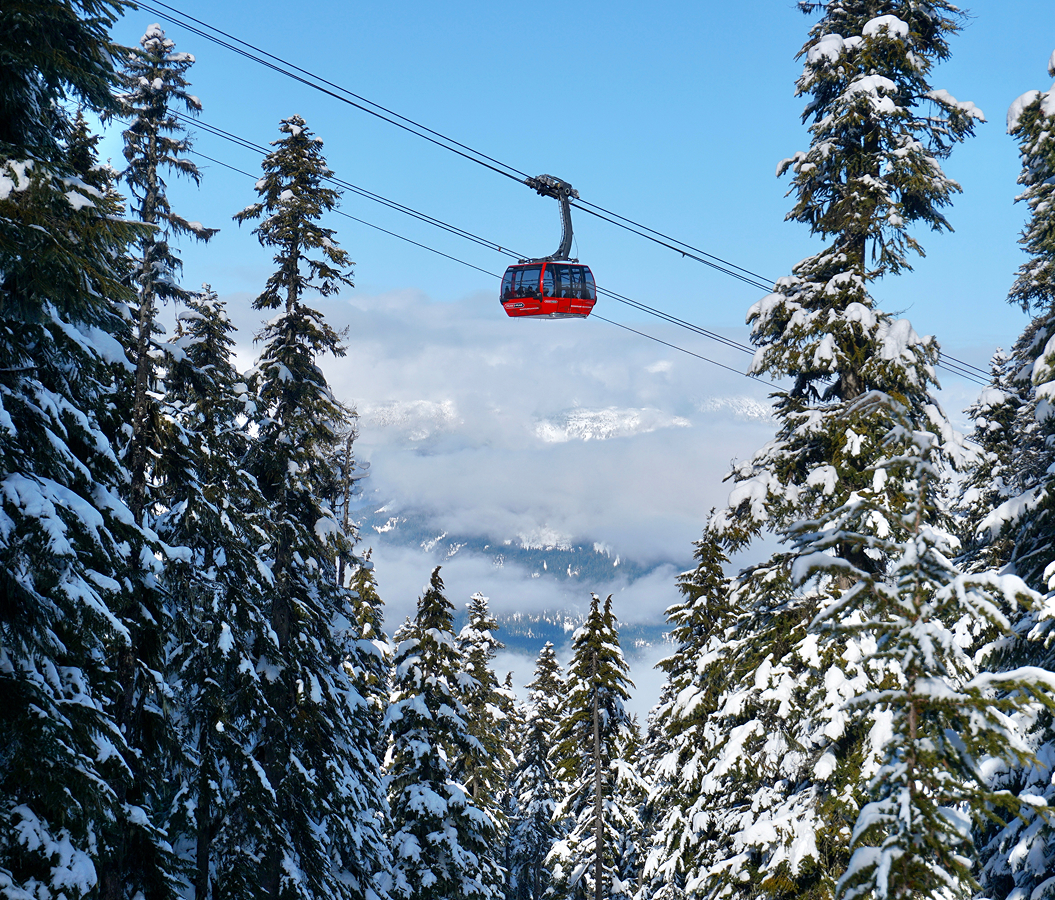
PEAK 2 PEAK Gondola is best known for its extraordinary engineering achievement connecting Whistler Mountain and Blackcomb Mountain across the deep valley separating their alpine slopes. Opened in 2008, the gondola spans 4.4 kilometers between its terminals, creating a direct transportation link between two previously separate mountain systems. Its longest unsupported span extends more than three kilometers, placing the installation among the most remarkable cable transportation projects of its generation. Cabins travel high above the forested valley, revealing panoramic views of glaciers, mountain ridges, and the surrounding Coast Mountains. The system transformed the operation of Whistler Blackcomb by allowing skiers and mountain visitors to move directly between the two peaks at high elevation. Its construction required sophisticated cable engineering and careful adaptation to the region's demanding mountain environment. PEAK 2 PEAK Gondola represents an internationally significant achievement in alpine transportation and resort infrastructure.
Day 2: Wild Blue Restaurant + Bar
Wild Blue Restaurant + Bar is best known for its sophisticated interpretation of Pacific Northwest seafood and contemporary Canadian cuisine within Whistler Village. Developed by a hospitality team that includes chef Alex Chen and restaurateurs Neil Henderson and Jack Evrensel, the restaurant combines substantial culinary experience with a focus on regional ingredients. Chen's career includes leadership in acclaimed Canadian kitchens and recognition for his technical precision and competitive culinary achievements. The menu emphasizes Pacific seafood, premium meats, seasonal vegetables, and carefully composed preparations informed by classical European technique. Its oyster and seafood program reflects the extraordinary maritime resources of British Columbia's coastline. The dining room combines contemporary architectural design with an extensive beverage program and a formal approach to service. Wild Blue represents an important development in Whistler's modern restaurant culture through its integration of acclaimed culinary leadership and the ingredients of coastal British Columbia.
Day 3: Stonesedge Kitchen
Stonesedge Kitchen is best known for its contemporary breakfast and brunch preparations within Whistler Village, combining Canadian comfort food with the casual dining traditions of a major alpine resort community. The restaurant developed around a menu emphasizing eggs, breakfast dishes, sandwiches, vegetables, and familiar preparations shaped by contemporary North American café culture. Its kitchen incorporates regional ingredients and carefully prepared comfort food, creating a daytime dining character connected with Whistler's active mountain lifestyle. The restaurant's village location places it within the pedestrian commercial district that developed during the resort's expansion into an international destination. Stonesedge Kitchen represents an expression of Whistler's independent restaurant culture through its combination of approachable cooking, contemporary presentation, and alpine hospitality.
Day 3: Lost Lake Park
Lost Lake Park is best known for its sheltered mountain lake, forested trails, and exceptional natural setting immediately northeast of Whistler Village. The park preserves a substantial area of woodland surrounding Lost Lake, where mature conifers and mountain vegetation create a landscape characteristic of British Columbia's Coast Mountains. Its network of walking and cycling trails connects the lake with the surrounding valley, establishing an important recreational corridor within the resort municipality. During winter, sections of the trail system support cross-country skiing and snowshoeing, reflecting Whistler's extensive network of seasonal outdoor activities. The lake's shoreline provides views across the surrounding forest and nearby mountain slopes. Lost Lake Park represents a significant component of Whistler's public landscape through its preservation of accessible natural environments within an internationally developed resort community.
Day 3: Squamish Lil'wat Cultural Centre
Squamish Lil'wat Cultural Centre is best known for celebrating the histories, artistic traditions, and living cultures of the Squamish Nation and Lil'wat Nation within a landmark Indigenous cultural institution in Whistler. Opened in 2008, the centre emerged through a collaboration between the two nations, whose traditional territories meet in the surrounding mountain region. Its architecture draws on the structural forms of Coast Salish longhouses and Lil'wat traditional dwellings, integrating timber construction with the natural landscape of the Coast Mountains. Exhibitions explore weaving, carving, ceremonial traditions, language, oral history, and the longstanding relationships between Indigenous communities and their territories. The centre's collections include carved objects, textiles, tools, and works of contemporary Indigenous art that demonstrate the continuity of cultural knowledge across generations. Cultural ambassadors and educational programs connect visitors with the perspectives and traditions of both nations. Squamish Lil'wat Cultural Centre represents one of British Columbia's most important institutions devoted to Indigenous cultural preservation and the expression of living First Nations heritage.
Day 3: Rimrock Café
Rimrock Café is best known for its longstanding reputation for refined seafood and game within an intimate mountain restaurant south of Whistler Village. Established in 1987, the restaurant developed into one of the region's most respected independent dining institutions through a culinary program rooted in classical European technique and the ingredients of the Pacific Northwest. Its kitchen emphasizes fresh seafood, carefully prepared meats, seasonal vegetables, and sauces associated with traditional fine dining. Game preparations reflect the restaurant's relationship with the mountain environment and the culinary traditions of western Canada. The dining room's warm timber finishes and understated alpine character create a setting connected with Whistler's earlier development as a mountain resort. Rimrock Café represents an enduring institution in the region's restaurant culture through its sustained commitment to classical technique, premium ingredients, and independent hospitality.
Where your story begins.
Foresyte Travel reveals places that feel extraordinary long before you arrive.
Enjoy editorial crafted for luxury travelers.
Foresyte may earn a commission when you book.