Why PEAK 2 PEAK Gondola matters.
PEAK 2 PEAK Gondola is a remarkable feat of alpine engineering where Whistler's Coast Mountain wilderness meets the technological ambition of modern cable transportation, connecting two major ski mountains across a deep glacial valley through one of the world's most consequential gondola installations.
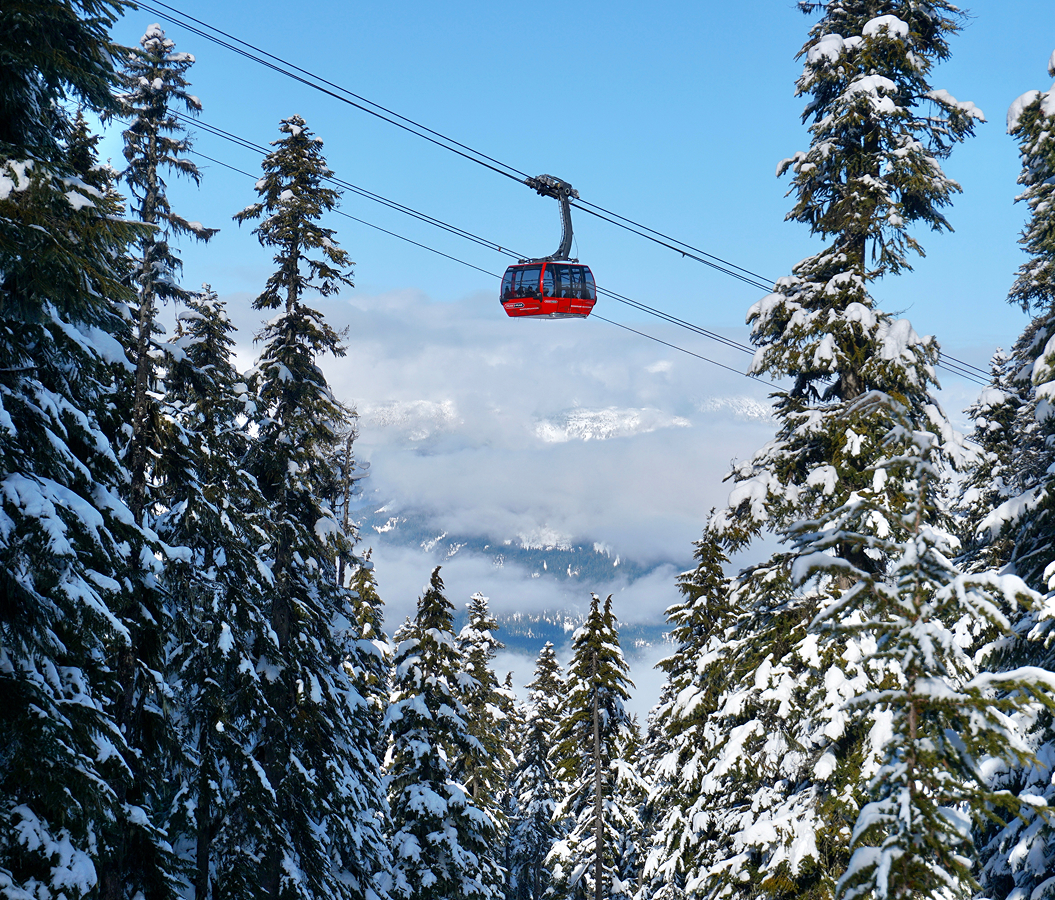
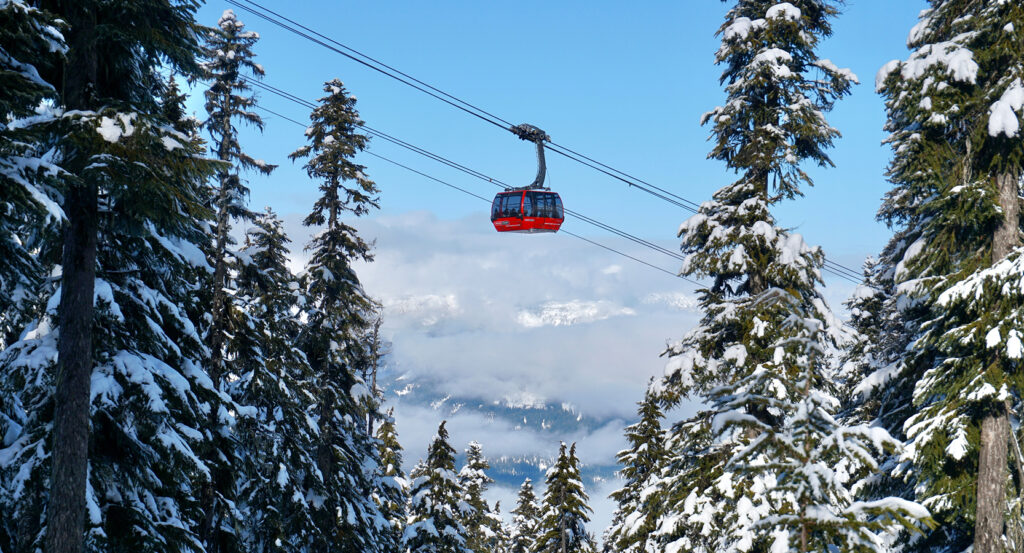
Suspended above Fitzsimmons Creek between Whistler Mountain and Blackcomb Mountain, the gondola occupies an elevated corridor across the valley separating the resort's principal alpine summits, with its terminals positioned near the Roundhouse Lodge and Rendezvous Lodge amid extensive ski terrain and exposed mountain ridges. Its cables extend across forested slopes and the steep valley below, carrying enclosed cabins between two high-altitude stations. The installation traverses terrain inaccessible to conventional surface transportation, maintaining direct mountain-to-mountain circulation throughout its operating seasons. Panoramic windows provide views of glaciers, rocky summits and the densely forested valley floor. The result is a striking aerial crossing whose engineering scale and geographical setting fundamentally changed how people move between Whistler's two mountains.
What defines PEAK 2 PEAK Gondola.
PEAK 2 PEAK Gondola is best known for its record-setting unsupported cable span, exceptional height above the valley floor and the direct connection it established between Whistler Mountain and Blackcomb Mountain. Whistler Mountain began operating as a ski resort in 1966, establishing the first major lift infrastructure serving the region's alpine terrain. Blackcomb Mountain opened in 1980, creating a second mountain operation separated from its neighbor by the deep Fitzsimmons Creek valley. The two mountains developed extensive lift networks and distinct recreational areas, with skiers historically required to descend toward the village to transfer between them. Their operations came under common ownership in 1997, creating the organizational foundation for a direct high-altitude connection. The proposed gondola required an engineering solution capable of crossing a substantial valley while maintaining clearance above its forested slopes. Conventional lift arrangements involving numerous intermediate towers presented significant challenges within the steep terrain. Engineers developed a three-cable gondola system capable of supporting long spans and maintaining stability under demanding mountain weather conditions. Construction began in 2007, introducing specialized cable installation techniques and extensive logistical coordination across the two summits. The project required the transportation of substantial structural components to high-altitude locations with limited conventional road access. Doppelmayr Garaventa supplied the lift technology, drawing upon its experience with large-scale alpine cable transportation systems. The installation opened on December 12, 2008, establishing a direct aerial connection between the mountains. Its total route extends 4.4 kilometers, with an unsupported span measuring 3.024 kilometers between the principal support towers. The cabins reach a maximum height of 436 meters above Fitzsimmons Creek, establishing a striking relationship between the transportation system and the valley's immense depth. At its opening, the installation set world records for the longest unsupported span and greatest height above the ground for a lift of its type. The project represented an investment of C$51 million, demonstrating the commercial importance of integrated mountain access. Its completion preceded the 2010 Winter Olympic and Paralympic Games, during which Whistler served as a principal mountain sports venue. The gondola subsequently became a defining component of the resort's infrastructure and an attraction for alpine sightseeing.
Doppelmayr Garaventa's three-cable technology provides the structural foundation for the gondola's exceptional span and operating stability. Two stationary track ropes support the cabins, and a separate moving haul rope propels them between the mountain terminals. This arrangement distributes loads across substantial cable systems and reduces movement caused by wind. The installation operates with a fleet of enclosed cabins designed to carry passengers across the valley in eleven minutes. Individual cabins accommodate up to twenty-eight passengers, providing substantial transportation capacity between the two mountain stations. The system's principal support towers stand near the opposing sides of the valley, allowing the central cable span to cross the deepest terrain. The cables maintain a pronounced suspended curve, demonstrating the relationship between tension, gravity and the considerable distance separating the supports. Specialized monitoring and operating procedures address wind conditions, mechanical performance and passenger safety. The terminals incorporate loading platforms, mechanical equipment and circulation areas designed for passengers carrying winter sports equipment. Selected cabins feature transparent glass floor panels that reveal the forested valley hundreds of meters beneath the crossing. Their reinforced glazing provides an unusual perspective on the terrain while maintaining the enclosed cabin's protective structure. Standard cabins incorporate extensive windows framing the surrounding alpine environment. The crossing provides views toward the volcanic peaks of the Garibaldi region, the rugged ridges of the Coast Mountains and the glaciers occupying higher elevations. Seasonal snow cover changes the appearance of the valley, with winter producing broad expanses of white terrain and summer revealing dense forest and exposed rock. The gondola supports both winter skiing circulation and seasonal sightseeing operations, extending its recreational importance beyond a single activity. Its direct connection allows passengers to reach extensive terrain on either mountain through a continuous high-altitude transportation network. The installation's engineering achievement lies in its ability to combine substantial passenger capacity with a crossing previously constrained by the valley's extreme topography.
How PEAK 2 PEAK Gondola fits.
PEAK 2 PEAK Gondola works as the engineering centerpiece for a Whistler outing connecting Indigenous cultural heritage, the history of international winter sports and the protected alpine landscapes that surround the resort.
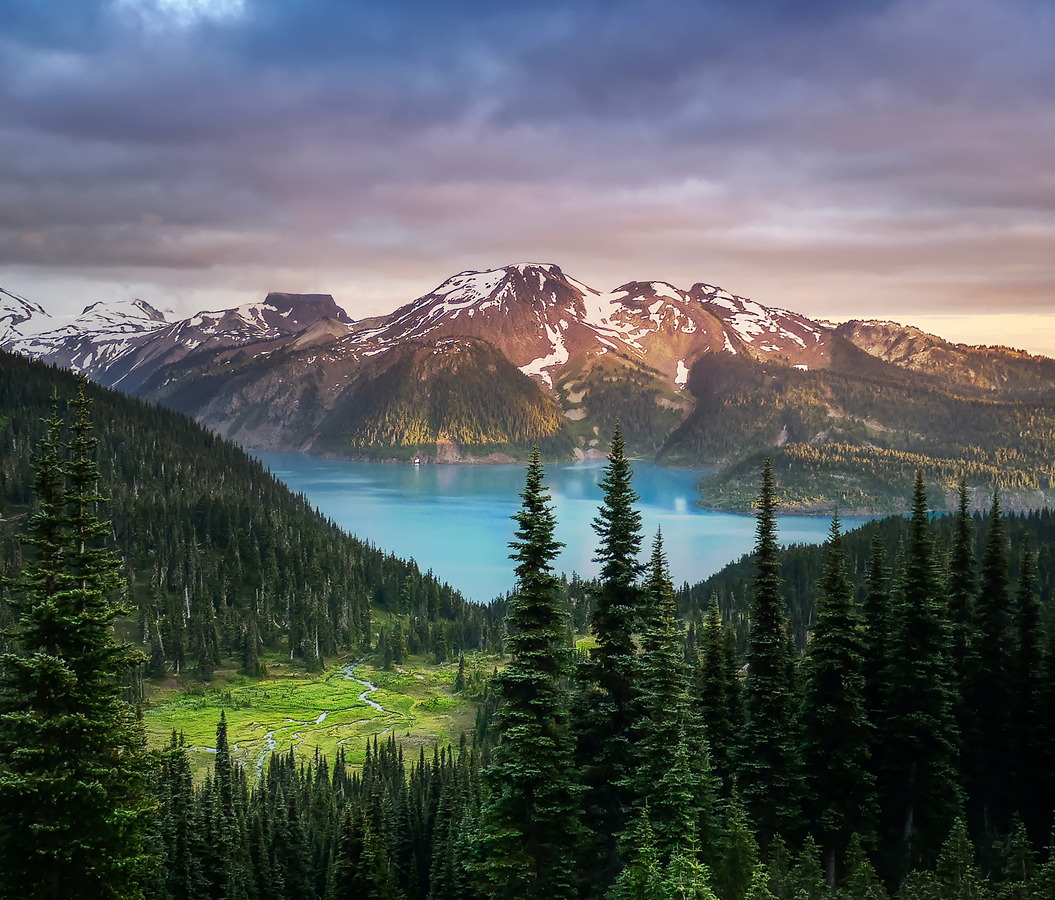
Begin at Squamish Lil'wat Cultural Centre, the Indigenous cultural institution situated in Whistler's Upper Village. Opened in 2008, the center was developed through cooperation between the Squamish Nation and Lil'wat Nation to preserve and share their distinct cultural traditions. Its architecture incorporates design elements inspired by Squamish longhouses and traditional Lil'wat istken dwellings. Exhibitions present weaving, carving, oral histories and ceremonial objects, connecting contemporary cultural practice with generations of Indigenous knowledge. Guided programs examine the nations' relationships with the surrounding mountains, forests and waterways, establishing the historical context of the region's development. Continue to Whistler Olympic Plaza, the public gathering space developed in connection with the 2010 Winter Olympic and Paralympic Games. The plaza occupies a prominent position within the resort community and preserves the Olympic rings as a permanent commemorative installation. Its landscaped grounds accommodate concerts, festivals and seasonal recreational activities, maintaining the civic purpose established during the Games. The surrounding public spaces connect Whistler's sporting history with its continuing development as a year-round mountain destination. Interpretive features commemorate the athletes, volunteers and communities associated with the international event. Conclude at Garibaldi Provincial Park, the extensive protected wilderness surrounding the volcanic and glacial landscapes east of Whistler. Established in 1927, the park preserves alpine lakes, glaciers, volcanic formations and substantial mountain ecosystems within British Columbia's Coast Mountains. Its landscape includes Garibaldi Lake, a turquoise glacial basin enclosed by steep peaks and forested slopes. Hiking routes provide access to subalpine meadows and elevated viewpoints overlooking the surrounding volcanic terrain. The park's conservation status protects important habitats and geological formations associated with the region's mountain environment. The progression moves from Squamish Lil'wat Cultural Centre's Indigenous heritage through Whistler Olympic Plaza's sporting history and culminates at Garibaldi Provincial Park's protected alpine wilderness, connecting PEAK 2 PEAK Gondola with the cultural and environmental foundations of the Coast Mountains.
Where your story begins.
Foresyte Travel reveals places that feel extraordinary long before you arrive.
Enjoy editorial crafted for luxury travelers.
Foresyte may earn a commission when you book.