Fun facts about Vancouver, British Columbia.
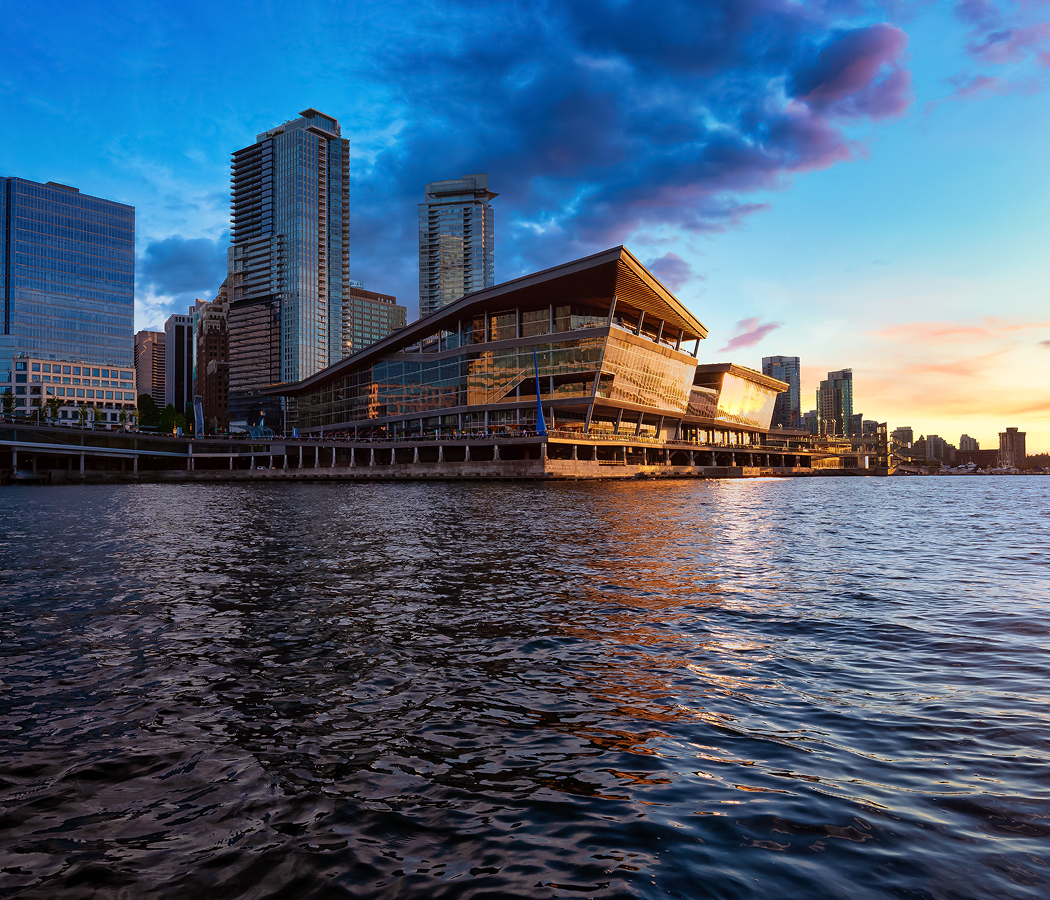
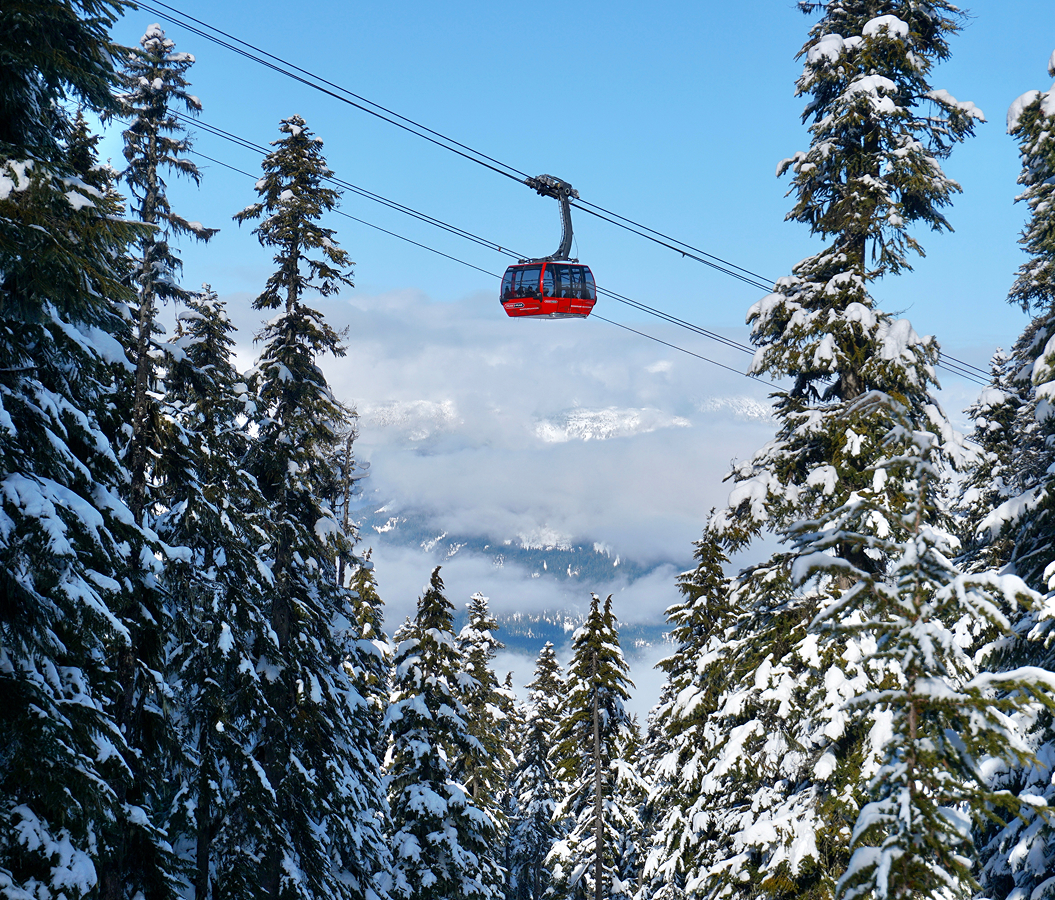
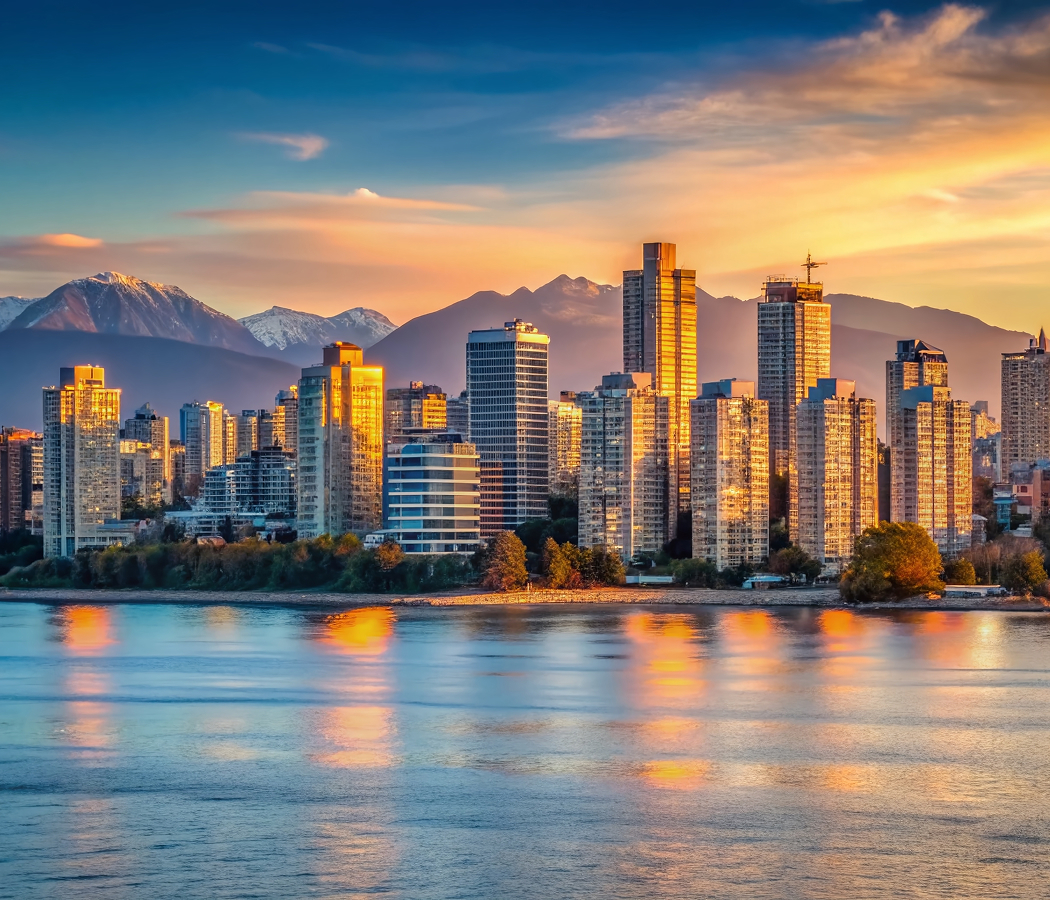
Vancouver occupies the Burrard Peninsula between Burrard Inlet and the Fraser River, with the Strait of Georgia to the west and the Coast Mountains rising immediately beyond the northern waterfront. Its setting combines densely developed urban districts with beaches, tidal waterways, forested parks, and mountain slopes that remain visible throughout much of the city. Downtown Vancouver extends across a narrow peninsula bordered by Burrard Inlet to the north and False Creek to the south, creating a compact urban center surrounded by water on three sides. The central business district contains a concentration of residential and commercial towers, with substantial glass façades reflecting the region's distinctive approach to high-density waterfront development. Canada Place stands along the northern harbor through its recognizable white sail-like roof structures, connecting cruise terminals, convention facilities, and public promenades with views toward the North Shore Mountains. Nearby, the Vancouver Convention Centre incorporates extensive waterfront public spaces and a large living roof within its contemporary architectural design. Westward, Coal Harbour contains marinas, landscaped walkways, and residential towers overlooking the harbor. Stanley Park occupies 400 hectares at the western end of the downtown peninsula, preserving extensive coastal forest, beaches, and recreational landscapes within the metropolitan center. Its seawall follows the shoreline through a continuous route offering views of Burrard Inlet, English Bay, and the surrounding mountains. The park contains old-growth forest remnants, landscaped gardens, and important Indigenous cultural sites, including a collection of expansive poles associated with First Nations artistic traditions. South of Stanley Park, the West End forms a dense residential neighborhood distinguished by tree-lined streets, apartment towers, and access to English Bay Beach. The adjacent Davie Village and Denman Street corridors contain restaurants, shops, and longstanding neighborhood businesses. East of the central business district, Gastown preserves historic commercial architecture associated with Vancouver's early settlement, including brick warehouses, Victorian buildings, and narrow streets arranged around Water Street. The nearby Chinatown district contains significant Chinese Canadian heritage sites, including the Dr. Sun Yat-Sen Classical Chinese Garden, whose traditional architectural forms and landscaped courtyards reflect classical Chinese garden design. South of downtown, False Creek separates the central peninsula from neighborhoods developed around former industrial waterfronts. Granville Island occupies a former industrial site transformed into a public market, arts district, and recreational destination, with converted warehouses containing food merchants, workshops, and performance spaces. The surrounding seawall connects parks and waterfront neighborhoods through pedestrian and cycling routes. Farther east, the Olympic Village district incorporates contemporary residential architecture and public spaces developed around the 2010 Games. Southward, the residential neighborhoods of Kitsilano, Fairview, and Mount Pleasant contain a mixture of historic houses, apartment buildings, independent businesses, and cultural institutions. Kitsilano Beach overlooks English Bay toward downtown and the North Shore Mountains, providing one of the city's principal waterfront recreational areas. The University of British Columbia occupies the western end of the peninsula, surrounded by forested parkland and coastal cliffs overlooking the Strait of Georgia. Its campus contains major research facilities, museums, and landscaped grounds, including the Museum of Anthropology, whose architecture incorporates expansive concrete forms inspired by Northwest Coast post-and-beam construction. Across Burrard Inlet, the municipalities of North Vancouver and West Vancouver extend along steep mountain foothills connected to the city by bridges and passenger ferries. The Lions Gate Bridge spans the First Narrows near Stanley Park, providing a prominent transportation landmark framed by forested slopes. Grouse Mountain and the surrounding North Shore peaks support skiing, hiking, and mountain recreation within close proximity to the urban center. Vancouver's physical distinction comes from the remarkable integration of high-density urban development, extensive waterfront parks, Indigenous cultural landscapes, and a mountain setting that shapes the city's geography and everyday recreation.
Canadian Pacific Coast art, literature, and music have acquired international influence through Vancouver's Indigenous communities, multicultural institutions, and expanding creative industries. The artistic heritage of the Musqueam, Squamish, Tsleil-Waututh, and other Northwest Coast peoples includes expansive carving, weaving, ceremonial regalia, and visual traditions grounded in relationships among families, territories, and ancestral histories. The Museum of Anthropology at the University of British Columbia preserves significant collections of Indigenous art and cultural objects, including expansive carvings by Haida artist Bill Reid. His sculpture The Raven and the First Men presents an influential interpretation of Haida mythology and stands among the museum's most celebrated works. The Vancouver Art Gallery contains extensive collections of Canadian and international art, with particular importance attached to the paintings of Emily Carr, whose work explored the forests and Indigenous communities of the Pacific Northwest. Carr's paintings became defining contributions to Canadian modernism, combining expressive forms with the dramatic landscapes of British Columbia. Contemporary Indigenous artists continue to influence the city's visual culture through sculpture, photography, painting, and public installations. Vancouver's literary history includes writers whose works examine migration, urban life, and the social complexity of Canada's Pacific coast. Douglas Coupland, raised in the Vancouver region, gained international recognition through Generation X and later works exploring technology, consumer culture, and contemporary society. Joy Kogawa's novel Obasan examines the internment and dispossession of Japanese Canadians during the Second World War, contributing to the country's broader reckoning with racial injustice. The city's performing arts institutions include the Vancouver Symphony Orchestra, founded in 1919, and the Vancouver Opera, whose productions contribute to a substantial classical music community. The Vancouver International Film Festival presents Canadian and international cinema, reflecting the city's position within a major North American film and television production industry. Vancouver's screen economy has attracted substantial international productions, supported by studios, technical specialists, and the varied urban and natural settings of southwestern British Columbia. The city's popular music heritage includes influential artists and groups associated with punk, alternative rock, electronic music, and contemporary pop. Bryan Adams began his musical career in Vancouver, and bands including Skinny Puppy and 54-40 contributed to the development of Canadian alternative music during the 1980s. The Vancouver Folk Music Festival and Vancouver International Jazz Festival have also played important roles in the city's live performance culture. Vancouver's culinary scene reflects its Pacific geography and substantial Asian Canadian population, particularly through Chinese, Japanese, Korean, Vietnamese, and South Asian food traditions. The city's seafood heritage includes Pacific salmon, Dungeness crab, spot prawns, and oysters harvested from the surrounding coastal waters. Wild salmon remains especially significant within Indigenous food systems, commercial fisheries, and contemporary regional cooking. Richmond, immediately south of Vancouver, contains one of North America's most extensive concentrations of Chinese restaurants and food markets, with regional cuisines ranging from Cantonese dim sum to Sichuan and northern Chinese specialties. Vancouver's Japanese culinary scene includes sushi, ramen, izakaya dining, and contemporary interpretations of Pacific seafood. The city's public markets, particularly Granville Island Public Market, connect regional agricultural producers, seafood merchants, bakers, and specialty food businesses. Contemporary restaurants increasingly emphasize ingredients from British Columbia's farms, vineyards, forests, and coastal fisheries. Vancouver's cultural influence is sustained through the continuing vitality of Northwest Coast Indigenous art, its internationally connected creative industries, and a culinary landscape shaped by Pacific resources and generations of migration.
Five fascinations.
5. Vancouver grew from a sawmill settlement known as Granville.
Modern Vancouver developed beside Burrard Inlet around the lumber industry during the nineteenth century. Hastings Mill began operating in the 1860s, and a nearby settlement grew around a saloon established by John “Gassy Jack” Deighton. The community became known as Granville before incorporation as the City of Vancouver in 1886, taking its new name from British naval officer George Vancouver. The arrival of the Canadian Pacific Railway accelerated its transformation into a major Pacific port. One of Canada's largest metropolitan centers emerged from an industrial waterfront where timber, rail transportation, and maritime commerce converged.
4. Vancouver rebuilt with remarkable speed after fire destroyed most of the new city.
Only months after Vancouver was incorporated in 1886, the Great Vancouver Fire swept through the settlement. Flames driven by strong winds consumed most buildings within a remarkably short period, leaving much of the newly established city in ruins. Reconstruction began almost immediately as residents and businesses returned to the burned district. Brick and stone increasingly appeared alongside timber construction as Vancouver expanded rapidly around its railway terminus and harbor. The disaster became an early turning point in the city's physical development, destroying much of its pioneer-era built environment almost at the moment Vancouver formally entered existence as a municipality.
3. Stanley Park contains an enormous temperate rainforest immediately beside downtown.
Stanley Park occupies a forested peninsula projecting between Burrard Inlet and English Bay, placing hundreds of hectares of coastal landscape directly beside Vancouver's urban core. The park opened in 1888, yet its forests and shoreline belong to a much older Indigenous cultural landscape associated particularly with the Musqueam, Squamish, and Tsleil-Waututh peoples. Towering western red cedars, Douglas firs, and other coastal species survive among beaches, wetlands, rocky shores, and trails. Vancouver possesses an extraordinary geographic contrast: dense high-rise neighborhoods rise within sight of a substantial forest whose ecology and human history long predate the surrounding city.
2. Vancouver transformed an industrial waterfront into an island-sized public market district.
Granville Island began as an industrial development created on tidal flats in False Creek during the early twentieth century. Factories, warehouses, mills, and workshops occupied the site as Vancouver's industrial economy expanded around the inlet. By the later twentieth century, changing manufacturing patterns opened the territory to reinvention. Former industrial buildings acquired new lives as studios, theaters, restaurants, shops, workshops, and the Granville Island Public Market, while traces of the district's working infrastructure remained visible throughout the landscape. Vancouver converted an aging manufacturing zone into a dense cultural district whose industrial architecture became part of the visitor experience.
1. Vancouver hosted a world's fair that permanently transformed its waterfront.
Expo 86 opened along False Creek under the theme of transportation and communication, bringing more than 22 million visits to Vancouver during its six-month run. Pavilions, transit infrastructure, public spaces, and striking events occupied former industrial land around the water. The exposition accelerated major transportation projects, including the original SkyTrain line, and focused international attention on a city undergoing rapid change. After the fair closed, large sections of the Expo lands entered decades of redevelopment that produced residential towers, parks, waterfront paths, and new neighborhoods. Vancouver's celebrated high-density waterfront urbanism owes a consequential chapter of its evolution to a temporary 1986 exposition.
Where your story begins.
Foresyte Travel reveals places that feel extraordinary long before you arrive.
Enjoy editorial crafted for luxury travelers.
Foresyte may earn a commission when you book.