Fun facts about Washington, D.C.
Washington, D.C. has become one of the world's most significant capital cities by combining iconic national monuments, extraordinary museums, and centuries of American history into a destination unlike anywhere else in the United States. Iconic landmarks including the United States Capitol, the White House, the Lincoln Memorial, and the Washington Monument have become enduring symbols of the nation's capital, while neighborhoods such as Capitol Hill, Georgetown, Dupont Circle, and The Wharf each reveal a distinct side of Washington's remarkable character. Every district contributes to a city where neoclassical architecture, expansive green spaces, and nationally significant institutions exist in extraordinary harmony.
Beyond its celebrated monuments, Washington fascinates through an exceptional blend of history, culture, and global influence. Visitors can explore the world-renowned collections of the Smithsonian Institution, admire masterpieces at the National Gallery of Art, reflect at the National World War II Memorial, or stroll the tree-lined paths surrounding the Tidal Basin. Cultural destinations including the Library of Congress, the John F. Kennedy Center for the Performing Arts, Rock Creek Park, and the thriving waterfront of The Wharf demonstrate how Washington continually balances its role as the center of American government with one of the nation's richest collections of museums, memorials, and performing arts venues.
Perhaps Washington's greatest fascination is its remarkable ability to preserve the story of the United States while remaining a thriving, living capital. Historic government buildings stand beside innovative museums, centuries of national history unfold across the National Mall, and lively neighborhoods contribute to a dynamic cultural scene beyond the city's famous landmarks. Whether watching the sunset from the steps of the Lincoln Memorial, touring the United States Capitol, exploring the museums along the National Mall, or wandering the historic streets of Georgetown, visitors quickly discover that Washington's enduring appeal lies in the seamless blend of democracy, history, and cultural achievement.
Five fascinations.
5. Washington's street plan was designed to turn geometry into national symbolism.
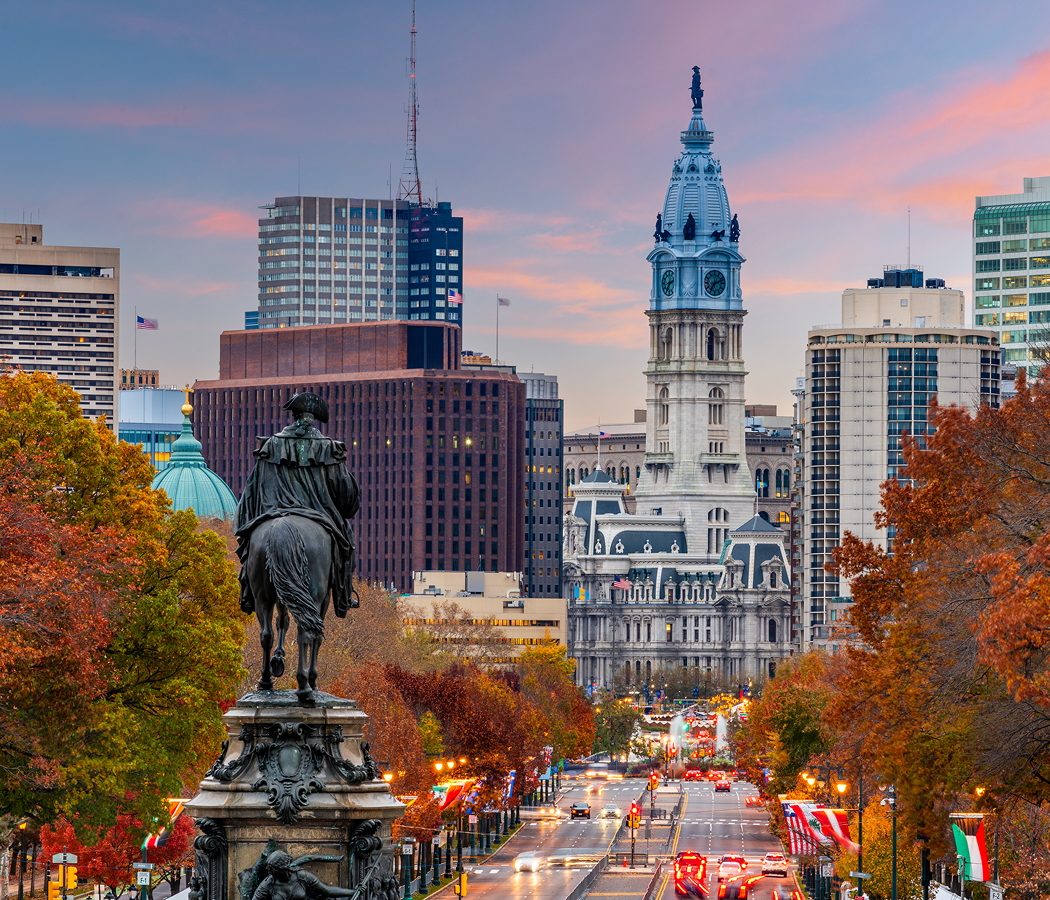
Pierre Charles L'Enfant developed the foundational plan for Washington in 1791, laying a rectilinear street grid beneath broad diagonal avenues that connected prominent sites across the new federal capital. The intersections created circles, squares, and dramatic sightlines intended for monuments and civic spaces. Pennsylvania Avenue formed a particularly important axis between the Capitol and the President's House. Subsequent development altered portions of L'Enfant's vision, yet its underlying geometry still defines Central Washington. The city's unusual collection of diagonal avenues and grand vistas originated as an intentional physical expression of a newly established national government.
4. The Washington Monument briefly became the tallest structure in the world.
When the Washington Monument was completed in 1884, its 555-foot height surpassed Cologne Cathedral and made the obelisk the tallest human-made structure on Earth. Construction had begun in 1848 but stopped for decades amid financial difficulties, political disputes, and the Civil War. The interruption remains visible today as a change in the color of the marble partway up the monument, reflecting stone obtained from different quarrying periods. The Eiffel Tower surpassed its height five years later, but Washington had already produced a remarkable engineering record from one of the simplest architectural forms imaginable: a colossal stone obelisk.
3. The National Mall once contained a major railroad station.
For much of the nineteenth century, the grand landscape now associated with museums, memorials, and open lawns looked dramatically different. The Baltimore and Potomac Railroad operated a station near the present National Gallery of Art, placing trains and tracks directly within the ceremonial center of Washington. President James A. Garfield was shot inside the station in 1881. The McMillan Plan of 1901 subsequently helped reshape the Mall according to a grander civic vision, and the station disappeared as Union Station consolidated major passenger rail operations farther north. Washington's celebrated grand core emerged through extensive removal and redesign, not simply preservation.
2. The Lincoln Memorial contains a deliberate visual correction that makes its columns appear uniform.
Architect Henry Bacon designed the Lincoln Memorial as a grand interpretation of a classical Greek temple, surrounding the structure with 36 exterior Doric columns representing the states in the Union at the time of Abraham Lincoln's death. Subtle adjustments in the building account for perspective and the visual effects created by its immense scale. Inside, Daniel Chester French's seated Lincoln dominates a chamber lined with inscriptions from the Gettysburg Address and Second Inaugural Address. Completed in 1922, the memorial transformed classical architectural principles into a carefully calibrated national monument whose physical design reinforces its symbolism.
1. The White House was completely gutted while Harry Truman was president.
By the late 1940s, generations of alterations had left the White House's interior structure dangerously weakened. Engineers determined that extensive reconstruction was necessary, forcing President Harry S. Truman and his family to move across Pennsylvania Avenue to Blair House. Workers removed virtually the entire interior behind the historic exterior walls, excavated beneath the building, installed a new steel structural structure, and reconstructed its rooms inside the preserved shell. The project lasted from 1948 to 1952. Much of what appears to be an early nineteenth-century interior today occupies a modern structural system concealed inside one of America's oldest national landmarks.
Where your story begins.
Foresyte Travel reveals places that feel extraordinary long before you arrive.
Enjoy editorial crafted for luxury travelers.
Foresyte may earn a commission when you book.