Why The White House matters.
In the heart of Washington, D.C., The White House stands as one of the most recognizable symbols of democracy in the world, a living emblem of power, history, and endurance.
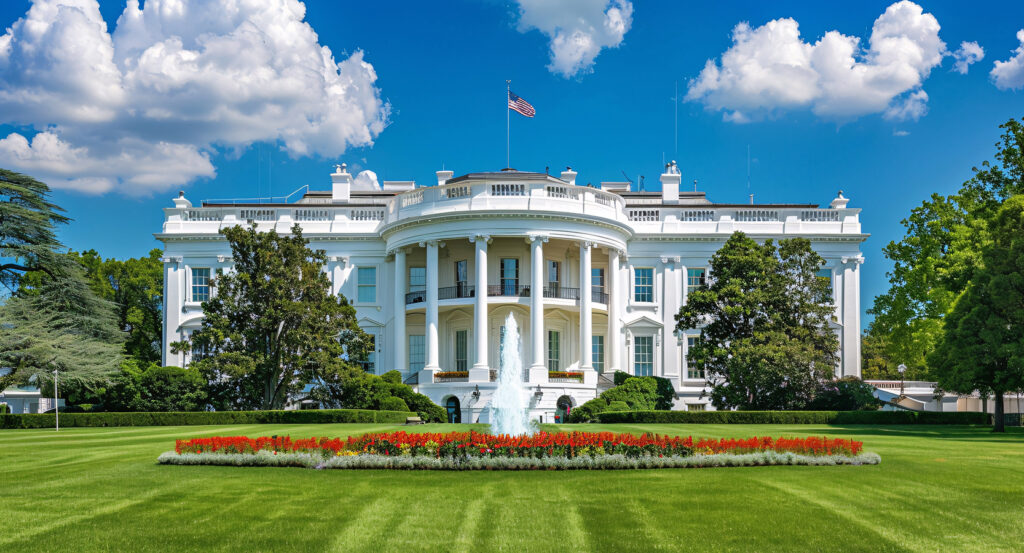
Set against the sweeping lawns of 1600 Pennsylvania Avenue, this neoclassical mansion exudes both elegance and gravity, embodying more than two centuries of American leadership. Its gleaming white façade, framed by fountains and oak trees, has witnessed the rise and fall of nations, moments of triumph and tragedy, and the quiet humanity that unfolds behind its storied walls. Designed by James Hoban and completed in 1800, the building has housed every U.S. president since John Adams, evolving through fires, renovations, and expansions. To stand before The White House is to stand before the living pulse of American history, a place where decisions that shaped the modern world have been made, from the abolition of slavery to space exploration to humanitarian leadership on a global scale. Whether you glimpse it from Lafayette Square or walk the south lawn during a public tour, The White House radiates both dignity and accessibility, a reminder that democracy, while fragile, belongs to the people it serves.
What defines The White House.
Beyond the iconic portico and its columns of white-painted sandstone lies a structure that tells countless stories of resilience and reinvention.
The White House was nearly destroyed during the War of 1812, when British troops set it ablaze in 1814, leaving only the exterior walls standing. President James Madison and First Lady Dolley Madison famously fled with a portrait of George Washington, saving it from destruction. The house was rebuilt over the next three years, symbolizing the young nation's determination to rise from the ashes. Later renovations under Theodore Roosevelt and Harry S. Truman modernized the interior, with Truman's reconstruction in the late 1940s reinforcing the structure from the inside out while preserving its historical façade. The mansion contains 132 rooms, 35 bathrooms, and six floors, with everything from the Oval Office, where history is written daily, to the State Dining Room, where diplomatic gatherings blend ceremony and strategy. Beneath the public floors lies a labyrinth of service corridors, kitchens, and the Presidential Emergency Operations Center, built for security during times of crisis. Few realize that the grounds are as rich in meaning as the architecture itself: the Rose Garden, South Lawn, and Jacqueline Kennedy Garden have hosted centuries of ceremonies, press conferences, and moments of reflection. And while public tours reveal only a portion of its grandeur, every inch of The White House hums with the legacy of those who walked its halls, from Lincoln's melancholy midnight vigils to Kennedy's fireside wit to Obama's quiet strength.
How The White House fits.
Visiting The White House offers a rare chance to step inside the narrative of the United States, a blend of history, architecture, and civic pride unlike anywhere else in the world.
Public tours must be requested well in advance through a congressional office, but even without entry, the surrounding grounds and views deliver a powerful experience. Begin at Lafayette Square, directly across from the north façade, where statues and fountains frame some of the most photogenic perspectives in the capital. Walk the perimeter along Pennsylvania Avenue and E Street NW, pausing to absorb the contrast between the building's serene beauty and the buzz of a working city that still orbits its influence. For those who do enter, highlights include the East Room, State Dining Room, and Blue Room, each showcasing period furnishings, portraits, and artifacts that trace America's evolving story. Don't miss The White House Visitor Center, located nearby on Pennsylvania Avenue, which features interactive exhibits, historic documents, and a full-scale model of the mansion for those unable to attend a tour. Pair your visit with nearby landmarks like the Washington Monument, Lincoln Memorial, or National Mall, where the ideals embodied by The White House find their reflection in stone and space. Whether viewed from afar or explored up close, The White House remains a masterpiece of both architecture and aspiration, a tribute to continuity through change, and a reminder that leadership is not a privilege of walls, but of purpose.
Where your story begins.
Foresyte Travel reveals places that feel extraordinary long before you arrive.
Enjoy editorial crafted for luxury travelers.
Foresyte may earn a commission when you book.