Top places to stay in Kyoto, Japan.
Kyoto preserves a hospitality tradition rooted in more than a millennium of Japanese imperial court culture, Buddhist temple life, and the craftsmanship of the ancient capital, where historic ryokan, tea ceremony, and the refined aesthetics of traditional architecture continue to shape the experience of visiting Japan. Established as Heian-kyō in 794 under Emperor Kanmu, the city became the seat of an aristocratic society whose ceremonial life depended upon elaborate reception, seasonal observances, and carefully regulated domestic customs. Court residences provided settings for poetry gatherings, musical performances, and formal entertaining, establishing an enduring association between hospitality and cultivated aesthetic judgment. During the medieval period, the expansion of Buddhist institutions introduced accommodation for pilgrims and religious travelers, with temple precincts supporting networks of lodging and charitable hospitality. The rise of the Ashikaga shogunate during the fourteenth century strengthened Kyoto's position as a center of artistic patronage, encouraging the development of architectural and social practices associated with Zen Buddhism. The Ōnin War, beginning in 1467, devastated substantial sections of the capital, although the subsequent rebuilding encouraged renewed commercial activity and the expansion of prosperous merchant neighborhoods. During the sixteenth century, tea master Sen no Rikyū refined the ceremonial principles of chanoyu, establishing influential traditions of reception organized around restraint, craftsmanship, and attentiveness to guests. The consolidation of political authority under Tokugawa rule in 1603 transferred the shogunate's principal administrative center to Edo, yet Kyoto retained the imperial court and an exceptional concentration of religious and cultural institutions. Wealthy merchants supported the development of traditional inns, whose tatami rooms, communal bathing facilities, and carefully prepared meals offered travelers an increasingly distinctive form of Japanese accommodation. The Tōkaidō highway connected Kyoto with Edo through an established network of post stations, strengthening commercial movement and the circulation of regional hospitality practices. The relocation of the imperial court to Tokyo in 1869 introduced a profound economic challenge, encouraging civic leaders to invest in manufacturing, education, and cultural preservation. The opening of the Kyoto Hotel in 1888 marked an important development in Western-style accommodation, serving international visitors drawn to the city's historic monuments. Railway expansion strengthened Kyoto's accessibility, supporting the growth of tourism during the late Meiji and Taishō periods. The preservation of much of Kyoto's historic urban fabric during the Second World War subsequently strengthened its appeal as a destination for architectural and cultural travel. The opening of the Miyako Hotel's modern expansion during the postwar era reflected growing demand for international accommodation near the Higashiyama foothills. The designation of seventeen Historic Monuments of Ancient Kyoto as a UNESCO World Heritage Site in 1994 reinforced the city's international cultural standing. The opening of The Ritz-Carlton, Kyoto in 2014 introduced a prominent contemporary expression of luxury hospitality along the Kamo River, combining modern architecture with Japanese decorative traditions. Kyoto's finest accommodation continues to draw upon the relationship between imperial ceremony, religious pilgrimage, merchant culture, and the intimate traditions of the Japanese ryokan.
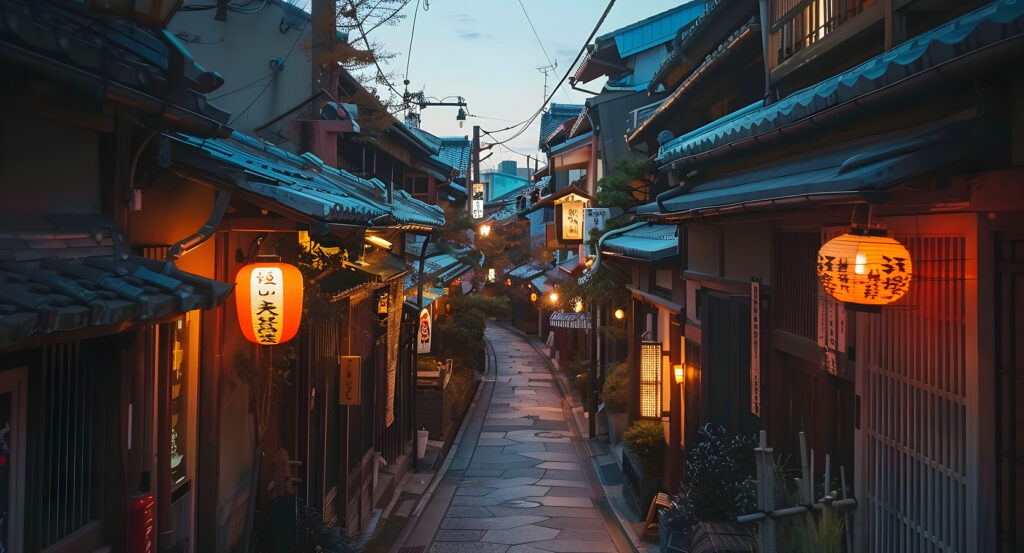
Kyoto's most distinguished places to stay occupy a carefully layered urban landscape where historic merchant streets, riverside neighborhoods, and wooded temple districts extend beneath the surrounding mountains. The central city retains the grid established during its foundation as an imperial capital, with broad avenues intersecting narrower residential streets and enclosed courtyards. Downtown Kyoto, particularly the neighborhoods surrounding Kawaramachi and Karasuma, provides the principal concentration of contemporary metropolitan hotels, with substantial commercial buildings and sophisticated boutique properties near major shopping streets and transportation connections. The adjoining streets of Nakagyō preserve traditional machiya townhouses distinguished by narrow street frontages, timber latticework, interior gardens, and elongated floor plans. Restored examples support intimate accommodation that connects guests with the spatial organization of historic merchant households. Eastward, the Kamo River establishes a defining geographic boundary, with landscaped embankments and pedestrian paths separating the commercial center from the historic districts of Higashiyama. Hotels overlooking the river occupy prestigious positions near the principal bridges, offering views toward the wooded eastern hills. Across the water, Gion preserves an exceptional concentration of traditional wooden buildings, narrow lanes, and established entertainment establishments associated with Kyoto's geiko and maiko communities. The streets surrounding Hanamikoji support intimate ryokan and carefully restored historic residences, creating an architectural environment shaped by timber façades, enclosed courtyards, and traditional rooflines. Southward, the Higashiyama district rises through narrow stone-paved streets toward Kiyomizu-dera, with accommodation occupying former residences and secluded properties near important religious institutions. The neighboring streets of Ninenzaka and Sannenzaka preserve a distinctive historic setting through traditional shopfronts, tiled roofs, and carefully maintained pedestrian approaches. Farther north, the Okazaki district introduces a more spacious cultural landscape through substantial museums, landscaped waterways, and grand religious architecture. The surrounding foothills contain prestigious hotels and secluded retreats near Nanzen-ji, where wooded gardens and historic temple compounds establish an atmosphere of exceptional tranquility. West of the central city, Arashiyama occupies a dramatic setting along the Katsura River, with forested mountains rising above historic bridges, temple gardens, and established residential streets. Luxury ryokan and intimate resorts occupy landscaped properties near the river, offering access to the district's celebrated bamboo groves and cultural institutions. The neighboring Sagano area preserves a quieter rural character through traditional residences, agricultural plots, and substantial temple grounds extending toward the western hills. Northward, the districts surrounding Kinkaku-ji and the foothills of northern Kyoto offer secluded accommodation near historic religious landscapes, with established residential streets and wooded gardens providing a contrasting environment to the commercial center. Northeast of Downtown, the Demachiyanagi and Shimogamo areas retain a refined residential atmosphere near the confluence of the Kamo and Takano rivers. Historic houses and intimate guesthouses occupy quiet streets near substantial wooded precincts, supporting accommodation within an established university and cultural environment. South of the historic center, the Kyoto Station district presents a contemporary metropolitan landscape through substantial hotels, commercial towers, and major transportation infrastructure. The station's grand modern architecture establishes a distinctive gateway to the city, with surrounding properties providing convenient access to regional rail services. These contrasting environments create a coherent hospitality geography extending from restored merchant townhouses and intimate Gion ryokan to secluded temple retreats, riverside luxury properties, and contemporary metropolitan hotels, each connected to a different expression of Kyoto's architectural inheritance. Foresyte may earn a commission when you book.
Foresyte Travel's top five choices.
5. Hotel The Mitsui Kyoto, a Luxury Collection Hotel
Hotel The Mitsui Kyoto occupies a site facing Nijō Castle that served for more than 250 years as the Kyoto residence of the Mitsui family, whose commercial dynasty became one of the most consequential business institutions in Japanese history. The contemporary property preserves the estate's Kajiimiya Gate, originally constructed in 1703 and carefully restored as the ceremonial entrance to the hotel. Architect Akira Kuryu organized the development around a central garden, with André Fu contributing interiors that integrate timber, stone, ceramics and references to traditional Kyoto residential architecture. Its 2020 opening returned the Mitsui name to the family's historic Kyoto estate, connecting one of Japan's great mercantile lineages with a site immediately adjoining the seventeenth-century castle of the Tokugawa shogunate.
4. Six Senses Kyoto
Six Senses Kyoto opened in 2024 in Higashiyama, placing the brand's first Japanese property within the historic district extending between major temple precincts and the foothills of eastern Kyoto. BLINK Design Group developed the interiors around the Heian period, drawing particular inspiration from The Tale of Genji, moon-viewing traditions and the restrained material culture associated with Kyoto craftsmanship. The property's central garden incorporates seasonal planting, stone and water into a contemporary interpretation of the city's long tradition of landscape composition. Six Senses entered Japan through a property conceived around Kyoto's literary and artistic inheritance, embedding a global wellness brand within cultural references reaching back more than a millennium.
3. The Ritz-Carlton, Kyoto
The Ritz-Carlton, Kyoto occupies the western bank of the Kamogawa River near Nijō Ōhashi, a site whose low-rise architecture was carefully calibrated to the scale and rooflines of Central Kyoto. Nikken Sekkei designed the building with deep eaves, gardens, water features and extensive use of stone and timber, integrating a substantial contemporary hotel into a city governed by unusually strict controls on building height and visual form. Peter Remedios developed the interiors around Japanese craftsmanship, with lacquerware, textiles, ceramics and other commissioned works establishing material connections with Kyoto's centuries-old artisan traditions. Its 2014 opening created a major international hotel whose architectural significance rests on accommodating global hospitality within the physical constraints and craft culture of Japan's historic imperial capital.
2. Four Seasons Hotel Kyoto
Four Seasons Hotel Kyoto is organized around Shakusui-en, a historic pond garden whose origins reach into the medieval period and whose composition forms the physical center of the property. The garden occupies part of a district associated with powerful samurai and aristocratic families, preserving a substantial body of water, stonework and mature vegetation amid the dense urban fabric of Higashiyama. Takenaka Corporation designed the contemporary hotel around this inherited landscape, using extensive glazing and carefully controlled building mass to maintain visual relationships with the pond and surrounding garden. Its 2016 opening placed a large international hotel around an existing piece of Kyoto landscape history, making centuries-old garden design the architectural foundation of the development.
1. Park Hyatt Kyoto
Park Hyatt Kyoto occupies the Higashiyama slopes beside Kōdai-ji and the preserved streets leading toward Kiyomizu-dera, embedding the property within one of Kyoto's most architecturally sensitive historic districts. The project was developed with Kyoyamato, the restaurant and hospitality institution whose association with the site extends through generations of the same family and whose historic structures remain integrated into the complex. Takenaka Corporation and interior designer Tony Chi organized the hotel as a series of low-rise buildings stepping with the hillside, using local stone, timber, gardens and framed views to preserve the district's intimate scale. Its 2019 opening joined a contemporary international hotel with a longstanding Kyoto family enterprise, creating a rare development whose architecture is physically interwoven with the historic streets, temples and hillside topography of Higashiyama.
Where your story begins.
Foresyte Travel reveals places that feel extraordinary long before you arrive.
Enjoy editorial crafted for luxury travelers.
Foresyte may earn a commission when you book.