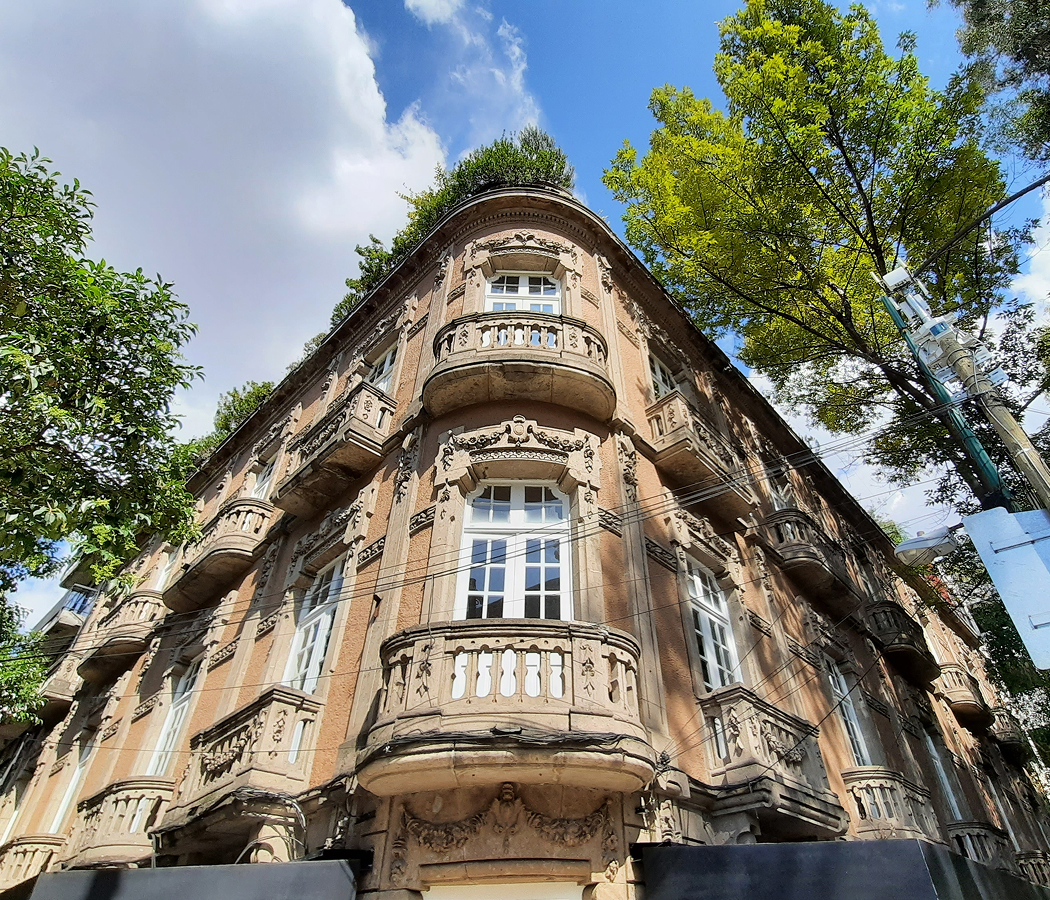
Top places to stay in Atlanta, Georgia.
Atlanta began with the railroads that made a small Georgia settlement the transportation and commercial crossroads of the Southeast. Founded as Terminus in 1837 at the planned endpoint of the Western and Atlantic Railroad, the settlement became Atlanta in 1847 as converging rail lines attracted merchants, passengers, and freight businesses. Early hotels clustered near the railroad depot, accommodating travelers whose journeys connected the Atlantic seaboard with the developing interior. The Civil War brought widespread destruction during William Tecumseh Sherman's Atlanta Campaign in 1864, but reconstruction quickly restored the city's commercial momentum. Atlanta became Georgia's capital in 1868, strengthening demand for lodging among legislators, business leaders, and visiting officials. The Kimball House, opened in 1870 by entrepreneur Hannibal Kimball, symbolized the ambitions of the rebuilding city through its expansive scale and elaborate public spaces. The International Cotton Exposition of 1881 and Cotton States and International Exposition of 1895 brought national attention to Atlanta's industrial growth and expanding visitor economy. The Georgian Terrace opened on Peachtree Street in 1911, establishing an elegant residential-style hotel associated with the city's developing cultural and social institutions. During the twentieth century, Atlanta's prominence in commerce, aviation, and conventions transformed its hospitality industry. The opening of the Atlanta Municipal Airport in 1926 established the foundation for a transportation hub that would become one of the world's busiest. The civil rights movement brought national and international attention to the city, whose Black business community played a consequential role in the development of downtown accommodation and public life. The Hyatt Regency Atlanta opened in 1967, introducing John Portman's revolutionary atrium-hotel design and helping establish Peachtree Center as a modern convention district. Portman's Westin Peachtree Plaza followed in 1976, its cylindrical glass tower becoming a defining feature of the skyline. The 1996 Summer Olympics accelerated investment in hotels, transportation, and downtown public spaces, introducing Atlanta to a vast international audience. Subsequent development extended luxury hospitality into Buckhead and established new boutique properties across revitalized urban neighborhoods. Atlanta's hotel history captures the evolution of a railroad junction into a globally connected Southern metropolis, shaped by commercial ambition, architectural experimentation, and a remarkable capacity for reinvention.
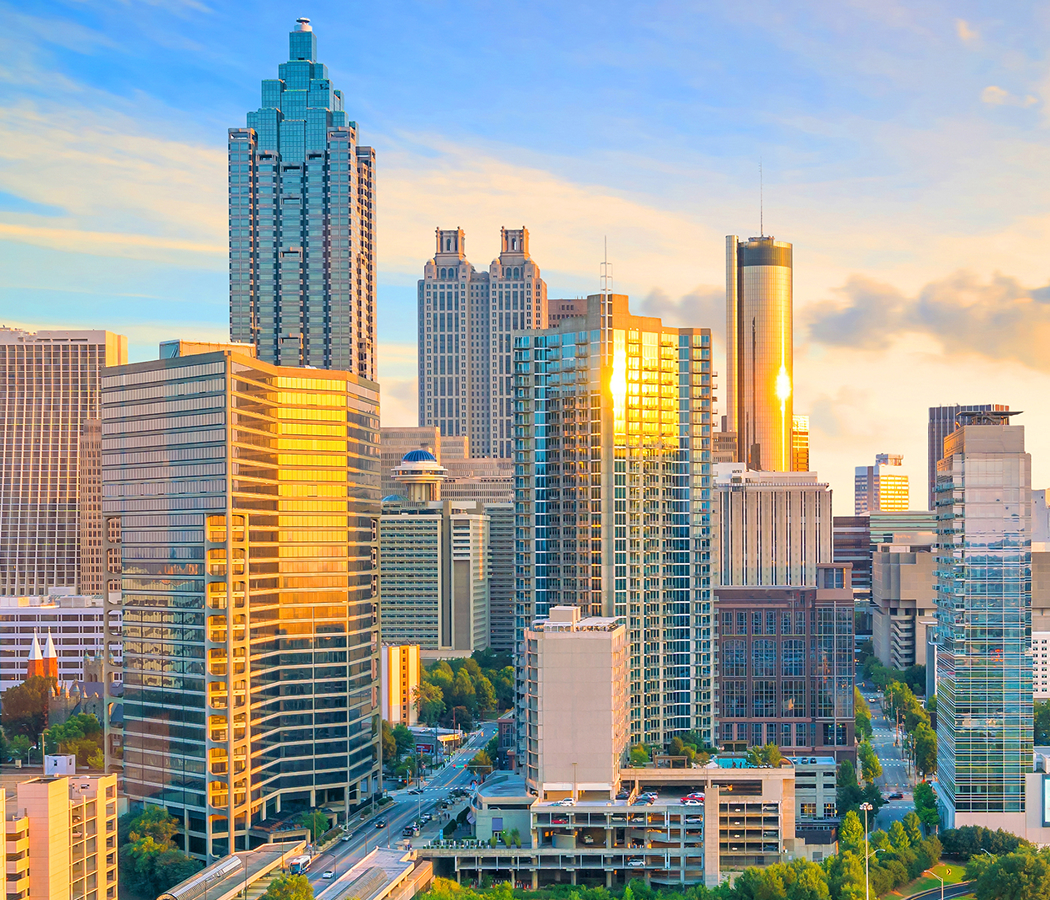
Atlanta's accommodation landscape stretches across a wooded metropolitan terrain of rolling hills, historic residential districts, and increasingly dense commercial centers linked by the Peachtree corridor. Downtown forms the historic business and convention center, where substantial hotels occupy prominent positions among office towers, entertainment venues, and major public attractions. Peachtree Center contains a concentration of high-rise properties distinguished by expansive atriums, elevated walkways, and dramatic views across the skyline. Nearby Centennial Olympic Park introduces landscaped public space surrounded by museums, sporting venues, and contemporary hotels. The adjoining Fairlie-Poplar district preserves a contrasting architectural environment through early commercial buildings, decorative masonry, and compact streets reflecting Atlanta's historic downtown development. Northward, Midtown offers a sophisticated urban setting organized around Peachtree Street and the cultural institutions surrounding the Woodruff Arts Center. Luxury hotels and contemporary boutique properties occupy glass towers and restored buildings near theaters, galleries, and prominent restaurants. The neighborhood's broad sidewalks and substantial residential developments create a lively pedestrian environment, particularly around the intersections of major commercial avenues. Piedmont Park provides an expansive green landscape along Midtown's eastern edge, with mature trees, open lawns, and views toward the surrounding skyline. East of the central business districts, Old Fourth Ward combines converted industrial properties, historic residential streets, and contemporary mixed-use developments. Accommodation near Ponce City Market offers access to independent restaurants, retail spaces, and the Atlanta BeltLine's Eastside Trail, whose landscaped corridor connects several established neighborhoods. The adjoining Inman Park area presents a more intimate architectural landscape through Victorian residences, tree-lined streets, and neighborhood commercial corridors. Boutique accommodation occupies carefully adapted historic properties near cafés and local dining establishments. Farther north, Buckhead forms Atlanta's principal luxury shopping and residential district, with prestigious hotels concentrated around Peachtree Road and the surrounding commercial avenues. Substantial contemporary towers stand beside landscaped residential streets, upscale retail complexes, and established cultural institutions. The Buckhead Village area introduces a more pedestrian-oriented environment through refined shopping streets, intimate restaurants, and carefully designed public spaces. Westward, the neighborhoods surrounding West Midtown occupy former industrial landscapes transformed into contemporary residential and commercial districts. Hotels near the Westside Provisions District provide access to converted warehouses, design businesses, and ambitious restaurants housed within substantial brick structures. South of the central city, the Castleberry Hill district preserves an atmospheric collection of historic warehouses and commercial buildings associated with Atlanta's railroad economy. Its loft conversions and galleries create a distinctive setting near downtown attractions. Across these districts, Atlanta offers accommodation ranging from expansive convention hotels and sophisticated high-rise luxury properties to intimate neighborhood retreats, with each setting reflecting a different chapter in the city's architectural and commercial development. Foresyte may earn a commission when you book.
Foresyte Travel's top five choices.
5. Nobu Hotel Atlanta
Nobu Hotel Atlanta opened in 2022 as part of the extensive redevelopment of Phipps Plaza, the Buckhead shopping complex originally established by developer Ogden Phipps in 1969. Simon Property Group expanded the site beyond its traditional retail role with hospitality, offices, restaurants, and new public spaces, positioning the hotel within Phipps Plaza's transformation into a broader mixed-use district. The property brought the Nobu hospitality concept created by Nobu Matsuhisa, Robert De Niro, and Meir Teper to Atlanta, extending a business that began with the original Nobu restaurant in New York in 1994. Rockwell Group developed interiors around Japanese-influenced materials, warm timber, natural textures, and restrained contemporary forms. Nobu Hotel Atlanta represents the evolution of Buckhead's luxury retail geography into a more integrated hospitality and commercial destination.
4. Waldorf Astoria Atlanta Buckhead
Waldorf Astoria Atlanta Buckhead occupies a limestone and glass tower near Peachtree Road, placing the property within the commercial district that became Atlanta's principal concentration of luxury retail and hospitality. The hotel opened in 2008 as The Mansion on Peachtree under developer John Williams, whose Preferred Apartment Communities followed decades of major real-estate activity across the city. Mandarin Oriental assumed management in 2012, bringing the property into its international portfolio during Buckhead's continued high-rise development. Hilton converted the hotel to Waldorf Astoria in 2018, giving the building its third luxury character within a decade. Its succession through independent development, Mandarin Oriental, and Waldorf Astoria reflects the sustained international investment that accompanied Buckhead's emergence as a major luxury district.
3. The Ritz-Carlton, Atlanta
The Ritz-Carlton, Atlanta opened in Downtown in 1984 during a period of substantial reinvestment in the city's central business and convention district. Its arrival formed part of the modern revival of the Ritz-Carlton name led by Atlanta-based hotelier Horst Schulze and the company assembled by William B. Johnson during the 1980s. The property occupies an important place in the early expansion of the contemporary Ritz-Carlton organization before the brand developed into a global luxury portfolio. Its Peachtree Street location places the hotel near the commercial spine that shaped Downtown long before later development shifted significant corporate activity toward Midtown and Buckhead. The Ritz-Carlton, Atlanta connects the city directly with the formative years of one of the most influential American luxury hotel companies of the late twentieth century.
2. Four Seasons Hotel Atlanta
Four Seasons Hotel Atlanta occupies the lower portion of GLG Grand, a Midtown tower completed during the district's late twentieth-century surge in high-rise development. Architect Rabun Architects designed the building with a classical stone exterior and prominent vertical composition along 14th Street, close to the Woodruff Arts Center and Atlanta's principal cultural institutions. Four Seasons opened the hotel in 1997, establishing the Toronto-founded company in a Midtown increasingly defined by corporate towers, residential development, and arts institutions. The property's arrival reinforced the northward sequence of Atlanta's luxury hospitality economy along Peachtree Street beyond the traditional downtown core. Four Seasons Hotel Atlanta forms part of the architectural and commercial transformation that established Midtown as a second major center of the modern city.
1. The St. Regis Atlanta
The St. Regis Atlanta opened in 2009 in Buckhead, bringing the hotel tradition established by John Jacob Astor IV in New York to one of Atlanta's most affluent districts. The property was developed by SR Hotel Development with architecture by Rabun Architects, whose composition draws on classical residential forms through limestone, brick, terraces, and an expansive entrance court. Its location beside Buckhead Village placed the hotel within a district whose twentieth-century evolution transformed former suburban estates into a dense concentration of retail, residences, offices, and international hospitality. The development joined a broader wave of luxury investment that reinforced Buckhead's role as Atlanta's principal high-end commercial center. The St. Regis Atlanta translates the Astor-founded hospitality lineage into an architectural form closely tied to Buckhead's residential heritage and twenty-first-century urban expansion.
Where your story begins.
Foresyte Travel reveals places that feel extraordinary long before you arrive.
Enjoy editorial crafted for luxury travelers.
Foresyte may earn a commission when you book.