Top places to stay in Geneva, Switzerland.
Geneva developed at the meeting point of European commerce, Alpine tourism, and international diplomacy, giving the Swiss city a hospitality character closely tied to its position on Lake Geneva. The settlement grew from a Roman trading center into a medieval commercial city, attracting merchants traveling between northern Europe and the Mediterranean. During the sixteenth century, the Protestant Reformation transformed Geneva under John Calvin, drawing religious refugees, scholars, and skilled craftspeople whose arrival expanded its commercial networks. Watchmaking and banking subsequently strengthened the city's international connections. By the eighteenth century, travelers undertaking the Grand Tour were visiting Geneva as a gateway to the Alps, supporting inns and established lodging houses near the lakefront. The nineteenth century brought a more ambitious era of hotel construction as steamship travel, expanding railway networks, and the popularity of Alpine scenery attracted affluent European visitors. The Hôtel des Bergues opened in 1834 on the northern shore of the Rhône's outlet from the lake, becoming an early landmark of Swiss luxury hospitality. The Beau-Rivage followed in 1865, founded by Jean-Jacques Mayer and his wife, Albertine, and establishing an enduring family association with the city's prestigious waterfront. The Hôtel de la Paix opened in 1865, contributing to the concentration of grand accommodation along the lakeside promenades. The Hotel d'Angleterre began welcoming guests in 1872, reinforcing the appeal of Geneva's northern waterfront to international travelers. The founding of the International Committee of the Red Cross in 1863 and the development of international humanitarian diplomacy gave Geneva an increasingly distinctive visitor economy. The establishment of the League of Nations after the First World War transformed the city into a major center of multilateral diplomacy, bringing delegates, journalists, and government representatives into its hotels. The opening of the Palais des Nations in the 1930s strengthened this institutional presence. Following the Second World War, Geneva became a principal European center of the United Nations, supporting continued demand for distinguished accommodation and international meeting facilities. The growth of private banking, commodity trading, and luxury commerce further diversified the market. Geneva's hotels developed around a rare combination of nineteenth-century lakeside grandeur, diplomatic tradition, and the discretion associated with Swiss financial culture.
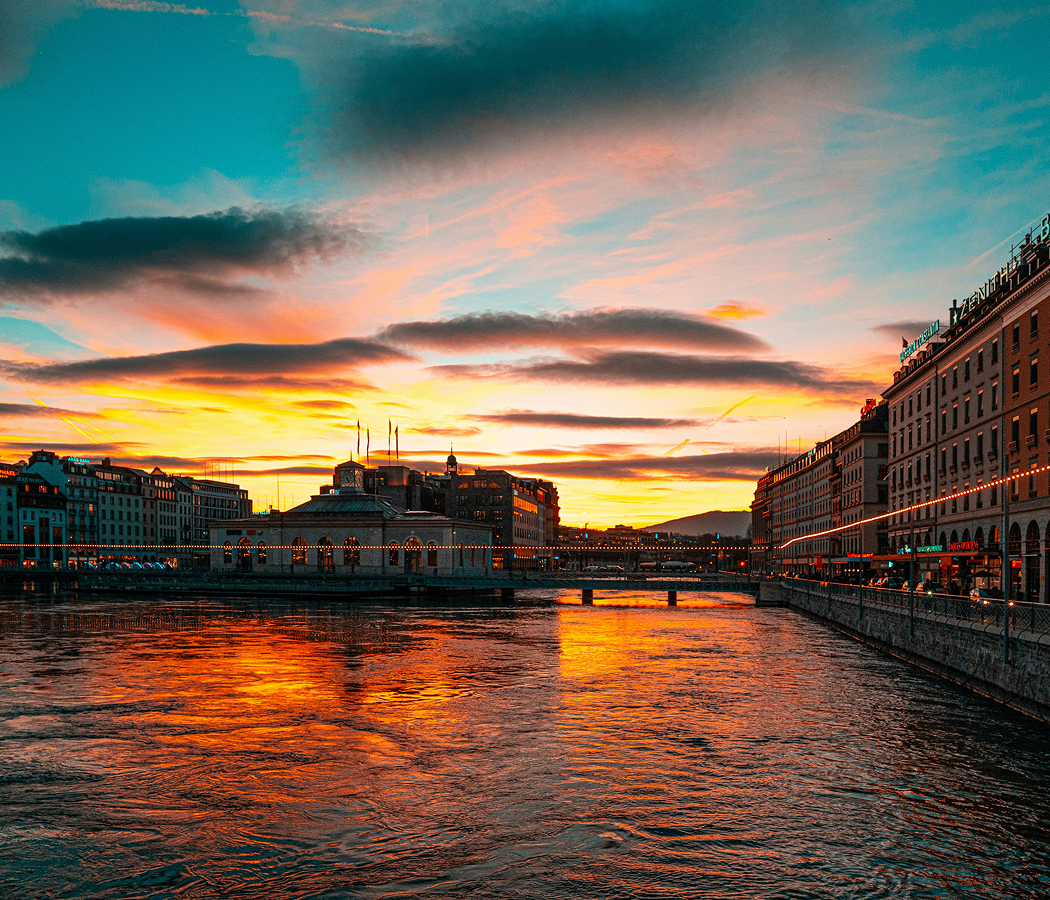
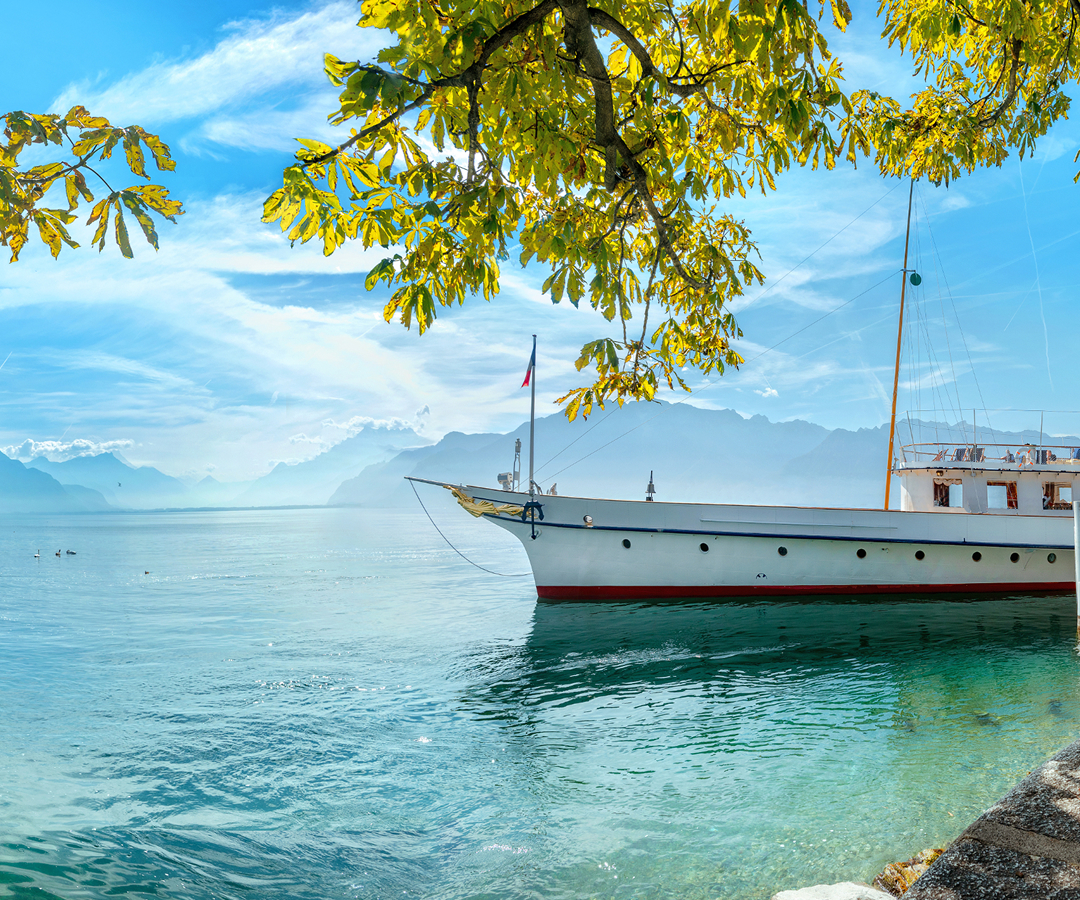
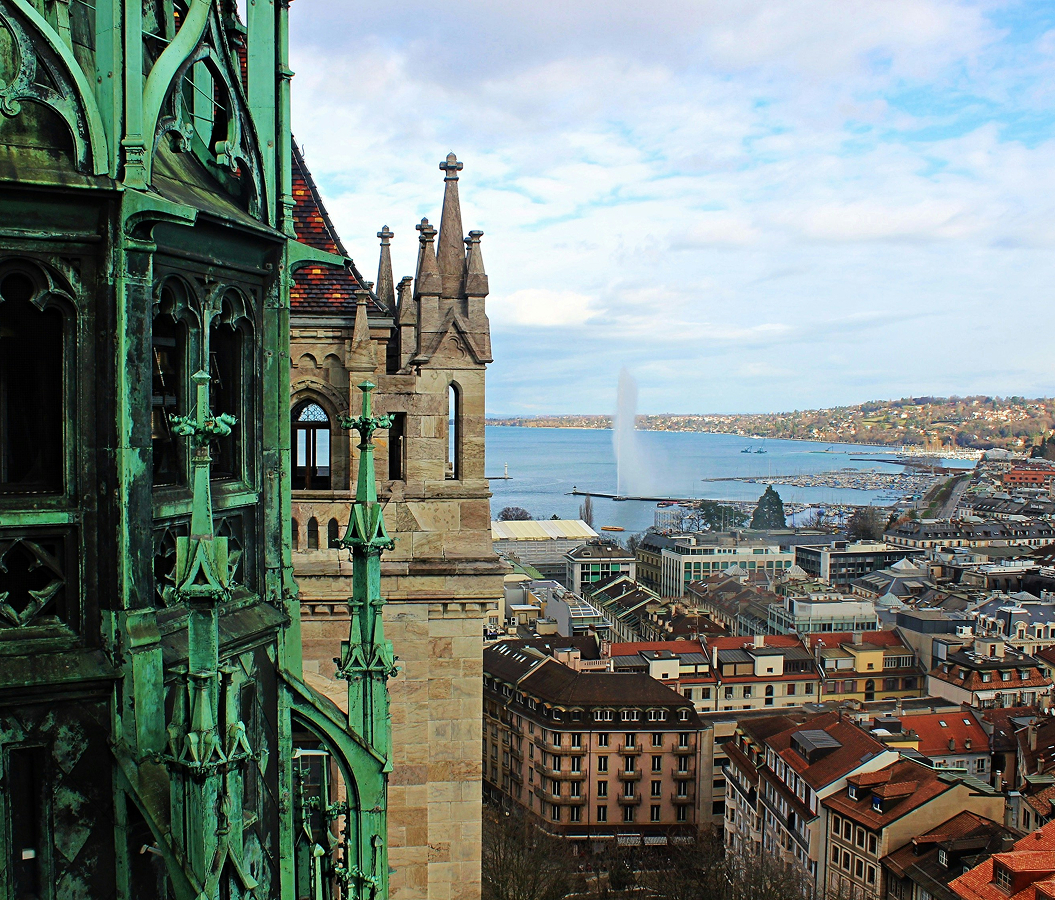
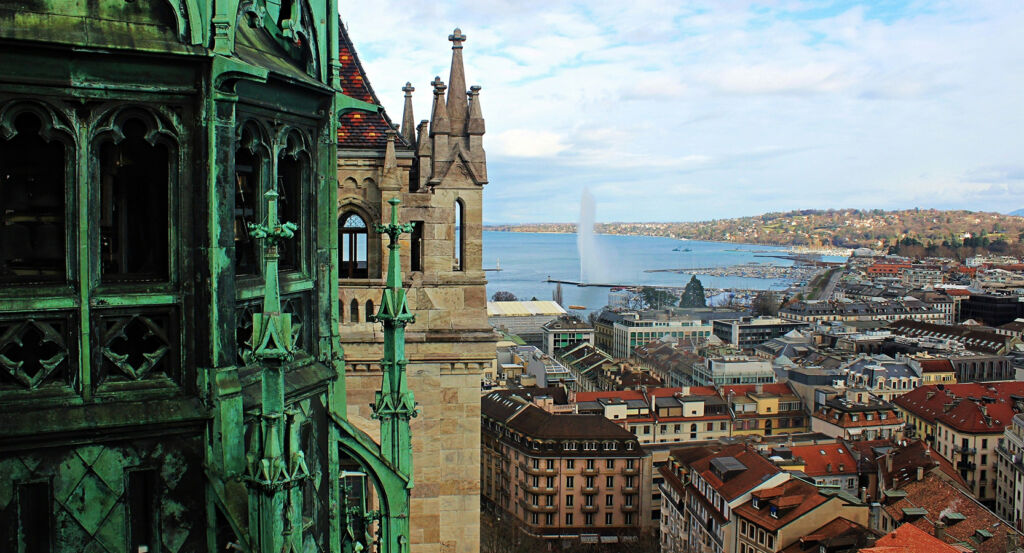
Geneva occupies the southwestern end of Lake Geneva, where the Rhône emerges from the water beneath a skyline framed by the Jura Mountains and the distant Alps. The city's most prestigious accommodation follows the lake's northern shore, particularly along Quai du Mont-Blanc, where grand hotels face the open water and the dramatic mountain horizon. Substantial nineteenth-century façades, ornate balconies, and carefully maintained promenades create an architectural environment closely associated with European luxury travel. The surrounding Pâquis district presents a more varied urban landscape through international restaurants, compact residential streets, and substantial contemporary hotels. Its proximity to the waterfront, railway station, and major commercial streets makes it a convenient base for exploring the city. Eastward, the area surrounding the Parc Mon Repos offers a quieter lakeside setting through elegant residential buildings, mature trees, and landscaped gardens. Smaller luxury properties and refined accommodation benefit from the neighborhood's established atmosphere. Across the water, the southern shore presents another distinguished hospitality corridor through the Rues-Basses shopping district and the surrounding streets of the historic center. Hotels near the Jardin Anglais enjoy immediate access to landscaped waterfront promenades, elegant boutiques, and views toward the Jet d'Eau, Geneva's celebrated lake fountain. The adjoining Old Town rises above the commercial streets through steep cobblestone lanes, historic stone buildings, and intimate public squares. Boutique hotels occupy carefully restored properties near St. Pierre Cathedral, offering a more secluded setting within the city's medieval architectural fabric. Southward, the neighborhoods surrounding Plainpalais introduce a livelier cultural environment through university buildings, independent restaurants, galleries, and traditional residential streets. Contemporary accommodation provides access to museums, markets, and a diverse neighborhood dining scene. West of the historic center, the Rhône's riverbanks support a substantial commercial district through modern office buildings, shopping streets, and established urban hotels. The area surrounding Cornavin Station provides particularly convenient accommodation for travelers using Switzerland's extensive railway network. Farther north, the international district around Nations occupies a more spacious landscape of diplomatic buildings, institutional headquarters, and landscaped public grounds. Substantial business hotels serve visitors attending conferences and international meetings, with contemporary architecture reflecting Geneva's global administrative importance. Beyond the central districts, Cologny presents an exceptionally prestigious residential setting along elevated slopes overlooking the lake. Private villas, landscaped estates, and intimate luxury accommodation benefit from expansive views across the water toward the surrounding mountains. The western lakeshore extends toward Versoix through quieter residential communities, marinas, and wooded waterfront parks, offering a more relaxed environment within reach of Central Geneva. Across the city, accommodation ranges from historic grand hotels and sophisticated contemporary business properties to intimate Old Town retreats and secluded lakeside residences, with the surrounding water and mountain landscape providing an exceptional sense of geographic distinction. Foresyte may earn a commission when you book.
Foresyte Travel's top five choices.
5. Mandarin Oriental, Geneva
Mandarin Oriental, Geneva occupies a prominent Rhône riverfront site where Geneva's historic center meets the commercial district surrounding the lake's western outlet. The building opened in 1950 as the Hôtel du Rhône, introducing a substantial postwar hotel to a city whose international role was expanding around diplomacy, finance, and multinational institutions. Mandarin Oriental assumed management in 2000, establishing the group's first property in continental Europe and extending an Asian hospitality company with nineteenth-century roots in Hong Kong into Switzerland. Subsequent transformations brought work by designers including Sybille de Margerie into the mid-century structure while retaining its direct relationship with the river. Mandarin Oriental, Geneva connects the city's postwar international expansion with a decisive stage in the European growth of one of Asia's oldest hotel groups.
4. Beau-Rivage Genève
Beau-Rivage Genève opened in 1865 under Jean-Jacques Mayer on Quai du Mont-Blanc, beginning a family hotel enterprise that has endured across successive generations. Its lakefront position placed the property within Geneva's nineteenth-century transformation as improved rail connections and Alpine tourism brought wealthy international travelers through the city. Empress Elisabeth of Austria stayed at Beau-Rivage in September 1898 and died after being attacked by anarchist Luigi Lucheni near the lakefront as she departed for a steamer. The hotel subsequently became associated with major diplomatic and political figures drawn to Geneva as the city developed into a center of international negotiation during the twentieth century. Beau-Rivage binds family stewardship, European grand-hotel culture, and Geneva's rise as a diplomatic capital to a single Lake Geneva address.
3. Hotel d'Angleterre Geneva
Hotel d'Angleterre Geneva opened in 1872 on Quai du Mont-Blanc during the period when Geneva's lakefront was developing into a prestigious district of grand hotels and promenades. Its position faces Lake Geneva, the Jet d'Eau, and the city's historic center across the water, embedding the property within the geography that became synonymous with Geneva's international tourism. The hotel passed through several generations of ownership before becoming part of the Red Carnation Hotel Collection, the hospitality company developed by Stanley and Beatrice Tollman. Red Carnation preserved the property's nineteenth-century residential character through individually composed interiors, antiques, artworks, and richly detailed public rooms. Hotel d'Angleterre carries Geneva's grand-hotel tradition into a comparatively intimate lakefront property rooted in the city's nineteenth-century expansion.
2. The Woodward – Auberge Collection
The Woodward occupies a 1901 building on Quai Wilson facing Lake Geneva, Mont Blanc, and the waterfront stretching east from the Rhône. Bastion Holdings commissioned architect Pierre-Yves Rochon to transform the historic structure into an all-suite hotel, pairing its Belle Époque exterior with extensively reconstructed interiors. The property opened in 2021 under Oetker Collection before subsequently joining Auberge Resorts Collection, marking a new chapter in the building's hospitality history. Rochon organized the interiors around marble, fine woodwork, bespoke furniture, and significant decorative arts, preserving the proportions associated with a grand private residence on the lakefront. The Woodward transforms an early twentieth-century Geneva building into a contemporary counterpart to the historic grand hotels lining the northern shore.
1. Four Seasons Hotel des Bergues Geneva
Hotel des Bergues opened in 1834 beside the Rhône at the outlet of Lake Geneva, making it among the earliest purpose-built grand hotels in the city. Its development accompanied Geneva's nineteenth-century emergence as an international destination, decades before the League of Nations and United Nations institutions cemented the city's diplomatic importance. The property hosted European aristocrats, political figures, and cultural travelers as the lakefront evolved into the ceremonial face of Geneva. Four Seasons assumed management in 2005 following a major restoration led by interior designer Pierre-Yves Rochon, extending the historic property into the Canadian company's European portfolio. Hotel des Bergues unites nearly two centuries of Geneva hospitality with the river, lake, and international institutions that shaped the city's global stature.
Where your story begins.
Foresyte Travel reveals places that feel extraordinary long before you arrive.
Enjoy editorial crafted for luxury travelers.
Foresyte may earn a commission when you book.