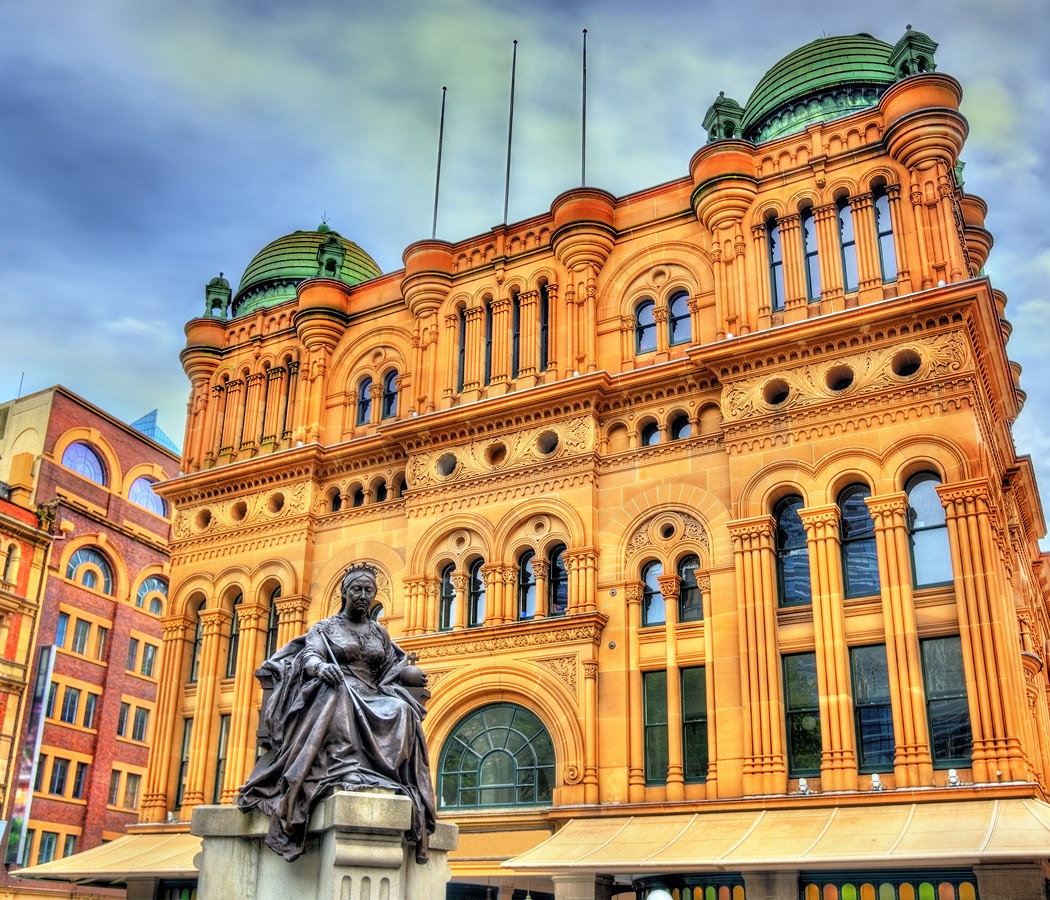
Top places to stay in Sydney, Australia.
Sydney established its hospitality heritage around the maritime commerce of Port Jackson, the prosperity of nineteenth-century colonial trade, and the growing appeal of its striking natural harbor, creating a tradition of waterfront elegance enriched by Australian beach culture, international migration, and the architectural ambitions of a modern Pacific metropolis. The Gadigal people of the Eora Nation inhabited the southern shores of Sydney Harbour for thousands of years, sustaining communities through fishing, maritime knowledge, and connections across the coastal landscape. British colonization began in 1788 with the establishment of a penal settlement at Sydney Cove under Governor Arthur Phillip. Early accommodation developed around the waterfront through inns, taverns, and boardinghouses serving sailors, merchants, government officials, and travelers arriving by sea. The expansion of maritime commerce during the nineteenth century transformed the settlement into a prosperous colonial port, encouraging substantial hotels near the wharves and commercial streets. The Australian Hotel opened on George Street in 1824, becoming an early landmark in the city's developing hospitality industry. The discovery of gold in New South Wales in 1851 accelerated migration and commercial activity, increasing demand for lodging as Sydney consolidated its position as a gateway to the Australian interior. Railway expansion strengthened the city's connections with regional settlements, supporting the growth of hotels around transportation terminals and commercial districts. The opening of the original Hotel Australia in 1891 introduced a grand establishment on Castlereagh Street, celebrated for its elaborate interiors and international clientele. Federation in 1901 established Sydney within the newly formed Commonwealth of Australia, reinforcing its importance as a center of commerce and international travel. The opening of the Hotel Wentworth in 1966 introduced a substantial modern luxury property during a period of expanding aviation and international tourism. The completion of the Sydney Opera House in 1973 transformed the harbor's cultural character and strengthened the city's global appeal. The opening of the Regent of Sydney in 1982 brought another prestigious international hotel to the waterfront, reflecting growing demand for sophisticated accommodation near the city's financial institutions. Sydney's successful bid for the 2000 Olympic Games stimulated major investment in visitor infrastructure, transportation, and urban redevelopment. The transformation of former industrial waterfront sites subsequently created opportunities for contemporary luxury hotels and boutique properties. More recently, the conversion of historic commercial buildings and the development of architecturally ambitious waterfront accommodation have broadened the city's hospitality landscape. Sydney's evolution from colonial port to international metropolis established a hotel culture shaped by maritime commerce, architectural ambition, and the extraordinary relationship between the city and its harbor.
Sydney's most desirable hotel districts occupy a remarkable coastal landscape where sandstone headlands, sheltered coves, and densely developed urban neighborhoods surround the waters of Port Jackson. The Central Business District extends southward from Circular Quay through a concentration of historic commercial buildings and contemporary skyscrapers, with luxury hotels positioned near major business institutions and cultural attractions. The streets surrounding Martin Place preserve substantial sandstone architecture and expansive civic buildings, creating an elegant setting for prestigious urban accommodation. Northward, Circular Quay provides one of the city's most celebrated waterfront locations, with hotels overlooking the Sydney Harbour Bridge, ferry terminals, and the extraordinary architectural silhouette of the Opera House. The adjoining Rocks district preserves narrow lanes, historic sandstone buildings, and restored nineteenth-century commercial properties associated with Sydney's earliest European settlement. Boutique hotels occupy carefully adapted heritage buildings, offering an intimate architectural environment within walking distance of the principal harbor attractions. Westward, Barangaroo introduces a contemporary waterfront landscape through substantial mixed-use towers, landscaped public spaces, and ambitious architectural development. Luxury accommodation occupies prominent positions overlooking the harbor, with expansive glazing and sophisticated interiors emphasizing the surrounding water. South of the central business district, Darling Harbour forms a major entertainment and convention precinct, with substantial hotels arranged around pedestrian promenades, restaurants, and cultural facilities. The neighboring Pyrmont peninsula combines former industrial buildings with contemporary residential developments, creating a varied accommodation environment near the waterfront. East of the city center, the streets surrounding Hyde Park introduce a more established urban setting through historic civic buildings, mature trees, and substantial commercial architecture. The adjoining neighborhoods of Darlinghurst and Surry Hills contain intimate boutique properties among Victorian terraces, independent restaurants, and former industrial buildings transformed into creative spaces. Their compact streets provide a distinctive alternative to the larger hotels concentrated around the harbor. Farther east, Potts Point occupies an elevated peninsula overlooking Woolloomooloo Bay, with elegant Art Deco apartment buildings, historic terraces, and intimate luxury accommodation. The neighboring Elizabeth Bay district offers a quieter residential atmosphere through substantial waterfront residences and established gardens. Across the harbor, North Sydney presents a contrasting commercial environment through contemporary office towers and substantial hotels with panoramic views toward the central skyline. The adjoining Kirribilli neighborhood preserves intimate residential streets and historic houses near the northern approaches to the bridge. Eastward along the coastline, Bondi Beach introduces Sydney's celebrated oceanfront character through broad sandy shores, established apartment buildings, and contemporary boutique accommodation. The surrounding streets contain cafés, restaurants, and independent businesses closely associated with the city's beach culture. Farther north, Manly occupies a distinctive peninsula between Sydney Harbour and the Pacific Ocean, with hotels and guesthouses positioned near its ocean beach and sheltered harbor waterfront. These varied settings allow visitors to experience Sydney through the grandeur of its harbor, the architectural intimacy of established residential neighborhoods, or the relaxed atmosphere of its celebrated coastal communities. Foresyte may earn a commission when you book.
Foresyte Travel's top five choices.
5. Capella Sydney
Capella Sydney occupies the former Department of Education building on Sandstone Precinct land between Bridge and Loftus streets, embedding the hotel within Sydney's governmental and architectural core. Government architect George McRae designed the expansive sandstone building, completed in 1915 as part of the administrative landscape surrounding nearby government offices and Circular Quay. Pontiac Land undertook the property's transformation with Make Architects and heritage specialists, restoring its Edwardian Baroque fabric and inserting contemporary hospitality spaces behind the historic elevations. Capella opened the hotel in 2023 as the Singapore-based company's first Australian property, introducing its international portfolio through one of Sydney's major adaptive-reuse projects. The conversion gives a former center of public administration a new civic presence within the revitalized Sandstone Precinct.
4. Shangri-La Sydney
Shangri-La Sydney occupies a high-rise above The Rocks, placing the hotel between Sydney's colonial-era waterfront district and the modern towers of the central business district. The building originated as the ANA Hotel Sydney in the early 1990s, part of a period when major international hospitality groups expanded around Circular Quay and the western harbor approaches. Shangri-La Hotels and Resorts acquired the property in 2003, giving the Hong Kong-based company a commanding position overlooking Sydney Harbour. Its elevation provides direct visual relationships with the Sydney Harbour Bridge, Sydney Opera House, and the working harbor that shaped the city's growth from the eighteenth century onward. Shangri-La Sydney represents the international hotel investment that transformed the western edge of Circular Quay into a major luxury hospitality district.
3. Four Seasons Hotel Sydney
Four Seasons Hotel Sydney stands at the junction of George and Alfred streets beside Circular Quay, occupying one of the principal gateways between The Rocks and Sydney's central business district. The property opened in 1982 as The Regent Sydney, bringing a major international luxury hotel to a waterfront precinct undergoing substantial redevelopment during the closing decades of the twentieth century. Four Seasons assumed management in 2002, extending the Toronto-founded company's presence into a building already closely associated with Sydney's harbor-centered hotel economy. A major interior transformation completed in 2019 reworked the property under Australian designer Miriam Fanning of Mim Design, introducing a contemporary interpretation of the city's coastal setting. Its history traces the evolution of Circular Quay from transport and maritime infrastructure into one of Australia's most concentrated tourism and hospitality districts.
2. Park Hyatt Sydney
Park Hyatt Sydney occupies the edge of Campbell's Cove at The Rocks, directly between Sydney Harbour Bridge and the water facing Jørn Utzon's Sydney Opera House. The hotel opened in 1990 on land whose maritime history stretches through the warehouses, wharves, and commercial activity that shaped Sydney Cove during the nineteenth century. Its low-rise architecture preserves the visual dominance of the Harbour Bridge and Opera House, tying the building's scale to a waterfront governed by unusually powerful civic monuments. A major transformation completed in 2012 introduced interiors by BAR Studio and an extensive collection of Australian art, strengthening the property's relationship with its national setting. Park Hyatt's significance comes from an architectural position embedded directly within the historic and expansive geography of Sydney Harbour.
1. Crown Towers Sydney
Crown Towers Sydney rises within Barangaroo, the vast western-harbor redevelopment that transformed former container wharves into a new commercial, residential, recreational, and cultural district. WilkinsonEyre designed the 271-meter tower as three twisting forms that rotate as they ascend, producing a sculptural profile engineered specifically for its prominent harbor position. Crown opened the property in 2020 as the principal hospitality component of Barangaroo South, extending the precinct's vertical skyline beyond the adjoining office towers. The building emerged from one of Sydney's largest twenty-first-century urban redevelopment programs, converting industrial waterfront land into a dense extension of the central business district. Crown Towers represents the architectural ambition and economic scale of Sydney's contemporary western-harbor transformation.
Where your story begins.
Foresyte Travel reveals places that feel extraordinary long before you arrive.
Enjoy editorial crafted for luxury travelers.
Foresyte may earn a commission when you book.