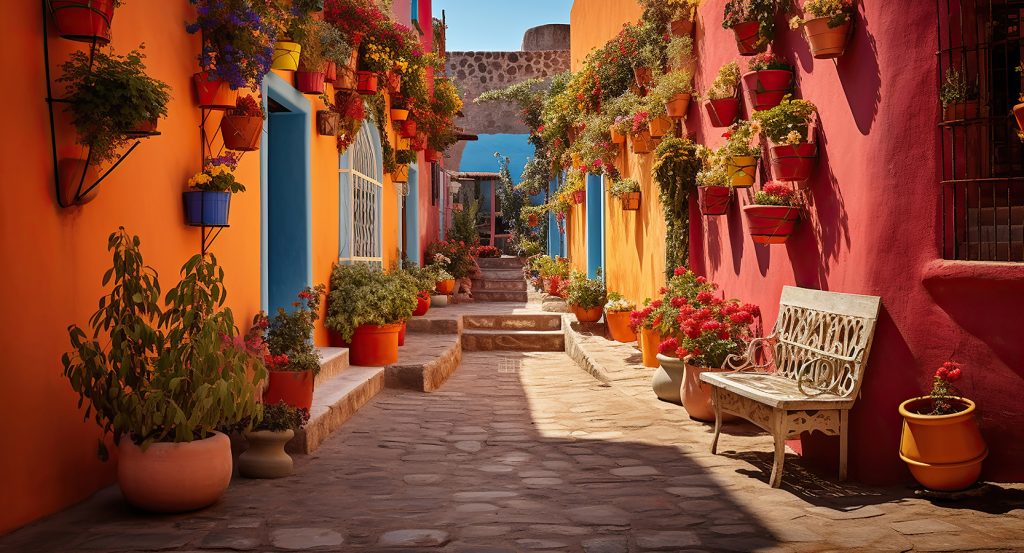
Top places to stay in New Mexico.
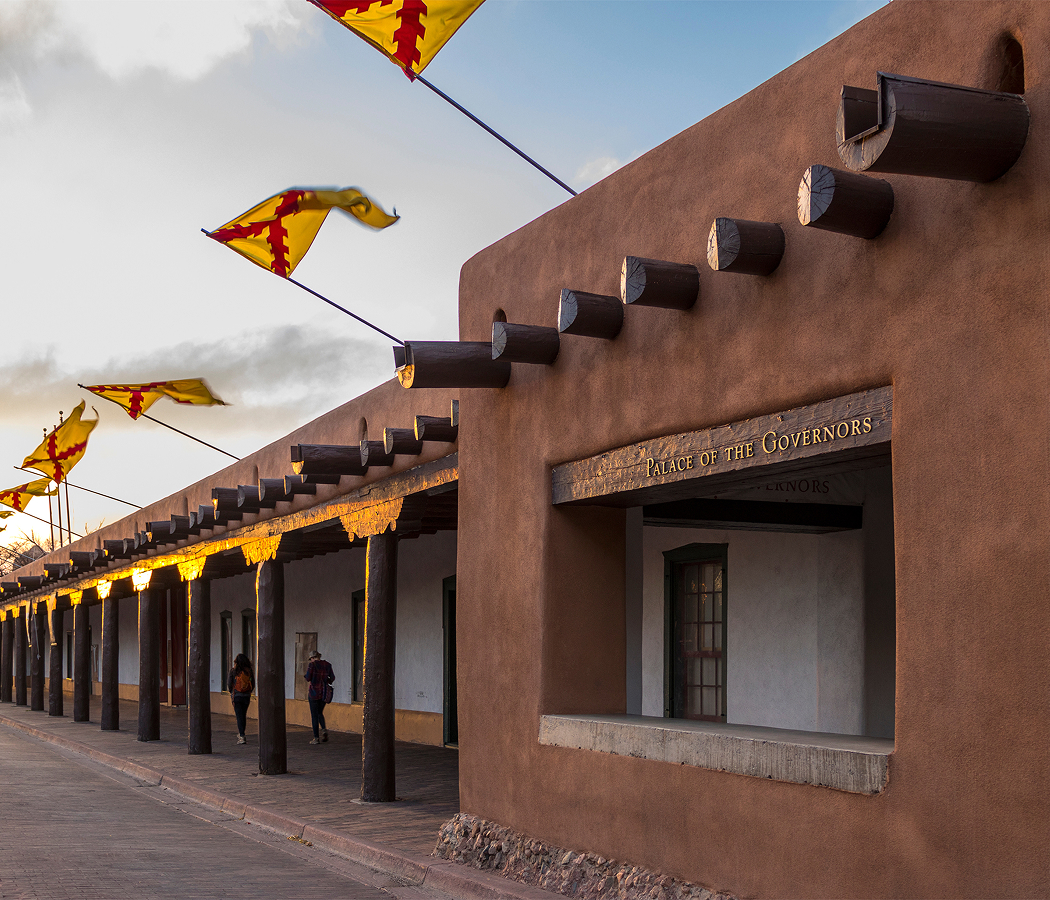
Santa Fe's emergence as one of America's most distinctive western destinations began with its position at the crossroads of Indigenous civilization, Spanish colonial administration, and the commercial routes of the American Southwest. The region had sustained Pueblo communities for centuries before Spanish governor Pedro de Peralta established Santa Fe as the capital of Nuevo México in 1610. The settlement developed around a central plaza, with lodging provided through private households, trading establishments, and accommodations serving colonial officials and travelers. The Pueblo Revolt of 1680 expelled Spanish authorities, and their return in 1692 initiated another period of colonial settlement. Mexican independence in 1821 opened the Santa Fe Trail to expanding commerce with the United States, bringing wagon caravans, merchants, and entrepreneurs to the territorial capital. Inns and boardinghouses developed around the plaza as commercial traffic increased. American occupation in 1846 introduced new military and administrative activity, followed by the establishment of New Mexico Territory in 1850. The arrival of the railroad at nearby Lamy in 1880 encouraged a different kind of visitor, including artists, archaeologists, and travelers fascinated by the region's Indigenous and Hispanic heritage. The Palace Hotel opened near the plaza in 1881, becoming a prominent gathering place for territorial politicians and commercial travelers. New Mexico achieved statehood in 1912, and Santa Fe increasingly cultivated an architectural character rooted in regional building traditions. The opening of La Fonda on the Plaza in 1922 introduced a celebrated hotel associated with the Fred Harvey Company and the Santa Fe Railway. Architect John Gaw Meem's subsequent work helped define the property's Pueblo Revival character, connecting modern hospitality with the city's historic architectural vocabulary. The opening of Bishop's Lodge as a resort in the 1920s extended accommodation into the wooded foothills north of the city. During the following decades, Santa Fe attracted a growing community of painters, writers, and collectors whose presence strengthened its reputation as an artistic destination. The establishment of the Santa Fe Opera in 1957 brought an internationally significant performing arts institution to the surrounding hills. The opening of the Inn and Spa at Loretto in 1975 introduced a prominent downtown hotel inspired by traditional adobe architecture. Later development brought intimate luxury inns, restored historic compounds, and secluded mountain resorts. Santa Fe's hospitality character emerged through the convergence of centuries-old cultural traditions, an influential architectural movement, and the extraordinary appeal of New Mexico's high-desert landscape.
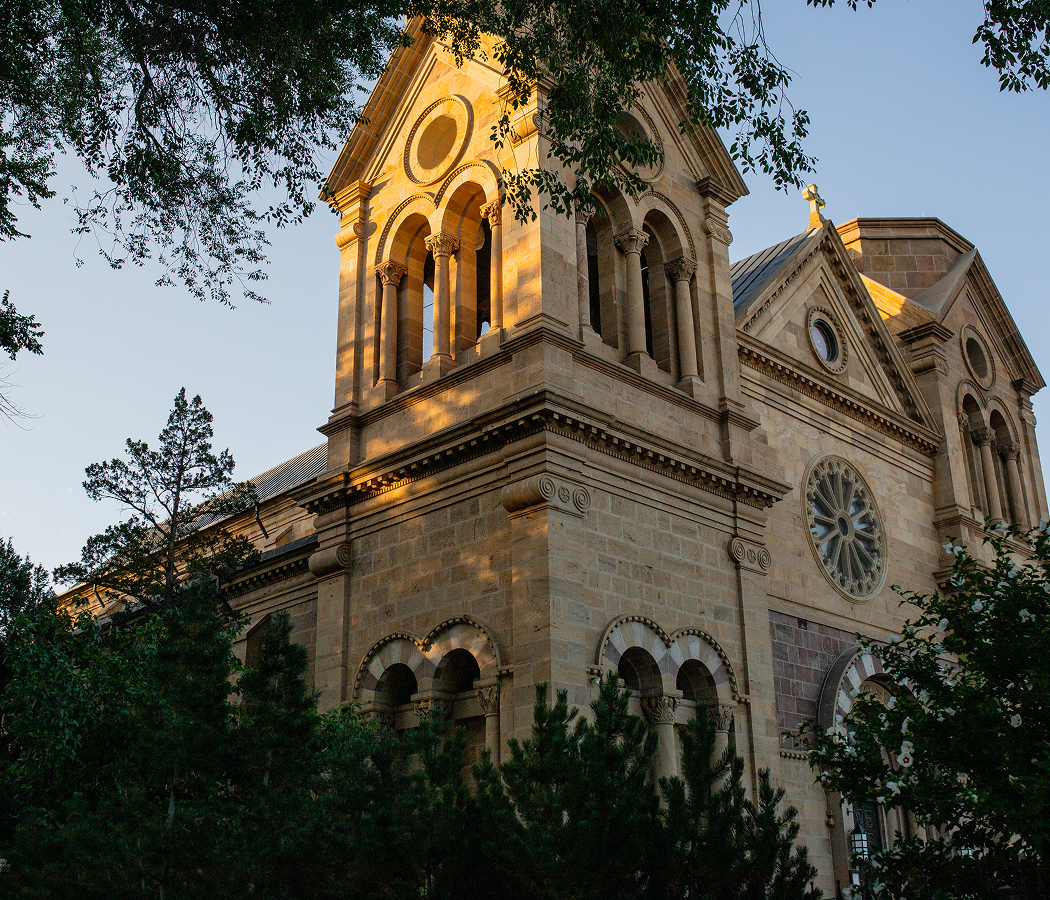
Santa Fe occupies a high plateau beneath the southern Sangre de Cristo Mountains, where adobe buildings, cottonwood-lined waterways, and rolling piñon-covered hills create a remarkably cohesive setting for hotels and historic inns. The Downtown Plaza district forms the historic center, organized around a landscaped public square bordered by traditional commercial buildings, cultural institutions, and narrow streets. Prestigious hotels occupy restored adobe structures and substantial Pueblo Revival properties, with rounded parapets, timber vigas, and intimate courtyards contributing to the architectural atmosphere. Accommodation near the plaza provides immediate access to museums, galleries, restaurants, and established shopping streets. Eastward, the streets surrounding the Cathedral Basilica of St. Francis of Assisi introduce a more expansive architectural environment through substantial religious buildings, historic residences, and carefully maintained public spaces. Boutique inns occupy converted homes along quiet lanes, offering a residential atmosphere within walking distance of the central district. Southward, the Railyard District presents a contrasting urban landscape through adapted industrial buildings, contemporary galleries, and landscaped public spaces surrounding the historic railway corridor. Modern hotels and smaller independent properties provide access to the farmers market, performance venues, and an increasingly lively collection of restaurants. East of downtown, Canyon Road follows a narrow historic corridor through traditional adobe compounds, intimate gardens, and established residential properties. Boutique accommodation occupies carefully restored buildings near the district's celebrated galleries, with enclosed patios and shaded terraces creating secluded environments. The surrounding streets preserve a distinctive village-like atmosphere through irregular lanes, low walls, and mature landscaping. Farther east, the Historic Eastside extends toward the foothills through winding roads and substantial residential compounds set among native vegetation. Luxury inns and private casitas offer privacy within traditional architectural settings, often incorporating fireplaces, exposed timber ceilings, and enclosed garden spaces. Northward, the neighborhoods surrounding Bishop's Lodge Road introduce a more expansive landscape of rolling hills, wooded valleys, and mountain views. Resort properties occupy extensive grounds where traditional Southwestern architecture is integrated into the surrounding terrain. The area's proximity to hiking trails and open countryside creates a distinctly restorative atmosphere. South of the central city, the neighborhoods along Cerrillos Road contain contemporary hotels and established commercial developments, providing convenient access to major transportation routes and shopping districts. Farther southwest, the growing communities surrounding the Santa Fe Community College area offer additional accommodation near open high-desert landscapes. West of the city, the La Cienega area introduces a quieter rural environment through historic agricultural properties, secluded retreats, and substantial private estates. Across Santa Fe, accommodation ranges from prestigious plaza hotels and intimate adobe inns to contemporary urban properties and secluded mountain resorts, with architecture consistently shaped by the materials, colors, and climatic demands of northern New Mexico. Foresyte may earn a commission when you book.
Foresyte Travel's top five choices.
5. Eldorado Hotel and Spa
Eldorado Hotel & Spa occupies a prominent site near the Santa Fe Plaza, embedding the property within the compact civic core established during the city's Spanish colonial period. The hotel opened in 1986 as Downtown Santa Fe was strengthening its position as an international center for art, architecture, and Southwestern culture. Its design draws from the Pueblo Revival tradition that reshaped Santa Fe during the twentieth century through adobe-colored stucco, projecting vigas, carved wood, and stepped massing. That architectural style descends from the citywide movement championed by figures including architect John Gaw Meem, whose work helped make regional design central to Santa Fe's modern character. Eldorado represents the translation of Santa Fe's carefully cultivated regional architecture into a large-scale downtown hotel.
4. The Hacienda & Spa
The Hacienda & Spa forms an intimate hotel-within-a-hotel at Hotel Santa Fe, whose ownership by Picuris Pueblo gives the property an exceptional relationship with one of New Mexico's Indigenous communities. Picuris Pueblo is among the state's historic Tewa pueblos, with cultural traditions extending centuries before the establishment of Santa Fe by Spanish colonists. Hotel Santa Fe opened in 1991 and incorporated Pueblo art, architectural references, and cultural programming into a hospitality property controlled by Native American ownership. The Hacienda subsequently established a smaller enclave within the larger complex, extending that foundation through handcrafted furnishings and regional materials. The property places Indigenous ownership at the center of a luxury hotel in a city whose cultural history is inseparable from the Pueblo peoples of northern New Mexico.
3. Hotel Chimayo de Santa Fe
Hotel Chimayó de Santa Fe takes its name and design inspiration from Chimayó, the northern New Mexico community whose weaving traditions became one of the region's most recognizable artistic legacies. The Ortega family helped preserve and expand that tradition through generations of weaving associated with Ortega's Weaving Shop, connecting the hotel's decorative program with a living regional craft. Interior spaces incorporate textiles, carved wood, punched tin, and other work rooted in Hispanic and Indigenous artistic traditions of northern New Mexico. The property occupies a central site near Santa Fe Plaza, placing these references within the historic urban core shaped by centuries of Pueblo, Spanish, Mexican, and American influence. Hotel Chimayó turns a specific northern New Mexican craft tradition into the organizing cultural foundation of the property.
2. La Posada de Santa Fe, a Tribute Portfolio Resort & Spa
La Posada de Santa Fe developed around an adobe residence constructed in the 1880s by Abraham Staab, a German-born merchant who became one of territorial New Mexico's prominent commercial figures. Staab built the house for his wife, Julia, creating a substantial Victorian-era residence whose European architectural details reflected Santa Fe's growing connections with national trade and commerce. The estate subsequently became the nucleus of La Posada, with additional adobe buildings spreading across landscaped grounds near the city's historic center. Its evolution preserved the Staab House within a larger hospitality complex, joining territorial-era domestic architecture with the low-rise forms associated with twentieth-century Santa Fe. La Posada captures the city's transition from nineteenth-century mercantile center to the art and hospitality destination that developed around its historic architectural fabric.
1. Rosewood Inn of the Anasazi
Rosewood Inn of the Anasazi opened in 1991 steps from Santa Fe Plaza, placing a purpose-built luxury hotel within one of the oldest continuously inhabited urban centers in the United States. Architect Jim Satzinger designed the property through the regional style that made Santa Fe architecturally distinct, using adobe-colored walls, vigas, latillas, fireplaces, and handcrafted woodwork at an intimate scale. Its name references the Ancestral Pueblo peoples whose settlements and cultural achievements preceded Spanish colonization across the Four Corners and northern Southwest by centuries. Rosewood assumed management in 1998, integrating the property into an international hospitality portfolio while preserving its concentrated regional architectural program. Inn of the Anasazi distills Santa Fe's Pueblo-derived architecture, craftsmanship, and layered cultural history into one of the historic center's most deliberately site-specific hotels.
Where your story begins.
Foresyte Travel reveals places that feel extraordinary long before you arrive.
Enjoy editorial crafted for luxury travelers.
Foresyte may earn a commission when you book.