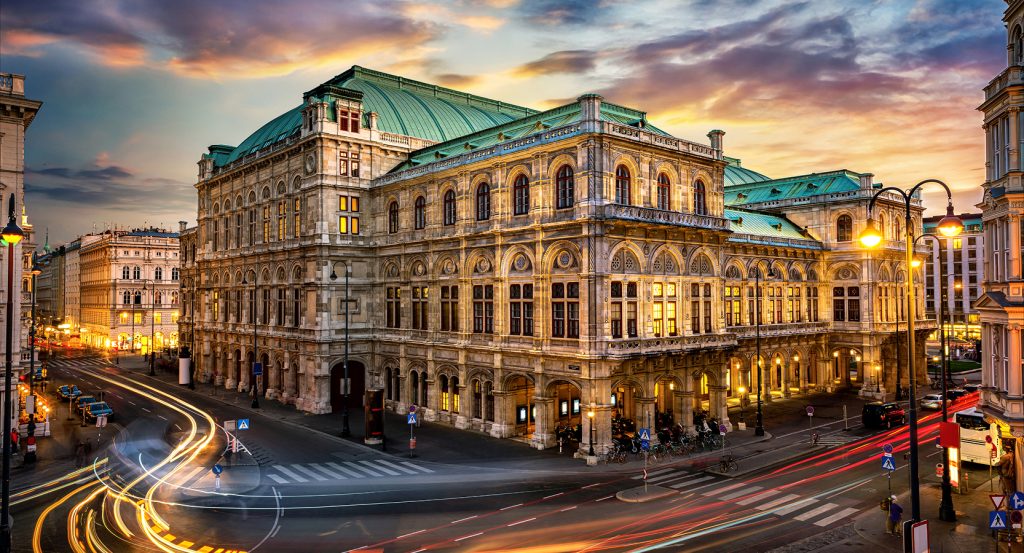
Top places to stay in Vienna, Austria.
Vienna cultivated a culture of grand hospitality at the heart of the Habsburg Empire, where imperial court life, European diplomacy, and the flourishing of music and the arts gave rise to an elegant tradition of palace-inspired accommodation, celebrated coffeehouses, and refined urban society. The dynasty's consolidation of power in Austria during the late thirteenth century established the foundations of a capital whose residences and religious institutions supported increasingly elaborate traditions of reception. By the sixteenth century, Vienna had become a principal center of Habsburg government, attracting foreign delegations and noble households whose visits required substantial accommodation. The Ottoman sieges of 1529 and 1683 profoundly shaped the city's development, with the latter followed by an ambitious period of Baroque construction financed by imperial and aristocratic patronage. Palaces, churches, and formal gardens transformed the capital's architectural character, creating an environment associated with courtly ceremony and international prestige. During the eighteenth century, the reign of Maria Theresa strengthened Vienna's administrative and cultural institutions, supporting a sophisticated society of diplomatic entertaining, theatrical performance, and formal dining. The Congress of Vienna in 1814-1815 brought European monarchs, ministers, and diplomatic representatives into the city, demonstrating the importance of prestigious residences and established hospitality institutions to international political life. The expansion of railway networks during the nineteenth century accelerated commercial travel, encouraging the development of grand hotels suited to wealthy international visitors. Emperor Franz Joseph I's decision to remove the city walls in 1857 initiated construction of the Ringstrasse, whose expansive buildings transformed the former fortifications into an extraordinary boulevard of imperial architecture. The opening of the Hotel Imperial in 1873 introduced one of Vienna's most distinguished hospitality institutions within a former aristocratic palace, coinciding with the city's hosting of the Vienna World's Fair. The opening of the Hotel Sacher in 1876 established another celebrated landmark near the Vienna State Opera, connecting luxury accommodation with the capital's theatrical and musical society. The collapse of the Austro-Hungarian Empire in 1918 ended Vienna's position as an imperial capital, introducing economic and political challenges that reshaped its hotel industry. The devastation of the Second World War brought further disruption, followed by reconstruction and the gradual restoration of historic buildings. Austria's restoration of sovereignty in 1955 strengthened Vienna's international position, encouraging renewed diplomatic activity and investment in prestigious accommodation. The establishment of the United Nations Office at Vienna in 1980 reinforced the city's importance as a center of international institutions and conferences. Contemporary hotel development has transformed former banks, aristocratic residences, and commercial buildings into sophisticated properties, preserving the architectural inheritance of the Habsburg capital. Vienna's distinguished hospitality tradition continues to unite imperial ceremony, international diplomacy, and the refined cultural institutions that established its reputation as one of Europe's great metropolitan destinations.
Vienna's most distinguished places to stay occupy an urban landscape organized around the expansive Ringstrasse, the historic streets of the Innere Stadt, and the residential districts developed during the capital's imperial expansion. The Innere Stadt forms the architectural and cultural center of Vienna, where prestigious hotels occupy substantial historic buildings near St. Stephen's Cathedral, the Hofburg, and the principal commercial streets. The district preserves an exceptional concentration of Gothic, Baroque, and nineteenth-century architecture, with intimate lanes connecting expansive squares, aristocratic palaces, and established cultural institutions. Hotels near the Graben and Kohlmarkt occupy prestigious positions within the historic luxury shopping district, where elegant façades and carefully restored interiors reflect centuries of commercial refinement. Southward, the streets surrounding Kärntner Strasse connect the cathedral precinct with the Vienna State Opera, supporting grand hotels and sophisticated boutique properties near prominent theaters and concert halls. The Ringstrasse establishes an expansive architectural boundary around the historic center, with prestigious accommodation occupying former palaces and substantial nineteenth-century buildings overlooking its broad avenues. The boulevard's architectural character reflects the ambitions of the Habsburg monarchy through the Vienna Parliament Building, the Burgtheater, and the Kunsthistorisches Museum, creating an exceptional environment for visitors drawn to the city's principal institutions. West of the historic center, the MuseumsQuartier introduces a contrasting cultural setting through former imperial buildings and contemporary exhibition spaces, with nearby boutique hotels occupying restored residential properties. The adjoining Neubau district preserves an energetic neighborhood environment through substantial nineteenth-century apartment buildings, independent shops, and established creative businesses. Southward, Mariahilf extends along the Mariahilfer Strasse commercial corridor, offering accommodation near major shopping streets and the architectural character of Vienna's densely built residential districts. East of the central boulevard, the Landstrasse district contains substantial diplomatic buildings, historic residences, and landscaped public spaces extending toward the Belvedere Palace. Hotels occupy elegant residential streets and contemporary commercial properties near the district's museums and transportation connections. The neighboring streets surrounding Stadtpark offer a distinguished environment through substantial nineteenth-century buildings and landscaped gardens bordering the historic center. Northward, Leopoldstadt occupies the island between the Danube Canal and the main river, presenting a more varied urban landscape through historic residential streets, substantial parks, and contemporary waterfront development. Hotels near the Prater provide access to extensive green spaces and the district's established entertainment institutions. West of the central city, Josefstadt preserves an intimate residential environment through narrow streets, substantial historic apartment houses, and established neighborhood cafés. Boutique accommodation occupies restored properties within walking distance of the Ringstrasse and the principal cultural institutions. Farther northwest, Alsergrund combines prestigious residential architecture with university buildings, historic medical institutions, and established commercial streets. The district's substantial nineteenth-century buildings support refined accommodation near the cultural and intellectual institutions of Central Vienna. Beyond the inner districts, Schönbrunn introduces a separate architectural landscape through expansive palace grounds, landscaped gardens, and established residential neighborhoods. Accommodation near the palace provides access to one of Austria's most significant imperial ensembles within a quieter metropolitan setting. These districts establish a coherent hospitality geography extending from expansive palace hotels and intimate historic residences to sophisticated residential neighborhoods and contemporary properties near the Danube. Foresyte may earn a commission when you book.
Foresyte Travel's top five choices.
5. The Ritz-Carlton, Vienna
The Ritz-Carlton, Vienna occupies four nineteenth-century palaces on the Schubertring, part of the expansive Ringstrasse created after Emperor Franz Joseph ordered the demolition of Vienna's medieval fortifications in 1857. The interconnected buildings emerged during the extraordinary construction campaign that surrounded the old imperial center with aristocratic residences, museums, theaters and institutions designed to express the ambitions of the Habsburg capital. An extensive conversion unified the four structures while preserving historic staircases, decorative plasterwork and substantial portions of their original architectural fabric before the hotel opened in 2012. The property embeds contemporary hospitality within the Ringstrasse project itself, among the most consequential episodes of urban reconstruction in nineteenth-century Europe.
4. Rosewood Vienna
Rosewood Vienna occupies a group of historic buildings on Petersplatz in the medieval center of Vienna, immediately beside the Baroque Peterskirche and a short distance from the Stephansdom. The property incorporates the former headquarters of Erste Group's predecessor institution, connecting the site with the development of Austrian banking in the nineteenth and twentieth centuries. London-based Alexander Waterworth Interiors and Austrian architecture practice A2K transformed the complex through restored historic rooms, contemporary Austrian art and residentially scaled interiors organized around the irregular fabric of the existing buildings. Its 2022 opening established Rosewood's first property in Austria inside the dense architectural core from which Vienna developed long before the nineteenth-century expansion beyond the former city walls.
3. Anantara Palais Hansen Vienna Hotel
Anantara Palais Hansen Vienna Hotel occupies the palace designed by Theophil Hansen for the 1873 Vienna World's Fair, an event conceived to present the Austro-Hungarian capital as a center of international industry, commerce and culture. Hansen, among the principal architects of the Ringstrasse era, created the building in the Renaissance Revival language that also shaped his Austrian Parliament Building and other major Viennese commissions. The structure subsequently served institutional and residential purposes before an extensive restoration converted it into a hotel, preserving its expansive façade, columned spaces and historic architectural character. Its later transition to Anantara carries a surviving work of the 1873 exposition into a new institutional chapter, linking the property directly with the event that announced imperial Vienna's metropolitan ambitions to the world.
2. Hotel Imperial, a Luxury Collection Hotel, Vienna
Hotel Imperial, a Luxury Collection Hotel, Vienna began as the private palace of Duke Philipp of Württemberg, who commissioned architect Arnold Zenetti to construct an imposing Ringstrasse residence completed in the 1860s. The palace became a hotel for the 1873 Vienna World's Fair, transforming aristocratic architecture into hospitality during the same international event that accelerated Vienna's emergence as a modern European capital. Emperor Franz Joseph, Richard Wagner, Queen Elizabeth II and other political and cultural figures became associated with the property across successive eras, extending its ceremonial role far beyond the original ducal residence. Expansive staircases, marble, stucco and historic state rooms preserve the architectural hierarchy of the palace, making the Imperial a direct surviving expression of the aristocratic world that shaped Vienna's Ringstrasse.
1. Hotel Sacher Vienna
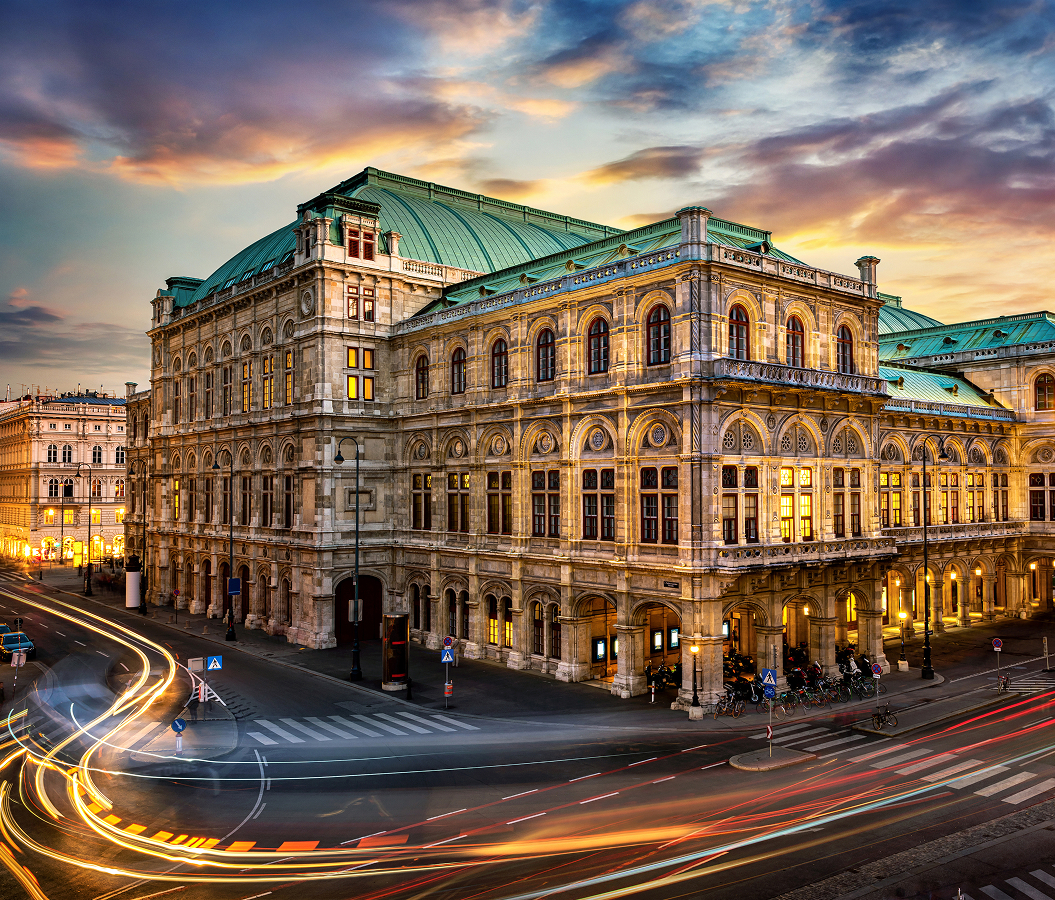
Hotel Sacher Vienna grew from the culinary legacy of Franz Sacher, who created the Sachertorte in 1832 while serving in the household of Prince Klemens von Metternich. His son Eduard Sacher established the hotel beside the Vienna State Opera in 1876, and Eduard's widow Anna Sacher subsequently transformed it into one of fin-de-siècle Vienna's defining social institutions, attracting aristocrats, diplomats, artists and political figures. The Gürtler and Siller families acquired the property in 1934, beginning the family stewardship that carried the hotel through war, Allied occupation and the restoration of Austrian sovereignty. Its history unites a globally recognized Viennese culinary creation with the political, artistic and social culture surrounding the Ringstrasse, giving Hotel Sacher significance extending from the Metternich era through the modern Austrian republic.
Where your story begins.
Foresyte Travel reveals places that feel extraordinary long before you arrive.
Enjoy editorial crafted for luxury travelers.
Foresyte may earn a commission when you book.